

Corsica Ferry Traffic Up 2.8% in March

By 2026 Newsletter week 22
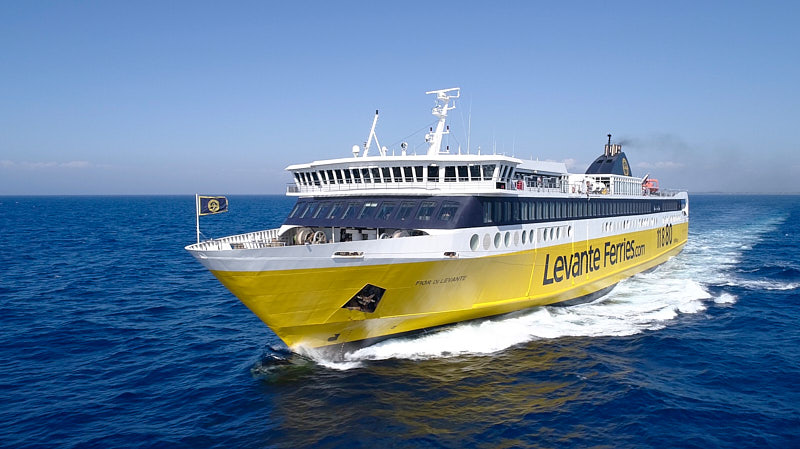
  • Corsica recorded 93,700 ferry passengers in March 2026, an increase of 2.8% compared with March 2025.
  • Ferry traffic grew faster than air traffic, which increased by just 0.5% during the same period.
  • Bastia remained the island’s leading ferry port, handling 52% of all ferry passengers, followed by Ajaccio with 29%.
  • Corsica Ferries retained its dominant market position with a 54% share of ferry passengers, ahead of Corsica Linea (28%).
  • Domestic French routes accounted for 80% of ferry passenger traffic, while services to and from Italy represented the remaining 20%.
  • Freight volumes carried by sea fell by 1.6% year-on-year to 170,100 tonnes in March.

FRS Finland to Introduce Fully Electric Ferry on Archipelago Route

By 2026 Newsletter week 22
  • FRS Finland has secured a 15-year contract to operate the Kalkkiranta–Bodö–Pörtö route from September 2027.
  • The service will introduce Finland’s first fully electric passenger vessel of this size in scheduled archipelago traffic.
  • The new vessel, a Callboats CAT 16, will carry up to 58 passengers and offer barrier-free access.
  • The ferry will operate with zero emissions, supporting the decarbonisation of local maritime transport.
  • Winter operations will continue using FRS Finland’s modernised existing fleet.
  • The vessel will be built in Finland by Callboats, highlighting domestic shipbuilding expertise.
  • FRS Finland hopes the project will pave the way for similar electric ferry solutions elsewhere in Finland.

ESPO Calls for EU ETS Reform to Protect Ports and Short-Sea Shipping

By 2026 Newsletter week 22
  • ESPO has urged the European Commission to use the upcoming review of the maritime EU ETS to address carbon leakage, business leakage and competitive distortions affecting EU ports and short-sea shipping.
  • According to ESPO, the current system is encouraging cargo diversion to non-EU ports, reducing direct connectivity and shifting investment towards neighbouring countries outside the EU.
  • The organisation warns that some short-sea shipping services are already losing traffic to road transport, which remains outside the ETS until 2028.
  • ESPO is calling for measures to restore a level playing field, including changes to the treatment of transhipment ports and greater recognition of the impact on peripheral and outermost regions.
  • The ports association also wants a larger share of ETS revenues reinvested in maritime and port decarbonisation projects.
  • ESPO stresses that it supports the EU’s climate objectives but argues that the current ETS framework is undermining both competitiveness and the effectiveness of decarbonisation efforts.

https://www.espo.be/news/eu-ets-review-last-call-from-europes-ports-to-restore-the-level-playing-field-and-stop-business-leakage

CLdN Appoints Cameron Bowie as COO of Shipping

By 2026 Newsletter week 22

CLdN has appointed Cameron Bowie as Chief Operating Officer of CLdN Shipping, effective 13 July 2026.

Bowie joins from container shipping company Hapag-Lloyd, where he currently serves as Managing Director UK & Ireland. He brings 36 years of experience in the maritime transport sector.

According to CLdN, his experience will support the company’s ambitions in short-sea container shipping and its continued expansion in UK, Irish and European trades.

Bowie succeeds Gary Walker, who will retire this summer after almost three decades with CLdN. Walker joined the company in 1997 and has led its shipping activities for the past 12 years, overseeing a significant expansion of operations.

Baleària Takes Control of Armas Trasmediterránea Operations in the Canary Islands

By 2026 Newsletter week 21

Baleària has taken effective control of Armas Trasmediterránea operations in the Canary Islands, including inter-island services and routes linking the archipelago with mainland Spain.

The combined group will employ around 4,500 people and operate a fleet of more than 50 vessels, transporting over 8 million passengers and 11 million linear metres of freight annually. Consolidated turnover is expected to exceed €1 billion.

The transaction brings together three historic Spanish ferry operators: Trasmediterránea, Armas and Baleària. The company says the move strengthens Baleària’s position as Spain’s leading ferry operator and one of Europe’s largest ferry groups.

Baleària plans to invest €45 million over the next three years to improve and modernise the acquired fleet in the Canary Islands. The company also confirmed that all fleet and shore-based jobs will be retained.

Operations in the archipelago will be carried out under the new Baleària Canarias brand, which will coexist temporarily with the Armas Trasmediterránea identity during the transition period.

The acquisition agreement was first announced in August 2025. Procedures concerning the Strait of Gibraltar and Alboran Sea operations are still pending completion.

Estonia Orders First Fully Electric Ferry

By 2026 Newsletter week 21

Estonian State Fleet has signed a contract with CRIST S.A. for the construction of Estonia’s first fully electric passenger ferry. The vessel is scheduled to enter service at the end of 2028 and will operate mainly on shore-charged green electricity.

The ferry will be deployed on the Virtsu–Kuivastu route and is designed for year-round Baltic operations, including winter ice conditions. Built to Ice Class 1B, the vessel will be capable of operating in ice up to 60 cm thick.

Designed by LMG Marin and built by CRIST S.A., the ferry will feature a 3 MWh battery system for fully electric daily operations, supported by biodiesel generators for extended range and emergency use. The vessel is expected to be up to 64% more energy-efficient than Estonia’s existing ferry REGULA.

The approximately 100-metre-long ferry will accommodate up to 110 passenger vehicles or eight freight trucks, with capacity for 380 passengers. Delivery is planned within 30 months of contract signing. The total contract value amounts to EUR 49.93 million.

A-Ships Management Sells GALAXY

By 2026 Newsletter week 21

On 6 May 2026, A-Ships Management’s ferry GALAXY (ex-SILESIA, FELICIA, YUZHNAYA PALMYRA, BEGONA DEL MAR, ADRIATICA I) left Piraeus for Port Said.

According to available information, the ship has been sold to Sea Connection Maritime S.A., based in the Marshall Islands, and is expected to be delivered to her new owners in Jeddah. She has been renamed GALA and reflagged to Comoros.

GALAXY had been operated by A-Ships Management since 2016.

Built in Poland in 1979, the vessel can carry 900 passengers and 260 cars. Service speed is 20 knots.

Photo: Avraam Iliadis

ANDROS KING Arrives at the Port of Rafina

By 2026 Newsletter week 21

On 17 May 2026, Golden Star Ferries’ recently acquired ANDROS KING (ex-VOLCÁN DE TABURIENTE) made her debut at the port of Rafina after a 19-month extensive conversion and renovation at the Perama repair zone.

The vessel was purchased from Spain’s Armas in July 2024 and will enter service on the Rafina – Andros – Tinos – Mykonos route on May 25.

Built in Spain by Barreras in 2006, the vessel can carry 1,400 passengers and 310 cars. Service speed is 23 knots.

Photo: Kostas Papadopoulos

Kongsberg Maritime Sees Strong Potential for Fully Electric RoPax Vessels

By 2026 Newsletter week 21

A new study by Kongsberg Maritime identifies several European ferry routes where fully electric RoPax vessels could become commercially viable.

Routes such as Dover–Calais and Tallinn–Helsinki stand out due to their short distances, high frequency and favourable port conditions.

The study estimates that electric RoPax vessels entering service between 2030 and 2040 could achieve 8% to 15% lower lifetime costs than diesel-powered ships, with operating costs reduced by 20% to 27%.

Kongsberg Maritime has developed two concept designs, both more than 200 metres long, featuring modular battery rooms, intelligent energy management, and automated docking and crossing systems.

The study notes that charging infrastructure remains a challenge, but concludes that full electrification is becoming technically and commercially viable on a growing number of European routes.

Source: https://www.mynewsdesk.com/uk/kongsberg-maritime/pressreleases/kongsberg-maritime-study-highlights-strong-potential-for-fully-electric-ropax-vessels-across-key-european-routes-3448815

Corvus Energy and BYD Energy Storage Strengthen Partnership on Next-Generation Marine Batteries

By 2026 Newsletter week 21

Corvus Energy and BYD Energy Storage have signed a Strategic Cooperation Agreement (SCA) to accelerate the development of next-generation marine battery systems.

The agreement builds on a Memorandum of Understanding signed in December 2025 and formalises the next phase of cooperation between the two companies.

The partnership combines Corvus Energy’s expertise in marine battery integration with BYD Energy Storage’s large-scale battery cell production capabilities. The focus will be on developing low-cost, safe and reliable lithium iron phosphate (LFP) battery systems for demanding maritime applications.

The companies will collaborate on technology development, certification and large-scale deployment of high-rate marine battery systems for the global market.

According to Corvus Energy, the cooperation aims to reduce system costs while maintaining high safety and performance standards for the maritime sector.

Picture Caption: Picture from the signing ceremony for the strategic cooperation agreement held at the CIBF exhibition in Shenzhen Marintec China. Yin Xueqin, General Manager of BYD Energy Storage and New Application Battery Division; Jiang Yufeng, Director of the New Battery Product Line; and Dr. Lars Ole Valoen, Chief Technology Officer of Corvus Energy AS, witnessed the ceremony. Wang Hongbo, Deputy Principal of BYD Energy Storage New Battery Product Line, and Geir Holberg, Vice President of Procurement at Corvus Energy AS, signed the agreement on behalf of their respective companies.