

More Than 9,000 Passengers Chose Fred. Olsen Express’ Huelva–Canary Islands Route

By 2026 Newsletter week 32

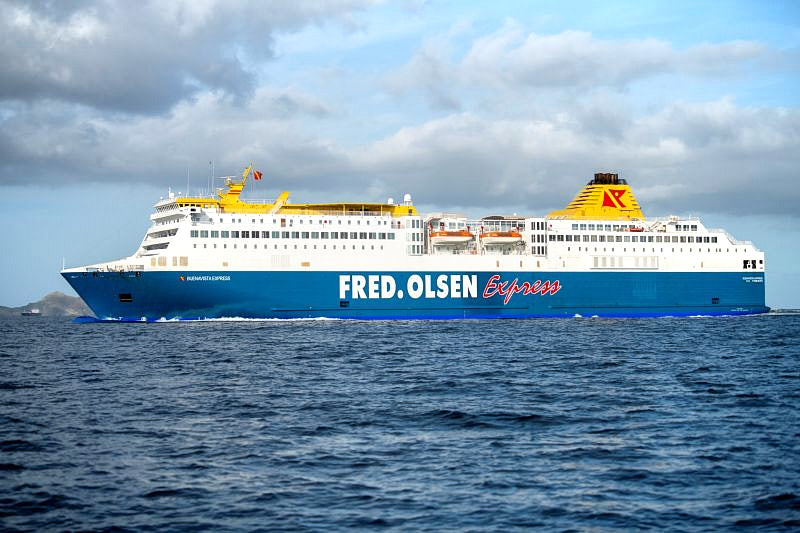
More than 9,000 passengers travelled on Fred. Olsen Express’ Huelva–Canary Islands service during June and July, almost 11% more than in the same period of 2025. The increase of around 600 travellers marks a record start to the summer season for the route.

The growth follows the refurbishment of BUENAVISTA EXPRESS, which now operates the service. The upgraded ferry offers enhanced public areas, restaurants and leisure facilities, creating a “mini-cruise” experience with amenities including a swimming pool, sun deck, sports bar, coworking space and high-speed Wi-Fi.

Fred. Olsen Express says the combination of improved onboard facilities, the ability to travel with a private vehicle and unrestricted luggage, and greater comfort for families and pet owners has driven demand. The company is also working with the Port of Huelva to further improve the passenger experience before embarkation.

The 33-hour service connects Santa Cruz de Tenerife, Las Palmas de Gran Canaria and Huelva, offering a range of seating and cabin options, including pet-friendly and accessible accommodation.
Torghatten Challenges Åland Ferry Procurement in Court

By 2026 Newsletter week 32

Ferry operator Torghatten has appealed the Åland Government’s procurement of the archipelago ferry services to Finland’s Market Court. The company argues that the tender requirements have been designed in a way that effectively leaves only one eligible bidder, and is seeking a judicial review of the procurement process. While the Åland Government is continuing negotiations with interested operators, no final contract can be awarded until the court has ruled. The appeal could delay the procurement by several months, potentially up to one year.

Torghatten is part of Nordic Ferry Infrastructure (NFI), which is controlled by EQT Infrastructure together with the Norwegian state-backed climate investment fund Nysnø Klimainvesteringer.

https://eqtgroup.com/about/current-portfolio/nordic-ferry-infrastructure

DFDS Adds Drammen Call to Norway–Belgium–UK Freight Route

By 2026 Newsletter week 32

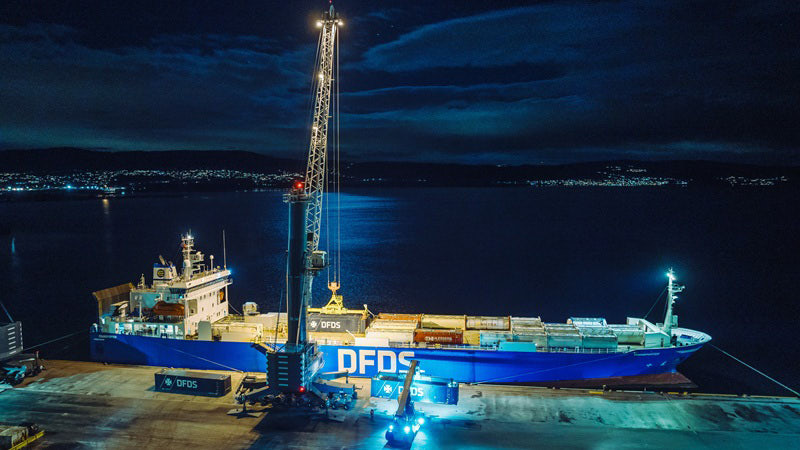
DFDS will expand its Norway–Belgium–UK freight service by adding Drammen as a weekly port of call from 17 August.

Located around 40 km south-east of Oslo, Drammen offers direct rail connections to Bergen and Trondheim, as well as strong road links across Eastern Norway. The new call is intended to strengthen DFDS’ presence in the Oslo region and provide shippers with improved access to the UK and Continental Europe.

The service will accommodate containers, trailers and heavy cargo, while combining ferry, road and rail transport as part of DFDS’ integrated logistics network.

DFDS will continue to serve Fredrikstad and Brevik, maintaining its existing Norwegian network alongside the new Drammen call.

Portsmouth Launches UK’s First Multi-Berth Shore Power System

By 2026 Newsletter week 32

Portsmouth International Port has commissioned the UK’s first multi-berth, multi-user, multi-frequency shore power system, enabling ferries and cruise ships to switch off their engines while alongside.

During the final testing phase, Brittany Ferries’ hybrid-electric ST MALO and GUILLAUME DE NORMANDIE became the first ferries to connect to the system. Cruise ships AIDAsol and AMERA also participated in the commissioning process.

The £24.4 million project, funded by £19.8 million from the UK Department for Transport and £4.6 million from Portsmouth City Council, will eventually allow up to three vessels to connect simultaneously. The port expects this capability to become operational later this year.

From 2027, the shore power installation is expected to reduce emissions by around 20,000 tonnes of CO₂e, supporting Portsmouth’s ambition to become the UK’s first zero-emission port by 2050.

Despite the milestone, Portsmouth International Port says electricity costs remain a challenge and is calling on the UK Government to make shore power more economically attractive for ports and shipping companies.

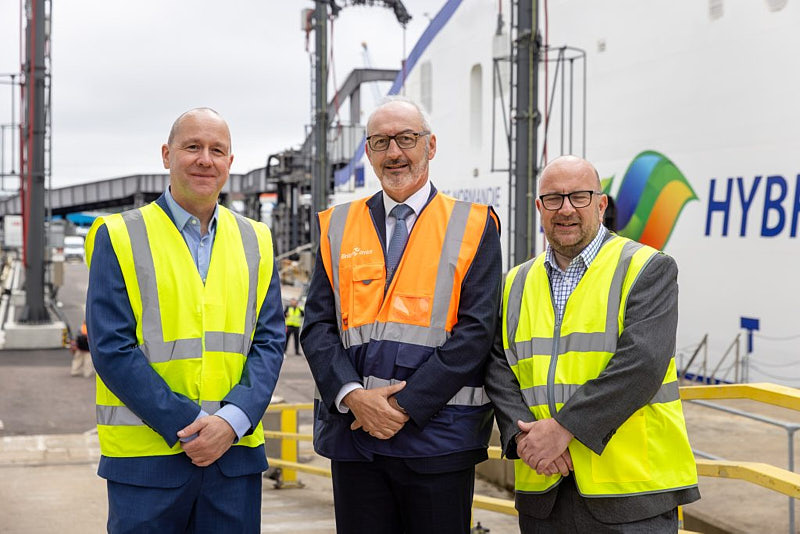
Pictured from left to right: Mike Sellers, Director of Portsmouth International Port; Christophe Mathieu, Chief Executive at Brittany Ferries; and Cllr Steve Pitt, Leader of Portsmouth City Council. Image credit: Portsmouth International Port

https://portsmouth-port.co.uk/news/its-electrifying-portsmouth-international-ports-shore-power-system-goes-live/

Corsica Ferry Traffic Up 14.4% in May

By 2026 Newsletter week 32

Ferry traffic to and from Corsica continued to grow in May 2026. A total of 363,400 ferry passengers travelled on the island’s maritime routes, an increase of 14.4% compared with May 2025. At the same time, 141,700 tourist vehicles were carried, up 13.5%, while maritime freight reached 174,400 tonnes, a modest 1.4% increase.

Corsica Ferries remained the dominant operator with 66% of all ferry passengers (around 240,000), followed by Corsica Linea with 14% (50,000). Moby Lines accounted for 10%, La Méridionale 6%, and Ichnusa Lines 5%.

Bastia was by far the busiest ferry port, handling 186,000 passengers (51%), ahead of Ajaccio with 85,000 (24%). L’Île-Rousse handled 29,000 (8%), Bonifacio 37,000 (10%), while Porto-Vecchio and Propriano accounted for the remainder. France represented 65% of ferry passenger traffic, with Italy accounting for the other 35%.

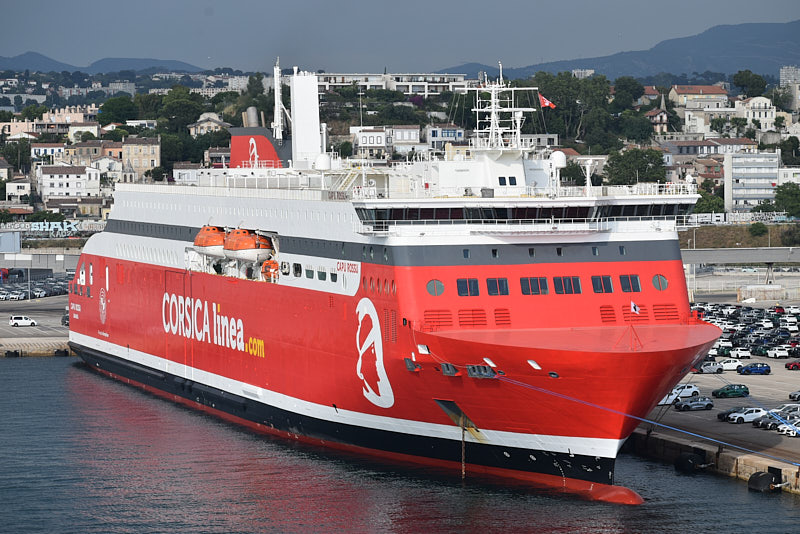
Photo: Matt Davies

GNV Launches New Italy–Algeria Route

By 2026 Newsletter week 32

GNV, part of the MSC Group, will launch a new direct ferry service between Civitavecchia and Annaba on 8 August.

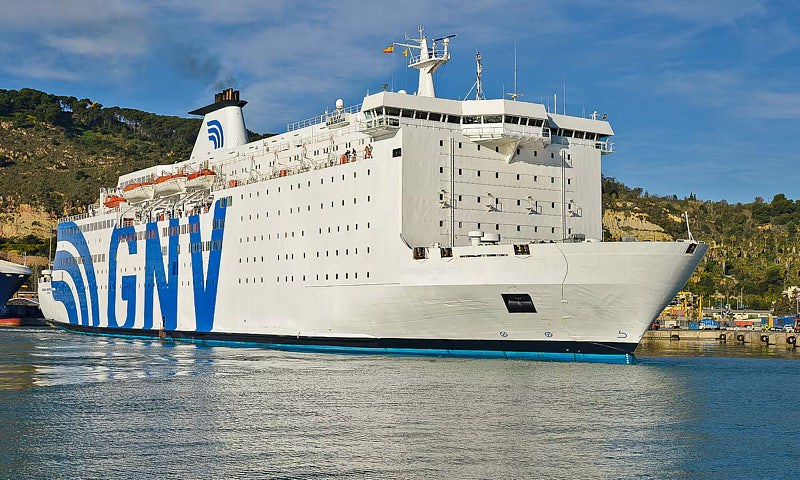
Vessel: GNV CRISTAL

The new route complements GNV’s existing services between Sète–Algiers and Sète–Bejaia, further strengthening the company’s presence in the Algerian market.

Cook Strait Ferry Infrastructure Programme Reaches Key Milestones

By 2026 Newsletter week 32

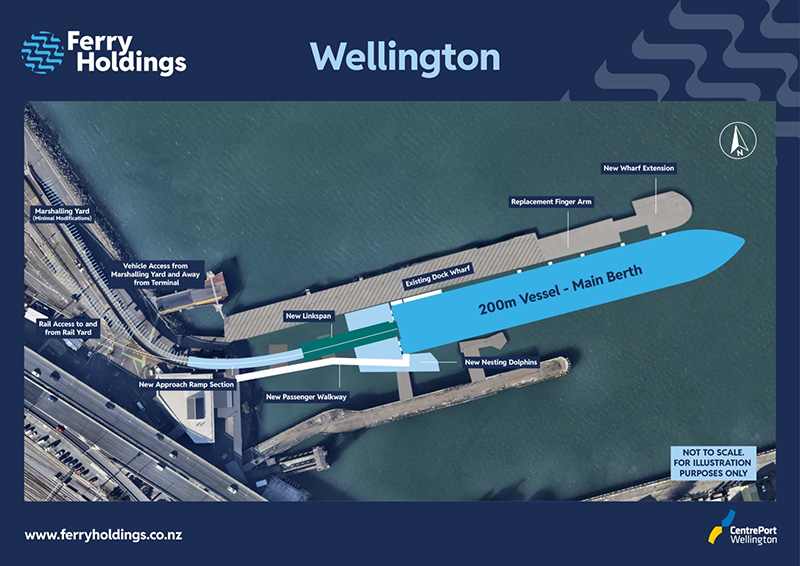
The Cook Strait Ferry Replacement Programme reached several key milestones in July, with infrastructure works advancing in both Wellington and Picton and major commercial agreements now in place to support the next phase of the project.

Ferry Holdings, CentrePort, Port Marlborough and KiwiRail have finalised the infrastructure scope, progressed detailed design and signed the agreements required to deliver the port infrastructure for the new rail-enabled ferries, which remain on track to enter service in 2029.

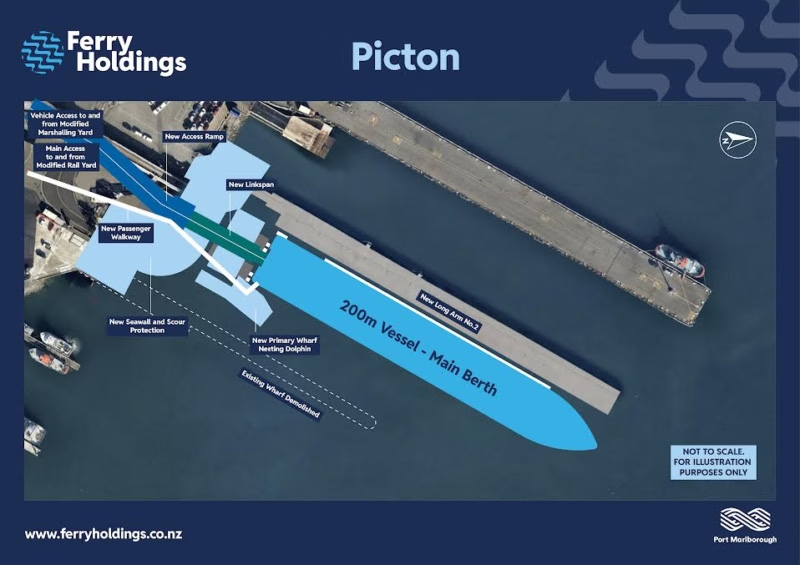
At Picton, Port Marlborough and Ferry Holdings are investing in a new wharf, linkspan, vehicle access bridge and passenger walkway, replacing ageing infrastructure while ensuring ferry services continue during construction.

At Wellington’s Kaiwharawhara terminal, CentrePort and Ferry Holdings are upgrading and reconfiguring existing facilities, with a strong focus on reusing existing infrastructure where possible.

Early construction works are now underway at both ports, with main construction due to begin later this month. A common rail- and road-capable linkspan design has been selected for both terminals, while procurement continues for major marine works, including berth piling in Picton and the Wellington wharf extension.

The combined upgrades will provide the infrastructure needed to support the next generation of Cook Strait ferries and strengthen the resilience of the link between New Zealand’s North and South Islands.

https://www.ferryholdings.co.nz/infrastructure-programme-progresses-as-delivery-milestones-reached/

Irish Ferries Parent ICG Agrees €1.2 Billion Management Buyout

By 2026 Newsletter week 31

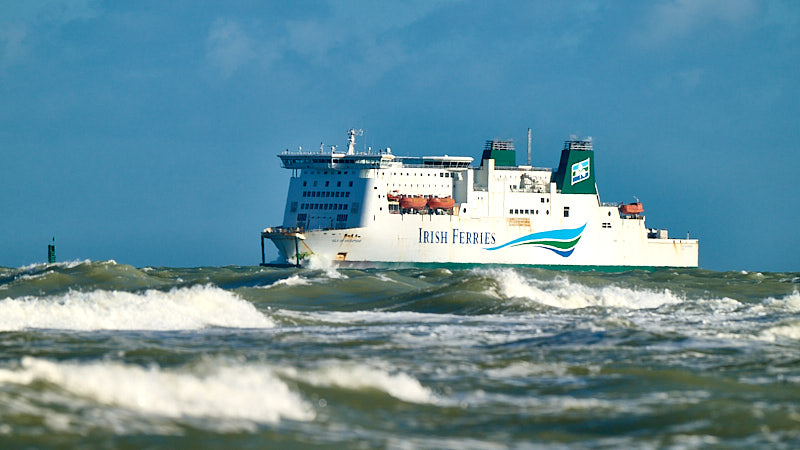
Irish Continental Group (ICG), the parent company of Irish Ferries, has agreed to a recommended management buyout valuing the company at approximately €1.2 billion.

A consortium led by CEO Eamonn Rothwell and three other senior executives has offered €8.00 per share in cash, a 28.2% premium to ICG’s closing share price on 24 July.

The independent board has unanimously recommended the offer, saying it delivers compelling value for shareholders. Rothwell said private ownership would better support ICG’s long-term development in an increasingly competitive and uncertain market.

The transaction remains subject to shareholder, regulatory and Irish High Court approval. Completion is expected in the fourth quarter of 2026.

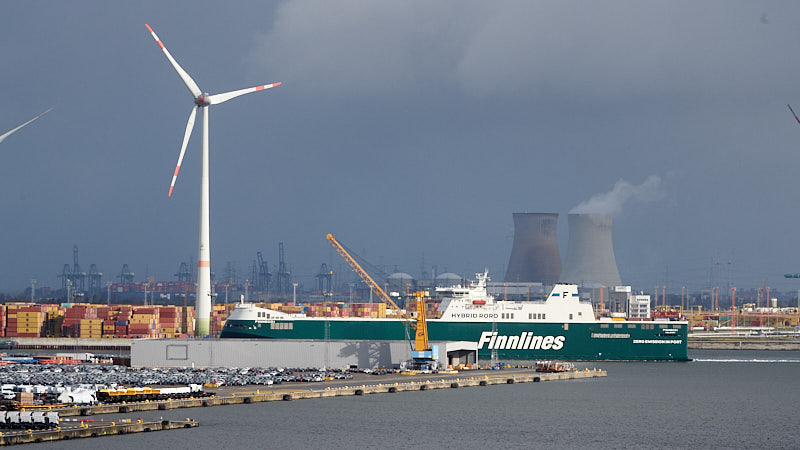
Finnlines Reports Stronger H1 Results Despite Volatile Market

By 2026 Newsletter week 31
  • Revenue increased to EUR 412.4 million (H1 2025: EUR 351.9 million).
  • EBIT rose to EUR 55.8 million (EUR 39.9 million).
  • EBT improved to EUR 51.2 million (EUR 33.8 million).
  • Transport volumes included:
  • 409,000 cargo units
  • 42,000 cars (excluding passengers’ cars)
  • 595,000 tonnes of non-unitised freight
  • 431,000 passengers and professional drivers

Finnlines says its investments in energy-efficient vessels, operational optimisation and the ability to use a diverse range of energy sources strengthened its resilience.

The company highlighted the impact of higher energy prices, geopolitical tensions and the 100% implementation of the EU ETS on operating costs during the first half of 2026.

CEO Thomas Doepel said the company’s strong financial position and long-term investment strategy helped deliver a solid performance despite a volatile operating environment.

Source: Finnlines, Financial Review January–June 2026.

https://www.finnlines.com/wp-content/uploads/2026/07/financial-review-q2_2026-eng.pdf