2021, an exceptional year for Port Boulogne Calais

By 2022 Newsletter week 5

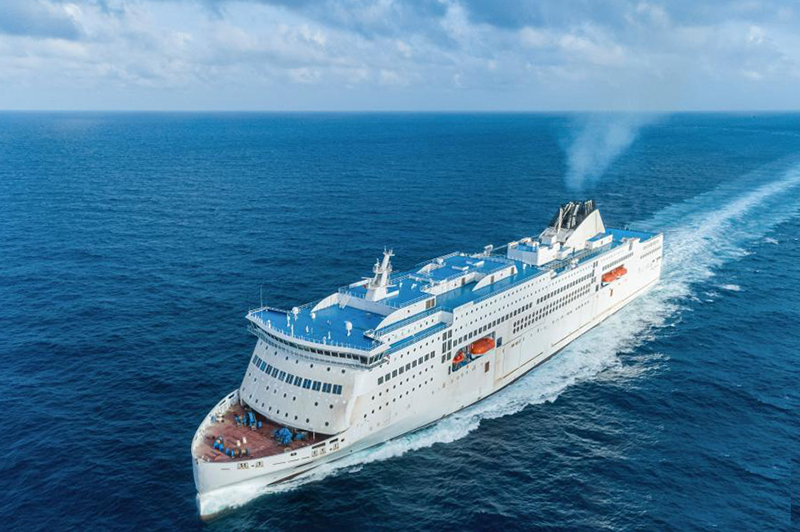
In 2021, Port Boulogne Calais experienced a very full year which could be
described as “extraordinary”:

  • the entry into force of Brexit and the United Kingdom’s exit from the Common Market
  • the COVID-19 health crisis
  • the arrival of a third cross-Channel company, Irish Ferries
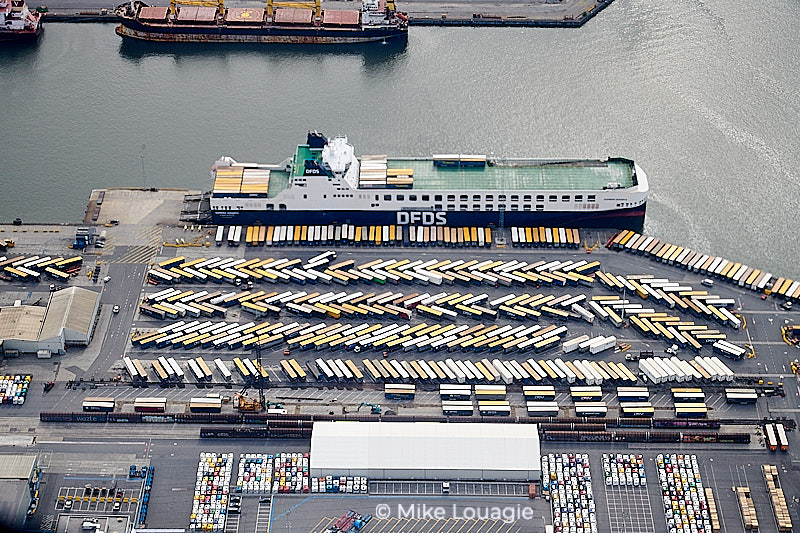
  • the start of the DFDS roro service Calais-Sheerness (temp. suspended in January 2022)
  • the opening of the new port of Calais which marks the completion of 6 years of work on the largest port site in Europe at the start of the century

Cross-Channel activity: 
-1.0% cargo 38,199,399 tonnes
-1.4% freight 1,638,695 units
-27% passengers 2,387,757
-42% passenger vehicles 248,217

Dublin Port sees full year impact of Brexit on unitised volumes

By 2022 Newsletter week 5

83% of Dublin Port’s volumes are in the RoRo and LoLo modes and there were contrasting outcomes in these two modes:

  • The number of RoRo units fell by -9.3% or 99,000 trailers
  • This was significantly offset by an increase in LoLo units of +10.2% or 43,000 containers
  • Overall unitised volumes (RoRo and LoLo combined) were down by -3.8% or 56,000 units

The full year impacts of Brexit on Dublin Port’s unitised volumes (RoRo and LoLo) are now clear:

  • The overall decline in the number of containers and trailers was small (-3.8%).
  • Fewer goods are now moving in trailers in the RoRo mode and more are moving in containers in the LoLo mode.  LoLo’s share of unitised volumes increased from 29% to 33%.
  • Fewer RoRo trailers are moving driver-accompanied.  During 2021, their number declined by 90,000, contributing substantially to the overall decline in RoRo volumes of 99,000.
  • The decline in RoRo volumes was concentrated on routes to the GB ports of Holyhead, Liverpool and Heysham where volumes declined by 187,000 (-21%) to 703,000.
  • However, RoRo volumes on direct routes to Continental Europe increased by 88,000 to 259,000.
  • As a result, where GB routes accounted for 64% of all of the 1.5 million unit loads (RoRo and LoLo combined) in 2020, they only accounted for 52% of the 1.4 million unit loads in 2021.

Record year for Belfast Harbour

By 2022 Newsletter week 5
  • Trade through Belfast Harbour has benefitted from an increase in global trade, the restart of domestic travel and cruise tourism and investment in new infrastructure projects during 2021.
  • +9% (25.6m tonnes handled)
  • +12% RoRo freight (almost 600k freight units), following significant investment in terminals and facilities and demonstrating the importance of Stena Line’s freight traffic routes to Scotland and England to the local economy.
  • +15% container traffic (highest level since 2008)
  • +69% ferry passengers (1.5 million people), with routes benefitting from the easing of travel restrictions and the growth in the ‘Staycation’ market.
  • Stena Line’s Belfast to Liverpool route proved particularly popular as over 400,000 passengers used the service in 2021, up over 150% on 2020 levels.

Source: Belfast Harbour

Port of Zeebrugge 2021: 4,6% growth and record-breaking volumes since 2010

By 2022 Newsletter week 5

In 2021 port of Zeebrugge realized a growth of 4.6% and the total handled tonnage just does not reach the cape of 50 million tons (49,169,915 total tonnage). Only the year 2010, with 49.6 million tons, precedes 2021 in the records.

With the container sector leading the way (+15.1%), all sectors except liquid bulk (-10.9%) posted positive results last year: RoRo +5.1%, Bulk +6.7%, Solid bulk +2%.

For the port of Zeebrugge whose largest trading partner is the United Kingdom, Brexit posed an unprecedented challenge.
The existing connections to Ireland proved to be an absolute asset in the pre-and post-Brexit era.
In 2021, Zeebrugge saw traffic volumes on the UK liner services decreasing by 4.1%.
In contrast, traffic volumes on Irish destinations were up 38.7%.

The other shortsea ro-ro destinations also showed good growth: Scandinavia +10.4%, Southern Europe +22.8%.

Container traffic experienced growth of 15.1% to a total volume of over 20.6 million tons or 2,205,457 TEUs. Both the handling of RoRo containers (+5.2%), LoLo (lift-on lift-off) containers +30.7%, and container volumes via estuary shipping (36.5%) are increasing.

Three candidates for the Greece – Cyprus line

By 2022 Newsletter week 5

The European tender for the selection of a Ferry Operator for the Greece – Cyprus line was successful. Three bids were submitted:

  • Scandro Holding Ltd (EUR 15,594,000)
  • N.RORO. Business Ties Ltd (EUR 14,100,000)
  • Kiara Naftiki Etairia (SeaJets)(EUR 16,500,000)

The evaluation committee will consider the proposals and they hope they have a result by the end of February.
The service will be offered on a weekly basis between April-May to September-October only as a seasonal service and have 22 return sailings annually on a limited service during peak periods.

The Cypriot government would include a subsidy of 5.5 million for a three-year contract (option for an extension for another three years).
The goal is to complete the procedure and start the line, after 21 years, next May.

Does Corsica need subsidies for the ferry services?

By 2022 Newsletter week 5

“The current Maritime Public Service Delegation (DSP) between Corsica and Marseille expires on December 31, 2022. The European Commission’s questioning of the very existence of the public service principle puts a sword of Damocles on the territorial continuity,” writes Corse Net Infos in a long article in French, quoting several political stakeholders (but not the ferry operators).

Some interesting elements, quotes, remarks of the debate:

  • Brussels does not see the need to subsidize a service which could very well be provided by private companies. Compensation is against the rules of the market and free competition.
  • Why is what is granted to other regions, such as Croatia or Greece, becoming problematic for Corsica?
  • A decision needs to be taken soon, because the new (multi-year) DSP should start on 1 January 2023.
  • Why only having Marseille as continental port? Toulon, Nice or even Livorno are closer to Corsica. Less fuel. Better utilization of ships.
  • The need to resolve the “painful legacy of the past”.
  • What sense does it make to have ‘market tests’ if the market is changing? (which it does)
  • Corsica, today, imports 90 to 95% from France. We want a system where Corsica is economically connected with Tuscany, Sardinia and Catalonia.

Damen Shipyards to build RoPax ferries for Penang Port Sdn. Bhd., Malaysia

By 2022 Newsletter week 5

Damen Shipyards has been contracted by Penang Port Sdn Bhd., Malaysia, to build up to five RoPax ferries to replace the current fleet that has reached its end of life.

They will operate on the ferry route that links the Malaysian Peninsula (Butterworth) with Penang Island and its city of George Town, Malaysia’s third largest, just a 10-minute journey away.

Designated the Damen Ferry 3508, the new class is designed to carry a maximum of 250 passengers both sitting and standing and 50 vehicles (scooters and motor bikes) in a mix of air-conditioned and open but sheltered areas.

DFDS: restated comparison figures for logistics business units

By 2022 Newsletter week 5

Following the completion of the acquisition of HSF Logistics Group, and consolidation of the company from 14 September 2021, the Logistics Division was, as previously announced, reorganised in two new business units: Dry Goods and Cold Chain.

The cold chain logistics activities embedded in DFDS’ three former Logistics business units – Nordic, Continent and UK & Ireland – were merged with the HSF Logistics Group to form the Cold Chain business unit. The remaining activities of the former business units are organised in Dry Goods.

Comparative figures for Q1-4 2020 and Q1-3 2021 for the new business units have been restated accordingly and are disclosed in the table below.