DFDS: Q2 performance better than expected

By 2023 Newsletter week 33

Read the Q2 2023 interim click on cover

“We have raised our outlook as we continued to deliver strong operational performance in Q2, and despite headwind in some regions, we achieved a result that was better than expected.”

Torben Carlsen, CEO DFDS

  • Q2 revenue decreased 3.2% to DKK 6.9bn but increased 2.5% adjusted for bunker surcharges, driven by higher passenger and logistics revenue.
  • Freight ferry revenue was below last year as lower volumes were partly offset by higher rates.
  • Q2 EBITDA decreased 5% to DKK 1,404m.
  • The freight ferry EBITDA of DKK 754m was 20% lower than last year as Q2 2022 earnings were boosted by elevated Channel earnings and exceptionally high levels of oil price spreads, that have now normalised. Moreover, Q2 2023 volumes were lower than last year.
  • The Q2 passenger EBITDA increased 28% to DKK 350m as results were improved across the route network.
  • Logistics Division’s EBITDA increased 26% to DKK 345m driven by acquisitions.

For the first half-year (H1), revenue increased 2% to DKK 13.3bn compared to the same period last year and H1 EBITDA increased 5% to DKK 2,413m. EBITDA was DKK 5,090m for the last twelve months (LTM, 2022-23).

 Outlook 2023
The EBITDA outlook is raised to DKK 4.8-5.2bn (previously DKK 4.5-5.0bn) following better than expected H1 financial performance. Revenue is overall still expected to remain at the same level as 2022.

The outlook is detailed on page 9 in the full report.

DFDS July volumes: freight closing in on last year, passengers up 9%

By 2023 Newsletter week 33

Ferry – freight

  • Total volumes in July 2023 were 7.2% below 2022. Volumes were 4.9% below 2022 adjusted for Channel.
  • North Sea volumes were robust on most routes but a slowdown in Swedish imports and a dip in fresh produce volumes to the UK due to weather conditions reduced overall volumes compared to 2022.
  • Mediterranean’s volumes were below last year as growth is being reduced by measures to curb inflation in Türkiye and European demand is stagnating.
  • Channel volumes were below 2022 which reflects the redistribution of market shares that took place in July 2022 in the wake of a ferry competitor’s suspension of sailings in 2022.
  • Baltic Sea market conditions are starting to become more comparable to 2022 as the war’s impact on volumes did not fully materialise in 2022 until after the summer. July volumes were still below last year.
  • For the last twelve months 2023-22, the total transported freight lane metres decreased 11.0% to 38.8m from 43.6m in 2022-21. The decrease was 4.3% adjusted for Channel.

Ferry – passenger

  • The number of passengers increased 9.3% driven by more passengers on the Channel and Baltic routes. The number of cars were up 3.8% due to primarily more cars on the Channel.
  • For the last twelve months 2023-22, the total number of passengers was 4.4m compared to 2.5m in 2022-21.

XRTC Report 2023 about the Hellenic Coastal Shipping

By 2023 Newsletter week 32

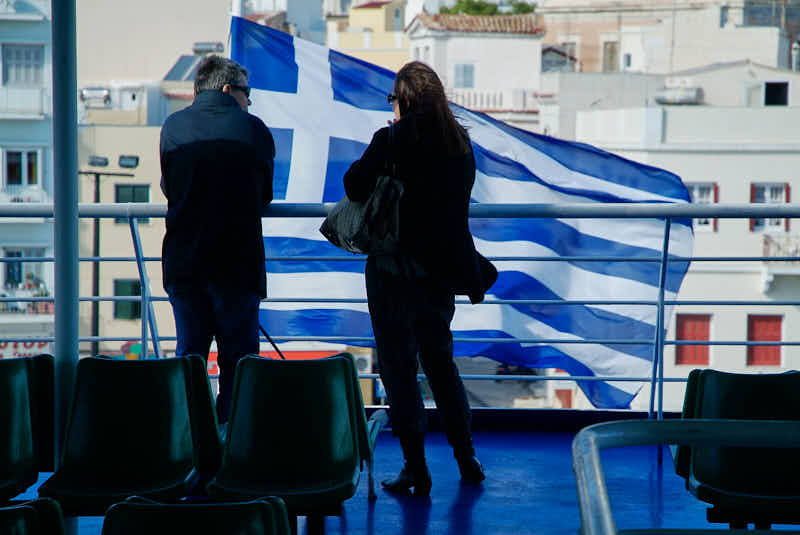
According to the recent annual report of XRTC, for the last 15 years, the Hellenic Coastal Shipping has been operating in a survival mode.

  • In the last fifteen years, the Hellenic Coastal Shipping has found itself in a trend of introversion, with fewer attempts to expand its activities, since the essential goal was to avoid bankruptcy and maintain the operational capabilities of the ferry companies. In that way it managed to maintain the cohesion of the Greek territory as well as the country’s connectivity with the European Union through the lines of the Adriatic Sea.
  • Passenger traffic in 2022 increased by 36% (17.5 million passengers), while the increase in vehicle traffic amounted to 12% (3.7 million vehicles).
  • The current situation within the Greek Ferry scene can be characterized as extremely worrying as in the last five years, the accumulated negative economic results are such that not only do not allow the renewal of the fleet, but also put limits in the viability of the ferry companies due to the successive economic, geopolitical, and health crisis.
  • This argument is being supported by both the EBITDA margin and revenue per ticket numbers that are steadily declining. The ferry operators’ EBITDA margin between the years 2018 and 2022 fluctuates steadily at 10%. In order for a ferry company to be able to carry out a fleet renewal investment program, the profit margin should be at least 25%. So, bearing in mind the fact that 86% of the Greek Coastal fleet that is currently in service are more than 20 years old, the task of a fleet renewal seems huge.
  • Currently, the renewal of the fleet should be carried out through newbuilding ships and not with second-hand ships of past technology. In that way, the recent ship purchases are disappointing considering that the ships entering the fleet are 40 or at least 30-year-old. That is not a very optimistic development bearing in mind that twenty years ago the Greek Ferry fleet was the most modern in Europe.
  • As far as the lack of satisfactory profitability is concerned, the report notes that the same weak conditions are those that impose to a large extent the pricing policies that have been followed during the last two years. Although they are unpopular, it is the only way for the ferry operators to cover their obligations towards employees, suppliers, ship maintainers or even the creditors of the fleet, avoiding unpleasant bankruptcy developments, which mainly have social effects (example NEL Lines, G.A. Ferries, Agoudimos Lines, SAOS Ferries etc).
  • These developments have led the Greek ferry market to an extreme concentration of the number of companies as well as to the creation of intense oligopolistic conditions, which may in the future lead to higher ticket prices and probably to increased social costs that will come up from the need to serve lines with reduced commercial interest.
  • One of the main challenges facing the Greek Ferry Scene is the aging of the fleet. The average age of the Greek Coastal Fleet is 28 years, which is however younger than the average age of the European Coastal Fleet!
  • The last Greek ferry fleet renewal period was completed in the mid-2000s. Since then, ferry operators did not proceed with the construction of newbuilding ships but replaced their older tonnage mainly with second-hand ships, as a result of the financial crisis and the lack of funding. However, the environmental regulations that are currently in force, no longer justify such incentives.
  • Greek Coastal market is called upon to find technical solutions for the construction of new environmentally friendly ships, but also significant funding.
  • The Hellenic Ministry of Shipping is proceeding with the planning and establishment of criteria for the replacement of coastal shipping vessels, with the aim of reducing gas emissions and the “green” transition of the fleet.
  • For that reason, it aims to create a private fund for the renewal of the coastal fleet, with the recruitment of a technical consultant through an international tender that will be financed by the Recovery Fund (RRF).
  • The biggest development within the Greek Ferry Scene is the Competition Committee’s official approval of the Attica Group – Anek Lines merger. The unified Attica group will leave behind the burdens of the past and will be able to move forward in the future.
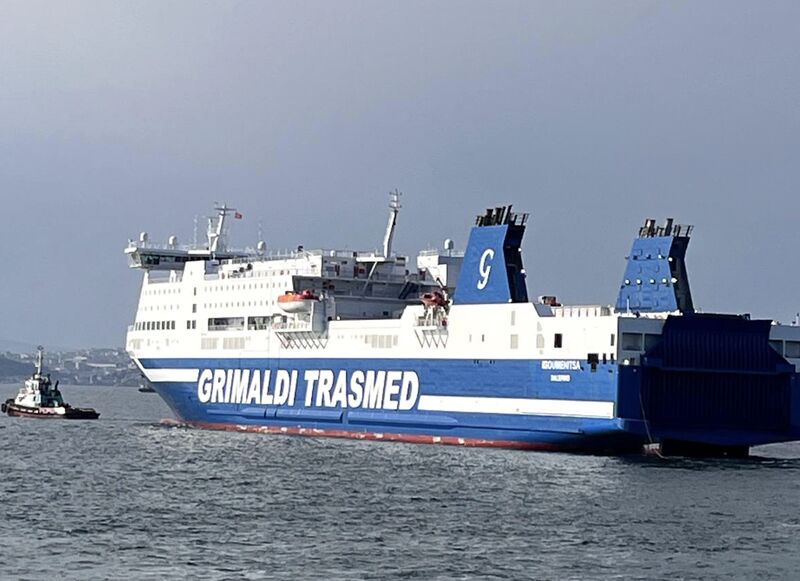
  • Greek Ferry Scene is led by two ferry companies that are among the 10 largest companies in the world and Europe, the Grimaldi Group and Attica-Group. However, there is a fragmentation in the domestic market, as it includes many single-vessel companies with old ships. Small ferry companies have difficulties to raise capital from commercial banks as well as being supported by foreign trade support organizations due to their small balance sheets.
  • All ferry companies will be forced and will have to implement modern management models adapted to ESG standards, in which emphasis must be given on corporate governance and transparency. The absence of this condition is a risk both for the market and society, while the responsibility does not fall only on the companies but also on the State.

Attica Group to absorb Anek Lines: official statement

By 2023 Newsletter week 32

Excerpt from the English-language press release from the Hellenic Competition Commission:

“The Plenary Session of the HCC (Hellenic Competition Commission) concluded that, although the merger may significantly restrict the operation of competition, in particular by creating or strengthening a dominant position, in the relevant markets for the provision of maritime transport services for passengers, cars and trucks in certain pairs of ports (Origin-Destination) in Crete and the Adriatic, the three conditions of the failing firm defence are fulfilled.

More specifically, the Competition Commission concluded that:

  1. a) ANEK would be forced to exit the market in the near future due to its financial difficulties,
  2. b) that there was no other alternative acquisition option, less harmful to competition, other than the notified concentration, and
  3. c) that there was no credible interest in acquiring the assets of ANEK and therefore the company’s assets would exit the market.

In any event, on the balance and the overall of the affected markets, the competitive structure will not be worse as a result of the merger than it would be in case of a non-liquidation of the company’s assets, and is therefore not causally related to it.”

Aegean Sea Lines ANEMOS made her debut in Greece

By 2023 Newsletter week 32

On August 5, 2023, Aegean Sea Lines’ ANEMOS (ex-ROSELLA) made her debut on the Piraeus – Western Cyclades line. The ship underwent a 5-month interior- and exterior renovation and eventually entered service on the Piraeus – Serifos – Sifnos – Milos and Piraeus – Sifnos – Ios – Santorini lines.

Photo: Kostas Papadopoulos

Seajets SPORADES STAR reassigned on the Inter-Cyclades service

By 2023 Newsletter week 32

On August 7, 2023, Seajets’ SPORADES STAR (ex-ST ELOI) replaced the HSC SUPERRUNNER JET on the Inter-Cyclades service.

The ship’s first sailing was from the Port of Lavrion to Kythnos – Kea and Syros.

Then she will perform, until August 26, 2023, the Syros – Tinos – Andros, Syros – Paros – Serifos – Sifnos – Kimolos – Milos and Syros – Paros – Naxos – Ios – Sikinos – Folegandros – Kimolos – Milos.

Photo: Kostas Papadopoulos

Godby Shipping sees a strong ro-ro market

By 2023 Newsletter week 32

“The ro-ro market is presently very strong with good rates,” is a quote on the news section of the Godby Shipping website.

Godby has announced charter contracts for the following vessels:

BALTIC BRIGHT: charter contract with Holmen Paper extended with one year, including an option for 2025. The ro-ro will continue transporting paper from Hallstavik and Norrköping in Sweden to Sheerness, United Kingdom.

The agreement with Holmen includes a substantial investment in fuel saving and emission reduction systems.

MISTRAL is presently on charter to Smyril Line until December 2023.

Directly after that, MISTRAL will be chartered to the Spanish ro-ro operator Suardiaz Shipping Lines. The intention is to use the vessel on Suardiaz’ new service between Vigo and Liverpool.

Before the new charter, will go through a five-year class renewal docking including installation of systems for increasing the energy efficiency of the vessel and painting with low-friction hull paint.

The charter contract is including options for a period of up to three years.


MIMER: CMA CGM has extended the contract until December 2024. MIMER – and before that the sister vessel MIDAS – has been running the Leeward Island (Caribbean) traffic for CMA CGM continuously since April 2012.

The fleet situation is as follows:

MIDAS TransProCon December 2023
MIMER CMA CGM December 2024
MISTRAL Smyril

Suardiaz

December 2023 +

max until December 2026

BALTIC BRIGHT Holmen December 2024 + option 2025
LYSVIK and LYSBRIS DFDS December 2024 + options 2030
MISANA and MISIDA Sea-Cargo December 2026 + option 2031


For more information, read Godby Shipping’s Flaskposten (messages in a bottle)

Record-Breaking Summer for Wasaline

By 2023 Newsletter week 32

Wasaline continues to show record figures in traffic between Vaasa (Finland) and Umeå (Sweden).

Up: passenger and vehicle volumes.

Down: freight volumes, due to the economic downturn.

+7% passengers (67,029) in July 2023

+12.5% passengers in H1, 2023

+16.4% cars (17,625) in July 2023

+28.2% buses (50) in July 2023

-14.4% cargo lane metres (26,188) in July 2023

“We are very satisfied with the summer so far, and the booking status for August looks promising as well,” says Peter Ståhlberg, Managing Director of Wasaline.