Townsend Thoresen veteran STAR N sold for scrap to Turkey

By | 2023 Newsletter week 13 | No Comments

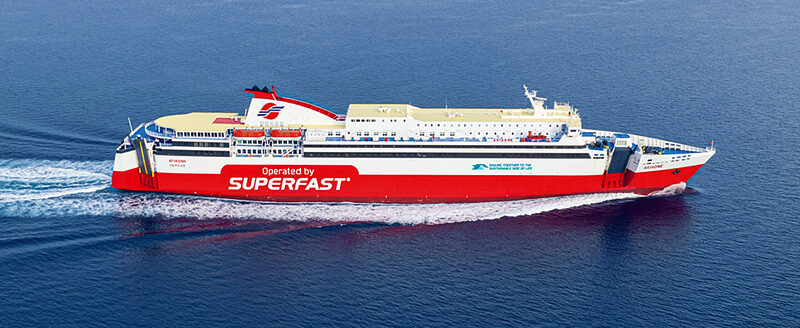
On 21 March 2023, passenger ferry STAR N (ex RED STAR 1, GABRIEL SCOTT, SAGAFJORD, SANDEFJORD, FENNO STAR, SCANDINAVIA, TERJE VIGEN, VIKING III) of the Ukrainian Sea Star Ferries, was arrived at Aliaga for recycling.

The 57-year-old ship served on the Brindisi-Valona/Brindisi-Igoumenitsa-Zakynthos route from 2007 to 2021 on behalf of Red Star Ferries, Sea Med and Star Lines as the RED STAR 1.

She was built in Germany in 1965 as the VIKING III and had a quite impressive career, serving on behalf of Townsend Thoresen Car Ferries, Da-No Linjen, KG Line, Jakob Line, Scandi Line, Color Line and Saga Line before coming in the Adriatic service. She was laid up in the port of Tripoli (Libya) since 26 December 2022.

Photo: Marine Traffic (Altay Alan)

How expensive is ferry travel? FerryGoGo found out

By | 2023 Newsletter week 13 | No Comments

With summer approaching, FerryGoGo has investigated the prices for ferry crossings in the high season.

FerryGoGo is a ferry travel, route comparison guide and booking engine.

Ferries are an excellent alternative to flying and increasingly expensive rental cars. This study examined the costs of a ferry crossing to various holiday destinations in the high season.

Since ferry crossings are difficult to compare and prices are often dynamic, this study explicitly looked at the price for a crossing with two people and a car during the high season (1 to 8 July) and calculated the cost per km/mile.

FerryGoGo selected all prices between 15 and 17 March 2023.

Based on the data, here are some conclusions:

  • For longer international crossings with a cabin for two people and a car in high season (1 to 8 July), you pay an average of €1,061. That average is €0.97 per km.
  • For shorter international crossings (<150 km), you will pay a lot more per km: €2.36 on average.
  • The study’s most expensive international short crossing is from Helsingør to Helsingborg or vice versa at €11.60 per km. The alternative, the Öresundbridge between Copenhagen and Malmö, is even a bit more expensive.
  • If you look at the long night crossings, the Trelleborg ferries from Rostock and the ferry from Liverpool to Dublin and vice versa are among the most expensive.
  • The crossings from Cairnryan to Larne and Fishguard to Rosslare are also quite expensive, while Calais to Dover, Dunkirk-Dover, and Holyhead-Dublin ferries are a lot cheaper by cost per km.

Prices for a return ferry ticket to popular destinations in total & price per km in the peak season (long routes > 150 km)

Prices for a return ferry ticket, and price per km in the peak season (short routes < 150 km)

The first all-electric River Tagus ferry has been delivered

By | 2023 Newsletter week 13 | No Comments
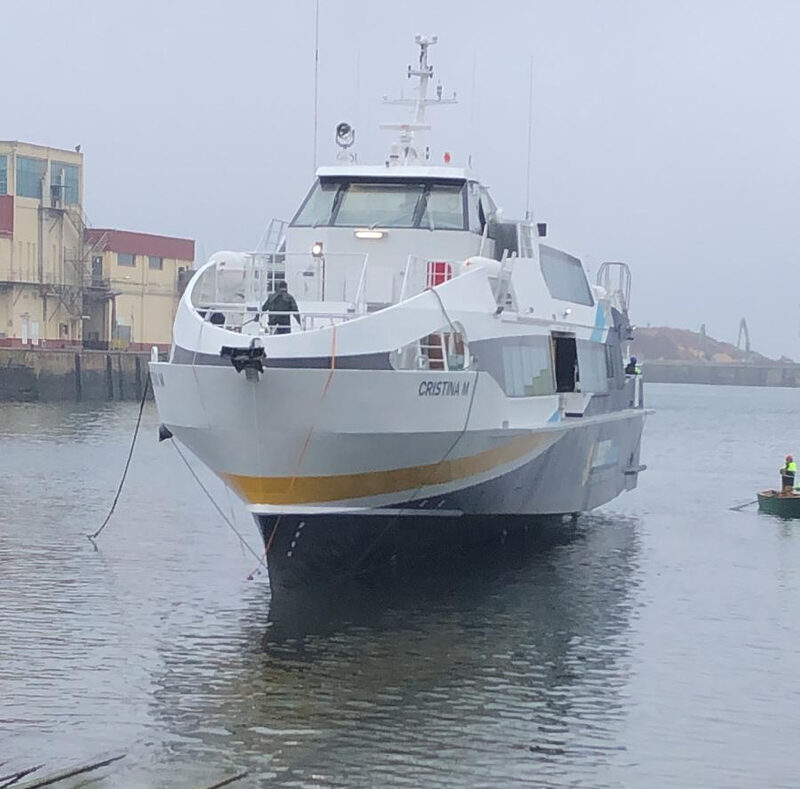
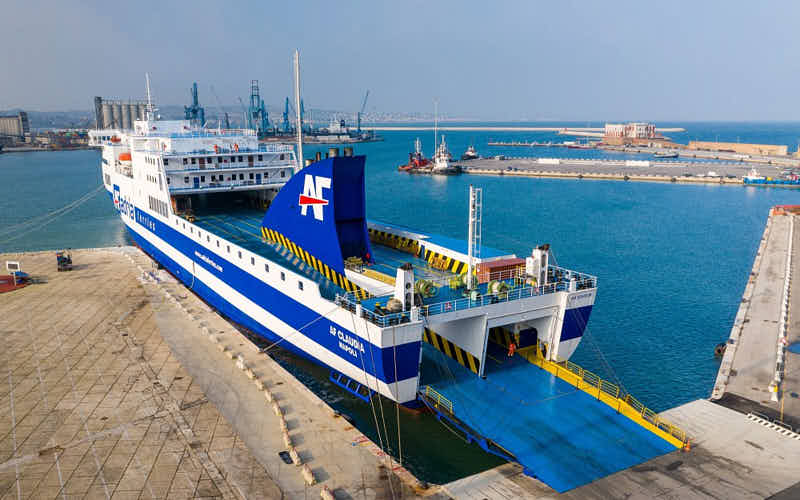
  • Lisbon’s debut all-electric ferry, equipped with ABB’s power solution has been delivered by shipyard Astilleros Gondán to urban transport provider Transtejo.
  • Environmentally-friendly operations along the Tagus river will transform metropolitan commuting in Portugal’s capital city.
  • The new fleet will play an integral role in delivering Portugal’s goal of carbon neutrality by 2050
  • The 40-meter, 540-passenger vessels will also improve passenger comfort and reduce operational and maintenance costs.

Gotlandsbolaget published its annual report

By | 2023 Newsletter week 12 | No Comments

January-December 2022:

  • Revenues SEK 2,918.8 million (2,336.5)
  • The increase is due to increased traffic revenue for Destination Gotland, new revenue for Hansa Destinations and an improved product tank market.
  • The costs amounted to -3,048.2 MSEK (-2,212.6).
  • Increased costs during the year are mainly due to higher fuel prices for Destination Gotland and Hansa Destinations.
  • Adjusted operating profit amounted to SEK -129.4 million (123.9), corresponding to SEK -51.8 (49.6) per share.
  • The total adjusted operating profit for the companies that operate ferry traffic (Destination Gotland AB and Hansa Destination AB) amounted to -417.2 MSEK (122.9).
  • In terms of fuel, Destination Gotland gradually carried out a temporary fuel change from LNG to MGO. The company intends to return to LNG and biogas as soon as the price picture permits, and the origin of the gas can be ensured (= non-Russian).
  • Long-term goal remains firm: Gotlandstrafiken’s carbon dioxide emissions must be reduced by 70% in 2030 (compared to 2010) and be climate neutral by 2045.
  • To reach climate goals, the company is developing the next generation of ships – the Horizon series, which will be powered by hydrogen gas. The goal is that at least one of the ships must be in service by 2030 at the latest.

Click on image to view PDF

European Green Deal: Agreement reached on cutting maritime transport emissions by promoting sustainable fuels for shipping

By | 2023 Newsletter week 12 | No Comments

Thursday 23 March 2023, co-legislators agreed on FuelEU Maritime – a new EU regulation ensuring that the greenhouse gas intensity of fuels used by the shipping sector will gradually decrease over time, by 2% in 2025 to as much as 80% by 2050.

This measure will help reduce greenhouse gas emissions from the shipping sector by promoting the use of cleaner fuels and energy. [source: European Commission]

FuelEU Maritime will help decarbonise the maritime transport sector by setting maximum limits on the yearly greenhouse gas intensity of the energy used by a ship. The targets cover not only CO2, but also methane and nitrous oxide emissions over the full lifecycle of the fuels.

The new rules also introduce an additional zero-emission requirement at berth, mandating the use of on-shore power supply (OPS) or alternative zero-emission technologies in ports by passenger ships and containerships, with a view to mitigating air pollution emissions in ports, which are often close to densely populated areas.

FuelEU Maritime takes a goal-based and technology-neutral approach, allowing for innovation and the development of new fuel technologies to meet future needs, and offering operators the freedom to decide which to use based on ship-specific or operation-specific profiles.

The Regulation also provides for a voluntary pooling mechanism. Under this scheme, ships will be allowed to pool their compliance balance with one or more other ships. Thus, it will be the pool as a whole that has to meet the greenhouse gas intensity limits on average.