ELO Becomes Mandatory for UK–EU RoRo Traffic on 20 April

By 2026 Newsletter week 13

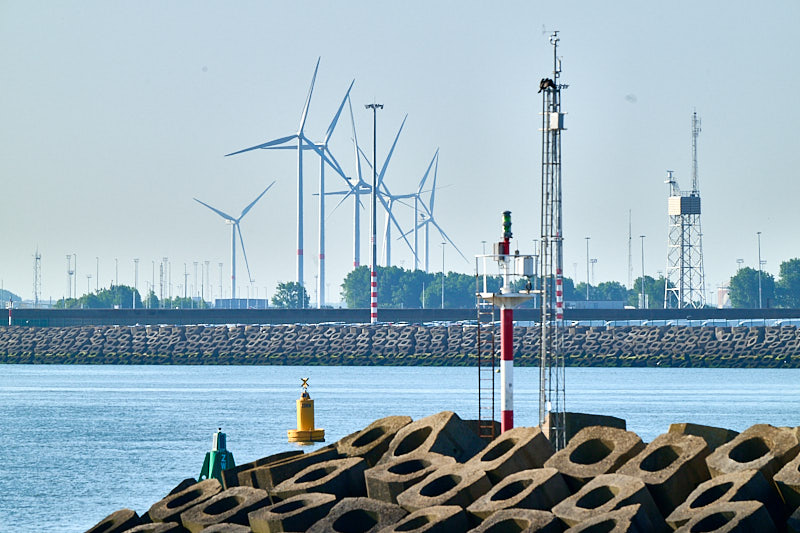
From 20 April 2026, the Obligatory Logistics Envelope (ELO – Enveloppe Logistique Obligatoire) becomes mandatory for all RoRo shipments crossing the Smart Border between the UK and the EU.

ELO is a digital system that consolidates all customs and transport data into a single barcode per truck—whether loaded or empty. This barcode is scanned at the border, allowing authorities to instantly access all required declarations for imports, exports, and transit movements.

For RoRo operators, the impact is significant:

  • One barcode replaces multiple documents
  • Faster processing at terminals
  • Reduced risk of delays due to missing data

In short, ELO is designed to keep high-frequency RoRo traffic flowing efficiently while ensuring full compliance with border formalities.

More details: https://www.douane.gouv.fr/fiche/obligatory-logistics-envelope-elo-key-transition-roro-trade-united-kingdom

Norway: Multi-Operator Ferry Ticket Portal Launched

By 2026 Newsletter week 13
  • Mobitech launches Osinos, a unified ticket portal for multiple ferry operators and merchants
  • Eliminates third-party distributors, enabling direct sales and instant payments
  • Already used by Fjord1 and Torghatten on several busy crossings

The platform simplifies ticketing for Norway’s fragmented RoRo ferry network and aims to improve both customer experience and operator efficiency.

France Warns of Port Disruption Risk from EES Rollout

By 2026 Newsletter week 13
  • French ports and shipowners warn EES system not operational ahead of 10 April launch
  • Risk of congestion, delays, and degraded passenger experience during peak season
  • System seen as poorly adapted to ferry flows, especially passengers travelling with vehicles

Armateurs de France and the Union des Ports de France call for urgent talks with authorities to avoid disruption at port border crossings.

Source: Open letter (in French)

Fjord Line Strengthens Finances and Appoints New CEO

By 2026 Newsletter week 13
  • Owners Kontrari and West Coast Invest take full control and inject new equity
  • Green transition loan secured via DNB and Eksfin
  • Brian Thorsted Hansen to step down as CEO on 1 July 2026; Heidi Nag Flikka to succeed

The refinancing strengthens Fjord Line’s financial platform and supports further emission reduction initiatives.

Heidi Nag Flikka, a board member since 2020 and former CFO (2019–2020), joins from Flekkefjord Sparebank. She brings experience from finance, marine and offshore sectors, including AF Gruppen and SpareBank1 SR-Bank.

Fjord Line positions itself for its next phase following years of modernisation and efficiency improvements, reinforcing its role as Norway’s second-largest international ferry operator.

Read More 

DFDS CEO Steps Down, Interim CEO Appointed

By 2026 Newsletter week 13
  • Torben Carlsen to step down as CEO on 17 April 2026
  • CFO Karen Dyrskjøt Boesen appointed Interim CEO from 18 April
  • Incoming CEO Michael Hansen to join on 1 July 2026

The succession process, launched in November 2025, is being accelerated as DFDS reports improving financial performance into early 2026.

Isle Of Man Steam Packet Reports Higher Revenue, Lower Profit In 2024

By 2026 Newsletter week 12

The Isle of Man Steam Packet Company reported higher revenue and traffic in 2024, but lower profits due to rising costs.

  • Revenue increased to £87.1 million, up from £77.9 million.
  • Profit attributable to shareholders fell to £10.5 million (2023: £11.7 million).
  • Group profit declined to £6.8 million (2023: £8 million).

Passenger numbers reached 630,279, the highest level since 2007 (+1.2%).

  • Passenger ticket revenue rose 6.8%.
  • On-board and ancillary income increased 12%.
  • Freight revenue grew 19%, driven by higher import volumes.

The introduction of MANXMAN supported both passenger and freight growth, offering increased capacity and upgraded onboard facilities.

Costs, however, weighed on performance:

  • Operating profit fell to £9.7 million (-8%).
  • Group operating profit declined to £7.2 million (-9.9%).
  • Drivers included higher operating costs, full-year depreciation of MANXMAN, and a £2.2 million impairment on ARROW.

Financial position improved:

  • Net debt reduced to £114.7 million (from £126.7 million).

Looking ahead, fleet renewal remains a key issue:

  • The fast craft MANANNAN is due for replacement by 31 December 2026 under the Sea Services Agreement.
  • The company is seeking an extension to align replacement with environmental and customer requirements.

Attica Group: Fleet Renewal Programme Is in Full Swing

By 2026 Newsletter week 12

Attica Group announced its fleet renewal program which is currently in progress. Three younger ships will join the fleet, six older ships will leave Attica Group.

Attica Group will purchase two Aero Highspeed Catamaran vessels from China: MEI ZHU HU and JIN ZHU HU (Brødrene Aa 2016 and 2017).

They will replace FLYING CAT 3, 4, 5 and 6 on the Saronic Service as the AERO HIGHSPEED 4 and 5. (brand: Hellenic Seaways)

SeaJets has agreed to buy five fast ferries from Attica Group (FLYING CAT 3, 4, 5 and 6, and HIGHSPEED 4) for EUR 25 million. The four Flying Cats have been operating on the Argosaronic Gulf routes, while HIGHSPEED 4 was operating every summer season on the Cyclades routes.

Five-year bareboat charter agreed for RoPax GNV BRIDGE, with a contractual purchase obligation. The ship, to be renamed SUPERFAST V, is expected in May 2026 and will replace LEFKA ORI (1987) on Adriatic services.

RoPax KYDON (1990) will be bareboat chartered. An agreement has been signed with an unknown company for a four-year charter and a contractual purchase obligation at the end of the period.

Together with two E-FLEXER vessels due in 2027, the Adriatic fleet’s average age will drop to 8.6 years.

BJARKØY Delivered to Torghatten Nord for Fully Electric Operations in Northern Norway

By 2026 Newsletter week 12

The ferry BJARKØY has been officially delivered from Remontowa Shipbuilding S.A. to Torghatten Nord AS, marking another step in Norway’s transition towards low-emission ferry transport.

The vessel is based on The Norwegian Ship Design Company’s NSD 50CFe design, developed with a strong focus on energy efficiency and reduced emissions. It is tailored for operations on the Stornes–Bjørnerå route in Northern Norway.

Key specifications:

  • Capacity: 50 vehicles and 149 passengers
  • Propulsion: Two azimuth thrusters
  • Energy system: Battery capacity of approx. 2.3 MWh
  • Backup: Two diesel generators

In normal service, BJARKØY will operate fully electric. The vessel will recharge via shore power during loading and unloading, an approach well suited to the short 12-minute crossings on its route. Diesel generators provide redundancy, ensuring operational reliability when required.

Photo: Portal Morski via The Norwegian Ship Design Company on Linkedin

CMAL Selects GSI For Northern Isles Freight Flex Ferries

By 2026 Newsletter week 12

Caledonian Maritime Assets Limited (CMAL) intends to award a contract to Guangzhou Shipyard International Co., Ltd (GSI), China. A mandatory 10-day standstill period is now underway.

The contract covers two 140m freight flex ferries. These vessels will replace HELLAR and HILDASAY on services operated by Serco NorthLink Ferries.

Key features:

  • Increased freight capacity
  • Higher operating speeds
  • Space for up to 200 passengers during peak periods

Fiona Hyslop, Cabinet Secretary for Transport, said the project marks an important milestone. She highlighted:

  • Improved freight and passenger capacity
  • Faster crossings
  • Greater reliability for Northern Isles communities and businesses

Kevin Hobbs, CEO CMAL, said GSI demonstrated strong innovation and efficiency. He added that the yard meets recognised environmental and safety standards.

The vessels have been designed by Navalue and LMG Marin.

BC Ferries Launches 10th Island Class Vessel

By 2026 Newsletter week 12

BC Ferries has launched ISLAND K’ASA, the final vessel in the current Island Class series, at Damen Shipyards Galați.

The ferry will enter service in early 2027 on the Campbell River – Quadra Island route. Once all four newbuilds are delivered, the Island Class will total 10 vessels, becoming BC Ferries’ largest class.

The ships offer significant capacity gains versus 2019:

  • +71% vehicles
  • +135% passengers

They feature hybrid-electric propulsion and are designed for future full-electric operation.

The programme is part of BC Ferries’ broader fleet renewal, with eight new vessels due between 2026 and 2031.

From left to right:

Katarzyna Zaluska (Kasia), Richard Tijpens, Jeroen de Smidt, Marian Stahuliak, Dragos Cojocariu, Ryan Tuira, David Tolman, Sebastian Fritz, Leo Postma, Darren Wilson, Darryl Dunbar, and Stefan Barbuta.

Photo: BC Ferries on Linkedin