A-Ships Management Sells GALAXY

By 2026 Newsletter week 21

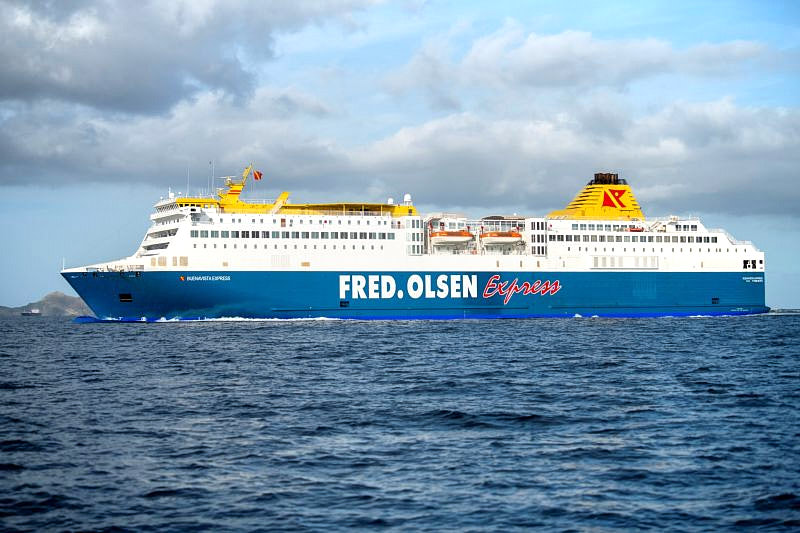
On 6 May 2026, A-Ships Management’s ferry GALAXY (ex-SILESIA, FELICIA, YUZHNAYA PALMYRA, BEGONA DEL MAR, ADRIATICA I) left Piraeus for Port Said.

According to available information, the ship has been sold to Sea Connection Maritime S.A., based in the Marshall Islands, and is expected to be delivered to her new owners in Jeddah. She has been renamed GALA and reflagged to Comoros.

GALAXY had been operated by A-Ships Management since 2016.

Built in Poland in 1979, the vessel can carry 900 passengers and 260 cars. Service speed is 20 knots.

Photo: Avraam Iliadis

ANDROS KING Arrives at the Port of Rafina

By 2026 Newsletter week 21

On 17 May 2026, Golden Star Ferries’ recently acquired ANDROS KING (ex-VOLCÁN DE TABURIENTE) made her debut at the port of Rafina after a 19-month extensive conversion and renovation at the Perama repair zone.

The vessel was purchased from Spain’s Armas in July 2024 and will enter service on the Rafina – Andros – Tinos – Mykonos route on May 25.

Built in Spain by Barreras in 2006, the vessel can carry 1,400 passengers and 310 cars. Service speed is 23 knots.

Photo: Kostas Papadopoulos

Kongsberg Maritime Sees Strong Potential for Fully Electric RoPax Vessels

By 2026 Newsletter week 21

A new study by Kongsberg Maritime identifies several European ferry routes where fully electric RoPax vessels could become commercially viable.

Routes such as Dover–Calais and Tallinn–Helsinki stand out due to their short distances, high frequency and favourable port conditions.

The study estimates that electric RoPax vessels entering service between 2030 and 2040 could achieve 8% to 15% lower lifetime costs than diesel-powered ships, with operating costs reduced by 20% to 27%.

Kongsberg Maritime has developed two concept designs, both more than 200 metres long, featuring modular battery rooms, intelligent energy management, and automated docking and crossing systems.

The study notes that charging infrastructure remains a challenge, but concludes that full electrification is becoming technically and commercially viable on a growing number of European routes.

Source: https://www.mynewsdesk.com/uk/kongsberg-maritime/pressreleases/kongsberg-maritime-study-highlights-strong-potential-for-fully-electric-ropax-vessels-across-key-european-routes-3448815

Corvus Energy and BYD Energy Storage Strengthen Partnership on Next-Generation Marine Batteries

By 2026 Newsletter week 21

Corvus Energy and BYD Energy Storage have signed a Strategic Cooperation Agreement (SCA) to accelerate the development of next-generation marine battery systems.

The agreement builds on a Memorandum of Understanding signed in December 2025 and formalises the next phase of cooperation between the two companies.

The partnership combines Corvus Energy’s expertise in marine battery integration with BYD Energy Storage’s large-scale battery cell production capabilities. The focus will be on developing low-cost, safe and reliable lithium iron phosphate (LFP) battery systems for demanding maritime applications.

The companies will collaborate on technology development, certification and large-scale deployment of high-rate marine battery systems for the global market.

According to Corvus Energy, the cooperation aims to reduce system costs while maintaining high safety and performance standards for the maritime sector.

Picture Caption: Picture from the signing ceremony for the strategic cooperation agreement held at the CIBF exhibition in Shenzhen Marintec China. Yin Xueqin, General Manager of BYD Energy Storage and New Application Battery Division; Jiang Yufeng, Director of the New Battery Product Line; and Dr. Lars Ole Valoen, Chief Technology Officer of Corvus Energy AS, witnessed the ceremony. Wang Hongbo, Deputy Principal of BYD Energy Storage New Battery Product Line, and Geir Holberg, Vice President of Procurement at Corvus Energy AS, signed the agreement on behalf of their respective companies.

Auramarine to Supply Methanol Fuel Systems for Grimaldi’s New RoPax Vessels

By 2026 Newsletter week 21

Auramarine has been selected to supply methanol fuel supply systems for six new RoPax vessels ordered by the Grimaldi Group from China Merchants Jinling Shipyard (Weihai).

The vessels will operate in the Mediterranean under the Grimaldi Lines and Minoan Lines brands. They will be equipped with engines capable of running on methanol, supporting the group’s net-zero ambitions.

Auramarine will deliver complete methanol fuel supply systems for all six vessels, covering safe and efficient fuel handling from bunkering to the main engine. The scope also includes control and emergency shutdown (ESD) automation.

In addition, Auramarine will supply conventional fuel systems for the main and auxiliary engines, allowing the dual-fuel vessels to operate on HFO, MGO and biofuels.

Competition Continues to Increase on Ireland – Continent

By 2026 Newsletter week 21

Finnlines is strengthening its Rosslare–Zeebrugge service with the addition of the LISMORE, which will join FINNWAVE from Week 22. The vessel will be chartered from P&O Ferries for weekend sailings. During the rest of the week, LISMORE will continue to operate on P&O Ferries’ Zeebrugge–Tilbury route.

LISMORE offers 4,076 lane metres of freight capacity, while FINNWAVE provides 4,192 lane metres. Both vessels can carry around 260 trailers and accommodate up to 12 drivers.

What Happened Before?

Two Weeks Ago: Hibernia Line officially announced a new freight and passenger service between Ringaskiddy and Boulogne-sur-Mer.  The two-vessel service will provide six weekly round trips.

End of March: DFDS announced that it will add a third vessel to its Rosslare–Dunkirk route from September. This will increase the schedule to seven weekly round trips, offering more freight capacity and additional passenger options.

In February, CLdN announced the acquisition of Samskip’s UK and Ireland door-to-door and quay-to-quay operations. Subject to regulatory approval, the deal will add dedicated container connections to Waterford and Belfast, as well as additional sailings to Dublin and Cork.

May 2025: Irish Ferries moved ISLE OF INISHEER to permanently serve the Dublin – Cherbourg route alongside WB YEATS.  Up to 7 roundtrips per week offered.

September 2025: Brittany Ferries increased their Rosslare – Cherbourg schedule from 5 to 7 return trips per week following the end of Stena Line’s 3 weekly roundtrips on the same route.

New Player Emerges on Corsica–Italy Ferry Links

By 2026 Newsletter week 21

A new high-speed ferry operator, Cors’Express, plans to launch services between Corsica and Italy next summer, offering crossing times between two hours and 3 hours 15 minutes.

The project is led by Bastia-based entrepreneur Vincent Lucchini through newly created company Cors’Express. Services from Bastia will be operated by the hydrofoil CALYPSO, acquired from Liberty Lines.

The 32-metre vessel can carry up to 220 passengers. The exact Italian ports have not yet been disclosed.

According to local media reports, the launch is planned for the second half of July or early August. The vessel is currently being prepared at Liberty Lines’ shipyard in Trapani and is expected to arrive in Bastia in late June or early July.

Cors’Express aims to operate year-round services, including during winter, with up to four sailings per week, subject to weather conditions. A meteorological study commissioned by the company reportedly concluded that 94% to 97% of crossings could be maintained throughout the year.

Port Boulogne Calais Reinforces Regional Electrification Strategy

By 2026 Newsletter week 20, 2026 Newsletter week 21

Port Boulogne Calais has renewed its commitment to the electrification of the Calais region by signing a partnership charter alongside Grand Calais Terres & Mers, Région Hauts-de-France, RTE, Enedis, CCI Littoral Hauts-de-France and Getlink.

The initiative follows a prospective study on the territory’s future electricity needs. According to the study, demand could reach up to 700 MW by 2040, driven by industrial development and residential consumption.

The port had already signed a major grid connection agreement with RTE in December 2024, securing 100 MW of electrical capacity for the Port of Calais. The project supports the large-scale decarbonisation of the Cross-Channel link by 2035, including passenger and freight transport.

Depending on the technical scenarios retained, the port’s future energy infrastructure could also help supply planned industrial projects within the port area.

Source: https://www.facebook.com/PortBoulogneCalais

Irish Continental Group Delivers Strong Revenue Growth as Freight Momentum Continues

By 2026 Newsletter week 20

Irish Continental Group reported a solid start to 2026.

Group revenue for the first four months of the year rose 13.9% to €215.9 million, compared with €189.5 million in the same period of 2025. The increase reflects the full-year application of the ETS and higher fuel surcharges, both of which were passed on to customers.

Freight Volumes Remain Robust

Year-to-date figures to 2 May show continued strength in freight activities:

  • RoRo freight volumes increased 5.2% to 270,900 units.
  • Terminal lifts rose 2.2% to 125,200 units.
  • Container volumes were slightly lower at 126,800 teu, down 3.8%.
  • Car carryings totalled 135,200, a modest decline of 2.9%.

The Group noted that the freight business has performed well since the beginning of the year, demonstrating the resilience of its core markets.

Ferries Division Posts Double-Digit Revenue Growth

The Ferries Division generated revenues of €138.6 million, up 16.7% year-on-year.

Irish Ferries continued to benefit from strong freight demand, carrying 270,900 RoRo units in the period. Passenger car volumes were slightly lower, although comparisons with 2025 are influenced by the temporary closure of Port of Holyhead in early January last year.

Container and Terminal Division Shows Steady Progress

The Container and Terminal Division delivered revenues of €87.6 million, an increase of 8.3%.

Terminal activity in Dublin and Belfast continued to grow, with lift volumes rising 2.2%, confirming the strength of the Group’s port operations.

Strong Balance Sheet Supports Future Growth

ICG maintained a conservative financial position, with pre-IFRS 16 net debt reduced to €128.9 million from €133.5 million at year-end 2025.

The company said its diversified business model and disciplined capital allocation provide a strong platform for further investment. Recent vessel acquisitions are increasing capacity on strategic routes and supporting long-term growth.

Well Positioned Despite External Challenges

Management acknowledged that higher fuel prices linked to geopolitical tensions in the Middle East may create cost pressures. However, ICG’s established fuel surcharge mechanisms and strong balance sheet help mitigate these effects.

With revenues rising, freight volumes growing, and investments continuing, Irish Continental Group remains well positioned to build on its leading role in ferry transport and logistics.

Source: Irish Continental Group

DFDS Reports Broad-Based Freight Growth Across Its Ferry Network in April

By 2026 Newsletter week 20

DFDS reported another month of solid freight performance, with April volumes increasing across most of its ferry network.

Freight Volumes Continue to Grow

In April 2026, DFDS transported 3.6 million lane metres of freight, up 2.0% compared with April 2025. Adjusted for route changes, growth was 1.9%.

Regional highlights included:

  • North Sea volumes above last year, supported by stronger performance on several routes.
  • Mediterranean volumes showing particularly strong growth, led by the Egypt and Tunisia services.
  • Baltic Sea volumes well ahead of 2025.
  • Strait of Gibraltar volumes also increased.
  • Channel volumes were slightly below last year, broadly reflecting overall market trends on the Dover Strait.

Over the last twelve months, total freight volumes reached 41.8 million lane metres, an increase of 0.8%.

Passenger Volumes Affected by Easter Timing

Passenger numbers in April totalled 416,000, down 8.1% on a comparable basis. The decline was mainly due to Easter falling earlier this year, shifting part of the seasonal travel demand into March.

Operational issues also resulted in fewer departures on the Strait of Gibraltar.

Freight Business Demonstrates Resilience

Despite some seasonal effects in passenger traffic, DFDS continues to benefit from the strength and diversification of its freight network. Growth in key regions such as the Mediterranean and Baltic underscores the company’s ability to capture opportunities in dynamic markets.

With freight volumes rising and performance improving across most areas, DFDS remains well positioned to deliver steady progress in 2026.