CER and ESPO Call for Stronger Rail–Port Connectivity

By 2026 Newsletter week 11

Turkish civil society organisations have renewed their call for the removal of Aliağa shipbreaking yards from the EU list of approved ship recycling facilities, citing severe pollution and systemic mismanagement.

During a meeting with the European Commission (DG ENVI) on 24 February, NGOs highlighted environmental degradation in the area, including contamination with Persistent Organic Pollutants (POPs) linked to ship recycling activities. They also pointed to several recent incidents at yards that remain on the EU list, including the discharge of unidentified liquids during the dismantling of the vessel LILY HA.

The organisations argue that the current situation poses significant environmental and health risks and are calling for the suspension of Aliağa facilities from the EU list until improvements are implemented.

Click and read the open letter: 

Full Charge ahead: Investigating the Potential to Electrify Europe’s Ferries

By 2026 Newsletter week 11

A new report by Transport & Environment (T&E) warns that ferry pollution in several European port cities can exceed emissions from all cars combined.

However, the study highlights that the transition is achievable: at least 60% of Europe’s ferry fleet could operate on batteries by 2035, and 52% of ferries would already be cheaper to run as electric vessels compared with fossil-fuel alternatives.

According to T&E, battery technology is no longer the main obstacle. The key challenge lies in port infrastructure, particularly the deployment of high-power charging. The report notes that 57% of ports would only require chargers below 5 MW.

Source: Transport & Environment

Read the full report: [link]

EU Directive on Empowering Consumers for the Green Transition: Deadline for National Implementation

By 2026 Newsletter week 11

EU Member States must implement the Empowering Consumers for the Green Transition Directive by 27 March 2026. The directive (EU) 2024/825 strengthens consumer protection and targets misleading environmental claims.

It amends the Unfair Commercial Practices Directive and the Consumer Rights Directive to improve transparency on sustainability and product durability.

Key elements include:

  • Stricter rules on environmental claims to combat greenwashing.
  • Ban on vague claims such as “eco-friendly” or “green” without clear evidence.
  • Restrictions on “carbon neutral” claims based solely on offsetting.
  • New information requirements on durability, repairability, and software updates.

For ferry operators, ports, and suppliers, the directive will affect how environmental and sustainability claims are communicated to consumers.

Companies will need to ensure that all green claims are substantiated, specific, and verifiable. Marketing language and sustainability messaging will likely require review before the rules start applying in September 2026.

Dover: The UK’s Most Consequential Trade Gateway

By 2026 Newsletter week 11

Handling more than £144bn of trade each year, the Port of Dover plays a central role in UK supply chains. Around 2 million freight vehicles and 10 million passengers pass through the port annually, representing one third of all UK–EU trade in goods.

CEO Doug Bannister describes Dover as “probably the single most economically consequential piece of UK national infrastructure,” underlining its importance for food supply, medicines and just-in-time manufacturing logistics.

The port is calling for targeted infrastructure investment, including support for the Lower Thames Crossing, improvements to the A2 access road, and additional secure lorry parking capacity in Kent to strengthen supply chain resilience.

Dover is also investing in digital border processing, including a new facility to support the EU’s Entry Exit System (EES), and exploring the creation of a green shipping corridor on the Dover–Calais route. Electrification of the short straits would require a major upgrade of the port’s electricity supply, from 8 MW today to around 170 MW.

Click and read the full interview with Doug Bannister:

Port Of Igoumenitsa Pushes Digital And Green Development

By 2026 Newsletter week 11

The Port of Igoumenitsa is strengthening its role as a key Adriatic gateway by investing in digitalisation and sustainable infrastructure. The Greek RoPax hub aims to improve operational efficiency while supporting the decarbonisation of maritime transport.

Strategically located at the entrance to the Adriatic, the port connects Greece with Italy through routes to Bari, Brindisi, Ancona, and Venice, while also serving Corfu and Paxoi. Authorities highlight growing passenger, truck, and vehicle traffic, prompting further infrastructure upgrades to handle larger RoRo and RoPax vessels.

The development plan focuses on modernising facilities, expanding capacity, and integrating digital tools to optimise operations. At the same time, the port is adopting green practices aligned with European policies for sustainable mobility and transport decarbonisation.

Click for the link

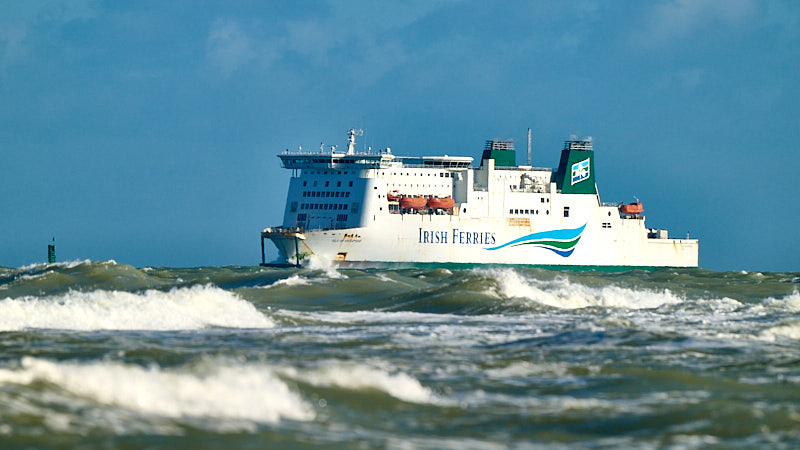
ICG / Irish Ferries Reports Strong 2025 Results

By 2026 Newsletter week 10

Irish Continental Group (ICG) reported

  • Revenue of €666.7 million (+10.4%)
  • Operating profit €85.6 million (+23.9%)
  • EBITDA reached €150.6 million (+12.8%)

The Irish Ferries division reported

  • Revenue €465.5 million (+7.4%)
  • Operating profit €65.2 million (+19.9%)
  • EBITDA €120.7 million (+9.9%)
  • Traffic figures: 2.99 million passengers (-2.5%), 679,700 cars (-3.9%), and 816,700 RoRo freight units (+6.5%).
  • The group took delivery of the cruise ferry JAMES JOYCE and is moving towards full ownership of its ferry fleet, enhancing operational flexibility.

ICG estimates that the overall car market, on the routes that they operate (Republic of Ireland to UK/France and the Dover Straits), grew by approximately 0.7% in 2025 to 4,722,600 cars. While encouraging, this level of car carryings is still 13.0% behind 2019 levels.

Irish Ferries’ car carryings decrease is primarily due to the reduction of a ship on the Dover – Calais route.

The total sea passenger market (i.e. comprising car, coach and foot passengers on the Republic of Ireland to UK/France and the Dover Straits) decreased by 1.0% on 2025 to a total of 19.0 million passengers. Irish Ferries’ passenger numbers carried decreased by 2.5% at 2,985,500 (2024: 3,062,200).

The RoRo freight market grew marginally between the Republic of Ireland to the UK and France and the Dover Straits, but the market remains 16.3% below 2019 levels.

Irish Ferries’ increased freight carryings over market performance were primarily driven by further market share on the Dover – Calais route.

Source: Irish Continental Group

Kontrari and West Coast Invest Take Full Ownership of Fjord Line

By 2026 Newsletter week 10

Kontrari and West Coast Invest have acquired Ferd’s stake in Fjord Line and are now the sole owners of the Norwegian ferry company, each holding a 50% share.

Fjord Line is Norway’s second-largest international ferry operator, carrying around 1 million passengers annually. The company operates routes between Norway and Denmark, with daily sailings from Bergen and Stavanger to Hirtshals and from Kristiansand to Hirtshals.

The transaction includes a capital injection that strengthens the company’s financial flexibility and supports its long-term development.

Kontrari and Ferd had been majority owners since 2015, with West Coast Invest joining in 2023. During this period, Fjord Line invested heavily in modernisation and sustainability. The high-speed catamaran FJORD FSTR was introduced on the Kristiansand–Hirtshals route, while cruise ferries STAVANGERFJORD and BERGENSFJORD—pioneers as LNG-powered vessels—were further upgraded with dual-fuel engines.

Ferd exits the company after ten years as an active co-owner. The parties have not disclosed the transaction value.

Source: https://kommunikasjon.ntb.no/pressemelding/18818309/fjord-line-unites-under-norwegian-ownership

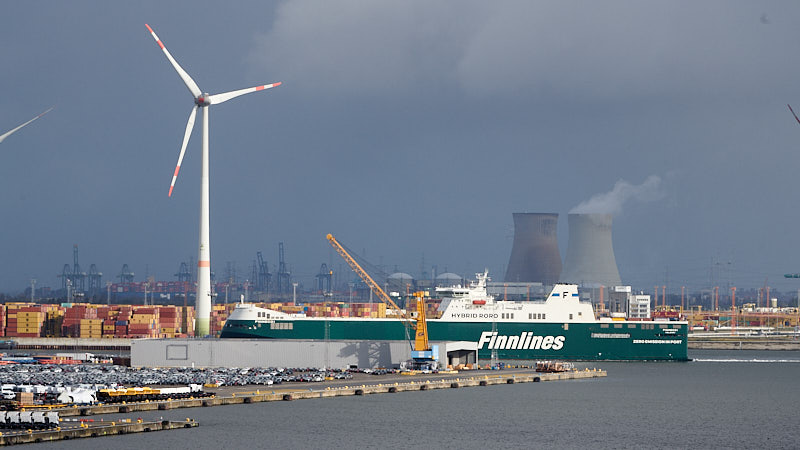
Finnlines Reports Stable 2025 Results

By 2026 Newsletter week 10

Key figures (2025)

  • Revenue: EUR 713.5 million (2024: EUR 699.3 million)
  • EBIT: EUR 79.4 million (2024: EUR 70.6 million)
  • Net profit: EUR 67.2 million (2024: EUR 44.6 million)
  • 2024 results included gains from the sale of five vessels

Traffic volumes

  • 788,000 cargo units transported
  • 71,000 cars (excluding passengers’ cars)
  • 1 million tonnes of non-unitised freight
  • More than 1 million passengers and professional drivers

Operations and network

  • Continued fleet optimisation and focus on route profitability
  • Strengthened position in the Baltic Sea and North Sea markets
  • Added a weekly departure from Gdynia to the North Sea–Biscay route, connecting Poland more directly to the Grimaldi network

Sustainability and fleet development

  • Fleet carbon intensity reduced by 14% compared with 2024
  • 40% emissions reduction target for 2030 (vs 2008 baseline) already achieved
  • Three methanol-ready RoPax vessels ordered, to enter service 2028–2029

CEO comments

  • CEO Thomas Doepel described 2025 as a stable financial year with a strong financial position.
  • The company continued to develop services, optimise its fleet and strengthen profitability.
  • Despite regulatory uncertainty around shipping’s green transition, Finnlines remains committed to its environmental targets and long-term investments in low-emission vessels.

Sources:

Finnlines’ Financial statements 2025, PDF

Finnlines’ Financial review January–December 2025, PDF

Eckerö Reports Record Results and Strong Volume Growth In 2025

By 2026 Newsletter week 10

Rederiaktiebolaget Eckerö delivered its best operating result ever in 2025, supported by record cargo volumes and steady passenger growth.

Interim-Accounts-31.12.2025 – Key points:

  • Cargo volumes reached a record 210,598 units, +11%, driven mainly by strong Finland–Estonia demand.
  • Passengers +2% (3,191,322), also the highest annual figure recorded by the company.
  • Revenue +5% EUR 234.8 million, reflecting higher volumes and more departures during the year.
  • Operating result improved to EUR 25.6 million, the strongest in company history.
  • Net result reached EUR 18.8 million, the second-best annual result for the group.
  • Cargo market share on the Finland–Estonia route 46%, up from 40% in 2024.
  • Passenger market share on the same route remained stable at 28%.
  • The company maintained a strong balance sheet, ending the year with net debt of -EUR 19.0 million, meaning cash exceeded interest-bearing liabilities.

Strategic Developments

  • The group acquired SAILOR from Tallink Grupp and renamed it FJÄRDVÄGEN. The vessel entered service on 2 January 2026 on the Långnäs–Naantali route under subsidiary Eckerö Link Ab.
  • The previous FJÄRDVÄGEN has been withdrawn and is held for sale.
  • The company also sold its last RoRo vessel TRANSPORTER in November 2025.

Outlook

For 2026, the company expects a stable financial result, although geopolitical uncertainty and the ongoing audit of pandemic traffic support could affect future performance.

Source: Interim-Accounts-31.12.2025