Steps are being taken to extend the existing Northern Isles lifeline ferry contract after state owned ferry operator CalMac confirmed it is taking legal action over a Scottish Government decision to award the next contract to current holders Serco NorthLink.
Longest Ferry Ever on Le Havre – Portsmouth
Brittany Ferries’ Cap Finistère is the longest ferry ever to operate on Le Havre – Portsmouth. She replaces Etretat, currently in Poland for annual overhaul.
Cap Finistère will be operating one round trip a week during the next four weeks.
Ventouris Ferries’s Rigel VII With New Livery
Ventouris Ferries’ ropax Rigel VII is sporting her new livery since last week. A fresh coat of white paint plus the Ventouris Ferries traditional signals are giving her a striking appearance. The ship is undergoing her conversion at Kynosoura (Diamantis yard) since September 13, 2019. She will be probably introduced – from the summer season 2020 – on the Italy-Albania run.
She was built in Japan (Imabari) in 1994. Her carrying capacity is for 730 passengers (312 beds), 122 trucks and 278 cars. (1,251 lane meters) but that is going to change.
Ionian Star (Ex-Bohus) in Piraeus Dry Dock
On November 29, Red Star Ferries’ latest acquisition Ionian Star entered the Vassiliadis large dry dock in Piraeus, in order to undergo scheduled repairs and refit.
The classic ship was purchased a few months ago from Color Line in order to replace the older Red Star 1 on the Brindisi – Valona line.
She arrived in Piraeus on September 10 and since then she was laid up to Koros shipyards (Salamis).
Ragnar Johansson Appointed Maritime Personality of the Year
The Göta Älvklubben has appointed Wallenius SOL’s CEO Ragnar Johansson as the Maritime Personality of the Year 2019. Ragnar received the award for his many years of work in developing Swedish shipping.
Göta Älvklubben, based in Gothenburg, is a forum for people from the shipping industry and for media people interested in shipping. Each year, they designate the Maritime Personality of the Year with the aim to make the shipping industry in Sweden more visible. During the year, the nominee must have distinguished himself with new ideas and good entrepreneurship, showing the potential of today’s Swedish shipping.
After christening the third new DFDS freight ferry in Göteborg on Friday 29 November, the mega roro started to operate on the Ghent route.
On Sunday 1 December she called for the first time. After her first return trip, DFDS invited the Belgian and Dutch media to show the new ship.
And since Ghent is home.. (all photos: Mike Louagie)
Sam De Wilde, Managing Director of DFDS’ Freight Ferry and terminal activities in Belgium, explained how DFDS has grown the ships in function of the cargo. “We had the Flower-class, then they were lengthened. Now Hollandia Seaways is a 6,800 lane meter ship. She will do two return crossings a week. The two other, smaller ships will also each do two return trips.”
New DFDS Mega Freight Ferries n° 3 and 4 to be Deployed on Belgium – Sweden
The DFDS freight website now shows that the 3rd Chinese mega roro, Hollandia Seaways, will start to operate on Ghent – Gothenburg next week. She arrived in Sweden after the long delivery trip, which included berthing trials in Vlaardingen and Immingham.
DFDS expects in Q2, 2020 to replace the three freight ferries currently deployed on Gothenburg – Zeebrugge with the 4th 6,700 lane metre mega freight ferry. The ferries that are replaced are expected to be deployed elsewhere in DFDS’ European route network.
The first two units, Ephesus Seaways and Troy Seaways (photo), are in service in the Mediterranean Sea.
DFDS & CLdN: Space Charter Agreements on Gothenburg – Zeebrugge
In June 2019, DFDS added the freight ferry route between Gothenburg and Zeebrugge to its portfolio.
DFDS currently deploys three freight ferries, offering five weekly departures in each direction: Magnolia Seaways, Belgia Seaways and Gothia Seaways.
In order to optimise capacity utilisation, DFDS has entered into two mutual space charter agreements with CLdN that also operates a freight ferry route between Gothenburg and Zeebrugge.
The space charter agreements entail that capacity is shared between route operators while all commercial activities remain entirely under the control of each operator.
“We are very pleased to announce our new space charter agreements. The flexibility of the agreements entails that we reduce the environmental footprint while offering a total of ten weekly departures in each direction on our two routes between Sweden and Belgium to support trade and the growth of our customers”, says Peder Gellert Pedersen, Executive Vice President, DFDS Group, and Head of Ferry Division.
The space charter agreements are expected to start on 1 January 2020. When the agreements are fully implemented, DFDS and CLdN are each expected to deploy one freight ferry on their respective routes between Gothenburg and Zeebrugge.
In passenger and freight volumes, the port of Igoumenitsa is one of Greece’s most important Western Balkan gateways, playing a key role in the development of domestic and international freight. FSN met with Mr Athanasios Porfiris, the new CEO, and had a constructive conversation about his vision and plans, the potential and the future of the significant Western Port of Greece.
Call for Interest for Ferry Companies to Operate Routes with Public Subsidies in Italy
The Italian government said to have completed the first step of the process aimed at renewing subsidy supports for maritime transportation from Italy mainland with Sardinia, Sicily and Tremiti Islands.
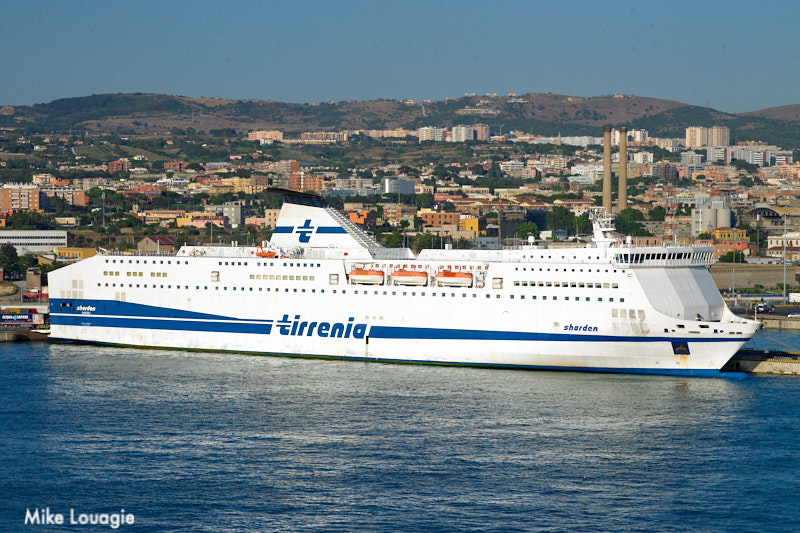
As of today, the subsidies paid to CIN Tirrenia are worth EUR 72 million per year but are due to expire next July. The Italian transport ministry already specified the subsidies will be reassigned through a public tender. At the moment it is still unclear whether the call will be launched for all the routes together, per region or per route. The second option seems to be preferable for the Government.
Roberto Morassut, member of the Environment ministry, while answering to a public interpellation, explained that first a market analysis will be done. Then the ferry operators will be called to express their interest at providing regular services.
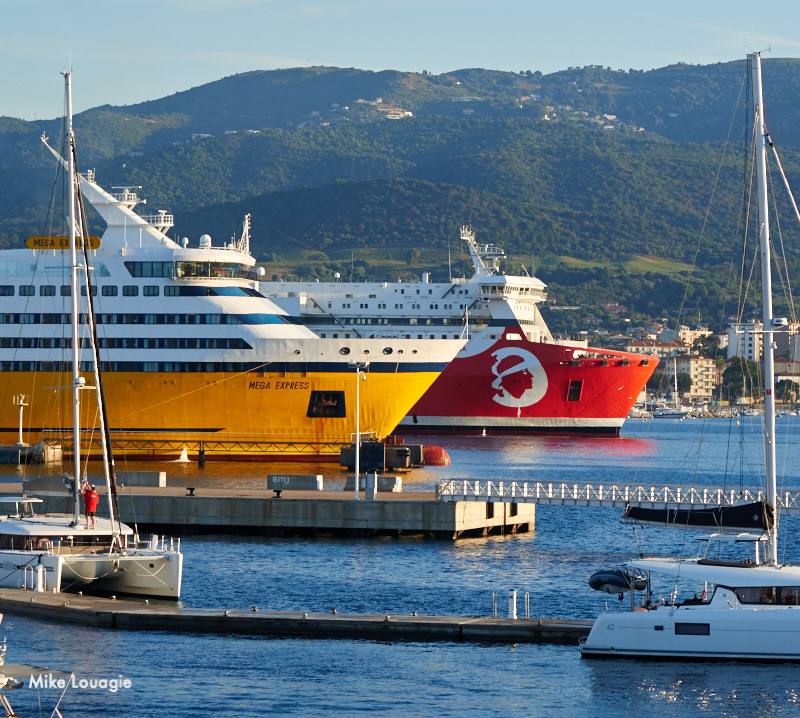
The most likely companies to be interested are Grimaldi Lines, Moby-Tirrenia CIN, Grandi Navi Veloci and maybe also Grendi Trasporti Marittimi and Corsica Ferries.
Today the routes supported with public subsidies are the following: Genoa-Porto Torres, Civitavecchia-Olbia, Genoa-Olbia, Cagliari-Palermo, Civitavecchia-Cagliari-Arbatax, Naples-Cagliari, Palermo-Naples and Ravenna-Catania.
Grimaldi Group of Italy should be the buyer of the ropax Ciudad de Cadiz, just sold by Trasmediterranea, part of Naviera Armas group, according to some brokers sources.
The price for this 2004 Visentini-built vessel is EUR 39-40 million according to the same sources.
The reason why Grimaldi decided to buy this ropax ship may be linked to the public subsidies for maritime connections between Italy mainland and Sicily and Sardinia islands, set to be launched next summer.
As for the imminent Finnlines order for the Super Star class ferries, Ferry Shipping News understood that Grimaldi is now in advanced negotiation with Avic Weihai Shipyard. Other shortlisted yards were GSI, Jinling, and Hyundai Mipo.
Brittany Ferries is realising the benefits of its drive to reduce and eventually eliminate the use of single use plastics on board its fleet of ferries linking UK, France, Spain and Ireland, by purging almost 5.7 million items of plastic per year.
Direct Ferries’ CEO Sean Cornwell and his team strongly believe the ferry industry has a once in a generation opportunity to redefine ferry travel and the appeal of it to whole new customer segments who before would never have considered taking the ferry. “The world is changing and we in the ferry industry have an opportunity to be on the front foot on this.”
The data (from the UK Department of Environment, Food and Rural Affairs – DEFRA) is compelling and clear cut. Per kilometre travelled, a foot passenger on a ferry uses 18g of CO2 – considerably less than a coach, bus, rail or plane. A family of 4 in car taking a ferry will use just ~25% of the CO2/person that they would have used had they taken a flight to their destination (43g+18g vs. 254g).
“Many of you compete directly with low-cost airlines and this is a powerful message to tell your potential customers,” concludes Sean Cornwell.
In the fall of 2018, the Oppland county council decided to allocate NOK 65 million for a new ferry and NOK 20 million for onshore infrastructure. The actual ferry Randsfjordferja II is almost 70 years old.
The special thing about the Randsfjord ferry, is that it must first be built, then dismantled and transported over sea and road, and then re-assembled and launched. Randsfjorden is Norway’s fourth-largest lake. The ferry connection is between Tangen and Horn.
After tendering, only one offer was received that qualified. It came from Holland Shipyards Group.
Now, an extra NOK 18.9 million has been allocated after several changes were made based on the original tender specifications.
Electricity provider Glitre Energi nett AS can supply enough energy on the quay for direct charging. This allows to drop the battery bank on land.
In addition, four engines and rudders have been replaced with two less expensive thrusters and better maneuvering capacity.
The yard takes the currency risk, as the contract is in Norwegian kroner.