

Wagenborg Names New Ferry HIDDEBORG

By 2026 Newsletter week 10
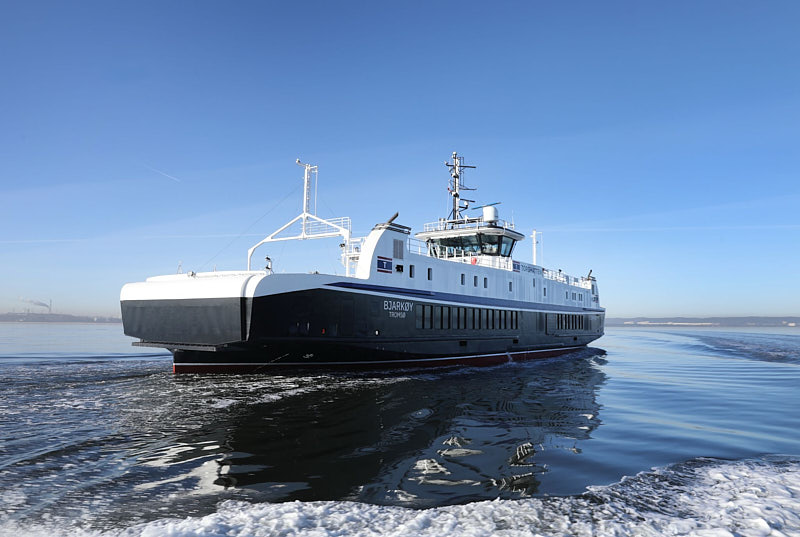
  • Wagenborg has named its new (small) ferry HIDDEBORG, which will operate the fast connection between Ameland and the mainland.
  • The vessel was christened at Next Generation Shipyards in Lauwersoog by journalist Afke Boven.
  • Designed for the shallow Wadden Sea, the ferry features about 80 cm draught, waterjet propulsion and energy-efficient engines.
  • HIDDEBORG is expected to enter service in 2026, strengthening reliability on the Ameland route.

Source: Wagenborg Passagiersdiensten (in Dutch)

Three New Motorways of the Seas to Be Subsidised in Italy

By 2026 Newsletter week 10

Three new Motorways of the Seas have been declared eligible for government funding under Italy’s Sea Modal Shift programme (formerly Marebonus).

Sea Modal Shift 3 new routes

The Ministry of Infrastructure and Transport approved requests submitted by shipping companies for the following routes:

  • Savona – Palma de Mallorca (covered by GRIMALDI GROUP via Valencia)
  • Cagliari – Marina di Carrara (operated by GRENDI TRASPORTI MARITTIMI)
  • Gioia Tauro – Livorno, a brand-new link to be launched between the two Italian ports

The Sea Modal Shift incentive scheme, promoted by the Italian Ministry of Infrastructure and Transport, supports combined road–sea transport.

Key elements include:

  • Eligible beneficiaries: road haulage companies, including temporary or permanent groupings, shipping vehicles and/or swap bodies (with or without drivers) on RoRo and RoPax vessels.
  • Eligible routes: those listed in Regulation No. 166/2023, plus additional routes proposed by applicants.
  • Subsidy: up to €0.30/km for each loaded vehicle unit, multiplied by the number of road kilometres avoided.

Scotland To Bring Ardrossan Harbour Into Public Ownership And Redevelop Port Ellen

By 2026 Newsletter week 10

The Scottish Government has announced a series of investments in ferry infrastructure, including the acquisition of Ardrossan Harbour and major redevelopment plans for Port Ellen.

Cabinet Secretary for Transport Fiona Hyslop told Parliament that negotiations and legal agreements for the purchase of Ardrossan Harbour have been successfully concluded. The harbour will be formally acquired by Caledonian Maritime Assets Limited (CMAL) later this month.

Bringing Ardrossan into public ownership is intended to secure its role as the main mainland port for CalMac services to Arran. According to the government, CMAL is already assessing short-term works to ensure resilient ferry operations while CALEDONIAN ISLES continues to operate from the port. The government also confirmed its commitment to funding a two-port service until major redevelopment works begin.

In addition, the Scottish Government has allocated more than GBP 107 million for the redevelopment of Port Ellen on Islay. The project will include new terminal facilities and an expanded marshalling area, aimed at increasing capacity and improving the passenger experience.

Source: https://www.transport.gov.scot/news/investment-in-ferries-and-ports/

SCA Reshapes RoRo Calls Between Umeå and Piteå to Cut Emissions and Improve Efficiency

By 2026 Newsletter week 10

SCA will reorganise its RoRo logistics from 1 October 2026, changing sailing patterns and port usage between Umeå and Piteå. The measures aim to improve efficiency and cut vessel emissions by about 40%.

Key port-related changes

  • Fewer RoRo departures from Umeå: services will drop from three to two sailings per week (one to Kiel, one to London/Rotterdam).
  • Lower sailing speeds of 11–12 knots (down from about 15 knots) combined with higher vessel load factors.
  • Piteå (Haraholmen) will become a regular call, allowing vessels to load production from SCA’s Munksund mill.
  • Around 550,000–600,000 tonnes per year from Munksund will shift to Piteå, making SCA one of the port’s largest customers.
  • The rail link between Munksund and Umeå will no longer be required.

Impact on ports

  • Piteå gains significant new volumes, alongside SCA’s existing 300,000 m³ of sawmill cargo.
  • Port operator ShoreLink expects to recruit around 20 additional staff to handle the increased activity.
  • Umeå will see a reduction of about 300,000–400,000 tonnes annually from Munksund cargo, although growing volumes linked to the Obbola paper mill will partly offset the decline.

Winter Weather Pushes EV Traffic on Molslinjen’s Kattegat Routes

By 2026 Newsletter week 10

Traffic patterns on Denmark’s domestic ferry network followed the usual winter trend in February 2026. Cold weather and snow reduced travel demand across most routes. Molslinjen reported slight traffic declines on all routes except the Kattegat crossings.

“The routes across the Kattegat stand out significantly. This time we believe we can thank the winter weather for the good numbers, somewhat unusually,” said Molslinjen’s Commercial Director, Lucas Kragh.

Cold temperatures appear to have boosted ferry demand among electric vehicle (EV) drivers. Low temperatures reduce battery range, encouraging drivers to limit road kilometres.

The share of EVs on MOLSLINJEN ferries rose sharply:

  • February 2025: 25.4%
  • February 2026: 34.0%

As a result, total traffic across the Kattegat increased 3.9% year-on-year in February.

At the end of January, Molslinjen commissioned eight new superchargers with 16 charging points at the Port of Aarhus. EV drivers can recharge while waiting for departure, reducing range concerns before continuing their journey across Zealand.

Molslinjen plans to install a similar number of charging stations at the Port of Odden. The new facilities are expected to enter service by the end of March 2026.

Viking Line Connects to Matkahuolto’s Matkat App

By 2026 Newsletter week 10
  • Viking Line has become the first shipping company to integrate with Matkahuolto’s Matkat transport app.
  • Travellers can now book and pay for their entire journey in one place, combining local transport, coaches or rail with Viking Line sailings to Tallinn, Stockholm or Åland.
  • The app allows passengers to plan door-to-door journeys across Finland, comparing routes and timetables and purchasing all tickets in a single transaction.
  • The service aims to make public transport connections to ports easier and more sustainable for travellers.

Europe’s Ports Welcome EU Ports Strategy

By 2026 Newsletter week 10

On 4 March, the European Commission launched its EU Ports Strategy, a 28-page framework outlining the future direction of Europe’s ports.

The European Sea Ports Organisation (ESPO) welcomed the document as a good starting point for further dialogue with EU institutions. The strategy recognises the growing complexity of ports, which must combine their role as competitive trade hubs with public service responsibilities supporting Europe’s economic resilience.

ESPO particularly welcomed:

  • The focus on maintaining the global competitiveness of European ports
  • The intention to review the impact of EU ETS and FuelEU Maritime
  • Recognition of the major investment needs in ports and their industrial clusters
  • Efforts to accelerate permitting procedures
  • The proposal for a high-level EU Ports Board
  • Plans for a cybersecurity forum linking ports, Member States, and the Commission

At the same time, ESPO warned against adding extra sector-specific regulatory layers or increasing reporting obligations for ports.

The organisation also called for further dialogue on shipping decarbonisation, the evolution of bunkering markets, and the role ports should play in the energy transition.

Interferry Welcomes EU Industrial Maritime Strategy

By 2026 Newsletter week 10
  • Interferry supports the European Commission’s Industrial Maritime Strategy, which recognises the strategic role of ferries in Europe.
  • The association particularly welcomes the proposal to reinvest EU ETS revenues into maritime decarbonisation.
  • Shipping’s annual financing needs for fleet decarbonisation are estimated at EUR 2.4–8.5 billion, while ETS collections could reach about EUR 10 billion per year.
  • Interferry stresses that funds should support practical measures for the existing fleet, including shore power, electrification and alternative fuels.
  • The organisation also backs efforts to reduce administrative burdens and avoid double payments once a global IMO measure is in place.

Baleària Improves Turnover And EBITDA In 2025 Thanks To International Growth

By 2026 Newsletter week 09

Baleària closed 2025 with strong financial results, surpassing €800 million in turnover and significantly improving profitability, driven largely by the expansion of its international routes.

Key Financial Highlights

  • Turnover: €801 million (+16%)
  • EBITDA: €170 million (+29%)
  • Net profit: €63 million (+152%)

President Adolfo Utor said the results confirm the robustness of the company’s business model and its ability to grow sustainably in a competitive market.

International Routes Gain Strategic Weight

In revenue terms, North African connections—both domestic and international—now contribute a share comparable to that of the Balearic Islands, traditionally Baleària’s core market.

Traffic figures underline the shift:

  • 6.5 million passengers transported (+15%)
  • 1.6 million vehicles (+11%)
  • International passengers: +68%, nearly 2 million in total

Morocco has consolidated its position as Baleària’s main international market. The 15-year concession for the Tarifa–Tangier City route has strengthened passenger flows, while new services to Algeria have further expanded the company’s North African footprint.

Over the past decade, Baleària has doubled its passenger volumes.

Cargo: A Structural Pillar

Cargo remains central to the business model:

  • 8.4 million linear metres transported (+10%)
  • Equivalent to approximately 622,000 lorries
  • Represents 36% of total turnover

Morocco accounts for 29% of total cargo volume, emerging as a strategic logistics hub. The Balearic Islands remain the largest single market, with 59% of cargo volumes.

Operational Efficiency Offsets Regulatory Costs

Fleet expansion and new route launches improved productivity and operational efficiency, allowing Baleària to absorb rising environmental compliance costs without compromising profitability.

The company sailed 1.9 million miles in 2025 (+1.5%), while maintaining tight cost control.

Sustainability And Emissions Reduction

Baleària continues to position sustainability as a competitive lever:

  • Emissions per passenger: -15%
  • Total carbon footprint: -1.4%
  • Emissions per mile sailed: -2.85%
  • Emissions per linear metre of cargo: -12%
  • Greenhouse gas intensity: -5.25%

The use of natural gas and biogas, alongside eco-efficiency investments, has enabled measurable progress despite higher activity levels.

Strategic Outlook

With EBITDA growth outpacing turnover and international routes gaining importance, Baleària has reinforced its standing in the European ferry market.

The company combines geographic diversification, cargo resilience, and decarbonisation efforts, positioning itself for further expansion while maintaining financial discipline.

Havila Voyages Reports Solid Annual Results

By 2026 Newsletter week 09

Havila Voyages has published its Q4 2025 figures, confirming a strong second full year with all four ships in operation on the Norwegian coastal route.

Key Financials 2025

  • Revenue: NOK 1.775 billion (2024: NOK 1.523 billion)
  • Increase: NOK 252 million (+17%)
  • Operating result before depreciation: NOK 373 million
    • 2024: NOK 218 million
    • 2023: NOK -191 million

The improvement reflects stronger demand, pricing power, and operational stability.

Operational Performance

  • 100% operational uptime in 2025 (2024: 98%)
  • Passenger nights up 3%
  • Average Cabin Rate (ACR) up approx. 20%
  • Q4 CO₂ emissions 38% below 2017 reference levels

CEO Bent Martini highlighted the significance of full-year uptime along the demanding Norwegian coast, calling it “an achievement everyone in the company should be proud of.”

Havila Voyages operates under a “power-by-the-hour” agreement with Kongsberg Maritime, ensuring 24/7 monitoring and proactive technical follow-up. This supports high technical reliability and predictable service delivery under the public-service contract.

Costs And Investments

Total operating expenses reached NOK 1.402 billion (2024: NOK 1.310 billion), an increase of around 7%.

Cost drivers included:

  • Higher guest volumes
  • General inflation
  • Expansion of shore-based organisation
  • Increased sales and marketing spend

The company deliberately increased marketing investments in Q4 to strengthen forward bookings. As a result, short-term profitability softened, but early indicators for 2026 are positive.

More than 63% of total 2026 capacity is already sold.

Outlook

Following refinancing in 2024, management expects further improvement in both revenue and profitability in 2026.

The combination of stable operations, higher yields, and continued emissions reductions positions Havila Voyages for stronger financial performance going forward.

Download the report here