

Port Askaig Shore Power Works Begin for New Islay Ferries

By 2026 Newsletter week 18

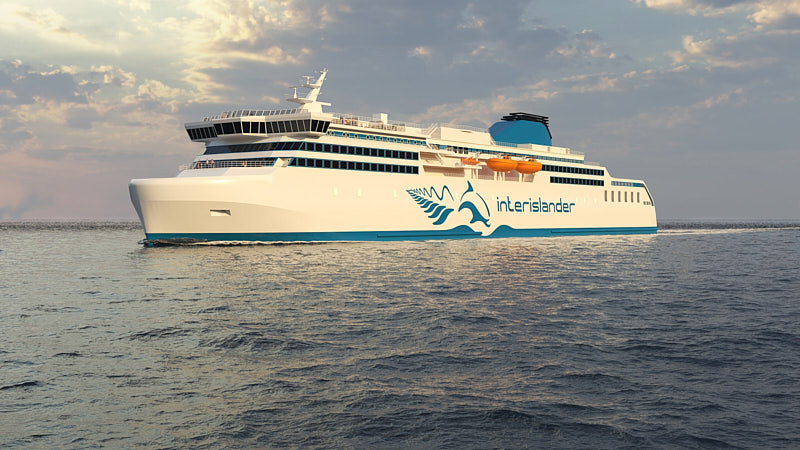
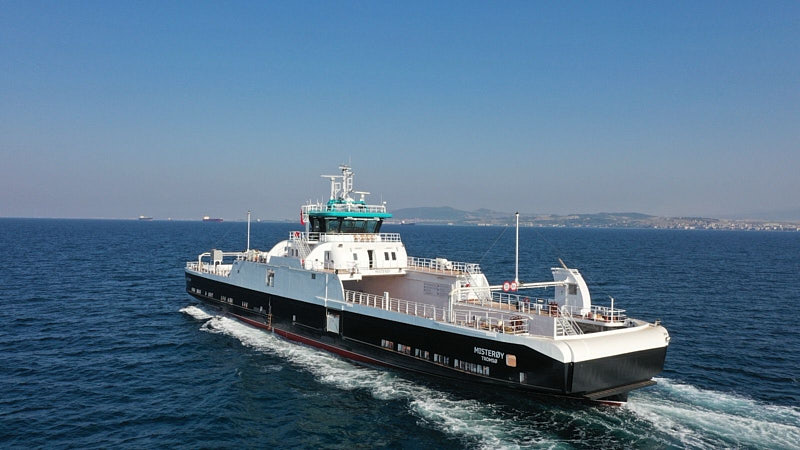
CMAL and SSEN have started infrastructure works at Port Askaig to provide shore power for the new Islay vessels. The project is being delivered in collaboration with Argyll and Bute Council and CalMac.

The scheme includes installation of a new high-voltage cable from the SSE substation at Keills to Port Askaig pier.

The full programme is expected to take four to five months. Travellers using Port Askaig are advised to allow extra time and expect delays during the construction period.

Source: https://www.cmassets.co.uk/ivew-port-askaig-shore-power-update/

Port of Turku: Ferry Traffic Stable, Investments Continue

By 2026 Newsletter week 18

Port of Turku handled 2.1 million passengers in 2025, down just 2%, retaining its position as Finland’s leading Sweden passenger gateway.

Total cargo throughput reached 1.5 million tonnes (-13%), with RoRo traffic at 1.1 million tonnes. The decline reflected route disruptions and dry-docking periods.

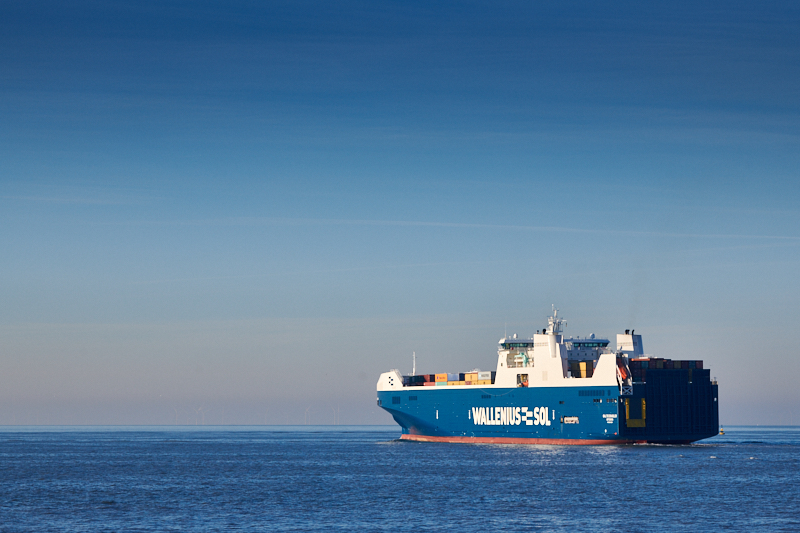
A positive development came late in the year when WALLENIUS SOL restored weekly Turku–Travemünde sailings.

Three daily departures to Stockholm by Viking Line and Tallink Silja continue to support accompanied freight flows.

Major investments are under way:

  • New Ferry Terminal Turku to open in 2027
  • New RoRo quay planned in West Harbour
  • Shore power projects progressing
  • 600 kW HGV fast charger added to truck park

Click on cover to access the annual report

Incat electric ferry waiting in Hobart as heavy-lift transporter is stuck in Strait of Hormuz

By 2026 Newsletter week 17, 2026 Newsletter week 18

The world’s largest electric ferry is sitting idle in Tasmania because the heavy-lift ship that was booked to take it to South America is stuck in the Strait of Hormuz.

The electric ferry has a 90-minute travel range, which is enough for its planned passenger service, but not enough to travel across the Pacific to its new home.

Source: https://www.abc.net.au/news/2026-04-28/incat-electric-ferry-transporter-stuck-in-strait-of-hormuz/106614948

Temporary EU State Aid Framework to Support Short Sea Shipping

By 2026 Newsletter week 18

The European Commission has adopted a temporary State aid framework to enable Member States to support the EU economy in the context of the Middle East crisis. The Middle East Crisis Temporary State Aid Framework (METSAF) is a targeted, time-limited instrument addressing the impact of the crisis on the most exposed sectors, including short sea shipping. The framework will remain in force until 31 December 2026.

For intra-EU short sea shipping, Member States will be able to compensate up to 70% of a beneficiary’s additional fuel costs resulting from the crisis. The price increase will be calculated by each Member State as the difference between the relevant market price and a historical benchmark. Total eligible costs will be based on current or pre-crisis fuel consumption.

Source: https://ec.europa.eu/commission/presscorner/detail/en/ip_26_894

Viking Line Q1: Stable Result In Challenging Market

By 2026 Newsletter week 17

Viking Line reported first-quarter 2026 sales of EUR 84.6 million, down from EUR 87.3 million last year.

Operating result was EUR -18.8 million (EUR -18.0 million), while pre-tax loss improved to EUR -19.5 million from EUR -22.0 million. Net result also improved to EUR -19.5 million.

Passenger volumes remained broadly stable at 763,080 (767,353), while cargo units declined to 34,323 from 36,352.

Market share reached 31.5% across the company’s traffic area. In Finland–Sweden traffic, Viking Line held 57.2%, while Finland–Estonia rose to 23.6%.

The quarter was affected by a severe ice winter, cautious consumer demand and higher energy market volatility. VIKING GRACE underwent an extensive drydocking, with group investments totalling EUR 7.9 million.

Due to uncertainty over fuel prices and market conditions, Viking Line has withdrawn its previous full-year guidance for 2026.

Tallink’s Q1: Growing Volumes And Improved Results

By 2026 Newsletter week 17

AS Tallink Grupp reported a stronger first quarter for 2026, with higher passenger and cargo volumes supporting improved financial performance in a still challenging market.

Revenue increased to EUR 149 million, while the net loss narrowed to EUR 22 million compared with the same period last year.

Passenger numbers rose nearly 7%, while cargo units carried increased by more than 13%.

CEO Peep Jalakas said the result was encouraging despite ongoing global and regional tensions affecting market confidence. He noted that the Middle East crisis had not yet significantly impacted first-quarter figures, although rising fuel prices from March could weigh on future results.

During the quarter, Tallink signed a charter agreement for SUPERFAST IX. The company is also assessing future deployment options for ROMANTIKA, which returned to Estonia this spring.

Maintenance works on BALTIC QUEEN, SILJA SYMPHONY and VICTORIA I totalled 47 days, with investments exceeding EUR 14 million.

Tallink also faced higher costs from the EU Emissions Trading System, as the required share of surrendered allowances rose to 100% from the start of the year. Loan repayments and interest expenses reached nearly EUR 15 million.

Tallink plans to continue energy-efficiency measures, including a full switch to biomethane for its Tallinn–Helsinki shuttle vessels.

The Supervisory Board will propose a dividend of EUR 0.06 per share at the Annual General Meeting on 19 May in Tallinn.

Eckerö Q1 Hit by Drydock, Cargo Record in March

By 2026 Newsletter week 17

Rederiaktiebolaget Eckerö reported weaker first-quarter 2026 results after the drydocking of FINLANDIA reduced departures by 8%.

Revenue fell 11% to EUR 37.9 million, while EBIT declined to EUR -9.1 million from EUR -2.8 million. Net result was EUR -7.5 million.

Passenger volumes decreased 17% to 453,170, while cargo units fell 6% to 49,357. Despite the quarterly decline, March delivered a record month for cargo traffic.

On the Finland–Estonia route, passenger market share stood at 24% and cargo share at 42%. Net debt improved to EUR 1.7 million.

https://rederiabeckero.ax/wp-content/uploads/2026/04/Interim-report-31-03-2026.pdf

Seajets’ RoRo CABO Completed Drydock

By 2026 Newsletter week 17

On 20 April 2026, Seajets’ RoRo CABO (formerly CABO STAR, ANTARES, FINNFOREST) completed drydocking at the Perama repair zone. The vessel had entered drydock on 30 March 2026 for maintenance works and hull coating ahead of her introduction into Greek coastal shipping.

With CABO, Seajets makes its first move into the domestic RoRo segment. Built in Gdansk, Poland, in 1988, the ship can carry 130 passengers and offers 2,500 lane metres, equivalent to around 130 trailers. Service speed is 21 knots.

Photo: Kostas Papadopoulos

HSC NISSOS Granted to Greek Armed Forces

By 2026 Newsletter week 17

On 15 April 2026, Saos Ferries owner Fotis Manoussis decided to grant HSC NISSOS (formerly ALCANTARA DOS) to the Greek armed forces.

The high-speed craft was acquired in April 2023 from Spain’s Acciona Logistica S.A. and arrived in Greece under tow on 31 May that year. She had been expected to enter service on either the Sporades Islands or Dodecanese routes, but this never materialised.

Built by Austal in Australia in 1996, HSC NISSOS has capacity for 550 passengers and 155 cars. Service speed is 32 knots.