Hurtigruten Completes EUR 430 Million Refinancing

By 2026 Newsletter week 26

Hurtigruten Group has completed a EUR 430 million refinancing, strengthening its capital structure and securing a long-term financing platform with lower financing costs and greater financial flexibility.

The refinancing includes EUR 330 million in new loan facilities provided by a consortium led by DNB, alongside Danske Bank, Nordea and SEB, replacing the group’s existing debt. In addition, Hurtigruten completed a EUR 100 million equity issue, underlining continued shareholder support. The company says the transaction reflects its improved performance as an independent business since the beginning of 2025.

CLdN Completes Acquisition of Samskip UK & Ireland Freight Business

By 2026 Newsletter week 26

CLdN has completed the acquisition of Samskip’s quay-to-quay and door-to-door freight business between mainland Europe, the UK and Ireland. The services will transfer to CLdN on 29 June.

The transaction includes Samskip’s container shipping services linking Rotterdam with ports in the UK and Ireland, together with its door-to-door logistics activities and a fleet of more than 5,000 multimodal cargo units. CLdN says the acquisition strengthens its short-sea container offering and significantly expands its multimodal network between the UK, Ireland, and Central and Eastern Europe.

HSC AEOLOS KENTERIS of NEL Lines Sold for Scrap

By 2026 Newsletter week 26

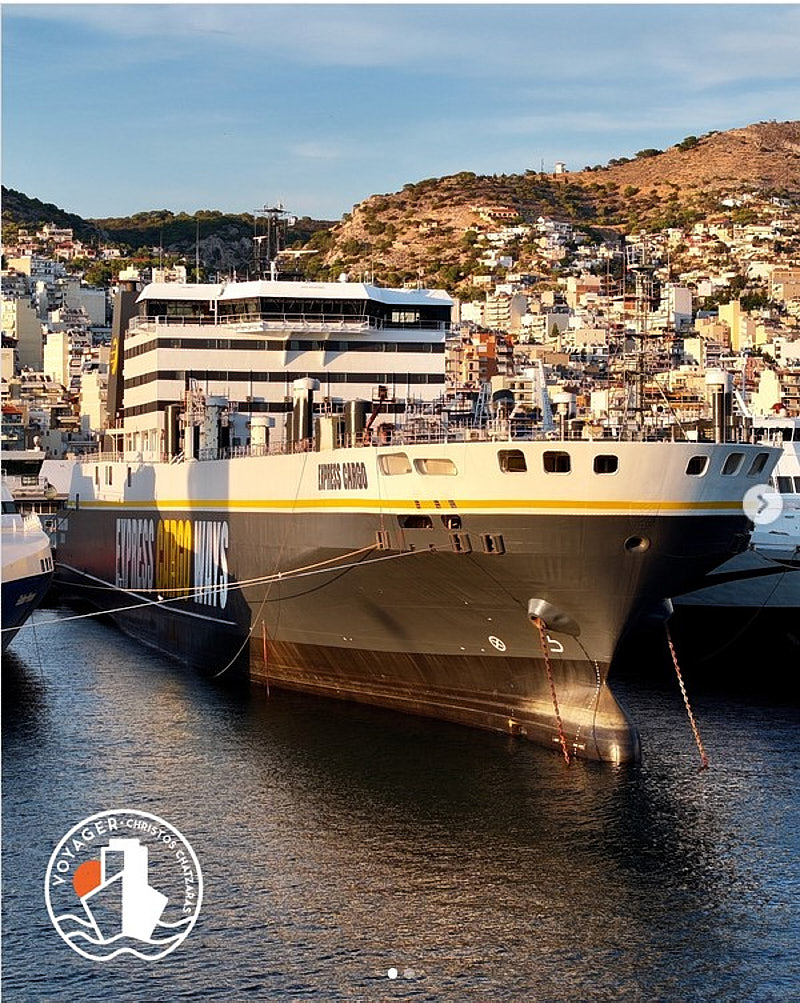
The once-proud HSC AEOLOS KENTERIS of the ill-fated NEL Lines has been sold for scrap in Aliağa, Türkiye, after a 10-year lay-up in Augusta, Italy, where she spent much of the time partially submerged.

Built by Alsthom Leroux Naval S.A. in France in 2001, she was the largest and fastest high-speed craft of her time. Introduced on the Piraeus–Chios–Mytilene route, she offered the fastest crossing ever on the service.

However, high fuel consumption and recurring mechanical problems made her operation difficult. In 2007, she was sold to Pictor Shipping SA and renamed RED SEA I. She subsequently operated for Namma Lines between Safaga and Jeddah.

From 2011 to 2016, she was laid up at Salamis. She was later chartered for service between Augusta and Malta, but the venture failed and the vessel was confiscated.

In 2026, she was refloated and sold for scrap, bringing a significant chapter in the history of NEL Lines to a close.

She had capacity for 1,750 passengers and 450 cars, with a service speed of 40 knots.

Photo: Voyagair (Christos Chatzaras)

AERO 4 HIGHSPEED Joins the Greek Coastal Fleet

By 2026 Newsletter week 26

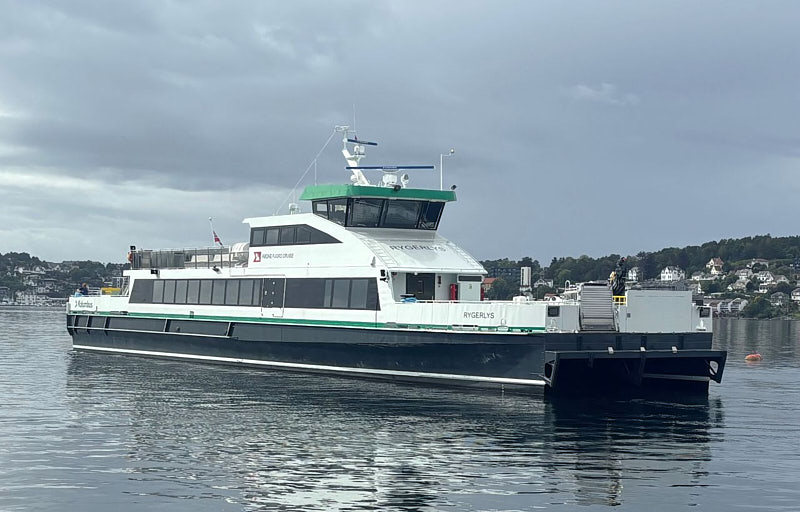
On 20 June 2026, AERO 4 HIGHSPEED (ex-MEI ZHU HU) of Hellenic Seaways entered service on the Piraeus–Poros–Hydra–Ermioni–Spetses route.

The vessel operates twice daily, with evening sailings extending to Porto Heli. Her sister ship, AERO 5 HIGHSPEED (ex-YU ZHU HU), is expected to join the fleet within the next few days.

She replaces the older FLYING CAT 4.

Built in Norway by Brødrene AA in 2017, she carries 270 passengers and operates at 35 knots.

Photo: Kostas Papadopoulos

JANTAR UNITY Makes First Call at Port of Ystad

By 2026 Newsletter week 26

The Port of Ystad has welcomed JANTAR UNITY, the new LNG-battery hybrid RoPax vessel of POLSCA Baltic Ferries, on her first call on the Ystad–Świnoujście route.

The vessel is using Ystad’s new ferry berth, where simultaneous loading and unloading via two ramps reduces port turnaround times and improves freight and passenger flows. The port says the combination of modern infrastructure and a modern vessel strengthens Ystad’s role as a key gateway across the southern Baltic.

Trelleborgs Hamn Awards Contract for New RoRo Berth

By 2026 Newsletter week 26

Trelleborgs Hamn has awarded Skanska the contract to convert 250 metres of its existing commercial quay into a new RoRo berth. Scheduled for completion in Q1 2027, Berth 14 will become the main berth for POLSCA ferries. The project forms part of the port’s long-term relocation of ferry traffic to the new harbour area, increasing capacity, improving internal logistics and reducing noise in central Trelleborg. Once completed, the port will operate eight RoRo berths.

Destination Gotland Uses BioLNG for Summer Sailings

By 2026 Newsletter week 26

Destination Gotland has bunkered BioLNG for the first time, using the renewable fuel on its ferry services ahead of the summer season and Almedalen Week.

The Swedish-produced BioLNG is supplied by St1 Biokraft and bunkered in the Port of Visby in cooperation with Avenir. While the availability of Swedish BioLNG remains limited, Destination Gotland says the initiative marks another step in its long-term strategy to reduce emissions from its Baltic ferry operations.

Italian Antitrust Clears Terminal San Giorgio Sale

By 2026 Newsletter week 26

Italy’s antitrust authority has approved the sale of Terminal San Giorgio in Genoa to Ignazio Messina & C., ending a three-year review. However, the approval comes with strict conditions, including the removal of MSC from Messina’s decision-making process and the conversion of Terminal San Giorgio into a joint-stock company. Grimaldi Group, which uses the terminal as its Genoa hub for Motorways of the Sea services, continues to oppose the transaction.

Aarhus and Odden prepare for electric Kattegat ferries with 118 MWh battery systems

By 2026 Newsletter week 26

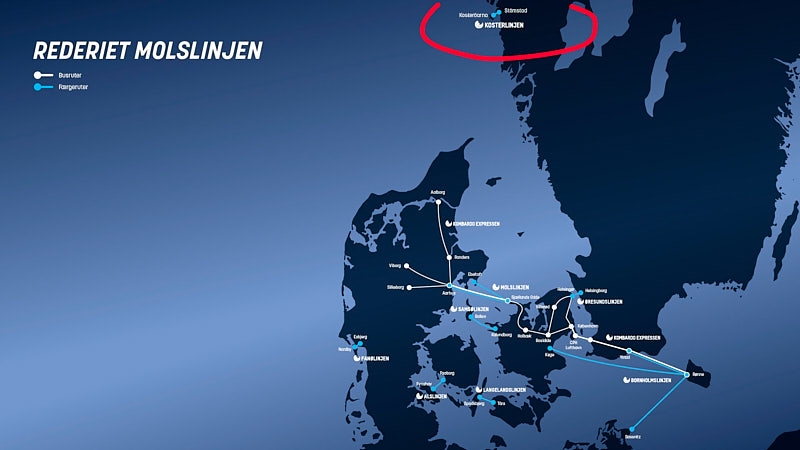
Molslinjen has selected BOS Power to supply the two battery energy storage systems that will support its future electric high-speed catamarans on the Kattegat routes.

The supplier selection was carried out with technical support from Hybrid Greentech, which has advised Molslinjen throughout the project.

The two battery systems, located in Aarhus and Odden, will each have a capacity of 118 MWh. They will enable the ferries to recharge during 30-minute port calls by combining electricity from the grid with stored energy. Each ferry will charge at 15 kV AC and up to 55 MW, receiving approximately 25 MWh of energy before its next crossing.

The battery systems will also provide backup capacity, storing enough energy for three to four ferry crossings should the electricity supply be disrupted.

The three electric catamarans, currently under construction at Incat in Australia, are scheduled to enter service from spring 2028. The project is expected to become the world’s largest maritime electrification programme.

Once all three ferries are in operation, annual CO₂ emissions are expected to be reduced by 132,000 tonnes. The ferries and associated shore infrastructure represent a total investment of DKK 3.5 billion. The value of the battery storage contract has not been disclosed.