
Watch the double baptism of Brittany Ferries’ GALICIA and SALAMANCA at Cherbourg on 22 February 2023.
Tallink Grupp’s 2022 Unaudited Financial Results reveal a profitable year.
- Full year profit of EUR 13.9 million (EUR 56.6 million net loss in 2021)
- Consolidated revenue of EUR 771.4 million (EUR 476.9 million in 2021)
- EBITDA of EUR 135.8 million (EUR 58.3 million in 2021)
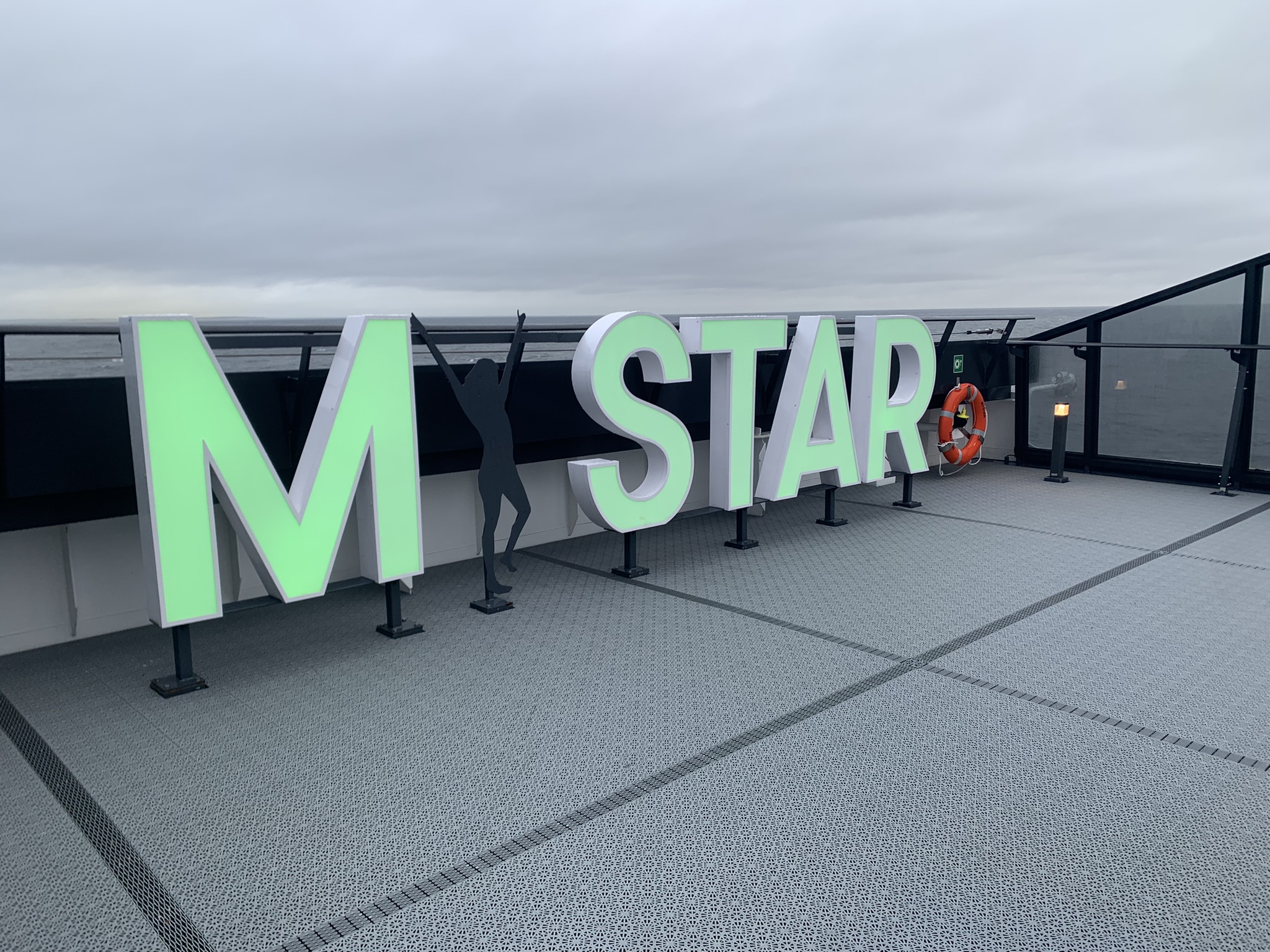
- Investments of EUR 203.3 million. EUR 176.7 million related to the new shuttle vessel MYSTAR.
- 5 million Passengers (2.96 million in 2021).
- 409,769 Freight units (369,000 in 2021)
The 2022 results were impacted by firstly the remaining Covid Travel Restrictions in force at the start of the year and then, more significantly, by the Ukraine War and resultant business cost increases.
Two ships are on long-term charters (ATLANTIC VISION and ROMANTIKA) and four on short-term charters (ISABELLE, SILJA EUROPA, GALAXY and VICTORIA I)

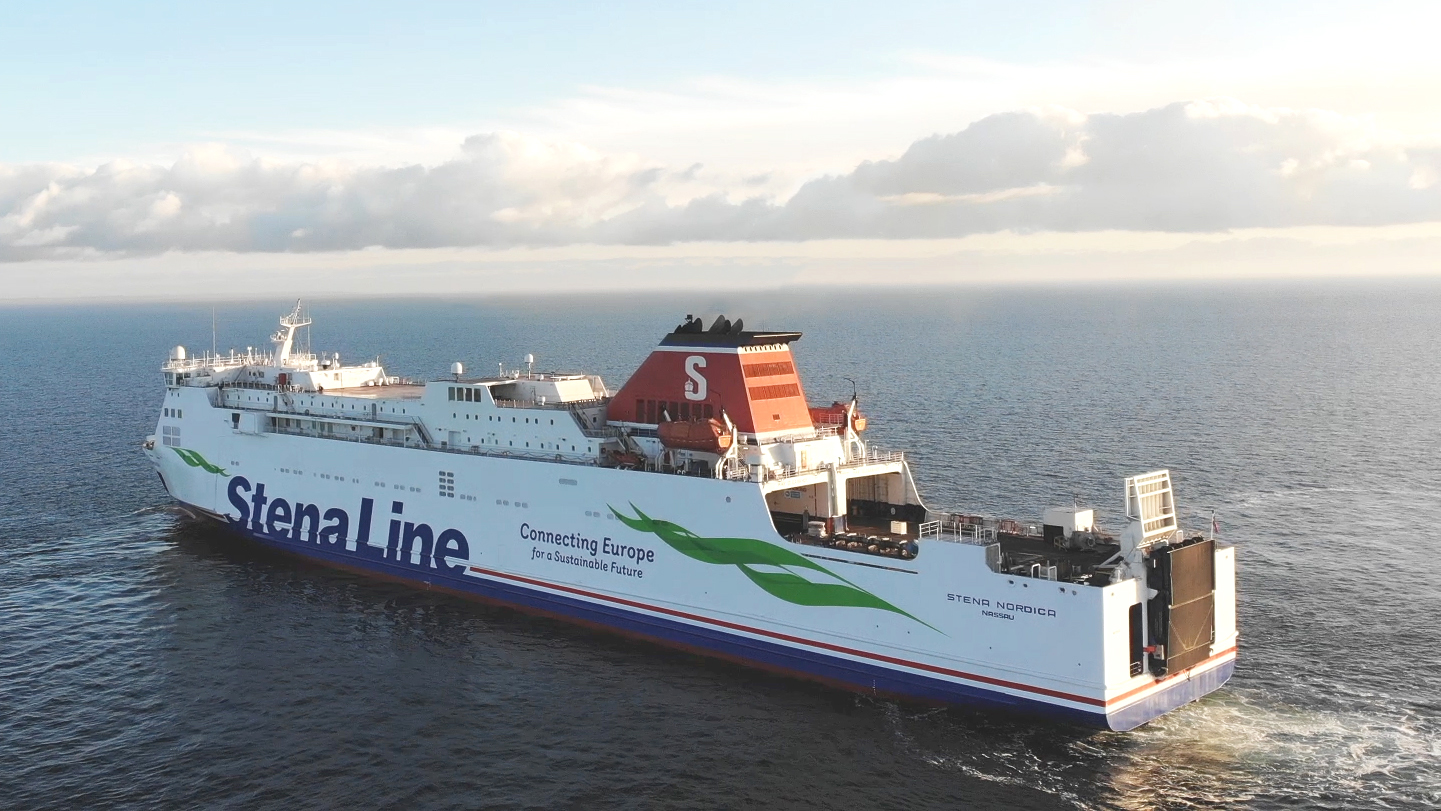
Stena Line has announced that the STENA NORDICA will replace the STENA EUROPE on their Fishguard – Rosslare service. The replacement of the 1981-built ferry is said to “secure the future stability” of the route.
The changeover will take place in July. The STENA NORDICA is currently being comprehensively refurbished at Remontowa, Gdańsk, to increase her passenger capacity, as well as providing new and enhanced facilities.
A commitment has been given by the company to ensure that the crew of the STENA EUROPE are offered roles on the STENA NORDICA or other Irish Sea Stena Line vessels.
Photo: Stena Line
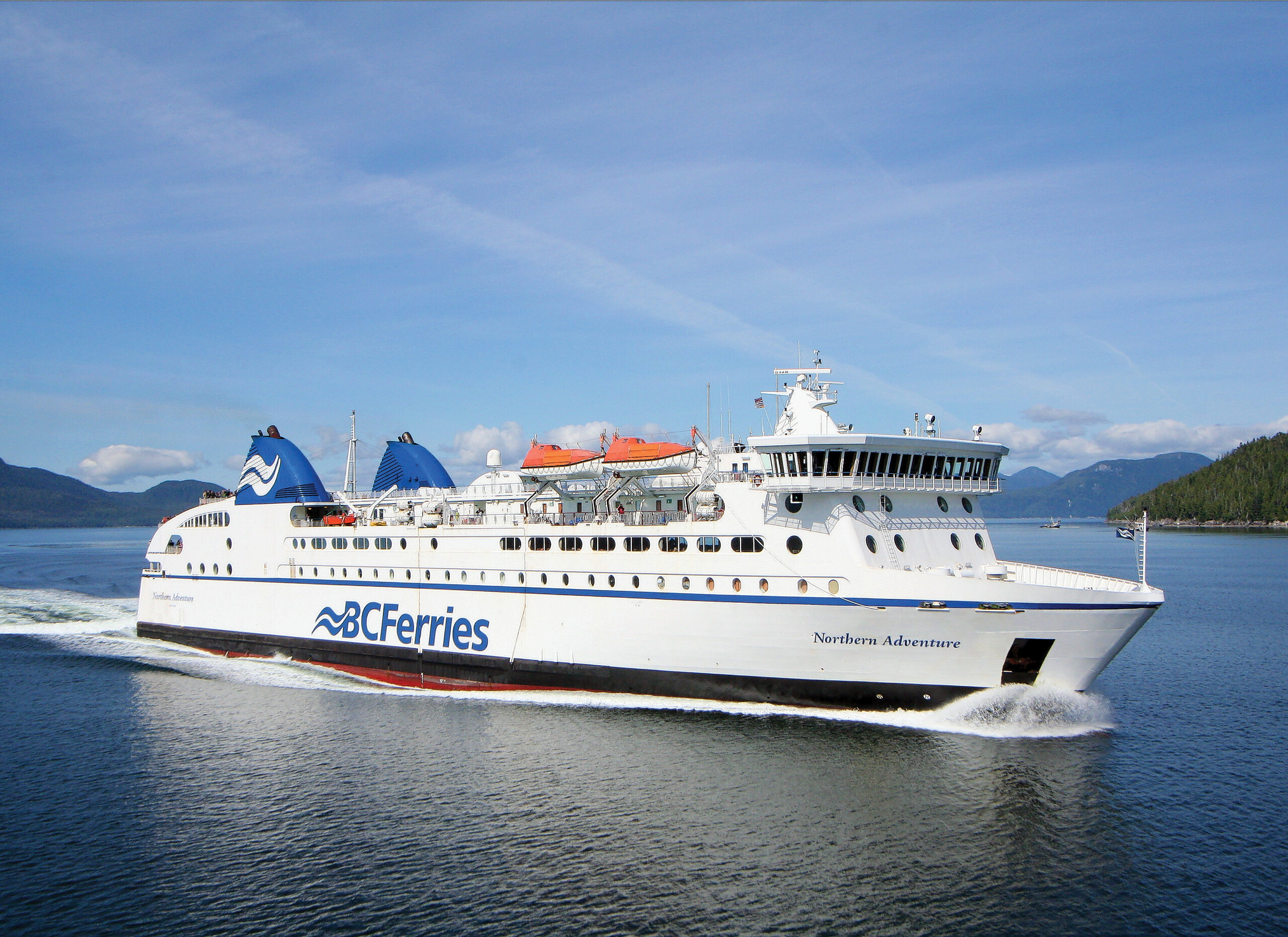
In the three months ending 31 December 2022, BC Ferries reported that compared to the same period in 2021;
- 5 million Passengers and 2.0 million vehicles travelled, an increase of 10% and 3%, respectively.
- Revenue, inclusive of Safe Restart Funding, was $234.8 million, an increase of $12.6 million.
- Net loss was $22.7 million, compared to a net loss of $1.6 million, primarily as a result of less Safe Restart Funding being applied in the quarter and higher operating costs.
- Operating expenses were $245.2 million compared to $209.5 million. This increase is mainly due to an increased number of sailings, with corresponding higher labour costs, as well as higher fuel prices and maintenance expenses.
Stena Line has announced that the STENA NORDICA will replace the STENA EUROPE on their Fishguard – Rosslare service. The replacement of the 1981-built ferry is said to “secure the future stability” of the route.
The changeover will take place in July. The STENA NORDICA is currently being comprehensively refurbished at Remontowa, Gdańsk, to increase her passenger capacity, as well as providing new and enhanced facilities.
A commitment has been given by the company to ensure that the crew of the STENA EUROPE are offered roles on the STENA NORDICA or other Irish Sea Stena Line vessels.
Photo: Stena Line
Stena Line and Peel Ports have signed a significant deal to continue operating to the port of 12 Quays, Birkenhead (Liverpool) until the year 2100.
Stena Line has operated from the Mersey port since acquiring the Belfast – Birkenhead service from DFDS in 2011.
The 77-year deal follows recent major investments in the route;
- The brand-new E-Flexer ferries STENA EDDA and STENA EMBLA were introduced to the route in 2020 and 2021
- Linked to the arrival of the new vessels, the South berth at Birkenhead was converted to two tier loading
- Stena Line has recently purchased two sites adjacent to the 12 Quays Terminal, to provide additional freight storage for its freight customers as they continue to expand their businesses there
Niclas Martensson, CEO of Stena Line, says: “After 12 successful years in 12 Quays our business in Birkenhead continues to flourish year-after-year. This deal is a sign of our long-term commitment to Birkenhead and Peel Ports, with whom we have a very strong partnership. We will continue to make significant investments to increase our services to our customers across the Irish Sea.”
The value of the deal has not been disclosed.
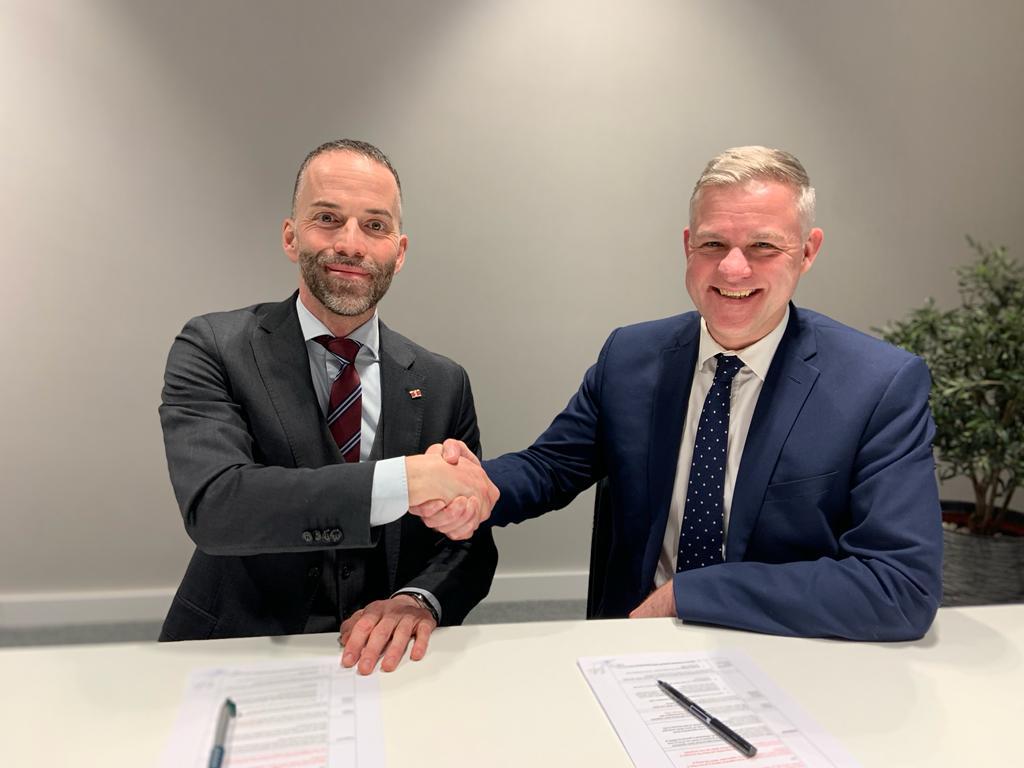
Carl-Johan Hellner of Stena Line (L) and David Huck, Peel Ports. Photo: Stena Line
DFDS’ unaccompanied freight service from Sheerness to Calais recently carried its 50,000th trailer since the route began in July 2021. Average loads have increased by 65% since traffic started.
The route was introduced in response to growing demand from cargo owners and hauliers, who view it as a solution to ongoing congestion issues and delays in Dover.
Richard Goffin, Port Director at London Medway, said:
“The rise in daily unit volumes over that time has also proven what we have long argued – that there is a real need for a viable alternative route for the UK’s supply chain given ongoing congestion around Dover and the shift in demand for increased unaccompanied services. At Peel Ports, we believe companies should look to move non-perishable cargo on unaccompanied services such as ours because they are more reliable, rather than have it travel on as accompanied freight, which has multiple points of failure.”
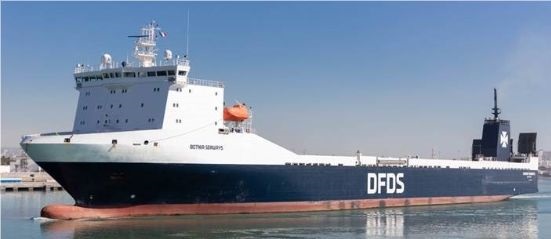
The route is currently operated by the BOTNIA SEAWAYS.
Photo: Peel Ports
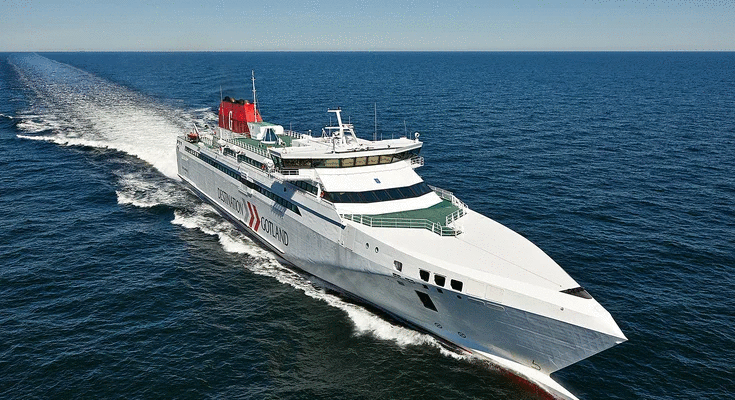
Gotlandsbolaget has announced that they will sell or charter the high-speed monohull GOTLANDIA II.
Gotlandsbolaget subsidiary Destination Gotland has returned the vessel to the parent company following a decision not to offer a seasonal service to Västervik. The company’s Visby services will be maintained by the modern fast ro-paxes VISBY, GOTLAND and DROTTEN.
GOTLANDIA II was built by Fincantieri in 2006 and can carry 900 passengers and 160 cars.
The company also owns the ro-pax VISBORG, currently on charter to DFDS, and another high-speed monohull, GOTLANDIA. It is understood that the company is also in the process of disposing of the latter fast craft, dating from 1999.
Gotlandsbolaget has an ongoing research project, named Horizon, to introduce climate neutral vessels, including a hydrogen powered catamaran.
Image: Gotlandsbolaget
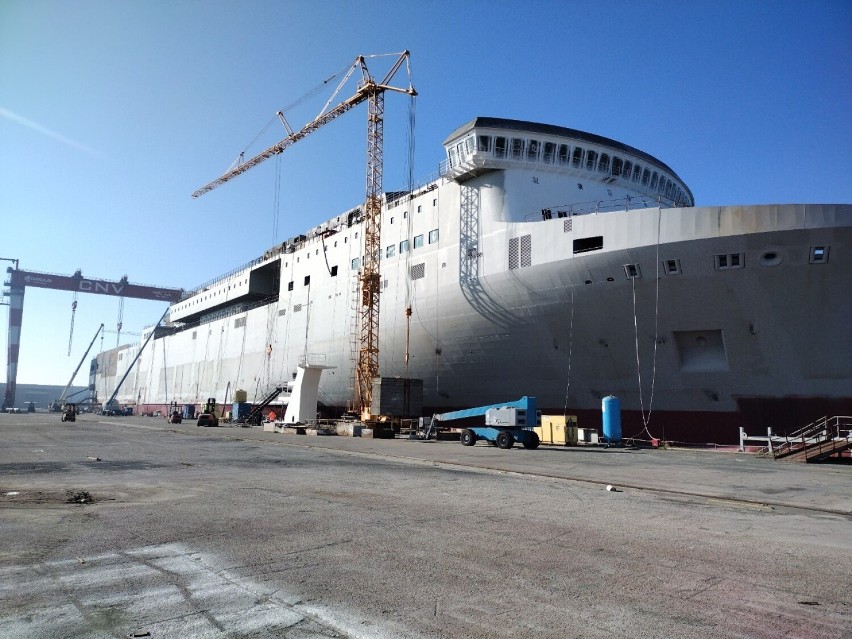
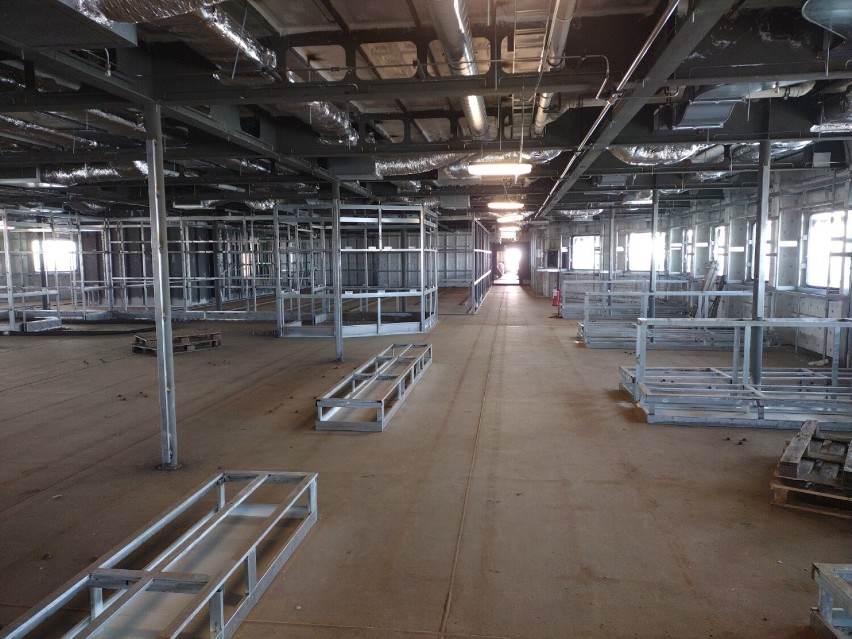
In an interview with Radio Gdańsk, Andrzej Madejski of Polskiej Żeglugi Bałtyckiej (Polferries) has provided an update on the three ro-pax ferries being built at Remontowa for his company and Unity Line.
- The Polferries vessel is due to enter service in 2027. The first of the two Unity Line ferries should be delivered in 2025
- Sheet metal cutting is continuing on the first vessel and the hull should be launched at the end of the year
- All three units will serve the Świnoujście-Ystad line
Meanwhile, Polferries has said that their Visentini ro-pax newbuild will be launched in the Spring, with the vessel entering service in the second half of 2024. The vessel will be chartered from a subsidiary of the shipbuilder for a period of 10 years, with a purchase option after 6 years.
Photos: Polferries
Steel cutting for Alslinjen’s new electric ferry recently took place at the Cemre Shipyard Tukey.
Molslinjen’s construction project manager, Ole Berg-Hansen, pressed the button to start the CNC plasma cutting machine, which cut through the very first plate for the new ferry.
To be completed in September 2024, the vessel’s key characteristics are;
- 8 meters in length
- 600 passengers
- 188 cars
- The ferry will have batteries of 3.1 MWh which can be fully charged in approx. 20 minutes
A similar vessel will be built for Samsø line, with production beginning 1 April 2023.
Video of steel cutting