


While Irish Continental Group retains a strong liquidity position, the Directors consider it prudent not to proceed with the final dividend payment against this background of market uncertainty and will no longer propose a resolution to approve the dividend at the AGM.
Ferry Connections Between Finland And Estonia Are Better Than Ever
A record number of vessels is now shuttling between Finland and Estonia.
“Regular travel, which was forced to come a halt for some time, is now back, and this summer ferry connection with our neighbours is better than ever,” said Valdo Kalm, chairman of the board at the Port of Tallinn. “People can travel to Tallinn Old City Harbour on board of one of nine ships, and two ships go on the Vuosaari-Muuga route.”
The Vuosaari-Muuga connection is especially convenient for those who travel by car and want to discover eastern parts of Estonia, for example, Narva-Jõesuu, or to drive south to Tartu or Lake Peipus. The route is operated by Tallink’s Sea Wind and Eckerö Lines’ Finbo Cargo.
In June, the first ever direct lines from Tallinn to Maarianhamina, the capital of the Aland autonomous area in Finland, were opened. Previously, Maarianhamina used to be a short midway stop on Tallinn-Stockholm route. In July, connection with Turku will be added, so the people of Turku region and Southwestern Finland can travel directly to Tallinn and Estonia.
“Surveys show that the interest in traveling to Estonia is very high among Finnish people, which is why these kinds of diverse traveling options give Finns opportunities to discover well-known places and every hidden gem that Estonia has to offer alike,” Valdo Kalm added.
According to the latest statistics of Port of Tallinn, it was already in June that the number of Finnish nationals outnumbered Estonian nationals on Tallinn-Helsinki line.
From Helsinki, routes to the Tallinn Old City Harbour are operated by Eckerö Line, Tallink and Viking Line. The Vuosaari-Muuga route is operated by Eckerö Line and Tallink. The Turku and Aland routes as well as the cruise to Saaremaa are organized by Tallink.
ICG Boss Says Ferries Subsidy ‘Wasting Taxpayers’ Money’
Eamonn Rothwell, chief executive of Irish Continental Group has warned that any move by the new Government to extend a subsidy scheme to keep certain sea routes going during the Covid-19 pandemic would be a “waste of taxpayers’ money” and further distort the market.
French Stevedore Firm Goes Into Liquidation, Creating A Challenge For Condor
Condor’s St Malo operations face a period of uncertainty as the company which provides its freight and foot passenger baggage services at the port has been placed into liquidation.
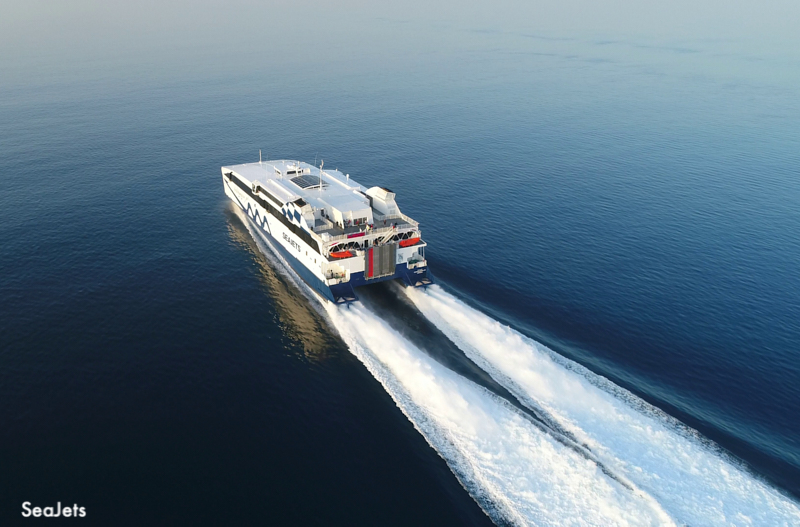
Seajets’ WORLD CHAMPION JET Enters Service On July 3
On July 3, 2020, Seajets’ WORLD CHAMPION JET (6,402gt/2000) will return in service and will be the first large High-Speed Craft to operate on the Hellenic coastal shipping for the summer 2020.
The vessel will depart from Piraeus every morning at 07.00 for Syros – Mykonos – Paros – Naxos – Ios – Santorini and vice versa and will return at 17.50 to the port of Piraeus.
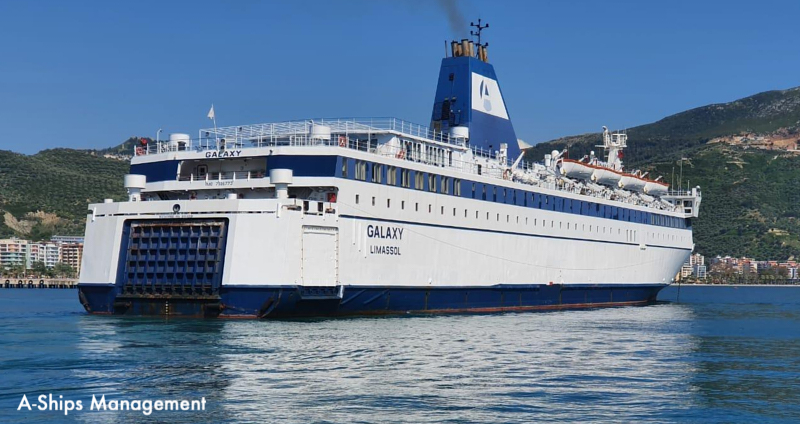
A-Ships Management’s GALAXY Introduced On The Italy-Albania Route
On June 22, 2020, A-Ships Management announced the introduction of its ferry GALAXY (10,553gt/1979) on the Brindisi-Vlore line for the summer season 2020. Last summer, she was chartered to the Moroccan INTERSHIPPING – for a period of 3 months – and served the Algeciras-Tanger Med line.
P&O Ferries Charters RoRo For Irish Sea
P&O introduces a fourth ship on the Liverpool – Dublin route. The new addition will be the Godby Shipping freight-only vessel MISIDA, starting on July 6.
Godby Shipping’s other roro vessel MIDAS has also left its lay-up, fort an unknown short-term charter.
Rederij Doeksen Presents WILLEM BARENTSZ
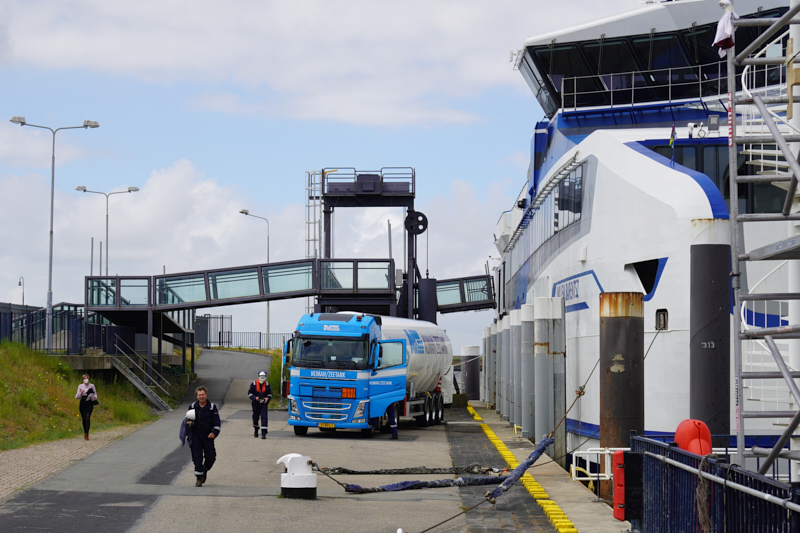
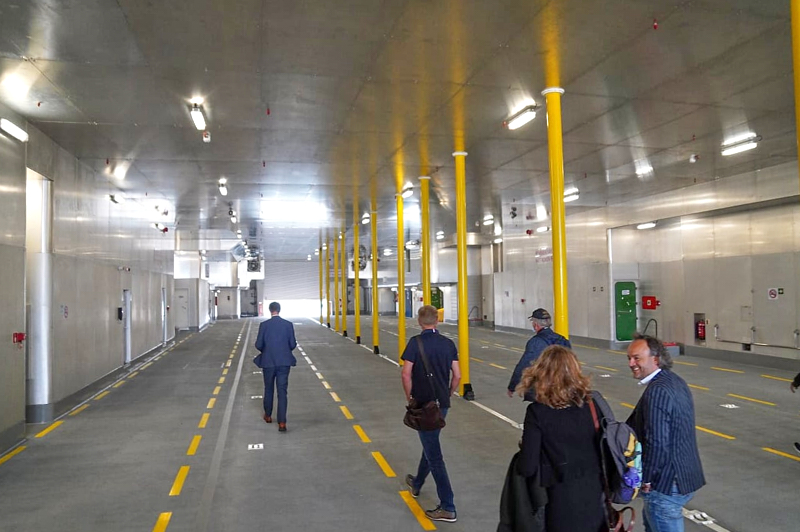
Ferry Shipping News was present at the introduction of WILLEM BARENTSZ of Rederij Doeksen on 1 July 2020.
This latest addition to the fleet of Rederij Doeksen , WILLEM BARENTSZ will come into service on Friday July 3, and her sistership WILLEM DE VLAMINGH in September. The two vessels will be on the Dutch ferry routes between Harlingen-Vlieland and Harlingen-Terschelling. To celebrate this, Rederij Doeksen organised a presentation on the vessel for a targeted audience. We thank Rederij Doeksen for the well appreciated invitation.
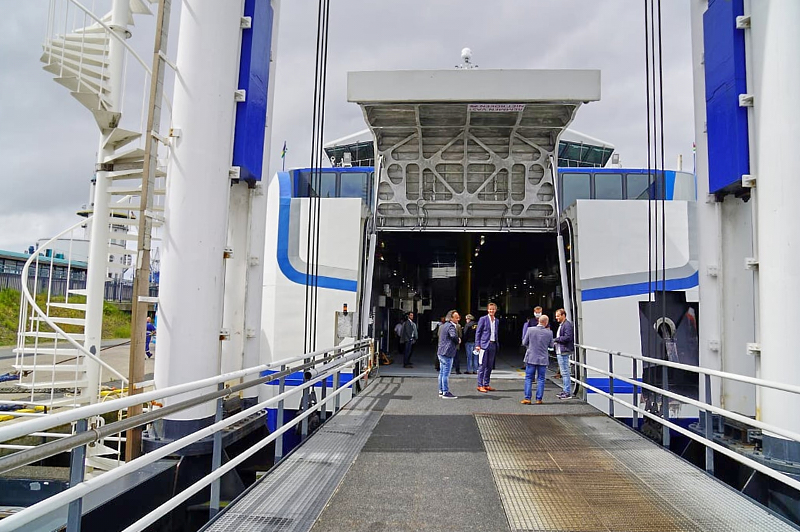
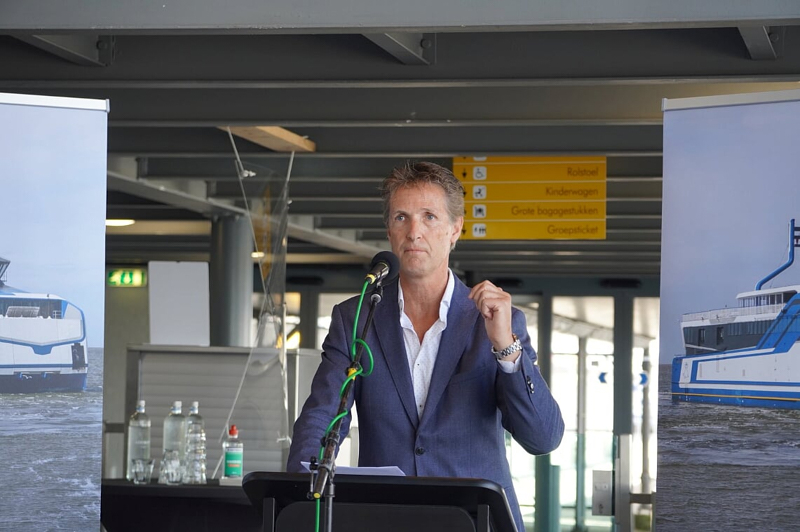
The Managing Director, Paul Mellies explained in his presentation that this vessel and her sister vessel have been constructed with the objective to lower the environmental impact on the Wadden Sea’s vulnerable ecosystem. The islands of Terschelling and Vlieland are very popular holiday destinations in the Netherlands and as a result of that, Rederij Doeksen is transporting approx. 785,000 passengers across the Wadden Sea every year.
Rederij Doeksen is the first Wadden-area shipping company in the Netherlands to commission LNG fuelled passenger ships. The bunkering is supplied by tank trucks.
Thanks to innovative applications, the lightweight, aluminium vessels consume significantly less energy than traditional steel ferries. The choice of LNG over low-sulphur diesel, was well-considered and results in a CO2 emissions reduction of around 11%, along with 90% less NOx, 100% less SOx, and a 95% reduction in PM10 (particulate matter) emissions. When, in time, usable Bio-LNG becomes commercially available, it may be possible to further enhance the CO2 reduction.
Paul Melles added that LNG is a safe choice as it is proven technique.
Furthermore, the vessel is equipped with solar panels to supply a portion of all onboard services that use electricity for lighting, heating, and catering systems, resulting in reduced use of LNG.
The vessel is equipped with a residual heat recovery system that ensures the maximum amount of heat is recovered for heating and electricity generation. This system covers the full energy demand needed to propel the bow thrusters for manoeuvring in port.
All of these above-mentioned factors offer a significant contribution to the preservation of the Wadden Sea area vulnerable ecosystem.
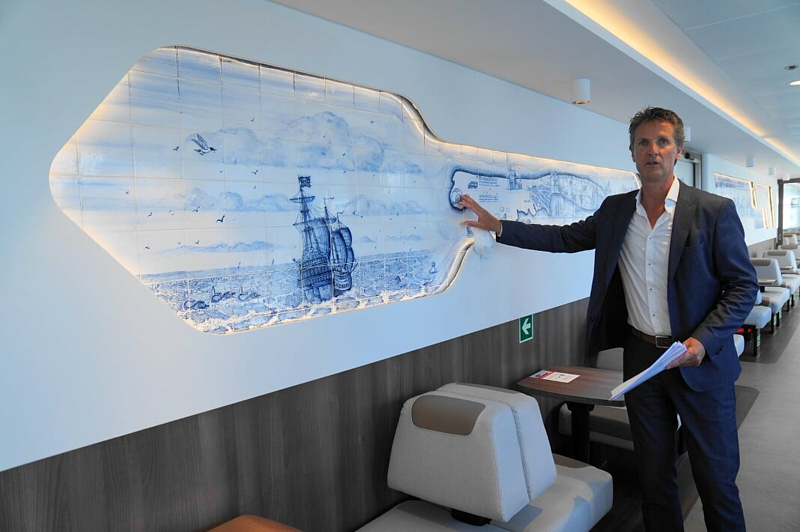
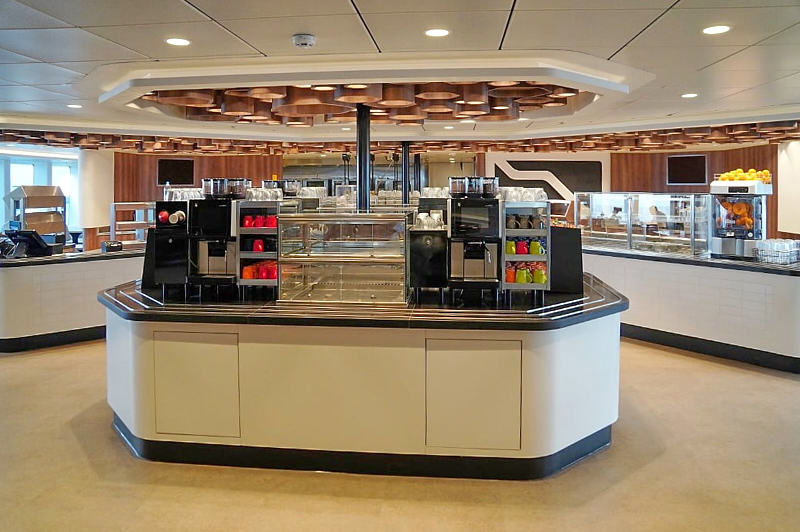
The interior has been designed by the Vripack design studio, located in Sneek. This company also designed the TEXELSTROOM of TESO. This ferry company runs a daily ferry connection between Den Helder and Texel.
Vripack design studio has a vision that, apart from looking at the design itself, the designers should also consider the consequences on its environment and use. It was clear to Rederij Doeksen and Vripack that the design of the interior of both new vessels had to focus on the passenger experience. On both ships, the ‘Wadden experience’ has been enhanced by, for example, maximising the height and width of the windows to create a wonderful outdoor feeling. The outdoor area’s will be the place to be for sun lovers in the summertime. The upstairs bar is cosy and a good place to be when the weather is not good enough to be outside on the 90 minutes journey from the mainland to the islands.
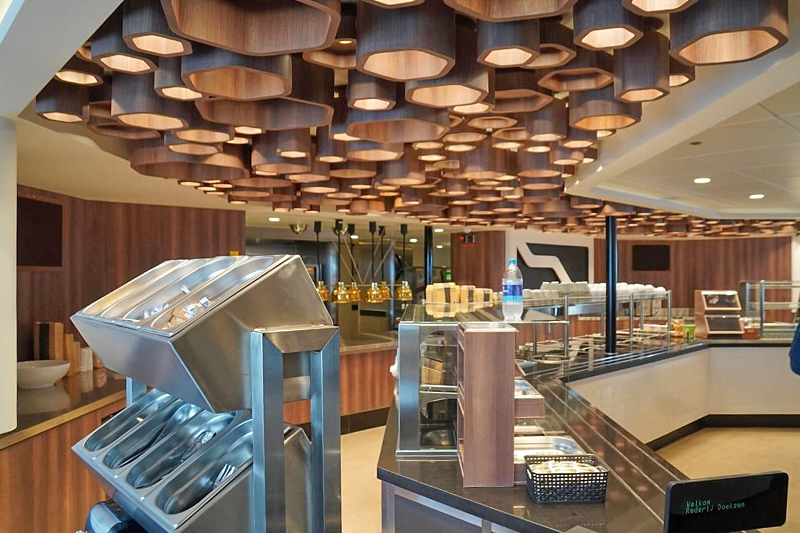

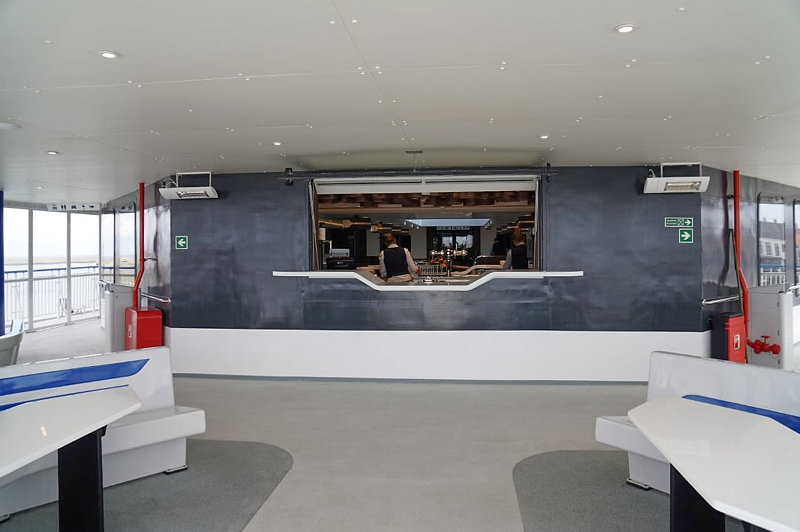
We from Ferry Shipping News wish both vessels and her passengers many safe sailings
Launch Video For Austal Hull 397
The A.P.T. JAMES for the National Infrastructure Development Company of Trinidad and Tobago is a 94 metre high-speed catamaran ferry launched from Austal Vietnam’s Vung Tau shipyard in May 2020 .
The vessel is now alongside at Austal Vietnam in Vung Tau and fit-out work continues, prior to sea trials commencing in August 2020.
Brittany Ferries And Somanor Confirm Termination Of Honfleur Shipbuilding Contract
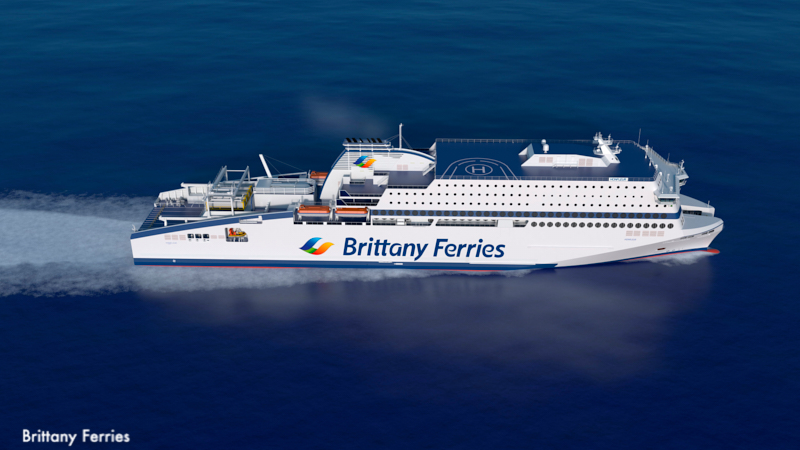
Somanor SAS (a semi-public company bringing together the Normandy Region, and the Calvados and Manche Departments), and Brittany Ferries have confirmed the termination of the construction contract for Honfleur with the Flensburger Schiffbau-Gesellschaft (FSG) shipyard. (17 June 2020)
The vessel has been under construction in Flensburg, Germany, since 2017. HONFLEUR was originally scheduled to enter service in June 2019, but delivery of the vessel has been postponed several times due to persistent financial problems encountered by the yard’s management.
The change of main shareholder in September 2019, with the arrival of Lars Windhorst and the Tennor group, did not allow the yard to return to growth and competitiveness.
With the surprise announcement that the yard was placed under the protection of the Commercial Court in May 2020, and unsuccessful discussions with the current management of FSG and its main creditors, Somanor and Brittany Ferries, the backers of HONFLEUR, acknowledged that they had lost confidence in the yard’s ability to complete the vessel within a reasonable period of time.
The Hellenic Ministry of Shipping and Island Policy announced a second €15 million aid package in order to cover part of the ships operating costs. Furthermore, the aid is given as an incentive for the further recovery of the ferry network, as well as the strengthening and enrichment of the routes for a period until July 20.
At the same time, another package of subsidies for maritime labour is expected by the Ministry of Labour and Social Affairs. This aid package is much- awaited by the shipping companies who estimate that it will help them to cover a substantial part of their fleet operating costs. As far as the passenger traffic is concerned, despite the seemingly better picture of the last few days, May 2020 presented a 60% reduction compared to May 2019. A figure that is essentially low for that period of the year. Also, June 2020 is expected to be worst by 65% -70% compared to June 2019.
Shipping companies underline that the picture of “full” ships that presented by the media is completely “false”, as the ships are routed with a 60% protocol, while the number of routes are also much less compared to 2019. The same period, last year, all the lines were served by more than 20 high-speed ferries while this year high speed crafts are completely absent.
The main priority of the Ministry of Shipping is to introduce -this summer- as many ships as possible into the Aegean as well as to increase the number of routes. At the same time, is preparing a proposal to the European Commission in cooperation with the Ministry of Finance in order to compensate the shipping companies with funds from European resources. Something that is expected to be done by the end of the season.
Moreover, the Ministry is intensifying the measures at ferries in order to be much safer for the passengers due to Covid-19. For this purpose, they deployed extensive inspections on ships at sea by the Coast Guard. The aim of these inspections is the full implementation of protection measures, by crews and passengers, at a period where passenger traffic is expected to increase due to the gradual rise of tourist flows in Greece.

Only one week after the launch of their new triangle service between Santander, Liverpool and Dublin, CLdN Ro-Ro has added Zeebrugge as a port of call to their bi-weekly Leixōes-Rotterdam service.
This move strengthens CLdN’s network to and from the Iberian Peninsula even further.
CLdN has organised for two of their weekly services from Leixōes to Rotterdam, to have an extra call in Zeebrugge. From the port of Zeebrugge they will, as from now, offer their clients additional through – shipment services to Esbjerg and Göteborg. “As a result, we now have a reliable, cost-efficient and environmentally friendly shortsea connection from the very south to the most northern parts of Europe,” says a CLdN spokesman.
To maximise capacity and minimise their carbon footprint as much as possible, the shipping company has chosen to deploy the latest generation of H5 class vessels (carrying up to 450 freight units + 200 new cars per shipment) to the route.
WATCH First Arrival Of CLdN LAURELINE In The Port Of Leixões
In July, Tallink will operate two special return trips to new destinations directly from Riga, to Åland islands in Finland and Saaremaa island in Estonia.
The sailings will all be operated with ROMANTIKA, which normally operates on the Riga-Stockholm route.
In order to ensure that travellers have plenty of time in each of the destinations to see the sights, enjoy some cycling or to go hiking or fishing, the company has increased the time available to spend at the destinations, with 9 hours available for exploring Åland and 12 hours available for discovering Saaremaa.
Tickets for the Romantika July departures will be available from today, 19 June 2020 on the company’s website www.tallink.lv.
In addition to the special cruises, Tallink will also operate four return trips on the regular route of Riga-Stockhom-Riga for work-only travellers. These trips will depart from Riga on 8, 14, 22 and 28 July 2020.
