
First of three Singapore-built battery ferries delivered

By 2022 Newsletter week 11

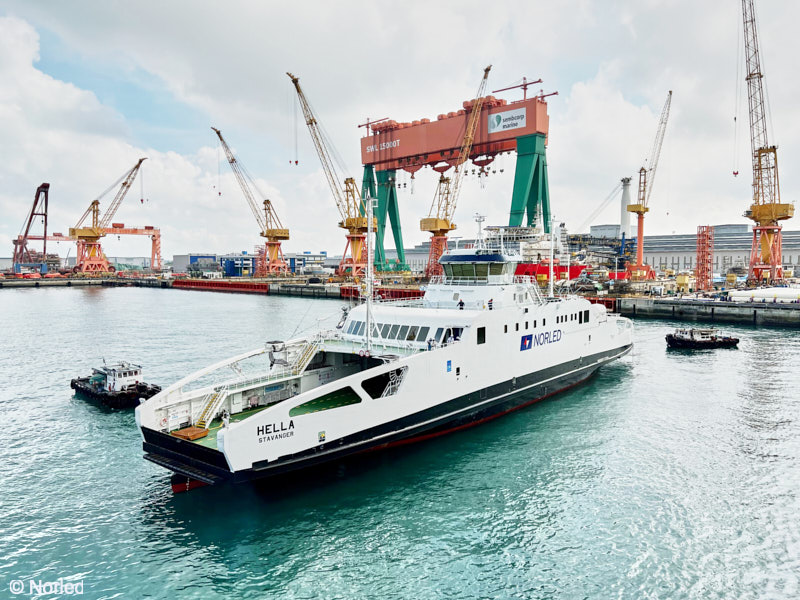
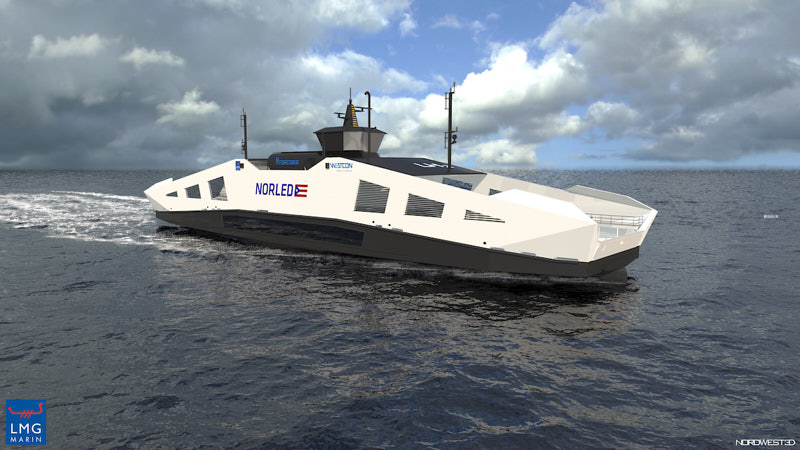
Sembcorp Marine completes the first of three zero-emission battery-powered ferries for Norled. They were designed by its wholly owned subsidiary LMG Marin.


Energy-efficient solutions:

  • quick-connection shore charging plugs
  • auto-mooring
  • auto-cross
  • efficient hull
  • propulsion and heat recovery systems
  • minimised hotel and auxiliary loads.

The vessels will operate normally on zero-emission, powered by lithium-ion batteries at a service speed of 10 knots. When required, they can run on combined battery-diesel hybrid backup modes. The batteries will be charged and recharged using green hydro-electric power.

Length 82.4m | 300 passengers and crew | 80 cars or 10 cars/ 10 trailer trucks

Route: Hella-Vangsnes-Dragsvik (Norway)

The remaining two Ropax ferries are expected to be ready in 2022.

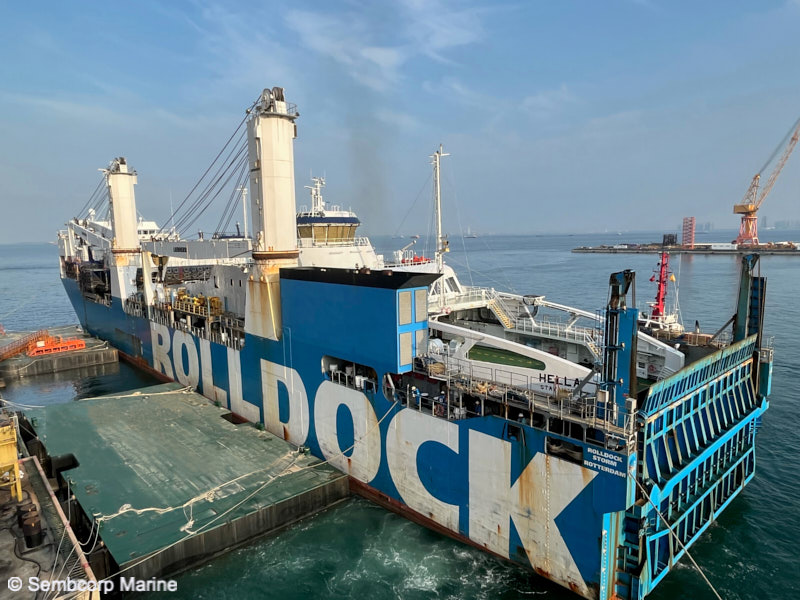
HELLA, the first ferry has been loaded on ROLLDOCK STORM and is on its way to Europe.
INTERESTING READS

By 2019 Newsletter week 38

Maritime Forecast To 2050: Fuel Flexibility Key To Competitiveness In Low-Carbon Shipping Future

DNV GL has published a fuel forecast for the maritime industry. The forecast shows that the uptake of low-carbon and carbon-neutral fuels is essential to meeting IMO GHG goals, with carbon-neutral fuels having to supply 30% to 40% of the global fleet’s total energy by 2050. In the deep-sea sector, ammonia, biodiesel, liquid biogas and electro fuels are promising carbon-neutral options, with battery, hybrid and hydrogen solutions being potential options for the short-sea segment.

TECHNOLOGY

By 2019 Newsletter week 24

Minimizing noise emissions from berthing ships is in the operators’ best interest to avoid higher port fees and other disadvantages. DNV GL’s new class notation QUIET will help shipowners demonstrate that their vessels are low-noise.

DNV GL Webinar: Global Sulphur Cap 2020 – Be Prepared for Compliance

By 2019 Newsletter week 20

As the deadline for the 2020 global sulphur cap is getting closer, many uncertainties still remain, making the job of preparing vessels for the fuel switch more challenging. That’s what DNV GL says. It is organising a webinar with the following content:

  • The regulatory framework, including an MEPC 74 meeting summary
  • The latest update on scrubbers
  • A review of the fuel switch options, including their associated risks
  • The IMO’s recommended Ship Implementation Plan (SIP)
  • An “executive checklist” for 2020 global sulphur cap compliance