

Fuel Cell Testing Moves Forward on ARK GERMANIA
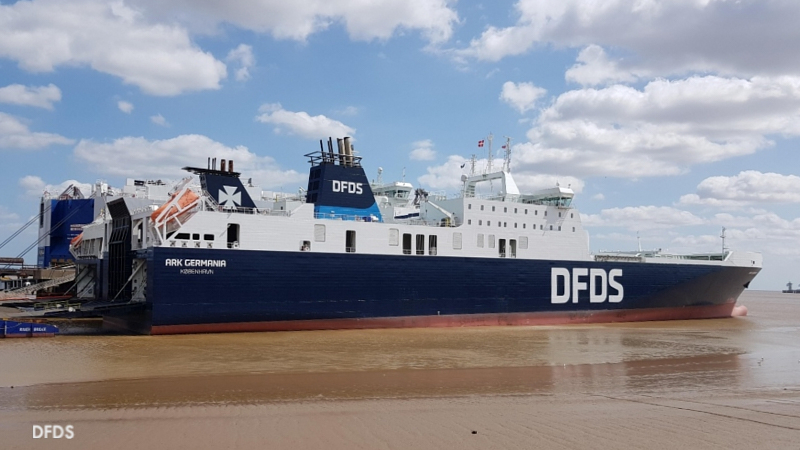
DFDS has received funding for upgrades to ARK GERMANIA to test fuel cell technologies with partners.
Fuel Cell Testing Moves Forward on ARK GERMANIA
DFDS has received funding for upgrades to ARK GERMANIA to test fuel cell technologies with partners.
Copenhagen-Oslo route suspended. PEARL SEAWAYS and CROWN SEAWAYS laid up in Copenhagen. Danish aid package for business means that crews on Pearl and Crown can be sent home with pay.
DFDS is temporarily suspending sailings on its Newcastle to Amsterdam (IJmuiden) ferry route.
The last sailings on the route before the temporary suspension will be from Amsterdam on Saturday 21 March and from Newcastle on Sunday 22 March.
Passenger capacity will be reduced to 50% on DFDS sailings from Dover to Calais and Dunkirk and Newhaven to Dieppe. There will not be a reduction in sailings, the schedules will remain the same.
DFDS stopped bookings of accompanied units and any other passengers on North Sea routes from Gothenburg to Ghent, Immingham or Zeebrugge.
Units that are normally driver accompanied can of course continue to be shipped, but only on an unaccompanied basis.
DFDS’ Outlook for 2020 Has Been Suspended
DFDS’ outlook for 2020 has been suspended following further restrictions on intra-European travel and general lock-down measures across Europe.
Passenger ferry services generated around 16% of DFDS’ total revenue of DKK 17bn in 2019.
The majority, 84%, of DFDS’ total revenue is thus generated by freight activities, including freight ferry services and logistics solutions.
As anticipated in the outlook for 2020, freight volumes linked to UK were for the first two months of 2020 lower than last year as volumes in Q1 2019 were boosted by UK stockpiling.
Freight ferry volumes between Europe and Turkey were above 2019 for the first two months of 2020, likewise in line with expectations.
The result for the first two months of 2020 was overall in line with expectations.
Until now freight activity has been in line with expectations but has started to decrease as manufacturing plants suspend operations and demand in general is impacted by the lock-downs. Contingency planning to mitigate effects of changes in demand and operations for both ferry and logistics activities is ongoing across DFDS’ network.
The further restrictions on intra-European travel and general lock-down measures have significantly reduced financial visibility and the outlook for 2020 is therefore suspended.

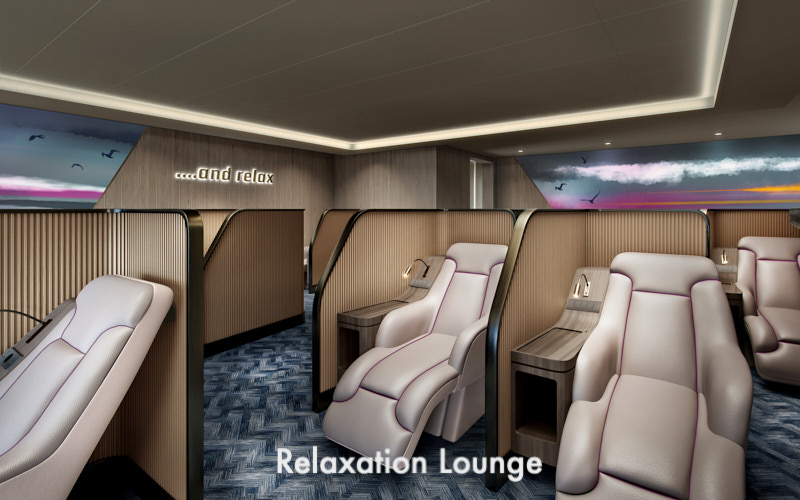
Since Monday 17 February, passengers looking for peace and quiet can enjoy the new Relax Lounge on DUNKERQUE SEAWAYS. The lounge boasts luxury reclining chairs built into an airline style pod for extra privacy, complimented by soft lighting for the perfect stress-free environment. Prices depend on availability and start from £6 per person each way.
Children under 16 are not permitted into the Relax Lounge.
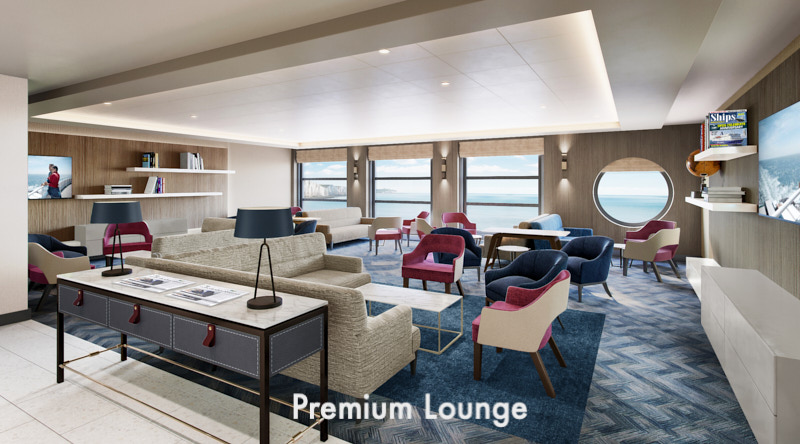
The ships’ Premium Lounge areas have also been fully refurbished with comfortable lounge furniture and modern décor to provide the luxurious and peaceful surroundings demanded by the modern traveller. This private lounge is open 24 hours a day and is available for all ages from £12 per person each way. Passengers can enjoy complimentary glass of Prosecco, premium snacks and pastries, hot and cold refreshments and hot food available from the Premium Lounge menu.
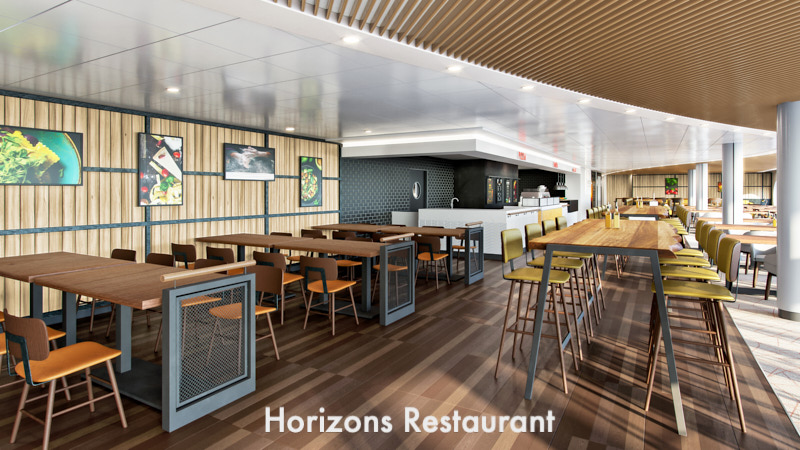
With the success of the Horizon restaurant, a pizza, pasta, salad concept on the Dover to Calais routes, the refit also includes this restaurant being installed on all three ships on the Dover to Dunkirk route. Here guests can enjoy a selection of freshly cooked, made to order pizzas, pasta dishes and healthy salads. Passengers can place their order, take a buzzer with them to their table and collect their meals when called.
Passengers will also benefit from new bathroom facilities throughout the ship and can now enjoy watching a spot of television in the Lighthouse Café, with newly installed TVs as an additional feature.
The refit was designed by SMC Design and carried out by Aecor Marine, with the bathrooms being fitted by Trimline.
DELFT SEAWAYS will be fully refitted from 1st March with DOVER SEAWAYS at the end of March 2020.
DFDS Looking for New Inland Areas Behind the Port of Trieste
The Danish shipping company DFDS, which two years ago took over the Turkish player Un RoRo with its maritime line from Istanbul to North Adriatic and France and the port terminal in Italy, intends to invest in new areas behind the port of Trieste.
Jens Peder Nielsen, head of Samer Seaports & Terminals, said to Ferry Shipping News that the group is interested in areas connected to the railway and part of the port’s free zone. “The aim is to increase intermodal services between Trieste and inland destinations in Central and Eastern Europe” Nielsen said. “We are looking at areas of at least 50-100,000 square metres where we can move the cargo units we transport between Italy and Turkey on board our ships and between Trieste and the rest of Europe by train”.
Samer Seaports & Terminals has plans also to invest in a new gantry crane and to upgrade the rail shuffle currently existing on the quay of the North Adriatic port.
In the 2019 full year report DFDS states “that port congestion in Trieste lowered the efficiency of train services” and also added that “the last major restructuring to be completed is to improve the operational efficiency of the two ports currently operated in Trieste. This is expected to be achieved during Q2 2020”.
DFDS: Interim and Full-Year Report Q4 2019
The UK market for freight and passengers slowed further in Q4 due to Brexit uncertainty. This lowered earnings for several business units, particularly Channel and North Sea.
Logistics Division increased EBITDA 17% in Q4 as contract logistics in UK & Ireland and other activities across the division continued to perform well despite the UK slowdown.
Mediterranean’s revenue development was ahead of expectations in Q4 but a change in the accounting for ferry maintenance and spare part costs added operating costs of DKK 48m. Moreover, port congestion in Trieste lowered the efficiency of train services.
Operational improvements in the route network are on track.
Outlook 2020
Positive impact from the Win23 strategy initiatives
Negative impact: uncertainty about Brexit
Revenue is expected to grow around 4% and EBITDA before special items is expected to be within a range of DKK 3.5-3.9bn (2019: DKK 3.6bn).
DFDS has acquired 100% of the share capital of the Finnish logistics company Freeco Logistics based in Turku, with additional offices in Vantaa, Finland, and Tallinn, Estonia.
Freeco Logistics provides international transport services between mainly Finland and Scandinavia, Baltics and continental Europe. Domestic transport services are offered as well, partly to optimise the international operation.
Operations include a fleet of around 150 trailers and 8 trucks.
Freeco Logistics expands and strengthens DFDS’ current activities between Finland and continental Europe and adds, in particular, in-house transport capacity and access to a large carrier network. The acquisition is thus expected to bring synergies from business development.
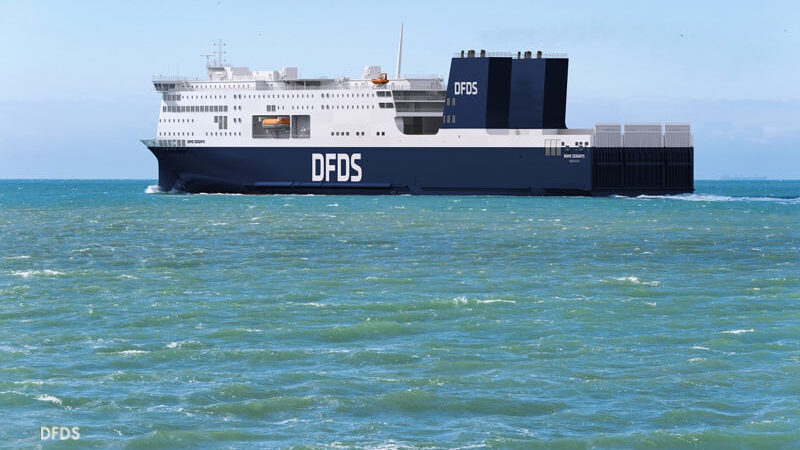
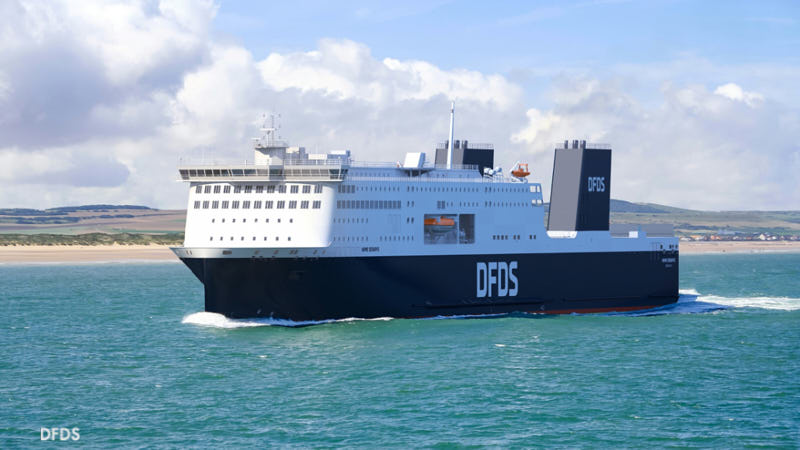
Although some of the renderings show the coast of Calais and the Port of Dover, the ropax ferries under construction at the Guangzhou Shipyard International, will be deployed in the first and second half of 2021 in the Baltic region. (plans can always change of course).
Christian Simon Nielsen, Project Manager, has kindly shared some great 3D renderings of the design on the DFDS newsroom.
With their capacity for 4,500 lane metres of freight and 600 passengers, the newbuilds are designed to accommodate future growth. The keel-laying ceremony which will take place in January 2020.
Ferry Shipping News understands there is an option for a further two units.

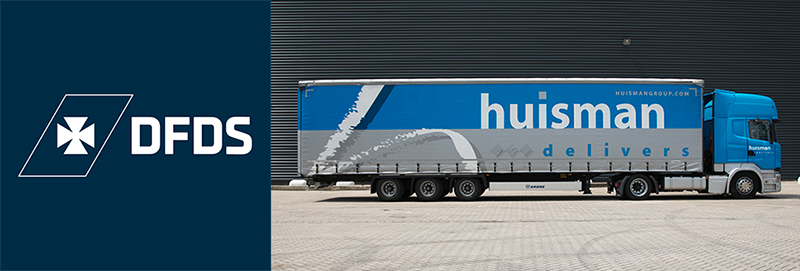
DFDS has acquired 100% of the share capital of the Dutch logistics company Huisman Group BV.
Huisman Group is a provider of part-load transport solutions and contract logistics focused on time-critical freight between the UK/Ireland and continental Europe.
Operations include warehouses and cross-docking facilities in Wijchen, the Netherlands, and Corby, England, as well as a fleet of around 55 trailers and 50 trucks. The company has 104 employees and annual revenues of EUR 23m.
Huisman Group expands DFDS’ activities between continental Europe and the UK/Ireland and adds, in particular, expertise in part-load solutions. This is expected to enable a further development of part-load solutions in DFDS’ logistics network as well as access to new customers. The acquisition is thus expected to bring synergies from both business development and operational integration.

New DFDS Mega Freight Ferries n° 3 and 4 to be Deployed on Belgium – Sweden
The DFDS freight website now shows that the 3rd Chinese mega roro, Hollandia Seaways, will start to operate on Ghent – Gothenburg next week. She arrived in Sweden after the long delivery trip, which included berthing trials in Vlaardingen and Immingham.
DFDS expects in Q2, 2020 to replace the three freight ferries currently deployed on Gothenburg – Zeebrugge with the 4th 6,700 lane metre mega freight ferry. The ferries that are replaced are expected to be deployed elsewhere in DFDS’ European route network.
The first two units, Ephesus Seaways and Troy Seaways (photo), are in service in the Mediterranean Sea.
DFDS & CLdN: Space Charter Agreements on Gothenburg – Zeebrugge
In June 2019, DFDS added the freight ferry route between Gothenburg and Zeebrugge to its portfolio.
DFDS currently deploys three freight ferries, offering five weekly departures in each direction: Magnolia Seaways, Belgia Seaways and Gothia Seaways.
In order to optimise capacity utilisation, DFDS has entered into two mutual space charter agreements with CLdN that also operates a freight ferry route between Gothenburg and Zeebrugge.
The space charter agreements entail that capacity is shared between route operators while all commercial activities remain entirely under the control of each operator.
“We are very pleased to announce our new space charter agreements. The flexibility of the agreements entails that we reduce the environmental footprint while offering a total of ten weekly departures in each direction on our two routes between Sweden and Belgium to support trade and the growth of our customers”, says Peder Gellert Pedersen, Executive Vice President, DFDS Group, and Head of Ferry Division.
The space charter agreements are expected to start on 1 January 2020. When the agreements are fully implemented, DFDS and CLdN are each expected to deploy one freight ferry on their respective routes between Gothenburg and Zeebrugge.