


Tallink Grupp Transported Record Number Of Passengers And Cargo, But Revenue And Profit Decreased

By | 2019 Newsletter week 10 | No Comments

Tallink saw a significant increase in the number of cargo units transported: + 5.7%, totalling nearly 385,000 cargo units transported in 2018.

The total number of passengers increased with 900 to the highest number ever: 9,756,611.

Tallink Grupp’s passenger numbers increased on nearly all the group’s routes and the number of cargo units transported increased on all the routes, with record numbers of passengers and cargo being transported on the Estonia-Finland routes and Estonia-Sweden routes, and the largest ever number of passengers transported also on the Latvia-Sweden route in 2018.

Despite the records achieved, the group’s revenue and profit were impacted by higher fuel costs, lower charter revenue and a longer-than-planned docking of one of the group’s vessels in spring 2018.

  • -1.8% revenue EUR 949.7 million (EUR 967.0 million)
  • -13.9% net profit EUR 40.0 million (EUR 46.5 million in 2017).

In 2018 Tallink Grupp’s vessels completed a record number of 10,070 trips.

See also the Moodie Davitt Report in the Media section

Tallink’s Retail And Restaurant Sales Slip 2.3% To €524 Million

By | 2019 Newsletter week 10 | No Comments
  • Last year, Tallink Grupp saw unaudited revenue from restaurant and shops sales (including onshore) slide by 2.3% to €524.4 million as spend per passenger declined slightly.
  • The core retail and restaurant segment accounted for 55.2% of total Tallink Grupp revenue in 2018, in line with 2017 (55.5%).
  • Sweden-Finland is key route for generating duty free sales . Traffic fall of 2.5%. Reason is the BALTIC PRINCESS which was out of service for 68 days in Q1, for maintenance.
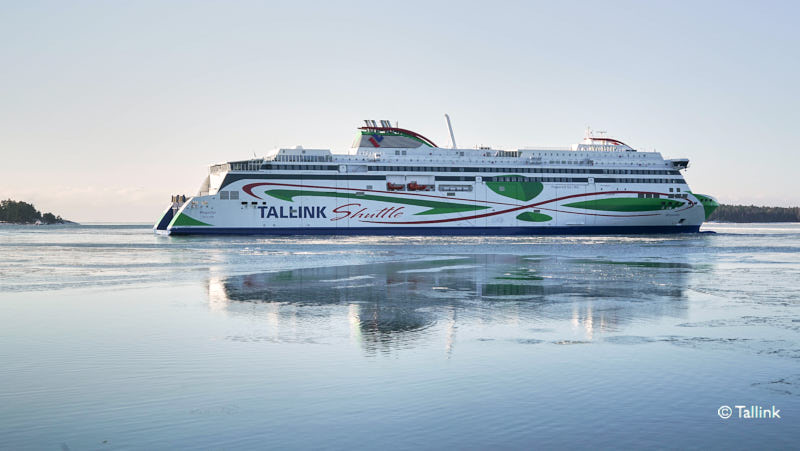
  • Estonia-Finland is busiest route (5.1 million pax). Increased competition = pressure on ticket prices. A new ferry has been ordered to join the MEGASTAR on the route in 2021.

Tallink Grupp Transports Record Number Of Cargo Units In 2018, But Fewer Cars

By | 2019 Newsletter week 2 | No Comments

Tallink Grupp transported in the full year 2018:

+0,04% passengers: 9,760,469 (9,755,720)

+5,67% cargo units: 384,958 (364,296)

-0,83% passenger cars: 1,124,897 (1,134,323).

  • Growth in spite of challenges, like longer than planned docking of BALTIC PRINCESS.
  • Record number of passengers in July, with 1,2 million pax in this month only.
  • Strong growth of cargo transportation, giving a new record.

Tallink Grupp’s Passenger Numbers And Cargo Units Increase, But Net Profit Is Down

By | 2018 Newsletter week 45 | No Comments

Tallink Grupp has announced its unaudited financial results for Q3 and first nine months of 2018.

Q3

+1.2% passengers (2.9 million passengers)

+0.3% revenue (EUR 283.6 million)

-3.6% unaudited net profit (EUR 46.1 million)

Comment:

  • number of passengers travelling, and the number of cargo units transported increased in all the geographical segments, however:
  • higher fuel costs
  • decreased charter revenues two Superfast ferries have led to the slightly reduced profit compared to the same period in 2017.

Unaudited 9-month interim statement

+0.9% passengers (7.5 million passengers)

-7.9% net profit (EUR 41.8 million)

-1.5% unaudited revenue (EUR 723.2 million)


Comment:

  • June and July highest numbers of passengers ever for these months
  • Largest number of passengers on the Estonia-Finland routes.
  • Largest number of cargo units on the Estonia-Finland routes
  • The greatest increases in both passengers and cargo units transported, has taken place on the Latvia-Sweden route.
  • Significantly increased fuel prices
  • Lower charter revenues
  • Strong competition
  • Longer than planned docking of one of the vessels in Q1

FERRY FINANCE

By | 2018 Newsletter week 41 | No Comments

Tallink Amends Group Dividend Policy And Intends To Reduce The Company’s Share Capital 

The Management Board of Tallink Grupp adopted a decision to supplement the Group’s dividend policy. With the decision the Group’s dividend strategy foresees the payment of dividends in the amount of 0.05 EUR per share going forward, the company’s financial results permitting.

In addition, the Group’s Supervisory Board gave the Group’s Management Board the instruction to prepare a proposal for the 2019 general shareholders’ meeting to reduce the company’s share capital by at least 7 cents per share. The aim of the reduction is to improve the company’s capital structure.

Higher Fuel Prices Put Pressure On Tallink’s H1 Profits Despite The Increased Cargo

By | 2018 Newsletter week 33 | No Comments

Some highlights of Tallink Grupp’s half-year results for the period January 1 – June 30, 2018:

  • 6 million passengers (+0.8%), with most notable growth of 11.4% on the Latvia-Sweden route.
  • Cars 533,710 (+1.3%).
  • Steady increase of cargo transportation (+9.2%). The lion’s share was carried on the Estonia-Finland route: 122,914 cargo units (+10.4%). The most notable growth was on Latvia-Sweden, where a total of 7,832 cargo units were transported (+45.8%).
  • Sales revenue decreased (-2.6%), providing EUR 439.6m of unaudited revenue
  • Unaudited net loss EUR 4.3m (2.4m).


Challenges:

  • Increase in fuel prices.
  • The decline in the absolute number of passengers on the Tallinn-Helsinki route in Q2, although Tallink has managed to increase both passenger numbers and market share on this route as a result of investments.
  • The excise duty levels in place in Estonia have an impact on the results and affect the Estonian tourism and service sectors negatively as a whole.

Tallink Installs Innovative Wireless Trackers On Vessels To Provide Passengers With Best Network Coverage On The Baltic Sea

By | 2018 Newsletter week 28 | No Comments

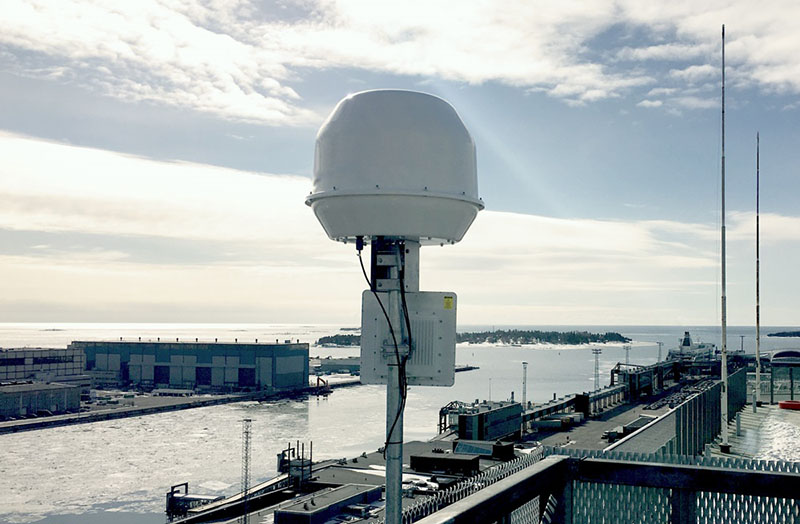
Tallink Grupp, in partnership with Swedish company Nowhere Networks have installed a Wireless Antenna Tracking Sytem (WATS) on board MEGASTAR. The tracker provides the ferry, operating on the Tallinn-Helsinki route, with a 400M/bit internet connection on board – the fastest and most stable internet connection currently available on the Baltic Sea.

With the new technology a high-speed connection is beamed to the shore by the tracker and the antenna re-aligns itself in real-time to maintain the highest speed at all times.