On 10 May the Golden Star Ferries’ trimaran, SUPER SPEED was introduced on the Piraeus -Paros – Naxos – Mykonos – Tinos – Rafina – Andros – Tinos – Mykonos – Naxos – Paros – Piraeus run.
She was purchased from the Croatian Krilo Ferry in October 2017, while during the summer season of 2018 she served the Volos-Sporades-Thessaloniki run. This year she is making a fresh start, performing a peculiar and clever run to the Cyclades.
SUPER SPEED was built in Australia (2002). She is 853gt (269 dwt), 54.5m long, 15.08m wide and 2m draught. Her carrying capacity is for 400 passengers. She has 3 MTU 16V4000 engines (6,960 kW) as well as 2 Kamewa 63 SII waterjets. Her maximum speed is 35 knots.
Rederij Doeksen’s new LNG vessels are on their way to the Netherlands. The SUN RISE left Vung Tau (Vietnam), where the two LNG catamarans were built, on 8 March. The vessels are expected this month in the Netherlands and will, from January 2020, carry out service to and from the Dutch Wadden islands of Terschelling and Vlieland.
These vessels will be the first single fuel LNG ferries in the Netherlands and the very first ships in the world where single fuel LNG engines are directly driven by a fixed propeller.
In 2016, Rederij Doeksen commissioned the Australian firm Strategic Marine to build two new cats. Dutch design agency Vripack signed for the design of interior and exterior.
Both will be powered by the new mobile 16-cylinder single-fuel gas engines MTU has developed. This engine is the first single-fuel high-speed gas engine that can directly and mechanically drive a fixed pitch propeller, with transient acceleration capabilities comparable to that of a typical high-speed diesel engine.
The waste heat recovery system applied to the LNG-vessels (designed by Orcan Energy, Munich) covers the entire energy demand for the intensive operation to supply electric power to bow thrusters when maneuvering in harbour. The result is that using the two efficiency packs means an annual CO2 reduction of 318 tonnes for each – a saving of 260,000 litres of fuel and 462,600 kWh a year.
The project actively contributes to the theme ‘Sustainable development of ports and energy transition’ from the Pioneers program Waddenfonds 2012-2013. The Waddenfonds awarded Rederij Doeksen a subsidy of € 1,207,500 for this new construction project.
Adriatic Fast Ferries d.o.o. is a new Croatian ferry company founded by former Jadrolinija CEO Alan Klanac and Swedish shipping and travel entrepreneur Ralph Axelson (ex-owner of HSC EXPRESS, recently sold to the Greek Panagiotakis/Stefanou families for crossings out of Rafina).
The ferry company will operate the brand Splitexpress.com with the high-speed ferry ADRIATIC EXPRESS. She was built for Red Funnel in 1998 and can take 170 passengers.
The unique route links Split Airport with Split Town, Bol (Brac) and Stari Grad (Hvar).
Only Serco Northlink and CalMac are candidates for the GBP 370 million contract currently tendered by government agency Transport Scotland, after FRS decided to pull out. The two remaining candidates submitted tender on 29 April. Now Transport Scotland has to take a decision.
The contract is starting on 31 October and lasts eight years.
Damen has established a presence in Finland for the first time. The Helsinki office has been set up to take advantage of the depth of engineering expertise that exists in the country following the group’s entry last year into building large vessels for the Ro-Pax, Cruise and Offshore markets via its new Romanian yard, Damen Shipyards Mangalia. The new office will augment and extend Damen’s engineering capability in this market segment.
Finland was selected as the location because, along with Italy, Germany and France, it is one of the leading countries in the world in the design and build of cruise and ro-pax vessels; this in combination with particular expertise in ice-class vessels, a growing segment of the cruise market.
Port Of Kiel First Cold Ironing Facility Officially Inaugurated At The Norwegenkai
On 9 May the shore power facility was declared open by the Minister-President of the federal state of Schleswig-Holstein, Daniel Günther, the German Federal Government’s Coordinator for the Maritime Industry, Norbert Brackmann, and the Lord Mayor of Kiel Dr Ulf Kämpfer along with Dr Dirk Claus, the Managing Director of Seehafen Kiel GmbH & Co. KG) and Trond Kleivdal, Board Chairman of the Color Line.
With immediate effect, the Color Line’s big cruise-ferries can now be supplied with electric power from on shore.
The regional government of Flanders has decided to invest EUR 1 billion in a new lock for the Port of Zeebrugge.
The increased traffic justifies a second lock. Zeebrugge is the number one player for ro-ro car traffic, with many PCTC’s calling at the inner harbour.
The large new lock will be built in the area on the site of the old Visart lock.
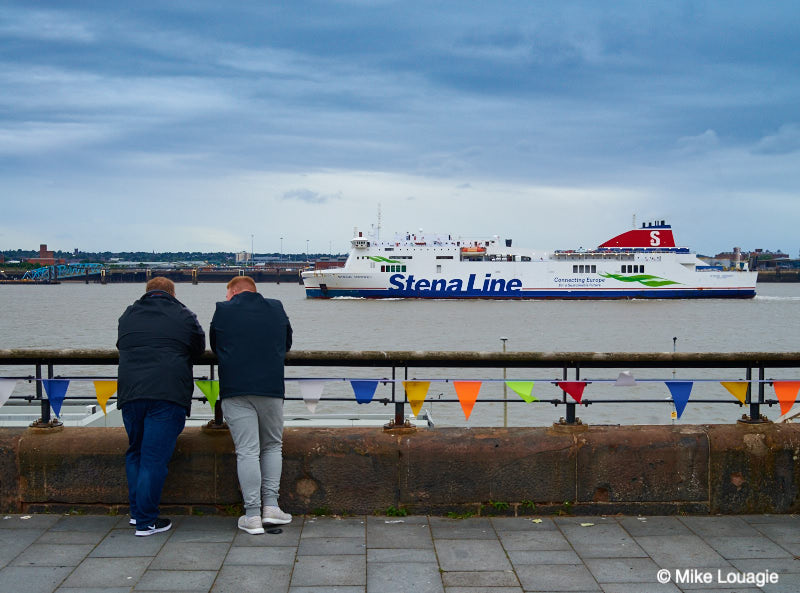
Belfast Harbour has committed to investing GBP 15 million to re-develop Victoria Terminal 2 which services the Belfast-Liverpool route. The project will enable the terminal to handle the next generation of Stena Line’s new ferries.
2019 To Be A Transition Year for Fjord1
Fjord1’s Q1 results have taken a dive. The company says it has to do with the loss of two important routes, and the preparations for the new routes.
“Nothing to worry about,” is what the company says to the Norwegian media. The company has a contract portfolio within the ferry segment of NOK 22 billion. The contracts last for 2033, and during 2019 the company will receive 14 new vessels.
Some highlights of Fjord1’s first quarter:
- Fjord1 started new contracts on 1 January 2019, for the following routes: Hareid-Sulesund, Brekstad-Valset and Arsvågen-Mortavika, Daløy-Haldorneset.
- The new connections involved start-up costs.
- The company lost the Halhjem-Sandvikvåg and Flakk-Rørvik routes.
- Newbuilds SULØY and GISKØY entered service.
Key figures (in million NOK)
-11% Revenue 640 (218)
-28% EBITDA 158 (218)
-62% EBIT 57 (147)
-86% Result 14 (107)
Hurtigruten has partnered with the Norwegian startup Brim Explorer, introducing battery powered catamarans custom built for Polar water exploration.
Debuting in the spring of 2020, the 24-meter vessel will operate a variety of daily silent and sustainable ocean excursions from her homeport Longyearbyen on the Arctic island of Svalbard – operating under the Hurtigruten Svalbard brand.