TECHNOLOGY

By 2019 Newsletter week 20

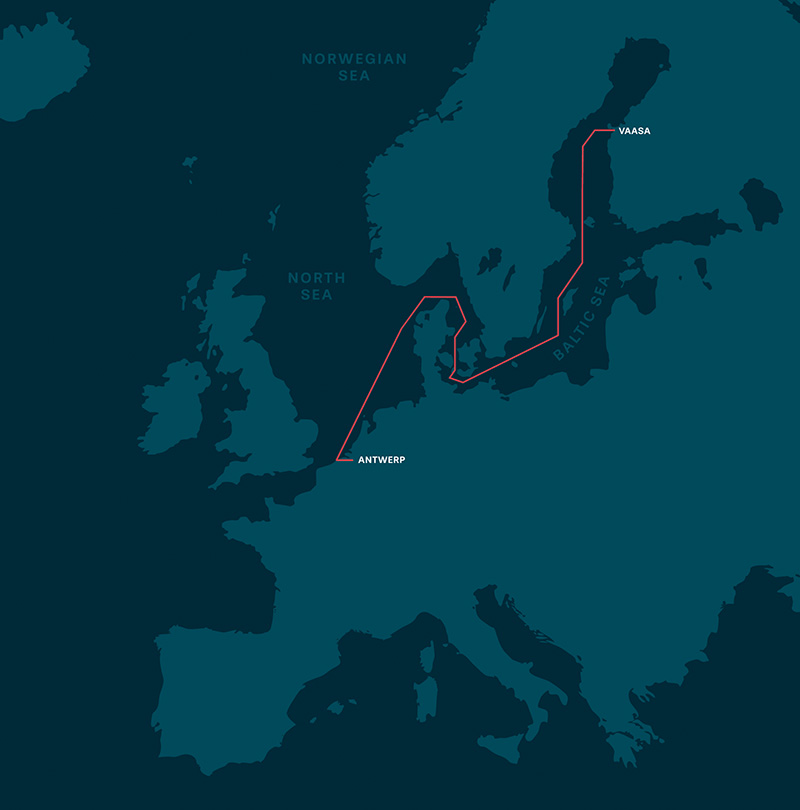
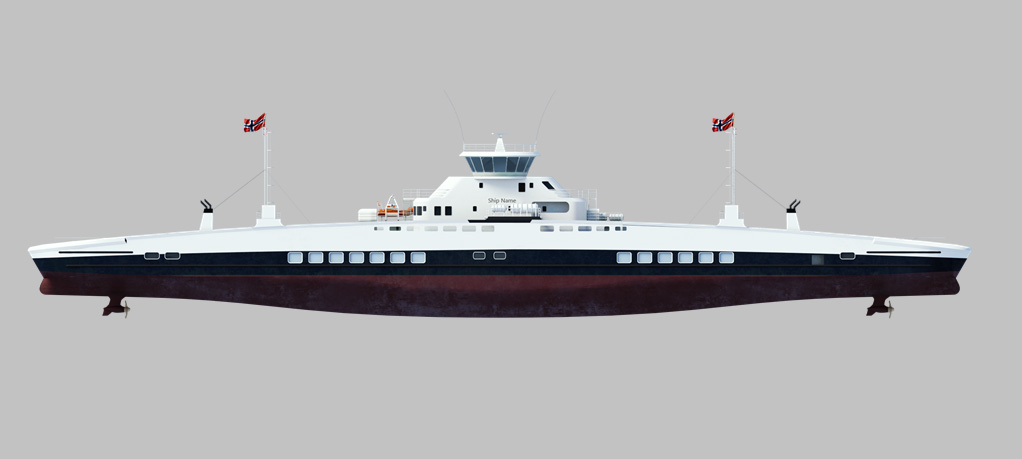
By replacing traditional lubrication oil and fuel oil separators with a filter solution from GreenOil Standard ApS, the energy consumption will significantly be reduced. This contributes to the Wasaline ro-pax ferry to be among the world’s most efficient and environmentally sustainable ships by reducing the CO2 emission, with an estimated +16 ton/year when running on LNG, using the filtration systems instead of the separators.
In addition to the environmental aspect Wasaline gets pure cost saving in operational cost and maintenance.

Connecting Europe For A Sustainable Future

By 2019 Newsletter week 20

AI assisted vessels to save fuel, Battery power propulsion, huge reduction of single use plastic on board, continued low level of crew and passenger accidents and an increased rate of female leaders. That are some of the highlights in Stena Lines sustainability review for 2018.

Its third review “A Sustainable Journey” describes initiatives, improvements and challenges in the operations from the sustainability perspective as well as results on their ambitious sustainability targets. The review also highlights the main initiatives the company has worked on during the past year.

DNV GL Webinar: Global Sulphur Cap 2020 – Be Prepared for Compliance

By 2019 Newsletter week 20

As the deadline for the 2020 global sulphur cap is getting closer, many uncertainties still remain, making the job of preparing vessels for the fuel switch more challenging. That’s what DNV GL says. It is organising a webinar with the following content:

  • The regulatory framework, including an MEPC 74 meeting summary
  • The latest update on scrubbers
  • A review of the fuel switch options, including their associated risks
  • The IMO’s recommended Ship Implementation Plan (SIP)
  • An “executive checklist” for 2020 global sulphur cap compliance

DFDS Is Testing Intelligent Drones

By 2019 Newsletter week 20

DFDS is developing and testing drones that can help us keep track of the trailers in the terminals in cooperation with Lorenz Technology, a Danish company developing drones based on Artificial Intelligence (AI).

The drones can autonomously zip around the terminal locating trailers, scanning and analysing trailer numbers, while integrating a real-time data flow to terminal management systems. This data can help terminal staff with different tasks, including precise location of trailers and improved weight management when loading ferries for increased operating efficiency.
This is a text block. You can use it to add text to your template

IN THE MEDIA

By 2019 Newsletter week 20

Journalist Nathalie Bureau du Colombier had an interesting article in French newspaper L’Antenne, based on an interview with Corsicea Linea CEO Pierre-Antoine Villanova.
On 26 May, ro-pax PAGLIA ORBA will be connected for the first time by shore power in the port of Marseille.
The ferry will be followed by PASCAL PAOLI and JEAN NICOLI in the coming months.
Corsica Linea has also the intention to order an LNG ferry this year, to be bost uilt by a European shipyard.
Between 2016 and 2018 revenue has gone up from EUR 176 to 220 million.
The shareholders have been asked to renounce dividends the next five years.
A group of banks will finance 80% of the cost of the new ship. The newbuilding will cost EUR 150 million. 20% will be paid by own funds.

SHORT NEWS

By 2019 Newsletter week 20
  • Baleària has scheduled new high-speed services between Barcelona and the ports of Ciutadella (Menorca) and Alcúdia (Mallorca) during the summer months, between 4 July and 11 September.
  • Former Irish Ferry vessel OSCAR WILDE is to be renamed GNV ALLEGRA
  • The EUROPEAN ENDEAVOUR will be renamed FINBO CARGO and operate Tallinn to Helsinki for Eckerö Line.

PHOTOS OF THE WEEK

By 2019 Newsletter week 20

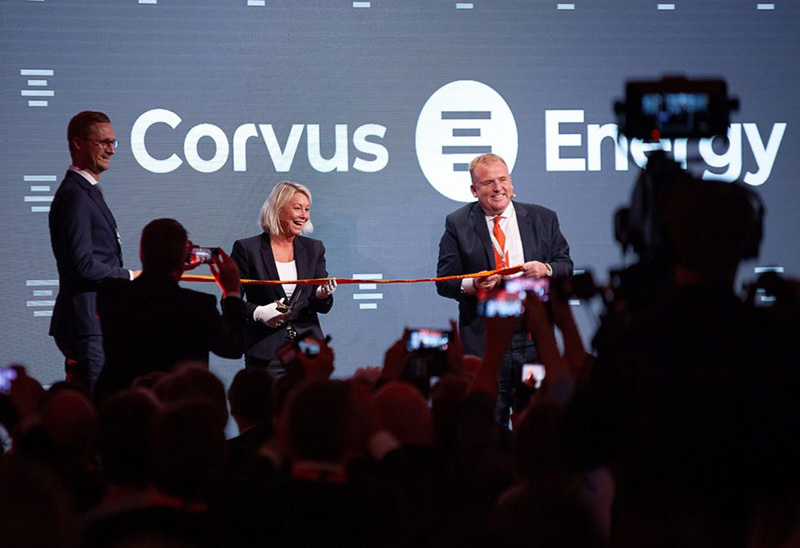
CLdN has officially welcomed ro-ro ferry LAURELINE with a ceremony in the port of Santander on 10 May.The LAURELINE is one of the vessels to connect the ports of Dublin, Zeebrugge and Santander, with three symmetrical sailings each week.

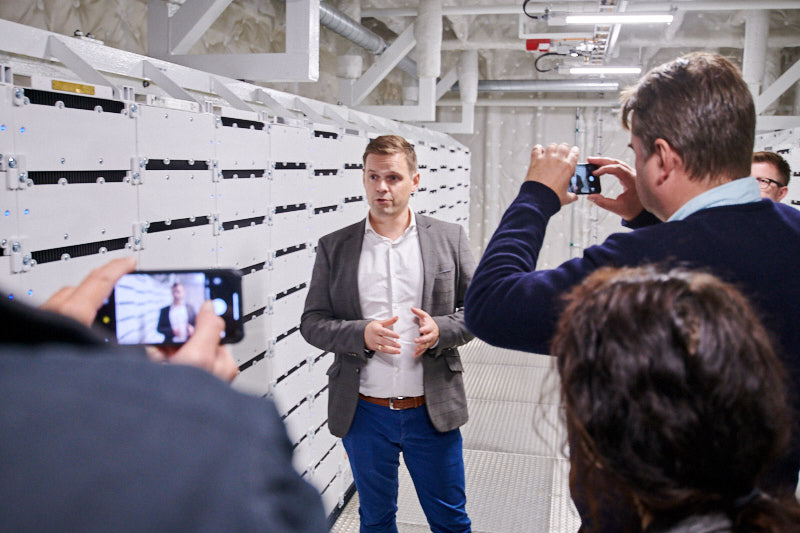
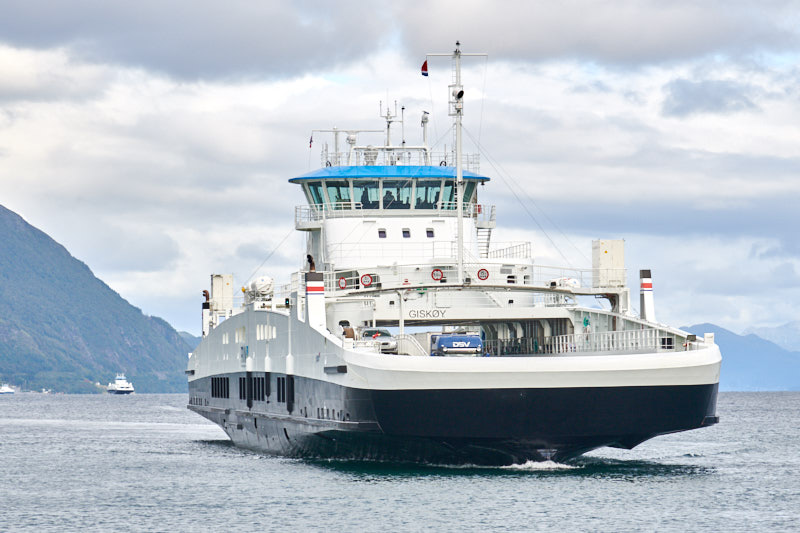
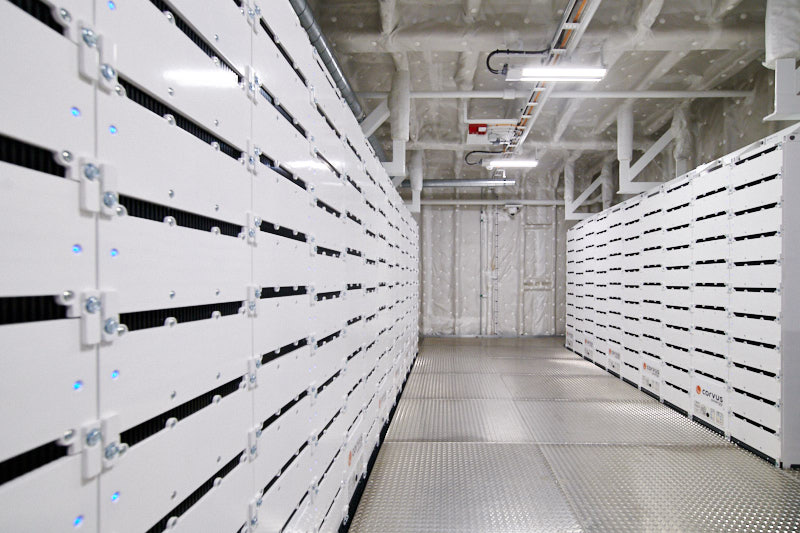
Battery ferry ELLEN has been built by Søby Yard (Denmark) for the domestic Ærøfærgerne service between Søby and Fynshav.

TOP STORY

By 2019 newsletter week 19

DFDS Opens New Route Between Zeebrugge and Gothenburg for Stora Enso

9 May, DFDS and Stora Enso have entered into a 5-year agreement to annually carry around 700,000 tons of paper and board products between Gothenburg and Zeebrugge.

To accommodate the volumes of the agreement, DFDS will open a route between Gothenburg, Sweden, and Zeebrugge, Belgium.

The new route will be operated by three ro-ro ferries. Two ro-ro ferries – SLINGEBORG and SCHIEBORG – will be acquired for DKK 270m. These vessels were originally designed for the route, and for this cargo. They were chartered by Stora Enso and operated by SOL Continent Line since November 2014. The ships will no longer be available to SOL Continent Line, which means that the SOL service between Gothenburg and Zeebrugge will end on 17 June, 2019. (read the SOL press release here)

DFDS will also transfer one ro-ro from DFDS’ existing route between Gothenburg and Ghent that currently deploys four freight ferries.

The new Zeebrugge-Gothenburg route is expected to begin operating mid-June, 2019.

Stora Enso has the option to extend the agreement with three year.

FERRY SHIPPING

By 2019 newsletter week 19

Scandlines Files a Lawsuit Against the Plan Approval for the Construction of the Fehmarnbelt Fixed Link

Scandlines filed a lawsuit against the “plan approval” decision for the construction of the Fehmarnbelt Fixed Link at the Federal Administrative Court in Leipzig (8 May).

In the Federal Republic of Germany, the “plan approval” is a special administrative procedure to be carried out on the permissibility of significant infrastructure projects.

Despite numerous adjustments to the plan documents in the course of the planning approval procedure, a large number of planning deficits have still not been remedied. Some of these unresolved issues have a direct negative impact on Scandlines’ ferry and business operations.

“After extensive examination of the documents established by the decision of 31 January 2019 we came to the conclusion that this legal step is inevitable. Scandlines will continue to operate after the tunnel opening. In the future, we want to continue to offer our customers the same high-quality ferry service we have been offering for over 55 years, “says Søren Poulsgaard Jensen, Scandlines’ CEO.

While the Danish project promoter denies the possibilities of a ferry operation parallel to the tunnel, an expert report commissioned by the planning approval authority comes to a completely different conclusion. This will continue to attribute 40% of the roadside freight traffic to the ferry line – plus a significant number of passengers.

The prerequisite for this, however, is fair and balanced tunnel planning, which also takes into account the legitimate interests of Scandlines.