DFDS February: Mediterranean freight growth offset by lower Channel volumes

By 2022 Newsletter week 11

Roro freight: For the last twelve months 2022-21, the total transported freight lane metres increased 6.2% to 43.1m from 40.6m in 2021-20.

Total volumes in February 2022 were 2.5% below 2021 (-3.1% adjusted for route changes). The decrease was mainly due to lower English Channel volumes as the market share in February 2021 was elevated by a successful transition post Brexit.

Moreover, the market share in February 2022 was reduced as Irish Ferries has entered additional capacity into the market.

North Sea volumes were above 2021 while Baltic Sea volumes were below 2021, partly due to reduction of capacity by a ferry on one route.

Volumes in the Mediterranean network were up on all routes on the back of deployment of more capacity and continued good growth in Turkish exports.

Ferry – passenger: The number of passengers started to increase in February as travel restrictions were reduced. The number of passengers increased almost five times to 95k which equalled 40% of the number of passengers in February 2020, the latest comparable month pre-Covid-19. Volumes primarily increased between Norway and Denmark as well as on the Channel.

For the last twelve months 2022-21, the total number of passengers was 1.0m compared to 1.1m in 2021-20 and 5.1m in 2019, the latter being the latest pre-Covid-19 year.

Port of Piraeus: financial results for the year 2021

By 2022 Newsletter week 11

+16% turnover € 154.2 million (€ 132.9 million)

+33% profit before taxes amounted € 49.2 million (€ 36.9 million)

+39% profit after taxes € 36.8 million (€ 26.4 million)

+57% Proposed dividend per share € 0.63 (€ 0.40)

The above amount is the highest level of profitability in the PPA history. Compared to the previous year, Pier I at the Container Terminal performed an increase of 13,9% in TEU handling, Car Terminal had an increase of 40,6% in vehicles throughput, the Cruise Terminal achieved a significant recovery by facilitating a total number of 379 Cruise Vessels and the number of vessels at the Ship Repair docks had an increase of 16.5%.

First of three Singapore-built battery ferries delivered

By 2022 Newsletter week 11

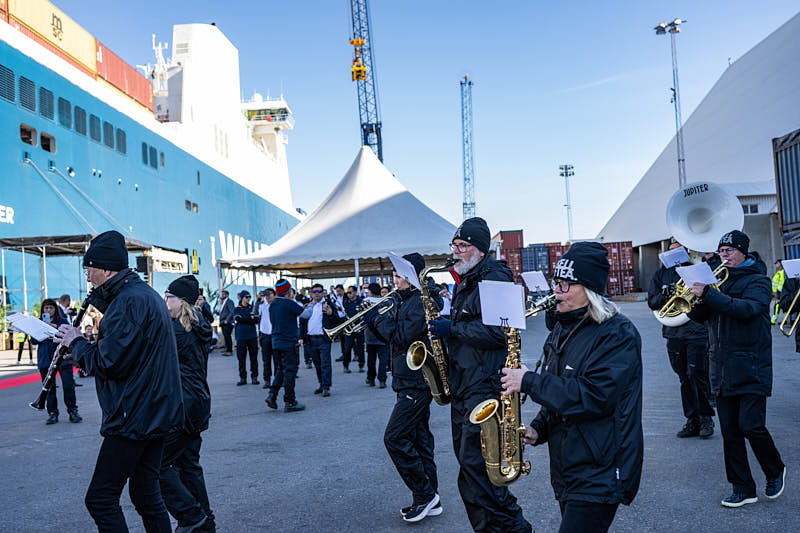
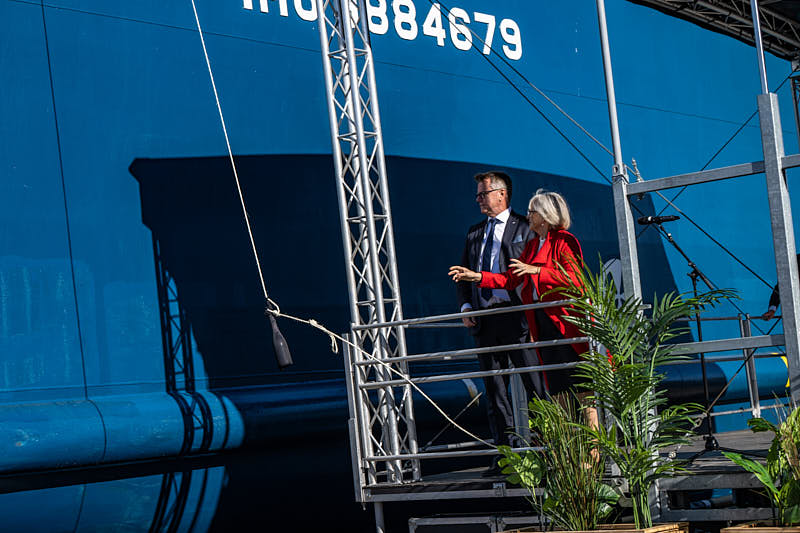
Sembcorp Marine completes the first of three zero-emission battery-powered ferries for Norled. They were designed by its wholly owned subsidiary LMG Marin.


Energy-efficient solutions:

  • quick-connection shore charging plugs
  • auto-mooring
  • auto-cross
  • efficient hull
  • propulsion and heat recovery systems
  • minimised hotel and auxiliary loads.

The vessels will operate normally on zero-emission, powered by lithium-ion batteries at a service speed of 10 knots. When required, they can run on combined battery-diesel hybrid backup modes. The batteries will be charged and recharged using green hydro-electric power.

Length 82.4m | 300 passengers and crew | 80 cars or 10 cars/ 10 trailer trucks

Route: Hella-Vangsnes-Dragsvik (Norway)

The remaining two Ropax ferries are expected to be ready in 2022.

HELLA, the first ferry has been loaded on ROLLDOCK STORM and is on its way to Europe.

Havyard Leirvik has signed a contract for the electrification of the Norled ferry IBESTAD

By 2022 Newsletter week 10

In line with the green shift, IBESTAD will be rebuilt from diesel-mechanical propulsion to electric propulsion with battery and shore power charging.

It will also be possible to use diesel generators over longer distances when it is not possible to charge from land.

The system will be delivered by SEAM, and the start of the project at the yard is set for 1 August 2022.

Battery rooms will be built, and the current two diesel engines will be replaced by electric motors for operating the propellers.

The ferry will be used on the Svensby-Breivikeidet connection over Ullsfjorden in Troms, Norway.

Press release in Norwegian