Adaptive Recognition delivers foundation for SmartPort Project at Scandlines Ports in Puttgarden, Germany and Rødby, Denmark

By 2023 Newsletter week 1

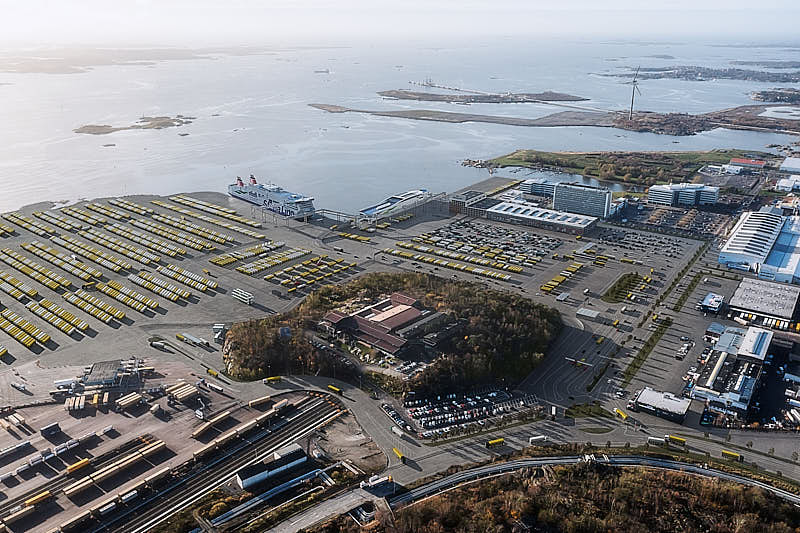
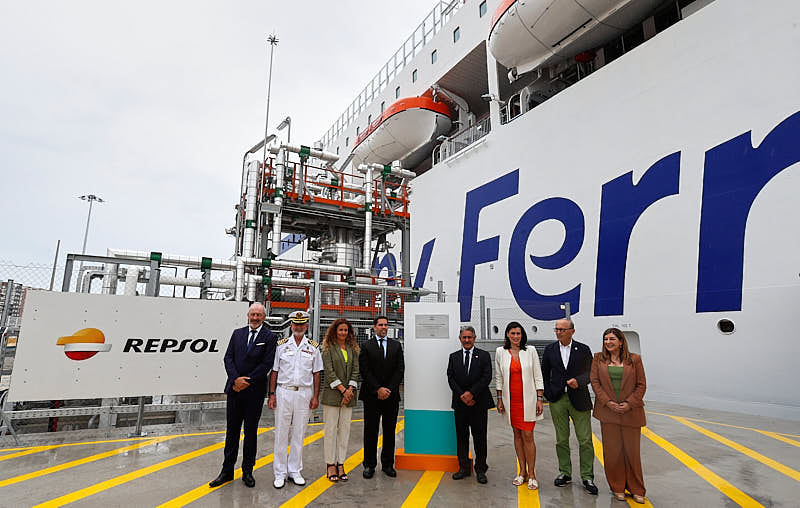
Adaptive Recognition is going to deliver automatic number plate recognition and vehicle identification technology at the entry and exit gates streamlining passenger and freight check-in flows.

This year, Adaptive Recognition will deliver the foundation – intelligent cameras, sensors and middleware – that will enable Scandlines to build a Smart Port that can automate the handling of ferry customers.

“This project marks Scandlines’ foray into digitizing ferry ports and turns the Puttgarden-Rødby connection into a real-time, end-to-end ferry operation with technology from Adaptive Recognition, making the two ports some of the smartest in Europe.”

Carsten Nørland, CEO Scandlines.

From 9 to 12: Liberty Lines orders three extra fast ferries with Armon

By 2023 Newsletter week 1

The Trapani-based fast ferry company Liberty Lines controlled by the Morace family announced to have already exercised an option for adding three more new buildings taking to 12 the order with the Spanish shipyard Armon for the construction of hybrid high-speed crafts to be delivered between 2023 and 2026.

The contract includes other options for the construction of further 6 more vessels to be delivered between 2027 and 2030.

These first 12 units are awarded of EUR 23.4 million in public subsidies from the Italian fleet renewal plan approved by the European Commission and part of the Eu Next Gen program.

All the series of new fast ferries will be equipped with an integrated propulsion system including MTU Series 4000 engines by Rolls-Royce, which will be supplying both traditional and electric propulsion; they are the result of intense cooperation between the technical offices of Liberty Lines, Armon shipyard, Rolls-Royce, RINA and Incat Crowther.

Some new ferries among the projects approved under the EUR 161 million Italian fleet renewal

By 2023 Newsletter week 1

The European Commission has approved, under EU State aid rules, a €500 million Italian scheme to help companies in the maritime transport sector to acquire clean and zero-emission vessels, as well as to retrofit more polluting vessels. The measure contributes to the achievement of the objectives of the Commission’s European Green Deal and ‘Fit for 55′ package.

The scheme is aimed at encouraging shipping companies to replace existing vessels with low environmental performance, and to reduce the use of fossil-based fuels in the maritime transport sector. The scheme will support projects increasing the environmental performance and energy efficiency of vessels operating long, medium and short sea services for passenger, freight and combined transport, as well as of other vessels operating in Italian ports.

In particular, the aid will support the acquisition of clean and zero-emission vessels, including vessels powered by electricity and hydrogen, and the retrofitting of vessels.

The aid will take the form of direct grants. The maximum aid amount per beneficiary is 40% of the eligible costs, which may be increased up to 60% for small and medium-sized enterprises and to 45% for projects concerning zero-emission vessels.

Some of the approved projects are for still-to-be-ordered ships from the ferry companies Toremar, Maregiglio di Navigazione, Snav, Lauro.it and Bluferries.

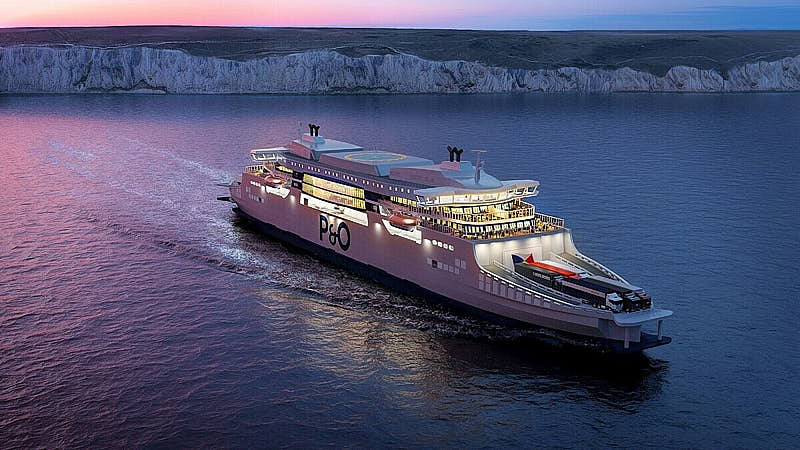
P&O Ferries say goodbye to BORE SONG

By 2023 Newsletter week 1

BORE SONG is no longer operating for P&O Ferries. She was chartered since 2011 and served the cross-Channel routes from Zeebrugge. She left Zeebrugge end of December 2022.

BORE SONG is now in the Baltic Sea, working together with her sister BORE SEA for Transfennica (Bore and Transfennica are companies owned by Dutch Spliethoff).

Just in time and no surprises: Corsica Linea and La Méridionale share the Marseille-Corsica routes until 2029

By 2022 Newsletter week 51

The Assembly of Corsica voted on Tuesday 20 December 2022 the attribution of the delegation of maritime public service (DSP) to Corsica Linea (the red ships) and La Méridionale (the blue ships).

Aim: guaranteeing territorial continuity between mainland France and Corsica.

Duration: from 1 January 2023 until 31 December 2029.

Annual cost: EUR 106.7 million (against 93 million for the actual DSP)

Routes:

Marseille-Ajaccio: Corsica Linea/La Méridionale, alternating, daily

Marseille-Bastia: Corsica Linea, 7/7

Marseille-Ile Rousse: Corsica Linea 3/7

Marseille-Propriano: Corsica Linea 3/7

Marseille-Porto-Vecchio: La Méridionale 3/7

Political:

Separatist and Autonomist Opposition voted against, denouncing an increase in costs and the postponement of the creation of a public shipping company (…).

The European Commission had to be convinced that a maritime public service is necessary.

EQT puts Molslinjen’s CEO in charge of Nordic Ferry Infrastructure

By 2022 Newsletter week 51

Molslinjen’s owners in Sweden, EQT Infrastructure, bring Molslinjen’s Carsten Jensen to a position as CEO of the newly established company Nordic Ferry Infrastructure based in Oslo.

The company is a holding company which in future owns both the Danish ferry company Molslinjen and the Norwegian ferry company Torghatten.

Carsten Jensen takes over immediately as CEO of Nordic Ferry Infrastructure. However, during a transition period he will still be responsible for the Molslinjen until a new CEO is in place.