PRINCE To Replace SMYRIL During Drydocking

By 2019 Newsletter week 31

PRINCE To Replace SMYRIL During Drydocking

Strandfaraskip Landsins (SSL) is a nationally owned transport company. The main objective for SSL is to provide transport to all corners of the Faroe Islands.

In September, the company will send its ro-pax SMYRIL to the drydock. A substitute ship has been found: PRINCE.

She will sail on the route to Suðuroy.

In its communication, SSL said that, “PRINCE has recently sailed as a hotel ship in the North Sea and in connection with this the hotel part of the ship was refurbished.”

Vulcan Shipyard Into Liquidation

By 2019 Newsletter week 31

Vulcan Shipyard Into Liquidation

Trasmediterranea finally got her VILLA DE TEROR. It took a while before Vulcan could finish it, mainly due to lack of money.

The management made deals with the workers and suppliers, who all accepted in one way or another to be paid upon delivery. All of them were paid but due to the lack of new orders the shipyard management decided to ask for its liquidation.

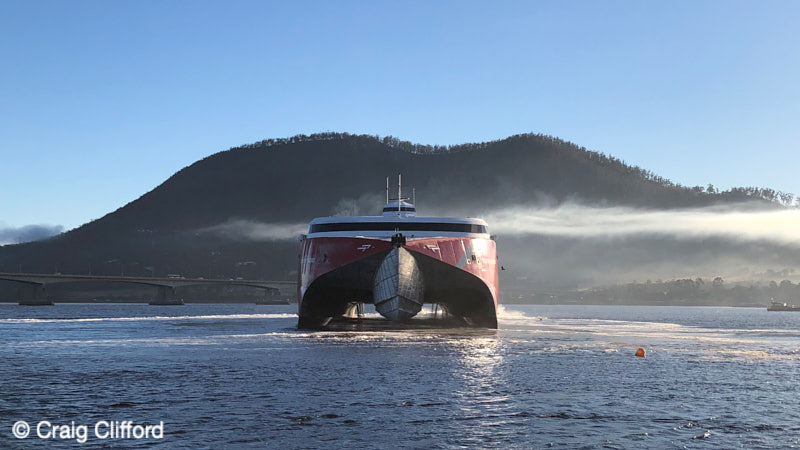
Incat Tasmania’s Newest 111m Ferry Has Been Handed Over To Naviera Armas

By 2019 Newsletter week 31

Incat Tasmania’s Newest 111m Ferry Has Been Handed Over To Naviera Armas

The ship, named VOLCAN DE TAGORO (Incat Hull 091) completed sea trials in the beginning of July, loaded fuel and supplies for the delivery voyage to Spain, and left Australia 16 July.

The delivery will be via Auckland, across the Pacific Ocean to Tahiti and the Panama Canal before crossing the Atlantic on her way to Spain.

Naviera Armas SA will operate the vessel on Spanish routes, including the Canary Islands.  The company has an extensive fleet of vessels, and VOLCAN DE TAGORO will be the fifth Incat vessel operating in the Armas fleet, however it is their first newbuild from Incat Tasmania.

VOLCAN DE TAGORO has capacity for 1,200 persons, including crew, and the expansive vehicle deck allows for almost 600 TLM (595 truck lane metres) plus 219 cars, or in car-only mode it can accommodate 401 cars.  Passenger spaces are divided into three classes, First Class, Business Class and Economy, each area offering bars and food service areas.  A gift shop and children’s play are also located on board.

The ship is powered by four MAN 20V diesel engines driving Wartsila waterjets. 091 achieved over 42 knots with 600 tonnes deadweight during speed trials, easily achieving her contract speed and the loaded service speed required for the Spanish routes.

FERRY FINANCE

By 2019 Newsletter week 31

Financial Performance Finnlines Improved Despite Slowdown Finnish Economy in H1

Key figures for January – June 2019

+2% Revenue EUR 295.5 million
+10% Result EUR 46.7 million
+7% EBITDA EUR 83.5 million

The second quarter was again the best ever.

In his comments, CEO Emanuele Grimaldi puts a lot of emphasis on what has been done, and will be done to make ferry shipping the most sustainable way of transport. More ships will be ordered.

“We have invested in emission abatement technology covering almost all our vessels and also lengthened six of our vessels in order to benefit from economies of scale. These investments have contributed to our sustainable development and e.g. the fuel consumption per transported tonne has decreased considerably. Other efforts to reduce energy consumption and emissions include changing of propeller blades, timetable planning, route optimisations as well as optimising speed, load and trim.”

“We have reduced CO2 emission between 2008 and 2018 by approximately 30%. However, while our past record in emission reduction is superb, we are looking beyond the IMO requirements. With regulators stimulating the debate on low-carbon fuels, we pledge not to lose our focus on sustainability: we will continue to improve and are on the right path. This focus on sustainability requires further investments. We have recently ordered three new green ro-ros, which will be built to produce zero emission in ports and aimed at pushing beyond the green scores of ro-ro in the Baltic region. We are also about to further order two Superstar class ro-pax vessels, in order to strengthen our well developing passenger business growth. These vessels will be the most environmentally friendly units in their category, carrying 5,800 lane metres of cargo and close to 1,000 passengers.”

FERRY PORTS

By 2019 Newsletter week 31

Tallinn’s Old City Harbour To Introduce Automated Mooring System

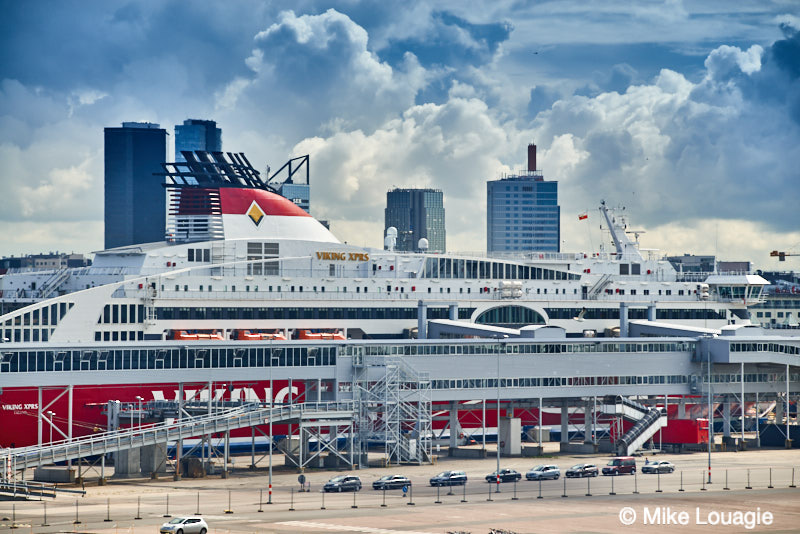
Port of Tallinn has signed contracts with maritime engineering companies Trelleborg and Cavotec for the instalment of automated mooring systems at quays 5, 12 and 13 of the Old City Harbour, which is used by passenger vessels serving the Tallinn-Helsinki route.The new automated mooring systems will be installed by the end of 2020. Each quay will be equipped with six vacuum pads that will moor, hold and release the vessel. As the first vessel, Viking Line’s Viking XPRS will start using the new system in spring 2020, while Tallink’s shuttle ships and Eckerö Line’s vessel can utilise the automated system by the end of the year. Similar automated vacuum mooring system is also installed at Helsinki West Harbour.

The new mooring systems are being installed in the framework of TWIN-PORT 3 project and are being co-financed by the EU Connecting Europe Facility (CEF). It is a collaboration project between ferry operators (Tallink, Viking Line and Eckerö Line), the ports of Tallinn and Helsinki and the City of Helsinki for the years 2018-2023 with a total budget of EUR 61.2 million. Port of Tallinn is investing a total of EUR 15.8 million within the project.

Port of Tallinn Saw An Increased Cargo Flow In Q2

By 2019 Newsletter week 31

Port of Tallinn Saw An Increased Cargo Flow In Q2

In 2019 Q2, 5.3 million tonnes of cargo and 2.9 million passengers passed through the harbours of Tallinna Sadam. Compared to the same period of previous year, the cargo volume increased by 4.3% (but mainly because of a new dry bulk terminal) and the passenger volume by 0.1%. The number of ship calls grew by 3.7% to 2039 calls.

At the end of June, Eckerö Line vessel FINBO CARGO started operating on the Muuga-Vuosaari route, serving both trucks and passengers with vehicles. Also, Tallink started to transport passengers with cars on its (mainly) freight ferry SEA WIND, already operating on the route. The positive effects of these innovations will be reflected in the results starting from the third quarter.

Marseille Fos Boosts Drive Towards Cutting Air Emissions

By 2019 Newsletter week 31

Marseille Fos Boosts Drive Towards Cutting Air Emissions 

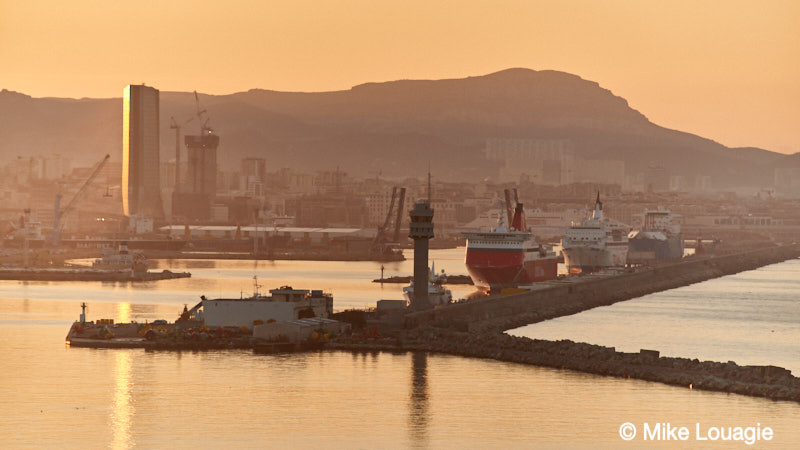
Among a string of new eco-friendly initiatives, the Marseille Fos port authority is to spend EUR 20 million over the next six years to extend shoreside electrical connections for berthed vessels to every ferry, cruiseship and repair quay within the Marseille eastern harbour.

Already available on the Corsica ferry quays, the network will be expanded in two phases to cover North Africa ferry quays and the shiprepair hub by 2022 and the cruise terminal between 2022 and 2025.

The zero-emissions investment – backed by national and regional government – recognises the need to maintain the port’s value to the economy while improving the city’s waterside air quality.  Marseille Fos CEO Hervé Martel commented: “We are convinced that ecological transition is the springboard to economic growth.  That’s why we are investing heavily to become the Mediterranean’s first 100% electric port by 2025.”

Martel recently joined a regional government delegation that visited Tunisia’s transport minister and gained an undertaking for a techno-economic study into the electrification of quays at La Goulette, the port of Tunis. Such provision in Tunis as well as Marseille is seen as crucial in encouraging the two ferry operators on the route to equip their ships for the facility.

Meanwhile 12 shipping companies have qualified for 2-3% reductions in Marseille Fos port dues as a reward for cutting air emissions below regulatory requirements over the past year.

The incentive was introduced in July 2017 after the port joined the World Ports Climate Initiative, whose Environmental Ship Index (ESI) has been adopted by 50 ports handling more than a quarter of the global fleet.  The ESI measures NOx, SOx and CO2 reduction performance for ships at berth on a scale of zero to 100.  At Marseille Fos, the scheme applies to containerships and cruise vessels with scores of 35 and above, the ‘cold ironing’ mark for ships using shoreside electrical power instead of onboard diesel generators.

Freight Digitalisation Project In Portsmouth

By 2019 Newsletter week 31

Freight Digitalisation Project In Portsmouth

Portsmouth International Port has awarded Hogia the contract to supply a terminal operating system to digitalise the management of freight transport, which will help to improve efficiency. The port is the second-largest cross-channel port in the UK, and offers ferry routes to destinations in France, Spain, and the Channel Islands. The port’s ferry customers, Brittany Ferries and Condor Ferries, transport over 250,000 freight units through the terminal each year.