
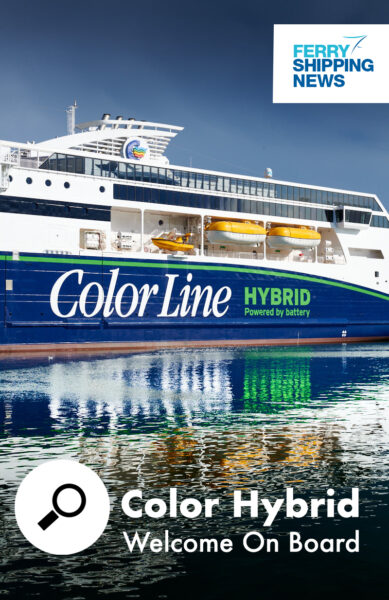
A virtual visit on the COLOR HYBRID.
LMG Marin Designs Two Hydrogen-Prepared Ferries for Norled
Norled has signed an agreement with LMG Marin to deliver the design for two double-ended ferries that Norled will operate on the Finnøysambandet route in Ryfylke, as from 2022.
The ferries, which will have a capacity of 199 persons and 60 cars, will be built by the Ada shipyard in Turkey.
The ferries are initially designed for biodiesel operation, but the ambition is to upgrade one of the ferries through the construction phase to hydrogen power.
Earlier this year, Ada signed a contract for the construction of these two ferries for Norled, based on LMG Marine’s design LMG 60-DE (H2). Construction is now underway, and the first steel cutting took place a few weeks ago.
With the assistance of Maritime Cleantech and in collaboration with LMG Marin and others, Norled has received EU funding of up to NOK 20 million to realize this hydrogen solution.

DFDS has acquired 100% of the share capital of the Dutch logistics company Huisman Group BV.
Huisman Group is a provider of part-load transport solutions and contract logistics focused on time-critical freight between the UK/Ireland and continental Europe.
Operations include warehouses and cross-docking facilities in Wijchen, the Netherlands, and Corby, England, as well as a fleet of around 55 trailers and 50 trucks. The company has 104 employees and annual revenues of EUR 23m.
Huisman Group expands DFDS’ activities between continental Europe and the UK/Ireland and adds, in particular, expertise in part-load solutions. This is expected to enable a further development of part-load solutions in DFDS’ logistics network as well as access to new customers. The acquisition is thus expected to bring synergies from both business development and operational integration.
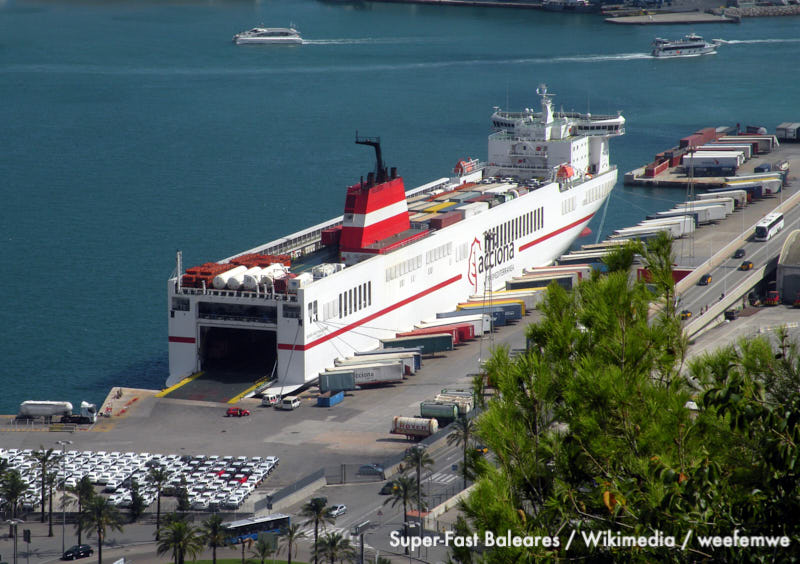
Grimaldi Group of Italy took delivery of the former Ciudad De Cadiz, the ropax just bought from Trasmediterranea (Naviera Armas group) and renamed Venezia. The price paid by the Naples-based group for this vessel is around €35 million.
The same Italian ferry company has also chartered in the roro Super-Fast Baleares from Trasmediterranea in order to replace the Eurocargo Trieste which caught fire three weeks ago off the port of Leghorn and is still under repair.
According to what Ship2Shore reported, also the ferry GNV Azzurra was chartered as accommodation vessel by Virgin Voyages for the crew which will be employed on the new cruise ship Lady Scarlett, soon to be delivered by Fincantieri’s Sestri Ponente shipyard.
The Greek ferry company European Seaways has just launched a new regular maritime link between the port of Brindisi in Italy and Vlore in Albania.
The vessel deployed on the route is the ferry Prince built in 1974 (1,000 pax, 150 cabins, 300 cars, 30 trucks) Transit time is 4 hours at a speed of 17 knots.
The Ministry of Infrastructure and Energy in Albania commented this new regular maritime link launched by European Seaways highlighting that, “ticket prices for the new ferry will be around 30% cheaper than current market prices.”
As of today, following companies are active on the Albania links:
- Brindisi – Vlore: European ferries and Red Star Ferries
- Ancona/Trieste/Bari – Durres: Adria Ferries
- Bari – Durres: GNV
During the high season two regular links are operated between Brindisi and Sarande by Red Star Ferries and European Ferries.
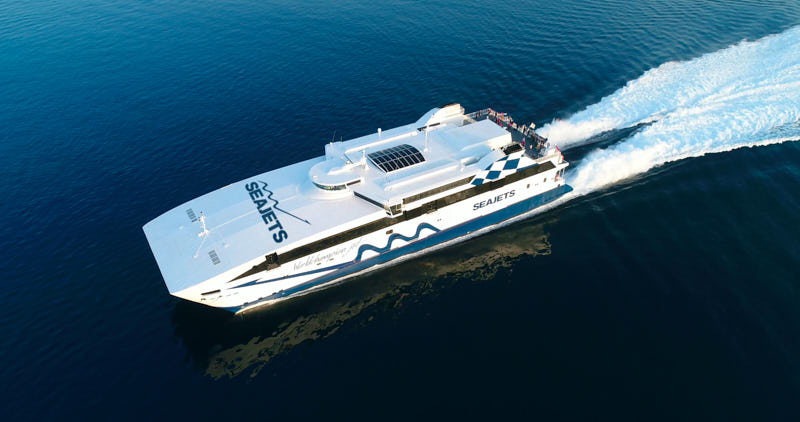
On 6 December 2019, Seajet’s HSC WorldChampion Jet was awarded “ship of the year” during the Lloyd’s List Greek Shipping Awards 2019 ceremony.
For the first time in the history of the event the prize is given to a high-speed passenger ship, recognizing her unique design, innovation and contribution to the Hellenic Coastal Lines.
The former VILLUM CLAUSEN was purchased from Danske Færger on December 2017 and served -during the summer season 2019- on the Piraeus-Syros-Naxos-Santorini line.
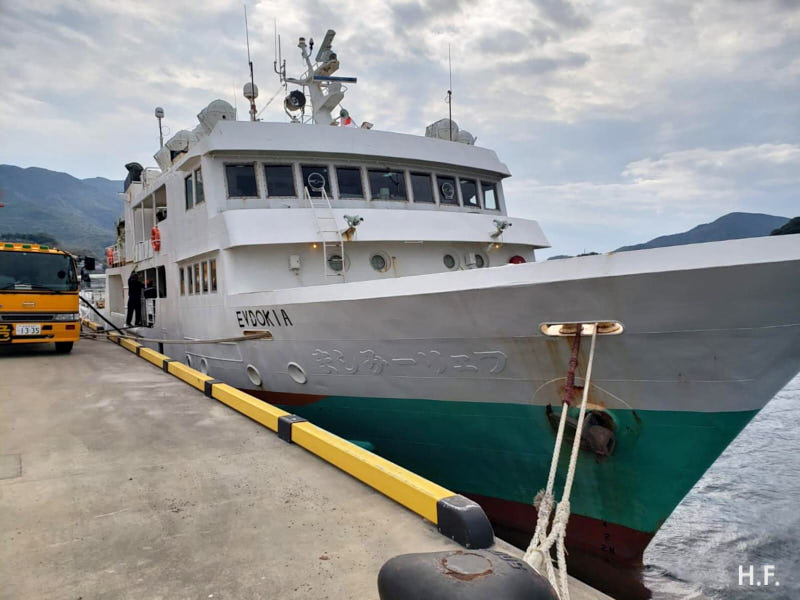
On December 7, 2019 the new acquisition of the Greek Kerkyra Lines, Evdokia (ex-Ferry Mishima) started to sail from Nagasaki to Greece under her own power.
The small Japanese ferry was purchased last September from the Sakido Kisen Co. Her trip to Greece will last 1,5 months and she will be refuelled in Singapore, Sri Lanka and Jeddah.
Evdokia was built in Japan (Mukai Shipyard) in 1995.
(44,24m / 167 pax / 4 trucks and 2 cars)
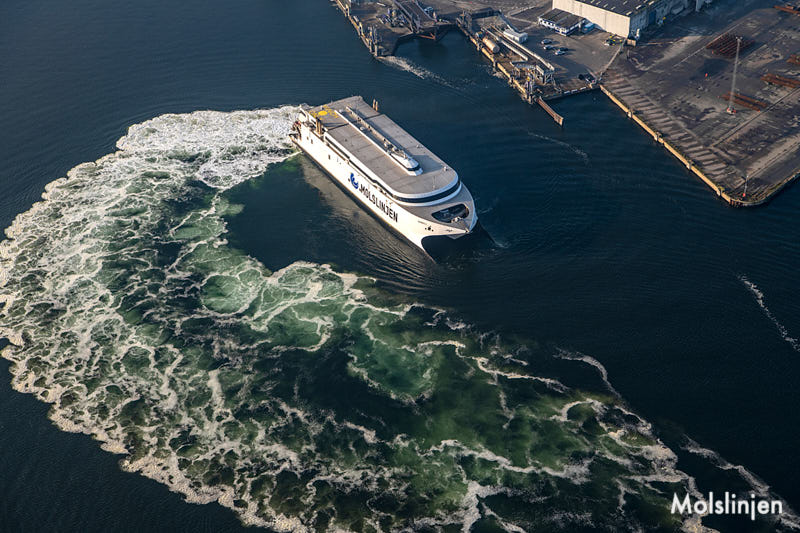
On 6 December Molslinjen broke a record on the Kattegat when passenger number 3,225,572 bought a ticket for the route between Aarhus and Odden.
“Traffic between East and West Denmark is constantly increasing,” says Carline Jensen, CEO of Molslinjen. Especially the bus route Kombardo Expressen has helped to achieve this increase.
“We expect many guests in December – so many that we have to put in an extra fast ferry on the busiest days,” says the CEO.
Norway’s Vestland County approved a tender stating that eight of the regional passenger vessels shall be zero emission by 2022 (if possible) and latest by May 2024.
Hydrogen will be an option for propulsion of the four largest vessels (2,5 MW power, 35 knots, 300 pax).
Route package 2 (local boat routes in Flora, Bremanger, Vågsøy, Høyanger and Vik municipalities) and route package 3 (local boat routes in Gulen and Solund municipalities) in Sogn og Fjordane will continue with the tender process as planned by Sogn- og Fjordane County Council.
The main vessels in route package 2 (with the exception of the vessels Måløy-Silda, Måløy-Hennøystranda and a smaller part of Florø-Barekstad-Batalden-Fanøy) will incorporate zero emission technology from 2022 at the earliest and from 01.05.2024 at the latest. There is a requirement that all energy that directly or indirectly powers the main vessels must be certified as renewable. The vessels in route package 3 and exceptions in route package 2 can run on fossil fuels.
For route package 1 (the four express ferries that run between Sogn and Fjordane – Bergen), the county council wants to implement an alternative procurement process, a development contract is being considered. The goal is for the introduction of zero-emission technology from the start of the new contract in May 2022, and will be required by latest 1 May 2024. All energy for operation of the vessels must be certified as renewable.
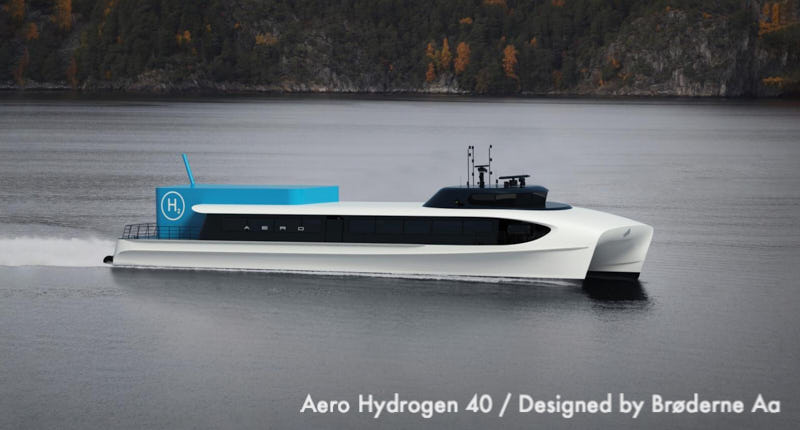
Ocean Hyway Cluster member Brødrene Aa AS is ready to deliver their new 42m AERO Hydrogen design (photo).