
Brittany Ferries is realising the benefits of its drive to reduce and eventually eliminate the use of single use plastics on board its fleet of ferries linking UK, France, Spain and Ireland, by purging almost 5.7 million items of plastic per year.
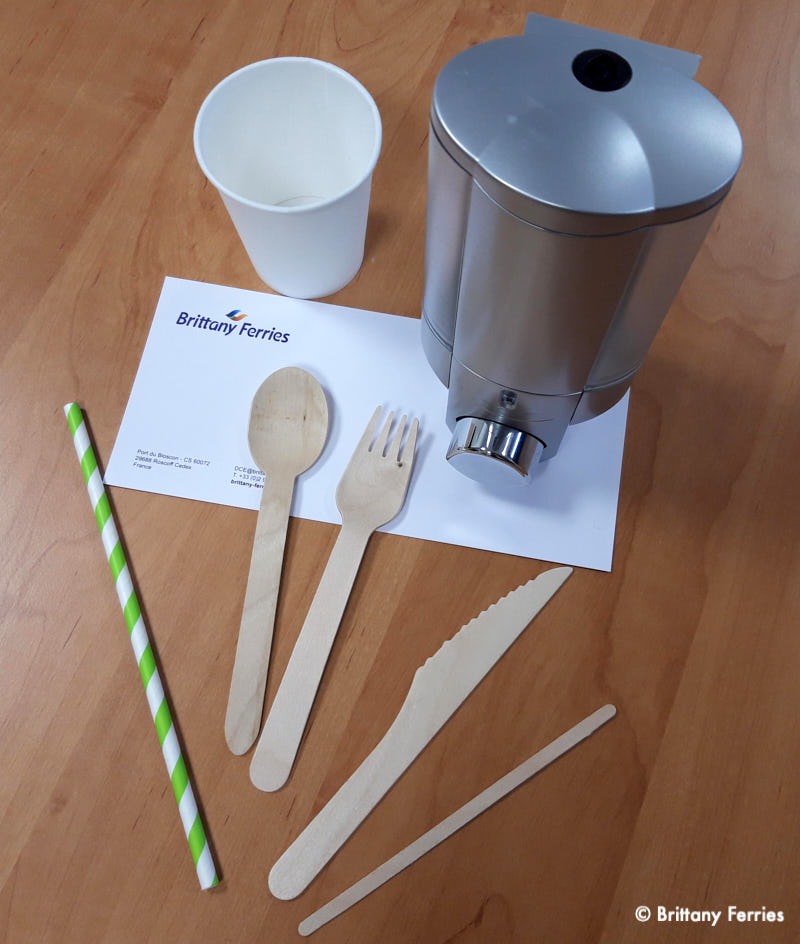
Brittany Ferries is realising the benefits of its drive to reduce and eventually eliminate the use of single use plastics on board its fleet of ferries linking UK, France, Spain and Ireland, by purging almost 5.7 million items of plastic per year.
Direct Ferries’ CEO Sean Cornwell and his team strongly believe the ferry industry has a once in a generation opportunity to redefine ferry travel and the appeal of it to whole new customer segments who before would never have considered taking the ferry. “The world is changing and we in the ferry industry have an opportunity to be on the front foot on this.”
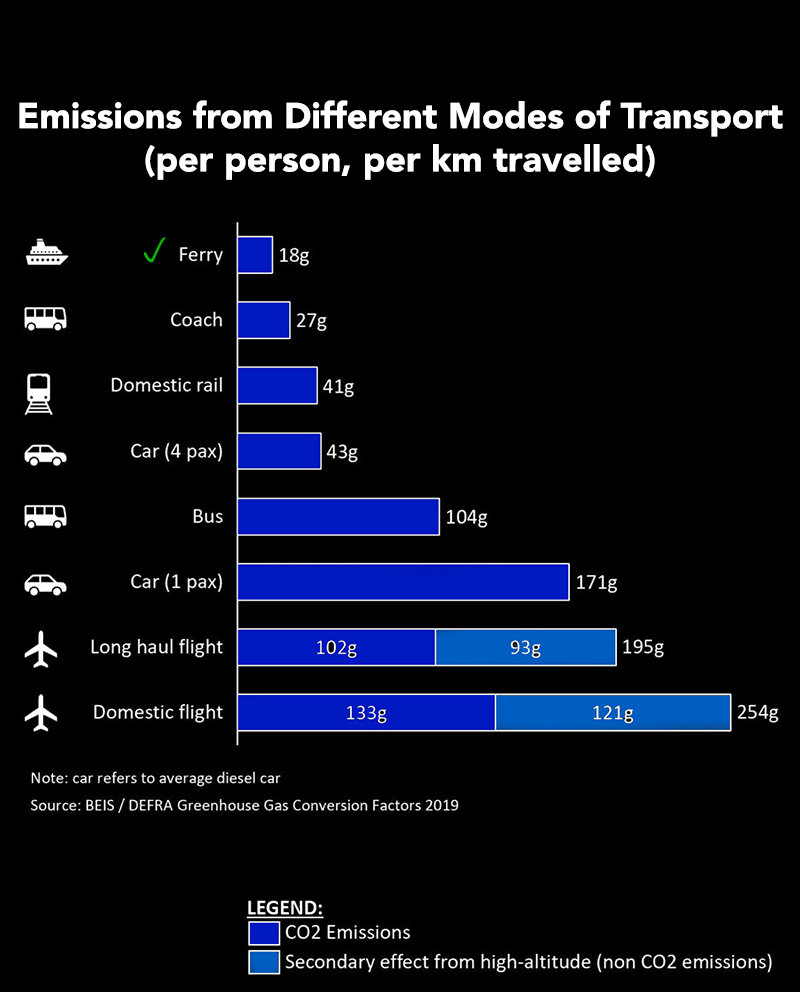
The data (from the UK Department of Environment, Food and Rural Affairs – DEFRA) is compelling and clear cut. Per kilometre travelled, a foot passenger on a ferry uses 18g of CO2 – considerably less than a coach, bus, rail or plane. A family of 4 in car taking a ferry will use just ~25% of the CO2/person that they would have used had they taken a flight to their destination (43g+18g vs. 254g).
“Many of you compete directly with low-cost airlines and this is a powerful message to tell your potential customers,” concludes Sean Cornwell.
In the fall of 2018, the Oppland county council decided to allocate NOK 65 million for a new ferry and NOK 20 million for onshore infrastructure. The actual ferry Randsfjordferja II is almost 70 years old.
The special thing about the Randsfjord ferry, is that it must first be built, then dismantled and transported over sea and road, and then re-assembled and launched. Randsfjorden is Norway’s fourth-largest lake. The ferry connection is between Tangen and Horn.
After tendering, only one offer was received that qualified. It came from Holland Shipyards Group.
Now, an extra NOK 18.9 million has been allocated after several changes were made based on the original tender specifications.
Electricity provider Glitre Energi nett AS can supply enough energy on the quay for direct charging. This allows to drop the battery bank on land.
In addition, four engines and rudders have been replaced with two less expensive thrusters and better maneuvering capacity.
The yard takes the currency risk, as the contract is in Norwegian kroner.

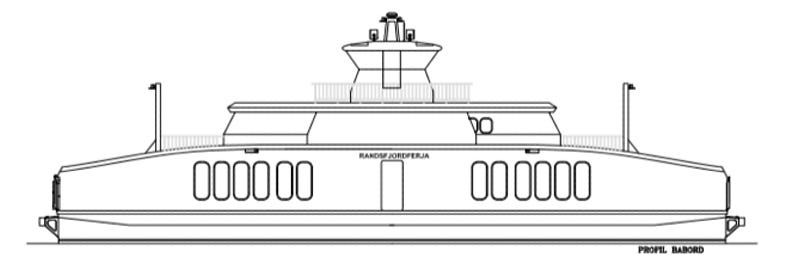
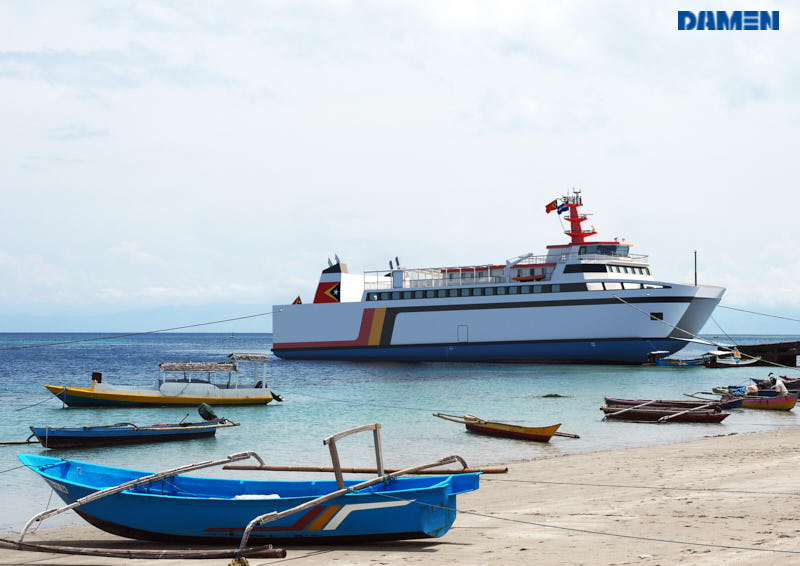
A new ferry route will connect the Southeast Asian Democratic Republic of Timor-Leste’s capital Dili with the Oecusse enclave and Ataúro.
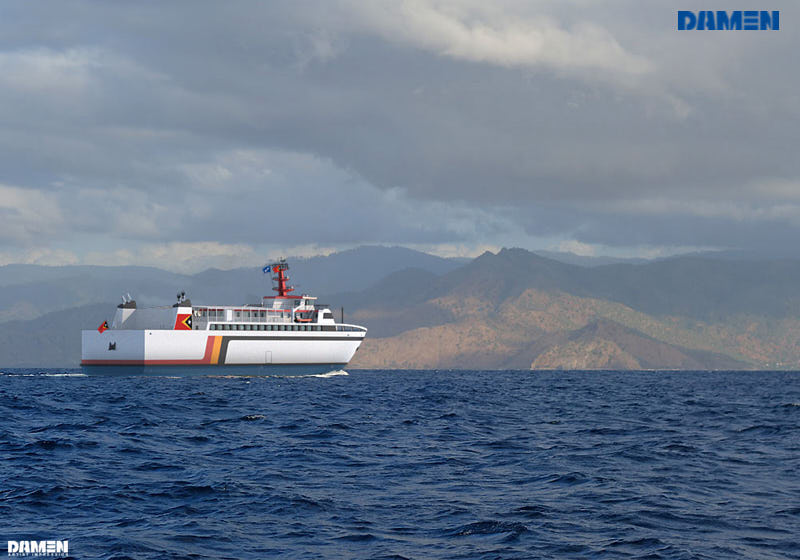
A new RoPax Ferry 6716 will be built by the Damen’s Yichang Shipyard in China, for the Republic of Timor-Leste.
With an ageing vessel currently in operation, the Port Authority of Timor-Leste IP (APORTIL) recognises the need to maintain the safety and reliability of its fleet, hence the investment in a new ship. In a project co-financed by Timor-Leste and the Government of Germany, the RoPax Ferry 6716 is scheduled to begin operations in 2021, and will lower operation costs, increase reliability of the service, and improve employment opportunities due to the improvement in transportation networks. In preparation for the ferry’s arrival, over the next 19 months APORTIL will undertake work to improve and build support infrastructures.
The extension of these maritime passenger connections will initially include a connection between Dili and Com, in addition to those already in place between Díli, Ataúro and Oecusse, with the aim of improving the quality of life of the populations in these areas.
The RoPax Ferry 6716 will have a width of 16 metres, a draft of 3.3 metres and a length of 67.3 metres, and its deck, with a 27-ton axle load, will reach 4.8 metres in height. The vessel is capable of a maximum speed of 10 knots and will have a carrying capacity of 380 pax.
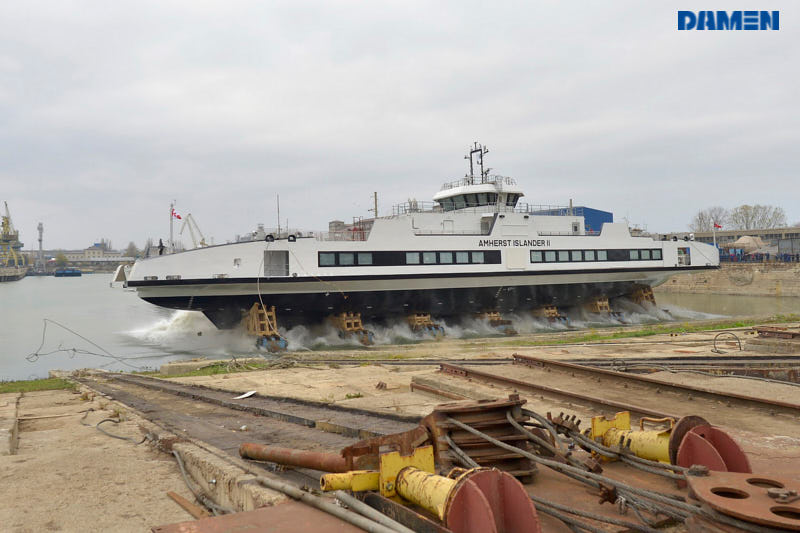
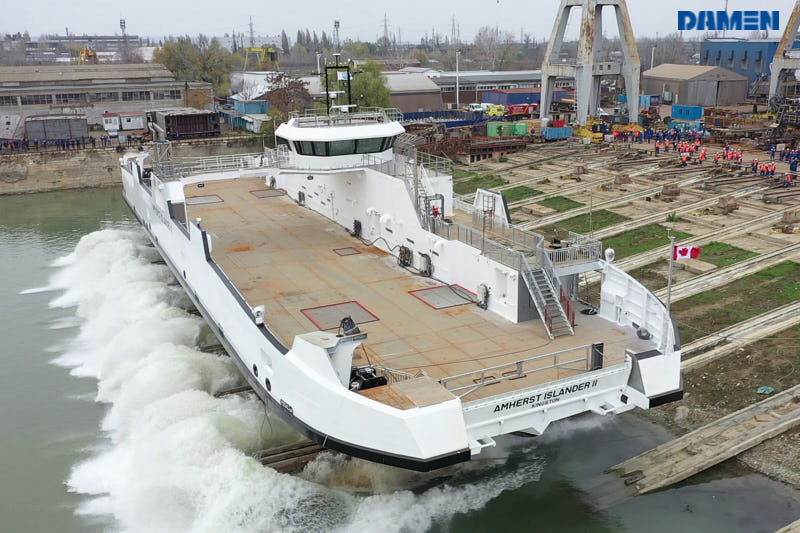
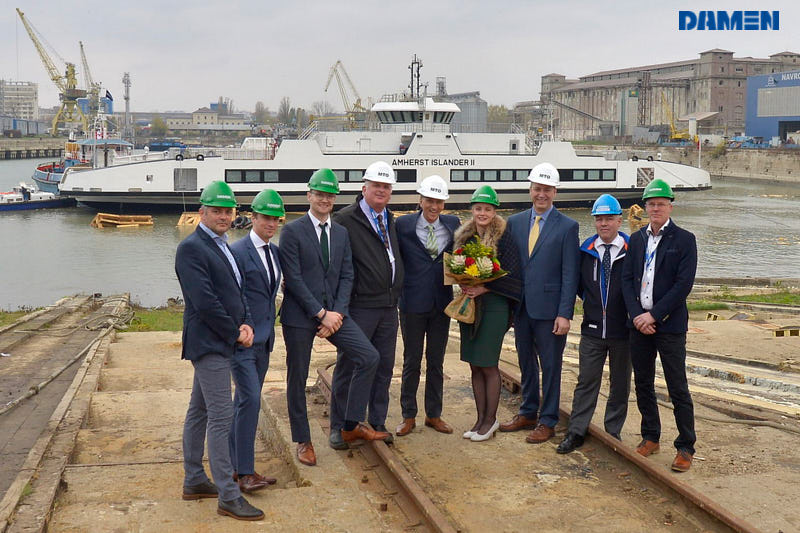
On 14 November 2019, Amherst Islander II, a Damen Road Ferry 6819 E3, was launched at Damen Shipyards Galati in Romania. The ceremony was attended by representatives of the owner, the Ministry of Transportation Ontario, Canada, as well as Damen personnel.
The Amherst Islander II is part of a two-vessel order that Damen will deliver to the Ministry of Transportation Ontario. The E3 ferries will be the first ferries in North America with the ability to operate fully electric and will reduce the amount of emissions by the equivalent of 7 million kg of carbon dioxide each year.
With an overall length of close to 72m and a loading capacity of up to 42 cars, the Amherst Islander II is the smaller of the two. The larger 99m Damen Road Ferry 9819 E3, the Wolfe Islander IV, is currently under construction in the dry docks and will be launched mid-2020.
Both ferries will operate solely on the Lake Ontario in between Amherst- and Wolfe Island.
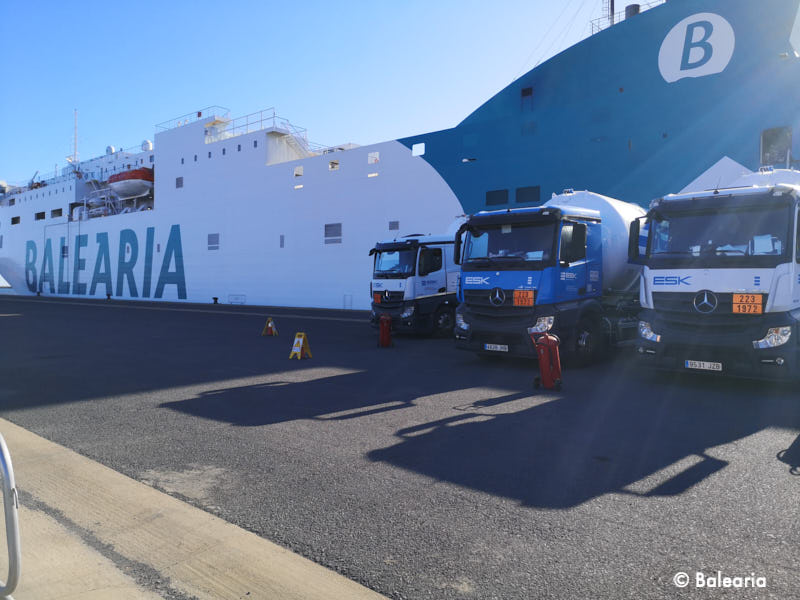
For the first time, Baleària carried out an LNG Multi-Truck-To-Ship (MTTS) bunkering, at a speed almost six times higher than the usual average.
Three tank trucks operated simultaneously to supply LNG to ropax Marie Curie, which started to operate for the joint Baleària and Fred.Olsen Express service on the Huelva – Canary route. The operation was done in the Port of Huelva.
The manufacturer of gas storage and transport systems CMC Cerezuela has developed a system that prevents flow losses and allows a high supply speed.
The peak bunkering speed was 2,800 l / min (168 m3 / h). The goal is to reach 3,000 l / min (180 m3 / h).
The following months, Attica Group will install open loop scrubbers on seven vessels of its fleet. The first ship to undergo that conversion will probably be Superfast XI which operates on the Patras-Igoumenitsa-Ancona run.
Entering that procedure, Attica Group reaffirms its commitment to adhere to the “Ancona Blue” Agreement (Social / Environmental Responsibility) signed in 2018 with the Ancona Port Authority. The purpose of the above Agreement is to reduce the levels of air pollution in the wider area.
Superfast XI was built in Germany (Flender Werft) in 2002.

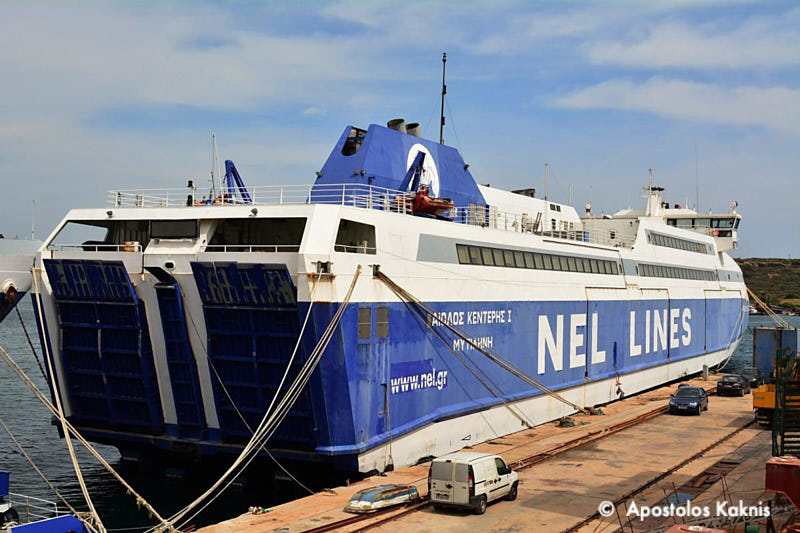
Some days ago, Anen Lines acquired NEL Line’s HSC Aeolos Kenteris 1 for two million euros.
A few days before, Anen Lines also acquired Theofilos for 380,000 euros.
On Monday 25 November more ships were scheduled to be auctioned: Aeolos Kenteris II and Taxiarchis.
This was postponed due to lack of interest.
Stena AB’s Ferry Division Is Strong Performer In the Group
Stena AB key figures for first nine months
Profit Before Tax = SEK 192 million (SEK 1,076 million)
Consolidated EBITDA, excluding net gain on sale of assets and change in fair value of investment Properties = SEK 5,938 million (SEK 3,856 million)
Consolidated EBITDA, including net gain on sale of assets and change in fair value of investment Properties = SEK 7,098 million (SEK 6,775 million)
Ferry Operation Stena Line (for the first nine months)
Improved and all-time high EBITDA compared to last year, mainly due to increased car volumes, passenger- and freight volumes.
EBITDA = SEK 2,958 million (SEK 2,490 million)
Shipping
Increased EBITDA mainly due to stronger rates in all tanker segments compared to last year together with more operational days and higher rates for the LNG vessels.
Strong contract coverage and utilisation rate across the roro fleet, offset by lower charter income as a result of vessels sold in 2018.
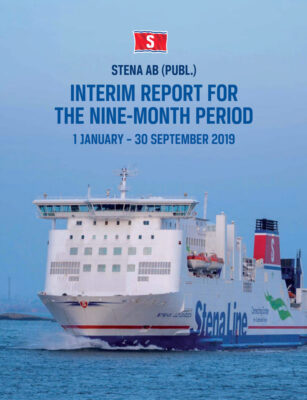
Click cover for download
Irish Continental Group (ICG) issued a trading update which covers carryings for the year to date to 23 November 2019 and financial information for the first ten months of 2019.
Consolidated Group revenue in the period was €308.8 million, an increase of €23.5 million or 8.2% compared with last year. While increases were achieved across all of the Group’s revenue streams, a significant proportion of the improvement arises in the Ferries Division from the improved schedule integrity following the prior year disruptions.
The overall effect of the continuing uncertainty about Brexit is generating negative impact on consumer sentiment and trade flows as investment decisions are delayed.
Ferries Division: Total revenues recorded in the period to 31 October amounted to EUR 184.3 million, a 7.1% increase on the prior year. This increase was driven by schedule changes, additional cruise ferry capacity following the entry into service of the W.B. Yeats in January replacing the previous Oscar Wilde and improved schedule integrity following the significant disruptions in the second half of 2018.
For the year to 23 November:
+1.6% cars
+10.5% roro units
A second cruise ferry is being built in Flensburg, with a contracted delivery of late 2020. It is intended that this vessel will service the Dublin/Holyhead route alongside the existing Ulysses with the chartered Epsilon being returned to its owners.