The Wight Shipyard Co announces merger with multinational shipbuilder OCEA

By 2022 Newsletter week 6

The Wight Shipyard Co. announced in a press release an all-share merger with the complementary multinational shipbuilder OCEA to create a combined group to capitalise on the fast ferry and offshore renewable energy markets opportunities.

Based at their primary yard in Les Sables d’Olonne, OCEA employs more than 500 skilled operators with further facilities in France, including the Caribbean and the Philippines.

The merger comes on the back of the news that The Wight Shipyard Co. has secured the contract for two new ‘Uber Boat by Thames Clippers’ with the shipyard already into the design and build of the next generation of Clipper-class vessels utilising the very latest battery-power technology and re-charging options.

OCEA SA is one of the world’s leading aluminium shipbuilders, specialising in the design, building and support of aluminium vessels up to 125 metres in length.

Car ferry ST DAMIAN sold for scrap

By 2022 Newsletter week 6

According to the weekly vessel scrap report 2022 (Week 5), ST DAMIAN (ex VIKING 3, WASA EXPRESS, ROSSLAGEN, IONIAN SPIRIT) eventually sold for scrap for 425 USD/t.

The ferry is the last of the popular Papenburg sisters (9 ships) that go for dismantling.

The Panama-registered ship operated between Brindisi and Vlora from 2016 until October 2021, before she was laid up in Paloukia (Salamis).

Photo: Christos Chatzaras (follow on Instagram)

MARSHAL ROKOSSOVSKY, dual-fuel train ferry for the Ust-Luga – Baltiysk line arrived in Kaliningrad

By 2022 Newsletter week 6

Russia’s first dual-fuel roro train ferry MARSHAL ROKOSSOVSKY has successfully completed its delivery voyage from Tuzla (Istanbul) to Kaliningrad.

The first of two vessels, she was built by Kuzey Star Shipyard and LLC Nevsky Shipyard.

In the near future, the ferry will be put on the Ust-Luga – Baltiysk line, which is strategically important for Russia. (Source: Rosmorport)

BREAKING NEWS

By 2022 Newsletter week 5

CLdN ro-ro signed a contract with Hyundai Mipo Dockyards for two hybrid 8,000 lane meter ro-ro vessels.

After the delivery of the new 5,000 lane meter LNG vessel FAUSTINE at the end of last year and the expected delivery of her sister SERAPHINE later this month, CLdN has now placed an order or for two new super-efficient 8,000 lane meter vessels with a technologically advanced propulsion train.

The order represents the largest investment in CLdN’s history and is a result of two years of intense engineering and development together with Hyundai Mipo Dockyard.

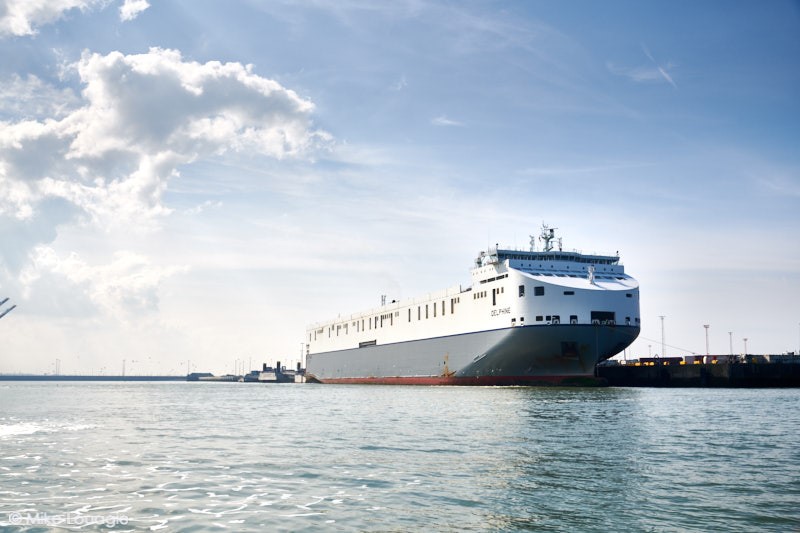
The new vessels, cargo wise, are modelled on the two 8,000 lane meter ships CELINE and DELPHINE, which CLdN operates since 2017.

Hybrid design

The new ships will be equipped with two LNG dual fuel main engines (ME-GI type) of 11MW each, as well as two electric propulsion motors of 6MW each.

In full electric mode the ship can achieve a cruising speed of 16-17 knots.

Both vessels will also be future proofed, to allow expansion or integration of technological advancements as time moves on. Compared with CLdN’s largest vessels currently in operation, the new ships will further reduce GHG emissions by 40% and will be NOx TIER III compliant.

Reducing carbon footprint

In 2021, CLdN announced they are the top performer amongst their ro-ro shipping peers in Northwest Europe for CO2 emissions per tonne of freight carried. These new vessels will strengthen CLdN’s current position as greenest ro-ro operator and push its ambition to further reduce its carbon footprint.

By investing in technologically advanced ships and terminals, CLdN enables its customers to improve their carbon footprint and support them at the same time in making their supply chains more efficient and robust.

Source: CLdN Press Release

Color Line resumes operations on the Oslo-Kiel and Sandefjord-Strømstad routes

By 2022 Newsletter week 5

Due to the reduction of the Norwegian corona measures, Color Line will resume operations on the routes between Oslo and Kiel and Sandefjord and Strømstad. The decision means that all four ships that have been taken out of service will resume their sailings, and that the company’s approximately 950 laid off employees will gradually return to work.

Oslo-Kiel
12 February: COLOR MAGIC
25 February: COLOR FANTASY

Sandefjord-Strømstad
9 February: COLOR HYBRID
28 February: COLOR VIKING

In a normal year, Color Line carries close to four million passengers and 200,000 freight units between Norway and Denmark, Sweden and Germany, divided into four year-round routes and seven ships. The booking rate for 2022 is already in line with or over the same time in 2019.

Stena Line sets sail to Finland for the first time – responds to market demand

By 2022 Newsletter week 5

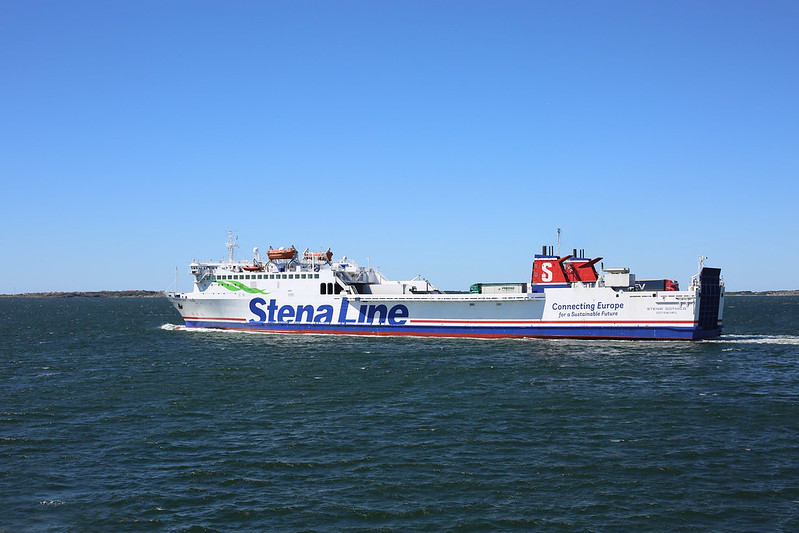
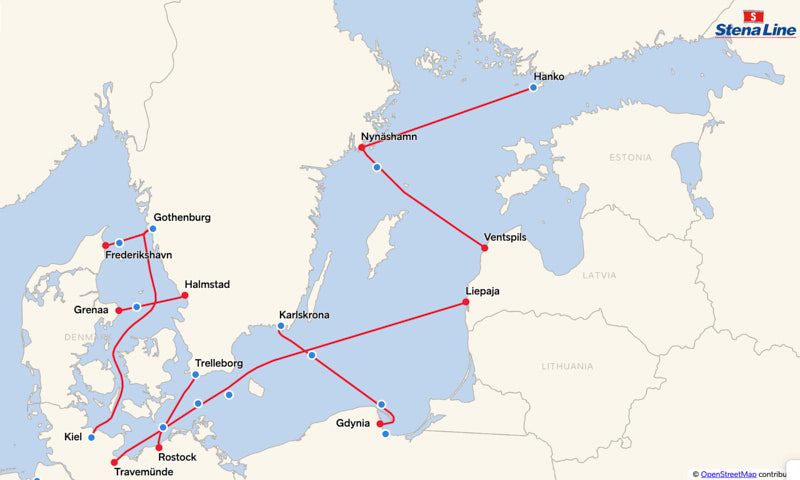
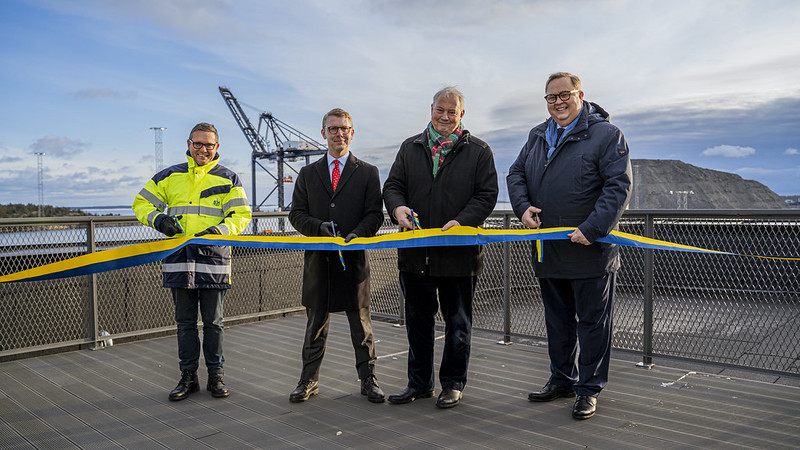
The new Stena Line Stockholm Norvik Port – Port of Hanko route was inaugurated on 1 February with a ceremony at Stockholm Norvik.

Since the 1st of February, URD operates on the route, with three departures each week.
A second vessel, STENA GOTHICA, will be added to the route in May, resulting in daily departures from both ports.
Both vessels have a lane metre capacity of 1,600 and can carry 186 passengers.

”This new service is primarily an outcome of customer dialogue and market demand,” says Johan Edelman, Trade Director Baltic Sea North Stena Line. “The new route marks the next step in Stena Line’s ambition to further expand and strengthen its position in the Baltic Sea.”

>>> Click on the map below to see an interactive route map

Group Photo:
Thomas Andersson, CEO Ports of Stockholm
Kristoffer Tamsons, Regional Minister for Transport of Region Stockholm
Harry Bouveng, Chairman of the municipal board Nynäshamn
Johan Edelman, Trade Director Baltic Sea North Stena Line

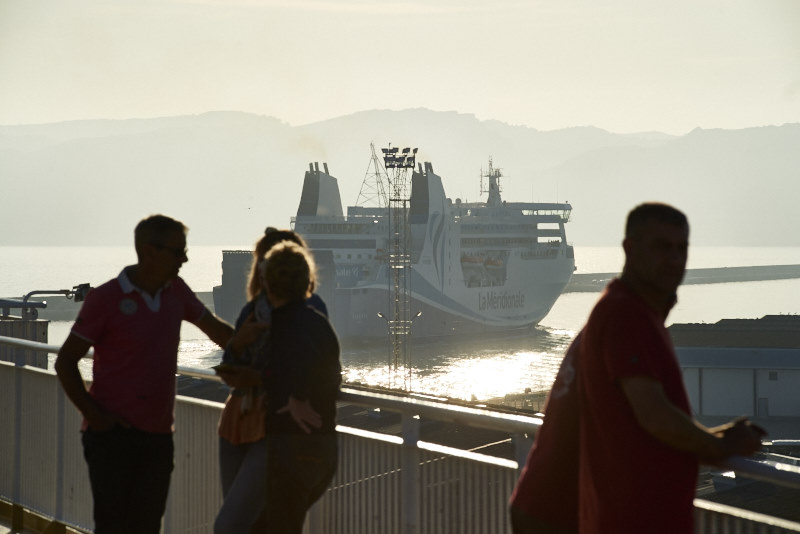
STEF’s subsidiary La Méridionale performed well on the freight side

By 2022 Newsletter week 5

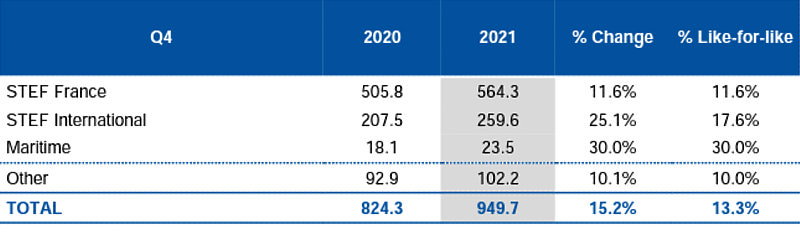
STEF, specialist in temperature-controlled transport and logistics for food products, announced a turnover of €3.5 billion for the year 2021, up 11.5%, including €950 million for the 4th quarter, which is up by 15.2%.

During Q4, La Méridionale achieved the expected performance on its crossings to Corsica under the current public service delegation.

On the Marseille-Tangier line, the company was affected by the closure of the Moroccan borders which considerably reduced passenger traffic in early December, even though its freight activities are showing a steady increase in fill rate.

2021, an exceptional year for Port Boulogne Calais

By 2022 Newsletter week 5

In 2021, Port Boulogne Calais experienced a very full year which could be
described as “extraordinary”:

  • the entry into force of Brexit and the United Kingdom’s exit from the Common Market
  • the COVID-19 health crisis
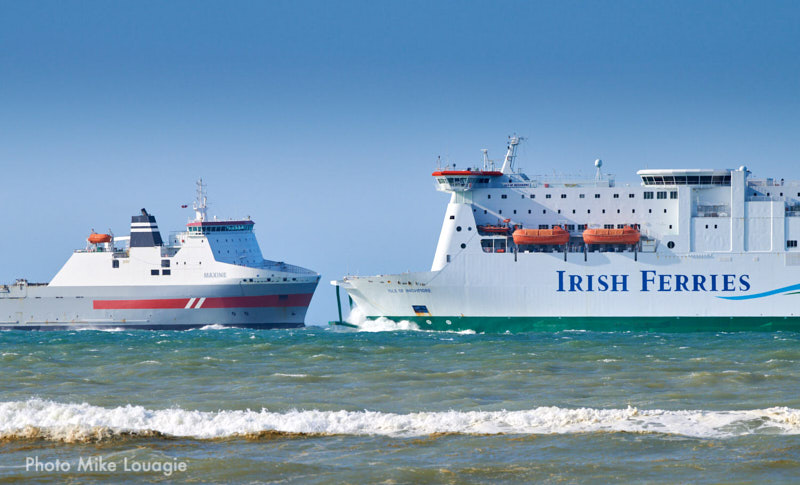
  • the arrival of a third cross-Channel company, Irish Ferries
  • the start of the DFDS roro service Calais-Sheerness (temp. suspended in January 2022)
  • the opening of the new port of Calais which marks the completion of 6 years of work on the largest port site in Europe at the start of the century

Cross-Channel activity: 
-1.0% cargo 38,199,399 tonnes
-1.4% freight 1,638,695 units
-27% passengers 2,387,757
-42% passenger vehicles 248,217

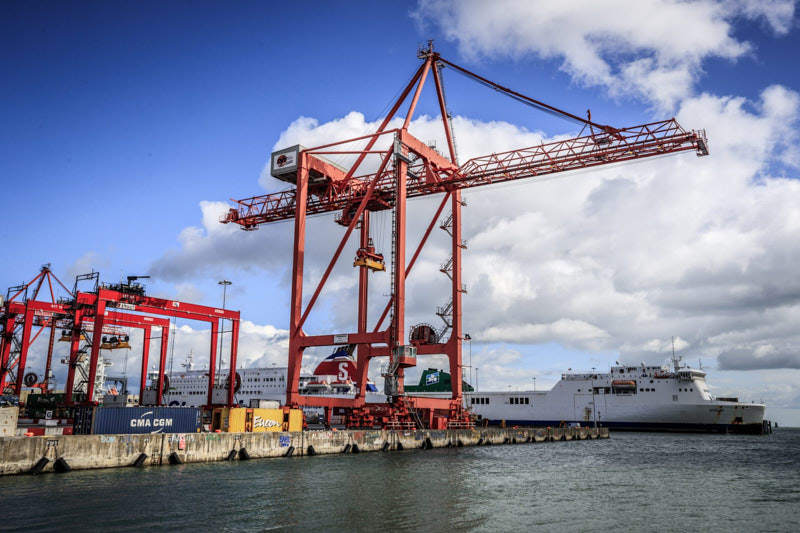
Dublin Port sees full year impact of Brexit on unitised volumes

By 2022 Newsletter week 5

83% of Dublin Port’s volumes are in the RoRo and LoLo modes and there were contrasting outcomes in these two modes:

  • The number of RoRo units fell by -9.3% or 99,000 trailers
  • This was significantly offset by an increase in LoLo units of +10.2% or 43,000 containers
  • Overall unitised volumes (RoRo and LoLo combined) were down by -3.8% or 56,000 units

The full year impacts of Brexit on Dublin Port’s unitised volumes (RoRo and LoLo) are now clear:

  • The overall decline in the number of containers and trailers was small (-3.8%).
  • Fewer goods are now moving in trailers in the RoRo mode and more are moving in containers in the LoLo mode.  LoLo’s share of unitised volumes increased from 29% to 33%.
  • Fewer RoRo trailers are moving driver-accompanied.  During 2021, their number declined by 90,000, contributing substantially to the overall decline in RoRo volumes of 99,000.
  • The decline in RoRo volumes was concentrated on routes to the GB ports of Holyhead, Liverpool and Heysham where volumes declined by 187,000 (-21%) to 703,000.
  • However, RoRo volumes on direct routes to Continental Europe increased by 88,000 to 259,000.
  • As a result, where GB routes accounted for 64% of all of the 1.5 million unit loads (RoRo and LoLo combined) in 2020, they only accounted for 52% of the 1.4 million unit loads in 2021.