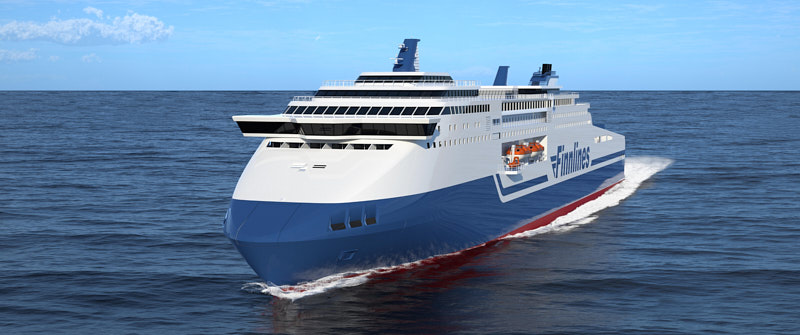


Scandlines to electrify two ferries for the Fehmarn Belt link

By 2023 Newsletter week 50

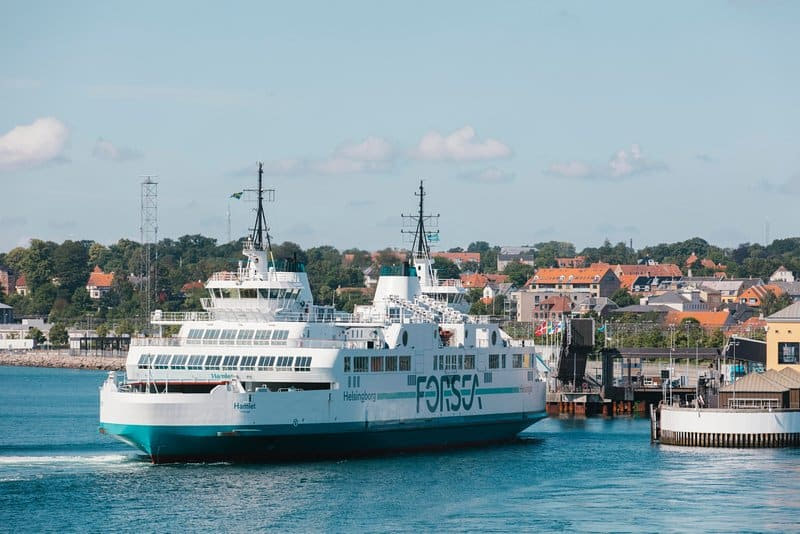
In recent years, Scandlines has cemented its position as a green frontrunner with a wide range of initiatives, including the new FUTURA ferry. Now the plan is to electrify two ferries on the Fehmarn Belt.

Scandlines is investing in the following:

  • Large energy storage system on board both ferries
  • Charging facilities on board
  • Solar panels on board both ferries

The total investment in electrification of the Fehmarn ferries amounts to EUR 31 million. The German Ministry of Transport has awarded the project financial support as part of a funding programme covering sustainable modernisation of coastal vessels to reduce emissions, covering up to 40 percent of the conversion costs.

Scandlines expects to sign a contract on the conversion in early 2024. Subject to the final delivery time of equipment, the ferries will be converted in the beginning of 2024 till 2025.

Double-ended ferry MØYSALEN sold to Kerkyra Seaways

By 2023 Newsletter week 50

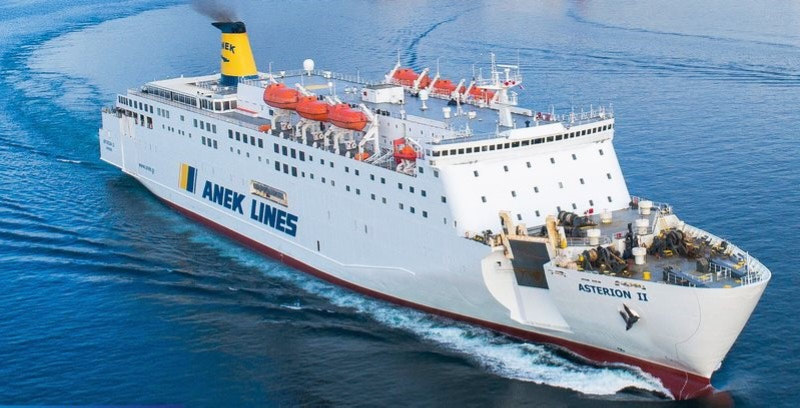
According to recent information, Kerkyra Seaways is the buyer of the Norwegian double-ended ferry MØYSALEN from Boreal Sjø. The ship departed from the port of Mekjarvik on December 13 and is expected to arrive at the port of Piraeus on December 28.

Built in Norway in 1993 (Johan Drage A/S, Rognan), MØYSALEN previously operated on the Sandnessjøen – Dønnastedene line. It was laid up in Sandnessjøen in 2023.

The vessel will undergo conversion before joining the Hellenic coastal shipping, likely serving on the Igoumenitsa-Corfu line. MØYSALEN has a capacity for 380 passengers and 104 cars or 10 trucks (18m), and its cruising speed is 13.6 knots.

Photos: Wikipedia

Saronic Ferries: Leading the transition to green shipping

By 2023 Newsletter week 49

As part of its commitment to fully transition to zero-emission shipping by 2040, Saronic Ferries participated in a training mission to Norway with the aim of further familiarising itself with electric propulsion technologies in coastal shipping.

The 3-day visit, organised by the Embassy of Norway in Greece, took place in Norway (3-6 December) with the goal of understanding and adopting environmentally friendly technologies for short sea vessels in the Greek market.

The educational visit of the company’s representatives to Norway offered a unique opportunity to explore the latest trends and practices in the electrification and hybridisation of passenger ships. Norway’s progress in this area is not only a model for business efficiency but also a beacon for environmental management in maritime industries.

Saronic Ferries, as already announced in the past, has been preparing since 2020 the study of a purely electric ferry for the transport of passengers and vehicles on the Saronic lines, which it already serves with a fleet of 5 conventional ships.

The study has already been implemented with the Dutch office C-Job and secured approval for the initial study (AiP) from the Norwegian Surveyor DNV, starting in the summer of 2023.

Photo: Saronic Ferries

Piraeus Port Authority S.A.: Conference on the electrification of ships in the port of Piraeus

By 2023 Newsletter week 49

On December 8, 2023, Piraeus Port Authority S.A. organized a conference on “Electrification of Ships in the Port of Piraeus – Prospects and Challenges”.

The Conference was held in the context of the energy transition of the infrastructure of the port of Piraeus and adaptation of its port operations to the imperatives of the Green Agreement and the EU Package of Measures “Fit for 55”.

It is noted that Piraeus Port Authority has already proceeded with a number of related actions, through two co-financed projects by the EU (CIPORT and EALING), having completed all the technical studies for 5 ship electrification positions in coastal shipping and 4 cruise ship electrification positions, while launching the construction of the aforementioned projects.

New Baleària route between Dominican Republic and Puerto Rico after summer 2024.

By 2023 Newsletter week 49

Baleària plans to open a new ferry route between San Pedro de Macorís (Dominican Republic) and Mayagüez (Puerto Rico) after summer 2024.

  • Distance 133 miles.
  • 7 hours crossing.
  • Plan to build a terminal in the port of San Pedro de Macorís and adapt the one in Mayagüez.
  • Possibly first LNG-powered ferry in the Caribbean.

Baleària has been operating in the Caribbean since 2011, where it currently connects the Fort Lauderdale with the Bahamian islands of Grand Bahama and Bimini.

This new service will be Baleària’s third route in the Caribbean and its sixth internationally.

Liberty Lines celebrated the launch of the first fast hybrid ferry

By 2023 Newsletter week 49

HSC VITTORIO MORACE, with a length of 39.5 meters and a capacity of 251 passengers, is the world’s first HSC hybrid fast unit. It is equipped with two MTU-Rolls Royce hybrid engines, allowing it to operate entirely in electric mode within ports before recharging the batteries while sailing at 30 knots in open sea.

It is the first of the 9 innovative fast hybrid ships that will join the fleet by 2026.

The vessel was launched at the Astilleros Armon shipyard in Navia, Spain.

Electrification + lengthening + autonomous battery-changing robot

By 2023 Newsletter week 49
  • The high-speed ferries BARONESSEN and BARONEN returned to the Brødrene Aa shipyard to replace their diesel engines with batteries.
  • The vessels will also be lengthened by 10m to address the reduced energy efficiency as a result from the addition of heavy batteries.
  • Innovation in charging: with the assistance of a robotic arm and a battery carousel, the battery module can be replaced in approximately 3 minutes. SHIFTR enables a swift transition to a fully charged battery while the boat is docked, resulting in significant time savings.
  • Using a robotic arm and a battery carousel, changing the battery module can be done in about 3 minutes. SHIFTR makes it possible to change to a fully charged battery while the boat is docked, thus saving a lot of time. At the same time, the power grid will not be burdened to the same extent as with fast charging. Slow charging takes place at lower power, and will be less of a burden on the infrastructure.