Stena Line to Acquire Wasaline and Strengthen Its Baltic Sea Presence

By | 2025 Newsletter week 45 | No Comments

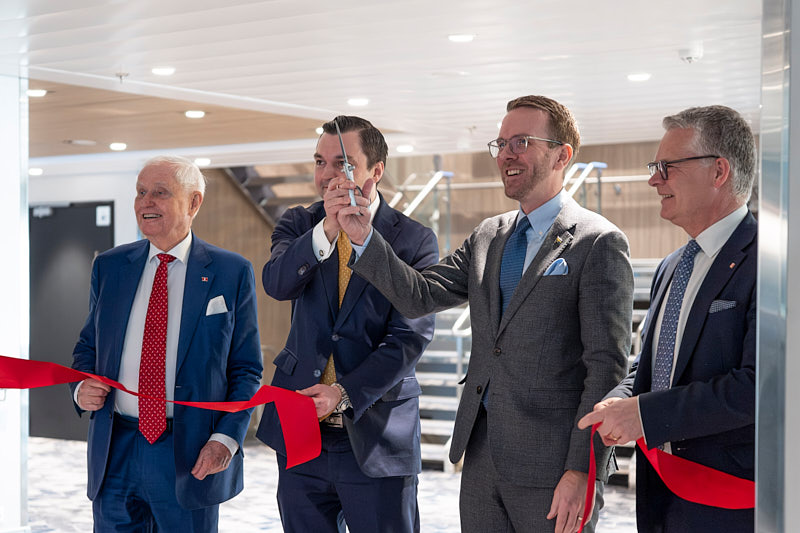
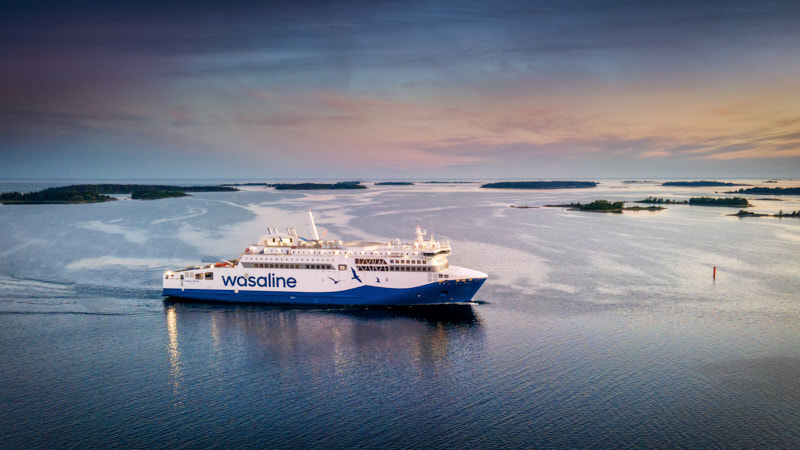
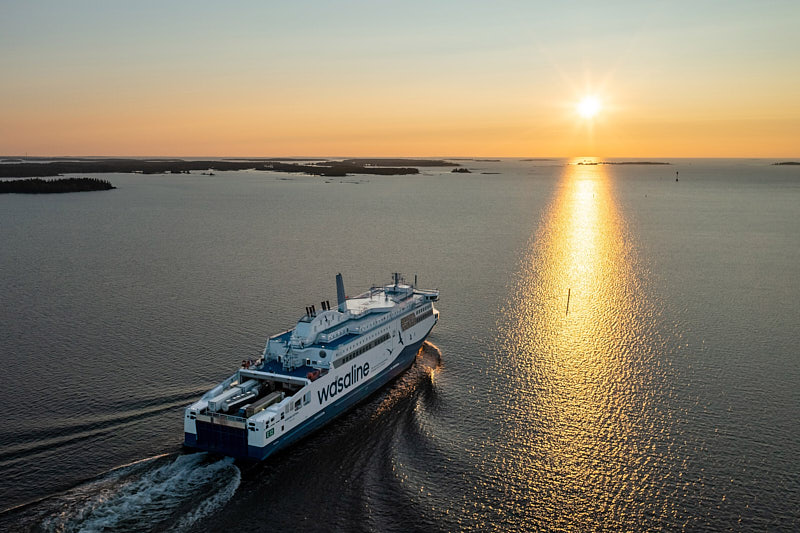
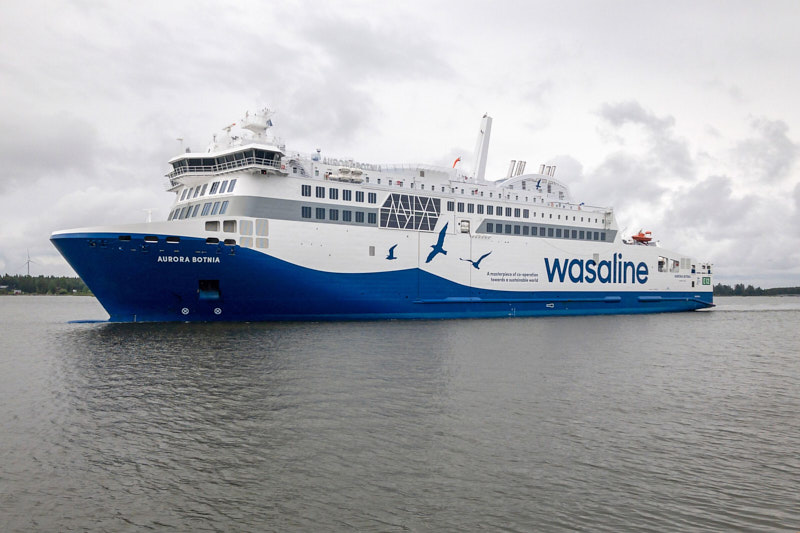
Stena Line will acquire NLC Ferry Ab Oy/Wasaline, taking over the operation of the ferry route between Umeå (Sweden) and Vaasa (Finland).

When will the transfer of ownership take place?

In the beginning of 2026, after city councils and authorities have approved the deal.

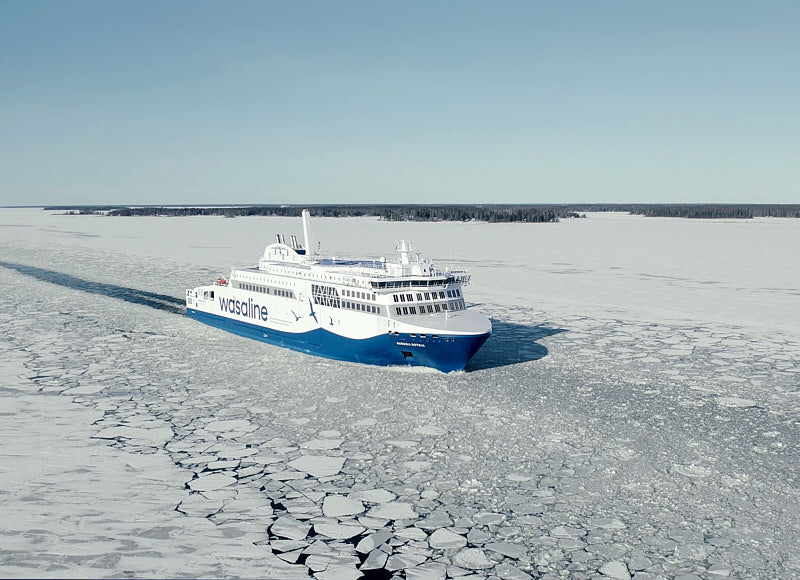
What happens to ferry AURORA BOTNIA?

Kvarken Link, a company owned by the cities of Vaasa and Umeå, continues to own the ship. NLC Ferry, under the new ownership, charters and mans the ship.


The Wasaline brand will remain.

What are the minimum requirements for traffic?

Agreement between Vaasa, Umeå and Stena Line states a minimum of 20 departures per week. At the moment, there are 20-26 departures (winter-high season).

For how long is the contract valid?

The charter agreement and the traffic requirements are agreed for 10 years, after which Stena Line has the possibility to either extend the agreement or to purchase the ship. Stena Line has expressed their long-term commitment to operate and develop the route.

Wasaline Achieves Carbon Neutrality Ahead of Schedule

By | 2025 Newsletter week 33 | No Comments
  • Wasaline has become the first carbon-neutral shipping company in the Baltic Sea.
  • A new biogas deal with Gasum and a FuelEU Maritime pooling agreement with Stena Line enable 100% biofuel use.
  • The Vaasa–Umeå link is now recognised by DNV as the first international green shipping corridor in operation.
  • Carbon neutrality was originally targeted for 2030 but has been reached in 2025.
  • Hybrid ferry AURORA BOTNIA will increase its battery capacity to 12.6 MWh in January 2026, the largest on any RoPax (says the press release).

Ekeri Achieves Carbon-Neutral Trailer Transport via Wasaline

By | 2025 Newsletter week 25 | No Comments

Trailer manufacturer Ekeri and shipping company Wasaline have completed their first fully carbon-neutral trailer transport from Vaasa, Finland to southern Sweden. The achievement combines Wasaline’s emission-free ferry service with intermodal rail transport via Umeå, offering a sustainable logistics chain from port to destination.

All Ekeri trailers shipped with Wasaline now use battery-powered freight capacity, further reducing emissions. “Intermodal transport is the future of efficient, sustainable freight,” says Tony Ehrs, Freight Director at Wasaline.

Green logistics capacity remains available.
www.wasaline.com

Wasaline Reports Strong Q1 2025 Results

By | 2025 Newsletter week 15 | No Comments
  • Revenue grew by 7.5%, setting a new Q1 record
  • Passenger traffic (cars and buses) reached all-time highs
  • Freight volumes increased by 10%, with growth in both units and tonnage
  • Energy consumption dropped 19.5% overall
  • Energy use per trip decreased by 21.7%
  • CO₂ emissions reduced by 23.2%
  • Number of trips increased by 2.8%
  • Main fuel remains liquefied natural gas (LNG)
  • Strong growth in intermodal transport, especially via the Vaasa–Umeå–Southern Europe corridor
  • Managing Director Peter Ståhlberg highlights customer loyalty and staff dedication

Click on here for the new sustainability report.

Wasaline Achieves Record-Breaking February Performance

By | 2025 Newsletter week 10 | No Comments

Wasaline has reported its best February ever, setting new records in both passenger numbers and freight transport. The northernmost shipping line saw 16,415 passengers travel between Vaasa (Finland) and Umeå (Sweden), a 14.6% increase compared to last year. Freight volumes also reached an all-time high for February, with 1,828 units transported, marking 8% growth from 2024.

Photo: Christoffer Bjorklund

Wasaline’s 2024 Performance: Progress and Sustainability Highlights

By | 2025 Newsletter week 04 | No Comments

Key Developments and Achievements

  • Reduction in Carbon Footprint:
    • Total carbon dioxide emissions reduced by 5% in 2024.
    • Increased use of green shore power by 22%, saving 1,800 tons of CO₂.
  • Operational Performance:
    • Cargo volumes increased by 6% in tonnage and 3.2% in length metres.
    • Passenger numbers and vehicles decreased by 9%, while buses saw a 1.3% decline.
    • Revenue dropped by 3.7%, but overall results remained stable.
  • Market Share Gains:
    • Maintained market share in passenger traffic.
    • Passenger vehicle and bus market share increased, with a 50% growth in the bus segment.
  • Intermodal and Carbon-Neutral Transport:
    • Launched intermodal transport from Umeå to southern Sweden and Europe, minimising emissions.
    • Introduced carbon-neutral transport options for passengers and cargo, with climate compensation allocated to biofuel or battery resources.
  • Commitment to Carbon Neutrality:
    • Targeting full carbon neutrality by 2030.
    • Hybrid vessel AURORA BOTNIA uses LNG, biogas, and batteries, operating on electricity in port areas with green shore power.

Outlook

  • Positive booking trends indicate an economic turnaround for both passengers and cargo.

Gasum and Wasaline Partner for FuelEU Maritime Pooling Solution

By | 2024 Newsletter week 41 | No Comments

Gasum, a Nordic energy company, is collaborating with Wasaline to develop the first large-scale commercial FuelEU Maritime pooling service.

This initiative aims to help conventional fuel vessels comply with stringent European Union emission regulations. The pooling service will allow shipping companies to meet compliance targets by leveraging over-compliance from vessels running on ultra-low emission fuels like bio-LNG, provided by Gasum.

Wasaline’s hybrid ferry, Aurora Botnia will contribute to the pool by using bio-LNG. This over-compliance can be shared with vessels that rely on conventional fuels, thus reducing their regulatory burden. Gasum, a leader in bio-LNG production and distribution, guarantees a reliable supply of renewable fuel for Wasaline, ensuring the stability of the pooling service.

FuelEU Maritime regulations, effective from 2025, will require vessels over 5,000 gross tonnage to reduce the carbon intensity of their fuels by 2%, with more stringent reductions to follow, potentially reaching 80% by 2050. The pooling service offers a flexible solution, allowing vessels with higher emissions to meet these requirements by relying on the emission savings of bio-LNG-powered ships.

Jacob Granqvist, Gasum’s Vice President for Maritime, highlighted that the pooling service offers shipping companies an easy, cost-effective way to comply with regulations while promoting low-emission fuel production. Wasaline’s CEO, Peter Ståhlberg, expressed excitement about participating in a project that supports renewable energy use and helps drive the green transition in the shipping industry.

This partnership marks a significant step towards decarbonising maritime transport, with Gasum aiming to offer 7 TWh of renewable gas annually by 2027, contributing to substantial carbon dioxide reductions.

Read more about Gasum’s services for the maritime transport sector.
Climate Compensation Gains Popularity at Wasaline

By | 2024 Newsletter week 36 | No Comments

Wasaline introduced a carbon offset option in June 2024, which has seen significant uptake, particularly among Swedish travellers, with over 1,500 choosing to offset their travel emissions. The proceeds are used to power the ship with biogas, enhancing its sustainability. Wasaline aims to reduce its carbon footprint by at least 5% annually, working towards climate-neutral operations by 2030. 

Wasaline introduces voluntary climate compensation also for passengers

By | 2024 Newsletter week 23 | No Comments

Passengers on the Vaasa-Umeå route can now opt to compensate for their journey by paying a nominal voluntary fee. Wasaline aims to reduce its climate footprint by at least 5% annually and achieve climate neutrality in Kvarken by 2030.

Operating with biogas and batteries has made the journey climate neutral. Since the launch of Aurora Botnia, CO2 emissions have decreased by 27.1%, with 10% of journeys in 2023 powered by biogas. The 2024 goal is a 15% reduction in CO2 footprint, according to Peter Ståhlberg, Managing Director of Wasaline.

Customer demand has driven the introduction of climate compensation, with fees used to purchase biogas. There is significant interest from cargo customers in climate-neutral operations. Currently, Wasaline offers emission-neutral intermodal transport to the continent via Sweden, using trains from Gothenburg and Trelleborg ports. The Vaasa-Umeå sea route aspires to be a Green Shipping Corridor by 2030.

Record-breaking passenger volumes for Wasaline in 2023

By | 2024 Newsletter week 02 | No Comments

Wasaline announced excellent results for 2023.

+4.4% passengers

+14.3% cars

+11.6% buses

-5.9% cargo units, mostly due to the ending of traffic to and from Russia. The volume of imported paper has decreased due to lower demand. Export from Finland has remained approximately at the same level.

Turnover for Wasaline stayed the same compared to 2022.

Wasaline expects the first two quarters of 2024 to be difficult for both passenger and freight services due to the current economic downturn.

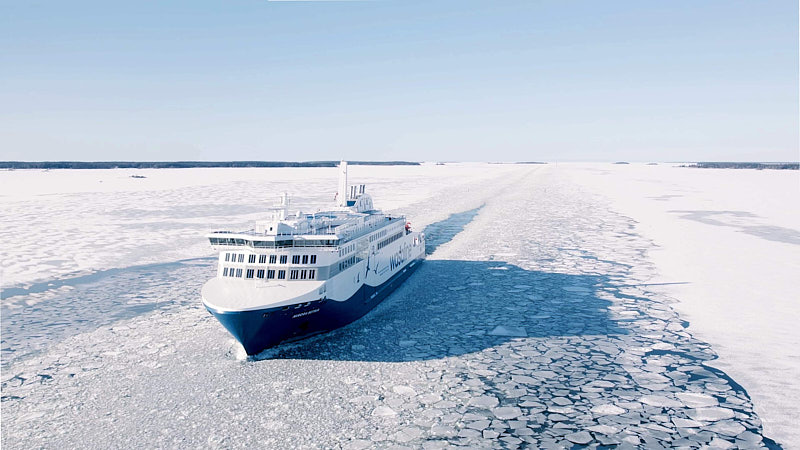
The shipping company is closely monitoring the (heavy) ice conditions in the Kvarken strait and is prepared to reduce the frequency of departures if necessary.