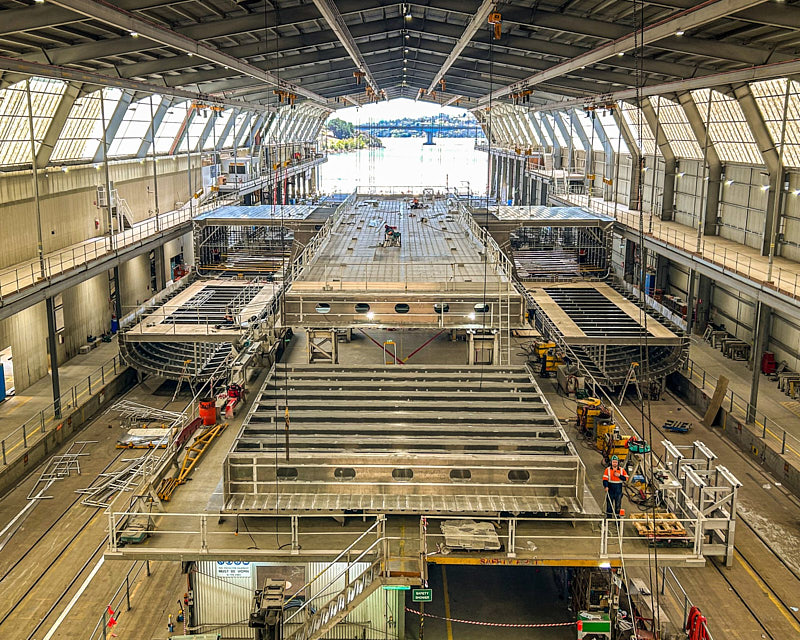

AYK Energy has won a Wärtsilä contract to supply a 55 MWh Polaris battery system for each of Molslinjen’s three new electric high-speed catamarans, totalling 165 MWh across the order. Read Molslinjen’s announcement.
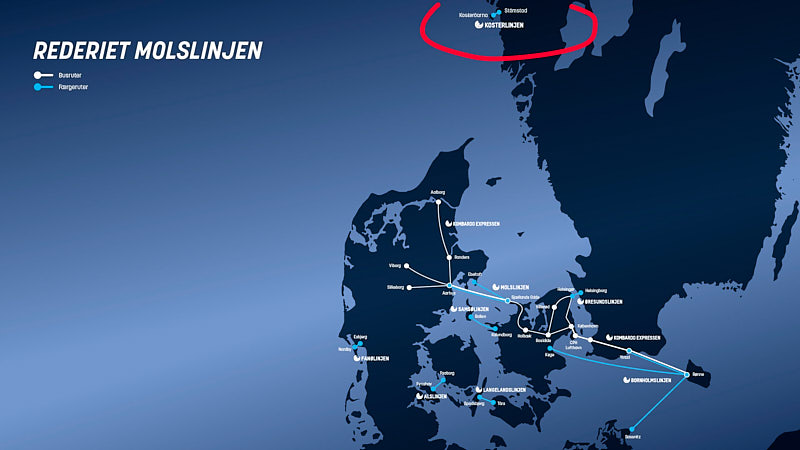
Molslinjen will take over the Strömstad–Koster Islands service on 27 September 2026, operating as Kosterlinjen on behalf of Västtrafik.
The contract was originally awarded to Torghatten. Both operators belong to Nordic Ferry Infrastructure (NFI).
Initial fleet: KOSTERSUND and KOSTERBRIS, running on biofuel.
Newbuildings: two fully electric ferries under construction in Finland, due in early 2027.
Capacity: each new ferry will carry 255 passengers and at least 30 bicycles.
Responsibilities: Västtrafik manages tickets, timetables and customer service; Kosterlinjen handles daily operations.
Serving the car-free islands of Nordkoster and Sydkoster, the route will be Molslinjen’s only service that does not carry cars.
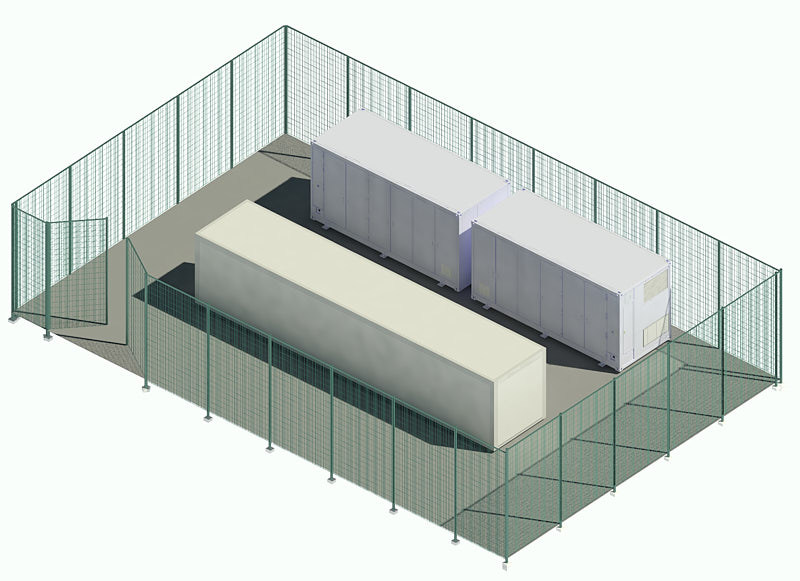
Molslinjen will install a 12-MWh battery energy storage system at Ballen Ferry Port on Samsø. The facility will support the electric ferry TYRFING, operating between Ballen and Kalundborg with up to five daily return crossings.
The battery will store enough electricity for approximately four ferry crossings, providing a more secure and stable energy supply. BOS Power will deliver the system, following consultancy support from Hybrid Greentech.
Besides supporting ferry operations, the battery can absorb surplus electricity when demand is low and release it back into the local grid during peak periods. Samsø Municipality also hopes it could eventually provide emergency power during a prolonged interruption of the island’s submarine cable connections.
Construction is scheduled for autumn and winter 2026/2027, with commissioning expected in March 2027.
Photo: Here is the first sketch of what will be the future BESS facility on Samsø.
Molslinjen’s Kattegat fast ferries delivered the strongest first quarter in the company’s history.
During Q1 2026, the catamarans carried almost 680,000 passengers and more than 290,000 passenger cars. That was nearly 5% more passengers and 5.6% more cars than the previous record set in early 2024.
According to Commercial Director Lucas Kragh, demand was boosted early in the year by poor weather, which encouraged more travellers to choose the ferry. Electric vehicles made a notable contribution, filling deck space in high numbers.
Traffic accelerated further in March, with volumes up 14% year-on-year. Electric cars accounted for 35% of all cars carried during the month.
Molslinjen said its marketing campaign positioning the ferry as “the smart road” helped drive market share gains, particularly versus the Great Belt bridge.
The group’s coach operator, Kombardo Expressen, also contributed positively, benefiting from disruption caused by reconstruction works at Aarhus Station.
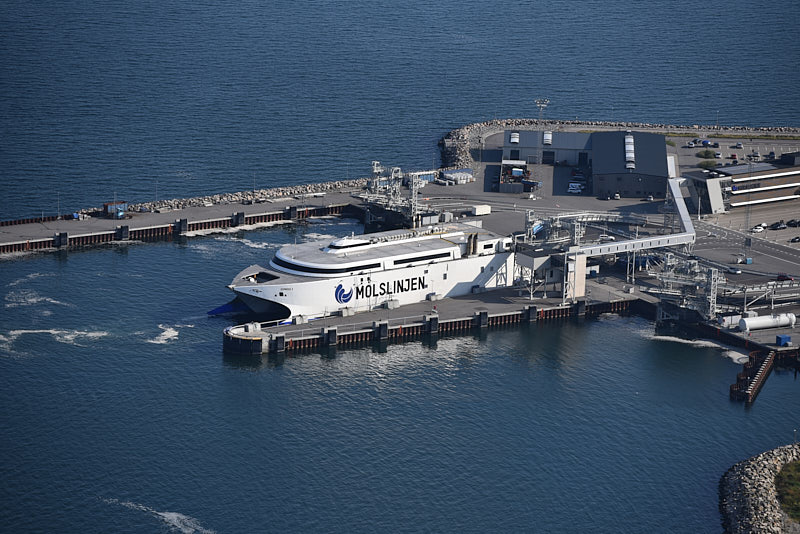
Traffic patterns on Denmark’s domestic ferry network followed the usual winter trend in February 2026. Cold weather and snow reduced travel demand across most routes. Molslinjen reported slight traffic declines on all routes except the Kattegat crossings.
“The routes across the Kattegat stand out significantly. This time we believe we can thank the winter weather for the good numbers, somewhat unusually,” said Molslinjen’s Commercial Director, Lucas Kragh.
Cold temperatures appear to have boosted ferry demand among electric vehicle (EV) drivers. Low temperatures reduce battery range, encouraging drivers to limit road kilometres.
The share of EVs on MOLSLINJEN ferries rose sharply:
- February 2025: 25.4%
- February 2026: 34.0%
As a result, total traffic across the Kattegat increased 3.9% year-on-year in February.
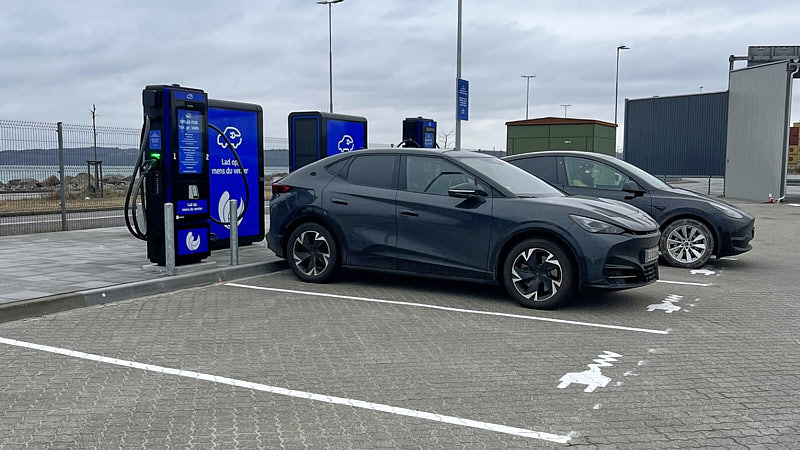
At the end of January, Molslinjen commissioned eight new superchargers with 16 charging points at the Port of Aarhus. EV drivers can recharge while waiting for departure, reducing range concerns before continuing their journey across Zealand.
Molslinjen plans to install a similar number of charging stations at the Port of Odden. The new facilities are expected to enter service by the end of March 2026.
]
The 1998-built ferry FYNSHAV has been sold by Danish operator Molslinjen to Naples-based Medmar Navi.
The reported price for the vessel, now renamed MEDMAR MARTINA, was approximately EUR 4.5 million.
The ferry is expected to sail from Northern Europe to the Mediterranean in the coming days. It will undergo refit works before re-entering service in the Gulf of Naples next summer.
Medmar Navi, a short-sea operator controlled by the D’Abundo family, recently acquired two additional vessels as part of its fleet renewal programme: MEDMAR GIORGIA and HSC MEDMAR DONATA.
The ships will serve regular routes from Naples and Pozzuoli to the islands of Ischia and Procida.hoto: Wikimedia

Molslinjen has started the process of recruiting a new CEO.
Kristian Durhuus will step down after nearly three years in the role.
- Durhuus became CEO in March 2023 following Molslinjen’s acquisition of ForSea, now Øresundslinjen.
- Owners Nordic Ferry Infrastructure (NFI) say the next development phase requires a different leadership profile.
- Major strategic projects are completed or well underway, including:
- Full integration of Øresundslinjen
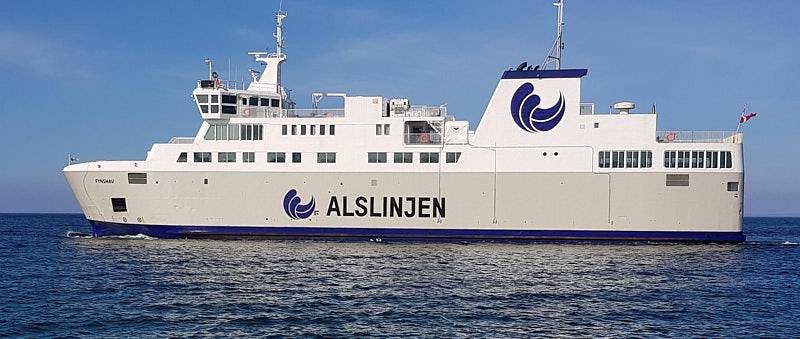
- New electric ferries in operation on Alslinjen and Samsølinjen
- Construction of three battery-powered catamarans in Australia
- Electrification of Kattegat services is now in progress.
- Carsten Jensen, CEO of NFI, will serve as interim CEO until a successor is appointed.
Durhuus said he is proud to have contributed to what he described as the world’s largest electrification project at sea.
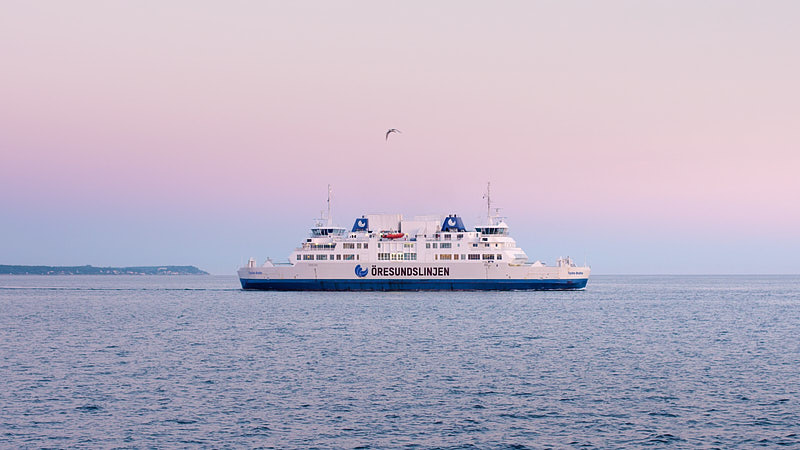
Öresundlinjen carried 6.37 million passengers in 2025, confirming continued growth on the Helsingborg–Helsingør route and marking its strongest year since joining Molslinjen.
Key figures 2025
- Total passengers: 6,373,842 (+4% vs 2024)
- Foot passengers: 3,363,377 (+7%), third-highest level since the Øresund Bridge opened in 2000
- Passenger cars: 1,036,897 (+2%), highest since 2019
Traffic was handled by three ferries, two fully battery-powered and one recently converted to electric operation.
Growth drivers
- Strong increase in walk-on passengers
- Continued investment in digitisation, improving flow and reliability
- Refurbished ferries, new restaurants and a clear shift to electric propulsion
CEO Kristian Durhuus said the results reflect the impact of sustained digital and operational development.
Onboard experience gains
- Ferry services continue to function as a “floating bridge” in the Øresund region
- Many foot passengers remain onboard for multiple crossings
- Restaurant guests: over 200,000 in 2025 (+27% vs 2024)
Source: Via Ritzau
After Molslinjen sold HSC MAX just before the 2024 peak season, the Kattegat fast ferry fleet dropped from four to three vessels. However, fewer sailings did not reduce traffic.
Key figures (2025):
- Cars: 1,362,835 (+2% vs 2024; slightly above 2019 with four ferries)
- Passengers: 3,330,703 (up on 2024, below 2019 record)
- EV share: 29.5% of cars, well above Denmark’s 17–18% fleet average
The operator credits better timetable planning and higher space utilisation. Growing EV ownership also supports demand, as drivers save kilometres and energy by taking the ferry.
Source: ViaRitzau
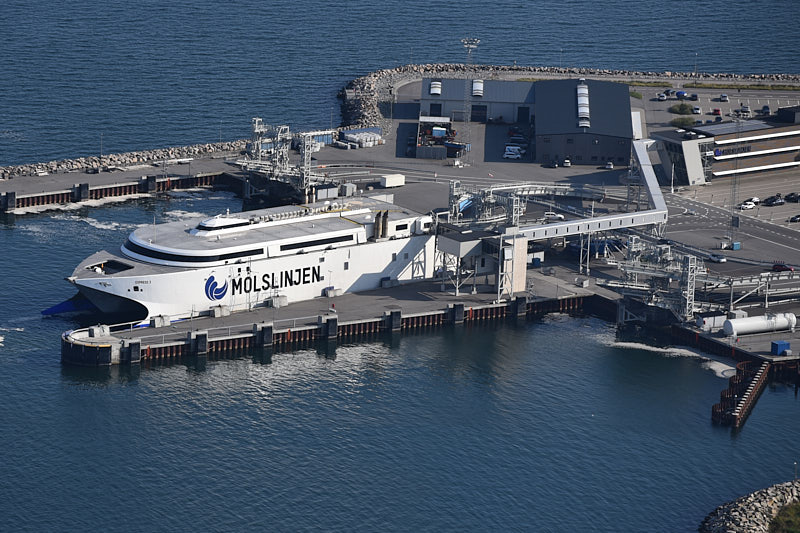
Molslinjen has ordered its third battery-powered catamaran for the Kattegat routes. The vessel will again be built by Incat in Tasmania, which is already constructing the first two ships. Together, the three vessels form what is described as the world’s largest electrification project at sea.
The new order covers a 129-metre emissions-free catamaran for the busy link between Jutland and Zealand. Molslinjen highlights the benefits of building all three ferries at the same yard, including shared learning and continuity. “It has been important for us to have a stable and solid supplier,” says Kristian Durhuus, CEO of Molslinjen.
The total investment for the three ferries and the associated shore infrastructure amounts to DKK 3.5bn. The project recently secured DKK 180m in national investment support. Durhuus says the company and its owners want to lead the transition to greener technology, noting that these solutions were not available only a few years ago.
The three ferries will fully electrify Molslinjen’s Kattegat operation. Deployment will take place as each vessel arrives in Denmark: the first in late 2027, the second in summer 2028, and the third in spring 2029.