DFDS : “five battery-powered cross-Channel ferries towards 2030”

By | 2022 Newsletter week 9 | No Comments

This and other interesting items can be read in the DFDS Annual Report 2021.

Some interesting elements:

Newbuilding plans (p29)

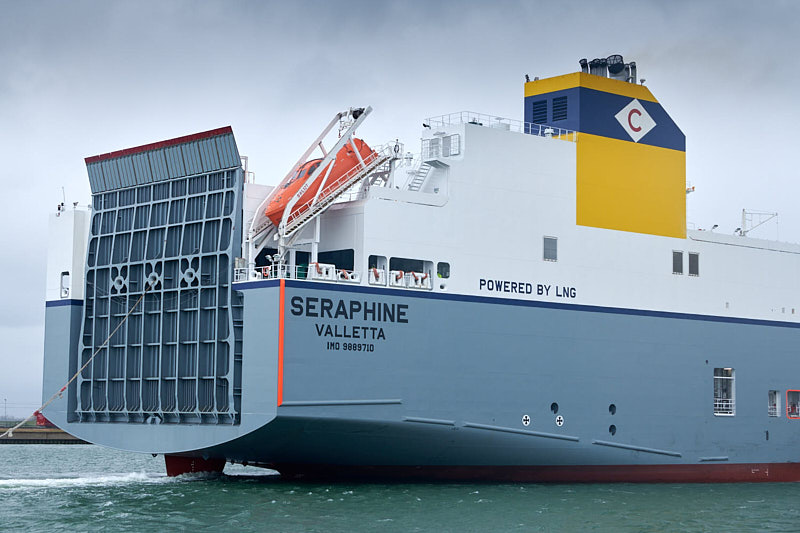
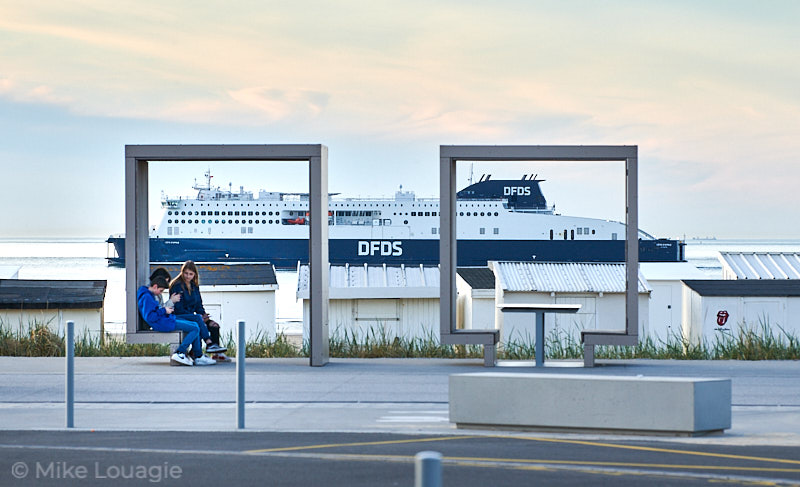
There are currently no plans to build new ferries, apart from a green ferry new building scheduled for 2025. The next major fleet investment program is expected to be renewal of the five short-sea Channel ferries for completion towards 2030. These ferries are expected to be battery powered due to the short crossing time of the Dover Strait.

Remark: under ‘investments’ (p24), DKK 2.3bn investments are expected in 2022:

One combined freight and passenger ferry new building and exercise of a purchase option to buy one freight ferry: DKK 800m.

About Irish Ferries on Calais-Dover (p32)

The excess capacity created by the entry of an additional operator is therefore likely to impact both freight and passenger pricing negatively in 2022. The likely passenger ticket price decreases will to some extent be mitigated by additional revenue from duty-free sales. Moreover, the new entrant will decrease the energy efficiency of the Dover Strait transport corridor.

Baltic Sea region (p32)

Freight volumes have grown in recent years which has led to capacity increases on routes operated by both direct and indirect competitors. The bridge between Germany and Denmark is expected to be completed within the next ten years and this has also prompted some operators to adjust their route networks. Freight ferry capacity in the region is therefore expected to continue to grow faster than demand in 2022.

Truck driver shortage

The truck driver shortages experienced in 2021 are likely to persist in the coming years. This is expected to support continued growth in the demand for unaccompanied ferry services that DFDS primarily provides in the North Sea and Mediterranean business units.

Roro vessel market

There was high demand for roro’s offered for chartering in the market and fixtures were made for longer periods at strong rates. Despite a market orderbook for newbuildings above both 2019 and 2020 (2019: 50k LM, 2020: 25k LM, 2021: 43k LM) and limited scrapping, all new buildings were absorbed in the market and several large operators added extra charter capacity to their networks.

The orderbook for 2022 and 2023 is around 70k LM, although Covid-19 related delays are expected to move delivery of several ferries into 2024. Smaller/older vessels are currently sold to secondary markets, rather than scrapped, and thus removed from the European market as well.

Ropax vessels

There was high demand for combined ferries with an overweight of freight capacity, to the extent that no vessels were available for chartering during most of 2021.

Charter rates for this ferry type thus increased during 2021.

Conversely, the demand for passenger-focused ferries was low and several vessels were idle during the year.

The orderbook for combined ferries is around 105k LM stretching to 2025 as few vessels were delivered in recent years (2019: 11k LM, 2020: 11k LM, 2021: 17k LM).

Click on cover

DFDS January: freight up 14% driven by Mediterranean and UK routes

By | 2022 Newsletter week 6 | No Comments
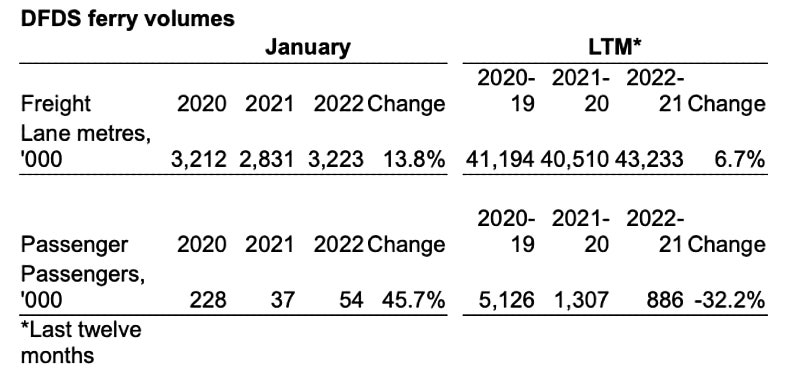
  • Freight volumes in January 2022 were 13.8% above 2021.
  • The volume growth in January was mainly driven by higher volumes on UK and Mediterranean routes.
  • Volumes on all UK routes increased considerably compared to last year as volumes in the first month post-Brexit were reduced by new rules and procedures as well as stock-building ahead of Brexit.
  • Volumes in the Mediterranean network were up on all routes on the back of deployment of more capacity and continued good growth in Turkish exports.
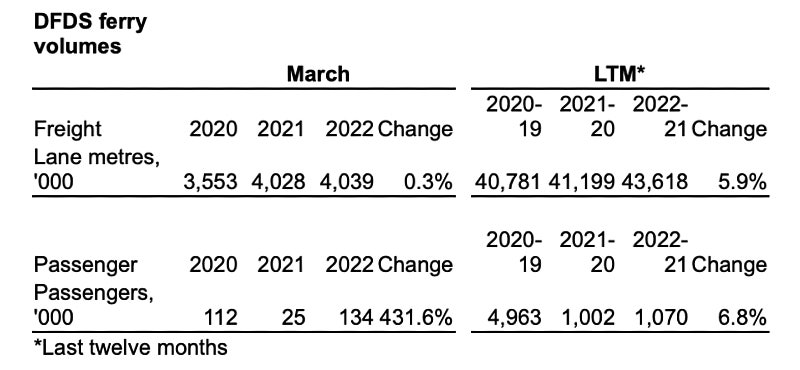
  • For the last twelve months 2022-21, total transported freight lane metres increased 6.7% to 43.2m from DKK 40.5m in 2021-20.
  • The total number of passengers in January 2022 was 45.7% above 2021.
  • The number of passengers increased between Norway and Denmark, while the number of passengers on UK and Baltic routes were on level with 2021.
  • For the last twelve months 2022-21, total number of passengers was 0.9m compared to 1.3m in 2021-20 and 5.1m in 2020-19, the latter being the latest pre-Covid-19 year.

DFDS Q4: growth set to continue in 2022

By | 2022 Newsletter week 6 | No Comments

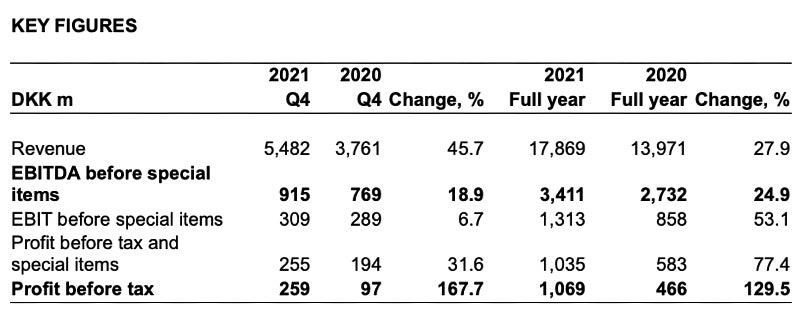
“In spite of Covid-19, Brexit, and supply chain bottlenecks, we delivered a strong result for 2021. In 2022, we look to raise both revenue and earnings more than 20%,” says Torben Carlsen, CEO.

  • EBITDA increased 19% to DKK 915m in Q4
  • Supply chain bottlenecks eased during Q4
  • Early signs of pick-up in passenger numbers
  • EBITDA expected to grow more than 20% in 2022
  • Total dividend of DKK 8.00 per share planned

OUTLOOK 2022

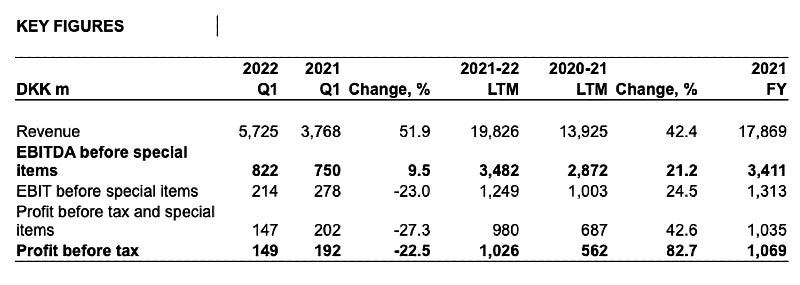
  • EBITDA range DKK 3.9-4.4bn (2021: DKK 3.4bn)
  • Revenue growth of 23-27%
  • Investments of DKK 2.3bn

DFDS: restated comparison figures for logistics business units

By | 2022 Newsletter week 5 | No Comments

Following the completion of the acquisition of HSF Logistics Group, and consolidation of the company from 14 September 2021, the Logistics Division was, as previously announced, reorganised in two new business units: Dry Goods and Cold Chain.

The cold chain logistics activities embedded in DFDS’ three former Logistics business units – Nordic, Continent and UK & Ireland – were merged with the HSF Logistics Group to form the Cold Chain business unit. The remaining activities of the former business units are organised in Dry Goods.

Comparative figures for Q1-4 2020 and Q1-3 2021 for the new business units have been restated accordingly and are disclosed in the table below.

Godby Shipping – DFDS: sale and lease-back deal

By | 2022 Newsletter week 1 | No Comments

DFDS and Godby Shipping have established a long-term co-operation with Godby Shipping buying the two storo sideport vessels LYSVIK SEAWAYS and LYSBRIS SEAWAYS and chartering them back to DFDS for a period of minimum three years.

Both vessels will continue in their present trade mostly serving Norske Skog forest product shipments out of Norway to UK and continental Europe.

DFDS’ newest RoPax is soon on her way to the Baltic Sea

By | 2021 Newsletter week 50 | No Comments

DFDS took delivery of AURA SEAWAYS [MarineTraffic], which was built at Guangzhou Shipyard International. With 4,500 lane meters, she will by far become the largest DFDS RoPax ferry in terms of cargo capacity.

AURA SEAWAYS fulfils the new design standards of EEDI, and the CO2 emissions per trailer are more than 20 % lower than on the vessels currently trading on the intended routes Karlshamn-Klaipeda and Kiel-Klaipeda.

DFDS Monthly volume report: UK bottlenecks easing slightly

By | 2021 Newsletter week 50 | No Comments

Freight: total volumes in November 2021 were 5.4% below 2020.

  • The decrease in total volumes compared to 2020 was due to lower volumes on most UK routes as stockbuilding ahead of Brexit boosted volumes on UK routes last year.
  • The negative impact from supply chain bottlenecks, that reduced volumes in Q3 and October, eased during November.
  • North Sea and Channel volumes were in November again above 2019.
  • The Mediterranean business unit continued to carry volumes above 2020 while Baltic Sea volumes were just below 2020 as capacity on one route was reduced from two ferries in 2020 to one ferry in November 2021.
  • Volumes for both the Mediterranean and Baltic Sea business units were above 2019.

Passenger: the total number of passengers in November 2021 was 84.0% above 2020.

  • The increase was largest between Norway and Denmark where travel restrictions to a large extent were abolished in November.
  • The number of passengers on UK routes picked up but in very small numbers due to continued travel restrictions.