- “We sail in a constant fog,” says Brittany Ferries president Jean-Marc Roué, pointing towards the uncertainty after 31 December 2020.
- Bookings are down 5%. Customers on both sides of the Channel are hesitant.
- The Brittany Ferries plan to build a direct replacement for BRETAGNE is definitely remaining on hold.
Brittany Ferries: Rosslare – Bilbao replaces Cork – Santander as key freight route to Europe
Brittany Ferries has announced that it is to move its Ireland/Spain sailings from Cork to Rosslare Europort, with the first sailing due to take place on 28 February.
- The change is in response to demand from Irish and continental hauliers
- Company confirms ongoing commitment to Cork – Roscoff, which will continue to be primary tourism route, with 100,000 pax/year.
- New Rosslare services will include an Ireland-France rotation to Roscoff
- Rosslare sailings to commence 28 February 2020
- The new Spanish arrival port from Rosslare will be Bilbao
“This was not a decision we took lightly and follows extensive consultation with our freight customers who sought better road connections and reduced driving distances,” said Christophe Mathieu Brittany Ferries CEO. “We opened the route in 2018 with a two-year trial window. While passenger numbers have been encouraging, the reality is that freight numbers, which are key to route viability, were not sufficiently robust. However I want to make it clear that we remain committed to Cork, with our flagship PONT-AVEN cruise-ferry service to Roscoff.”
The Cork-Santander route which was launched in 2018 was primarily aimed at the freight market into Europe although it also carried holidaymakers, with an ‘économie’ no-frills onboard experience. The new route out of Rosslare will again concentrate on freight with an option for holidaymakers.
Why Rosslare – Bilbao?
The consensus among hauliers is that Rosslare, with its proximity to Dublin and the east coast road network, is a preferred option. Equally hauliers operating on the European mainland noted that Bilbao is more attuned to freight traffic and has easier transport links into Europe.
As with the current Cork-Santander sailings, the new Rosslare-Bilbao sailing will be twice-weekly and will incorporate a weekly Ireland/France rotation.
(Source: Brittany Ferries)
Condor Ferries CEO Welcomes the Expertise of the New Owners
See also our extra news flash from 14 November 2019.
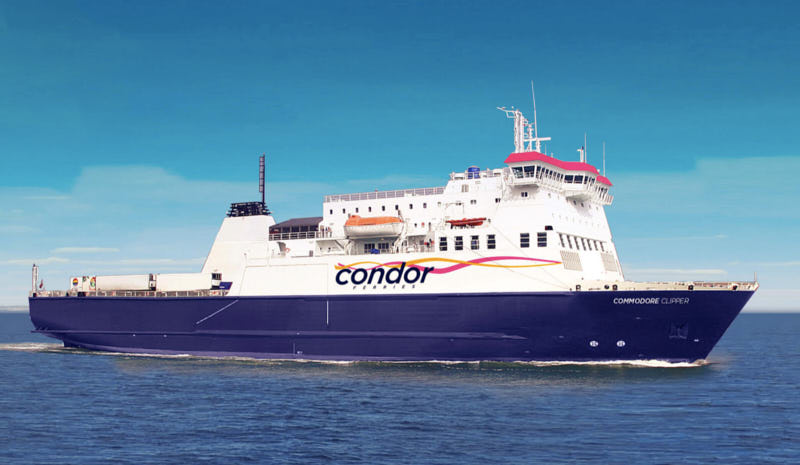
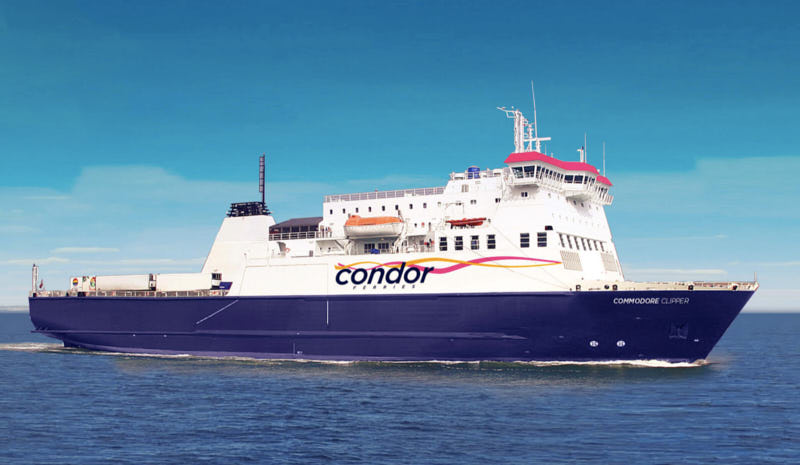
Paul Luxon, Condor Ferries’ CEO, said in a statement that he is delighted with the agreement between the current shareholder, Macquarie Infrastructure and Real Assets, to sell its 100% interest in Condor Ferries to a consortium of Columbia Threadneedle Investments, the majority shareholder, and Brittany Ferries.
“The new shareholders wholeheartedly share our vision and strategy for maintaining and developing essential Channel Islands’ lifeline ferry services across the freight supply chain, Islander travel and tourism sectors. Having met with senior executives of CTI and BF on several occasions, the company welcomes such experience and expertise from the new shareholders and having introduced them to key stakeholders including politicians and senior civil servants, discussions on fleet replacement and future investment will continue.”
He added that Condor Ferries’ management and staff will continue to deliver the five-year business plan that is underway. “We will continue to focus on providing efficient and effective sea connectivity to support the Channel Islands’ economies”.

Brittany Ferries and Columbia Threadneedle Investments reach agreement to acquire Condor Ferries from Macquarie Infrastructure and Real Assets
Brittany Ferries, in consortium with the Columbia Threadneedle European Sustainable Infrastructure Fund (ESIF), has reached an agreement to acquire 100 percent of Condor Ferries from Macquarie Infrastructure and Real Assets (MIRA).
Contracts have been signed and the deal is expected to be executed following scrutiny by relevant regulatory authorities. Brittany Ferries will hold a minority stake.
Condor Ferries is an operator of lifeline freight and passenger ferry services. Each year, Condor Ferries carries approximately 1 million passengers, 200,000 passenger vehicles, and over 900,000 freight lane meters between Guernsey, Jersey, the United Kingdom, and the Port of St. Malo in France.
Brittany Ferries began operations in 1973. Today its fleet includes twelve ships connecting France, the United Kingdom, Ireland and Spain. It operates from three ports in the UK, Portsmouth, Poole and Plymouth and carries around 2.5 million passengers every year, as well as 210,000 freight units.
ESIF is a new open-ended, evergreen fund that invests in European mid-market equity assets, managed by leading global asset management group Columbia Threadneedle Investments.

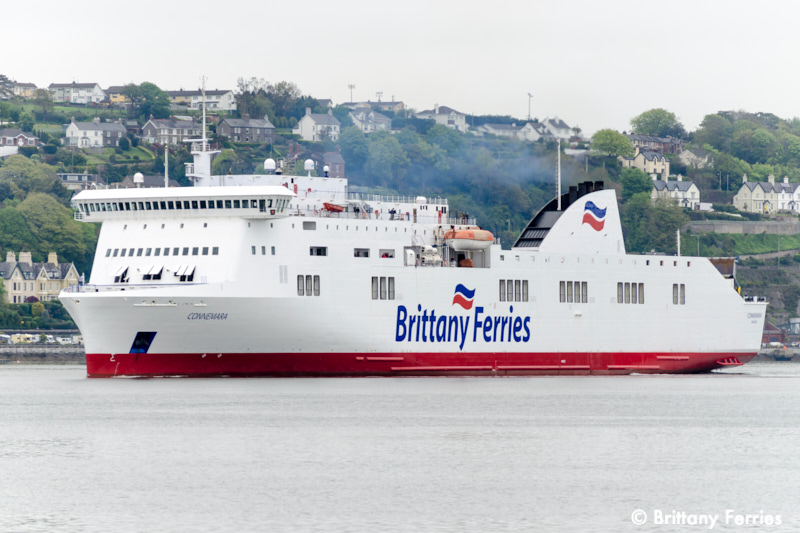
On 6 November, CONNEMARA was registered in France, bringing the number of French-flagged vessels in the Brittany Ferries fleet to eleven.
She entered the fleet in May 2018 under Cypriot flag.
The move creates 111 jobs for French seafarers.

Brittany Ferries has embarked on a series of ‘dry runs’ as part of wider plans to prepare for the possible consequences of a no-deal Brexit on both sides of the Channel.
Last week’s trial involved around 100 freight vehicles travelling from the UK to France, with a total of 15 rehearsals planned between now and mid-October in eight Channel ports.

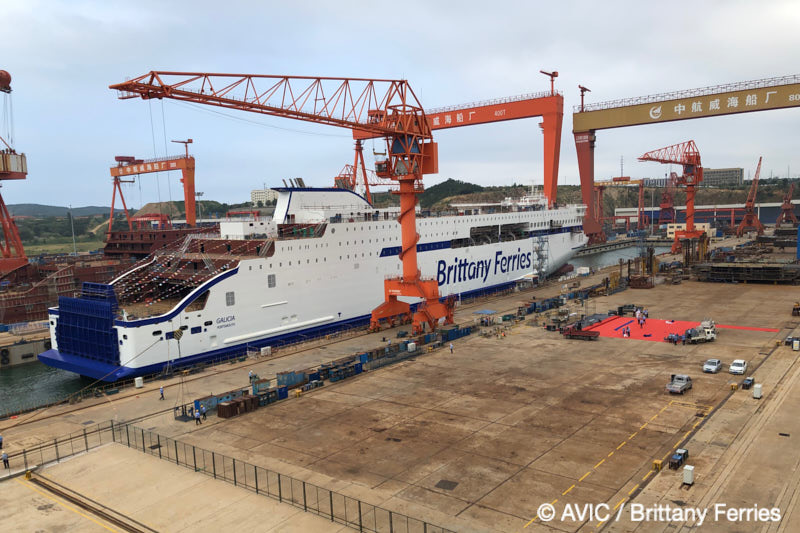
Ferry company Brittany Ferries has marked two key milestones in its EUR 550 million fleet renewal programme. At the AVIC Weihai shipyard in Shandong, eastern China, shipyard workers and Brittany Ferries teams gathered to celebrate the launch of cruise-ferry GALICIA, and the start of building work for sister ship SALAMANCA.
The Spanish Port of Santander closes the first half year with an increase in total traffic of 9.6% and 6.2 million tons of cargo.
It is the best half year of the last five years and represents a clear recovery of merchandise traffic since the drop experienced in 2016.
On the ferry side, the line from CLdN has driven the growth of the Margen Norte dock. In addition, ro-ro cargo moved by Brittany Ferries has increased by 8.8%.
Through its hub in Zeebrugge, CLdN links Santander with Dublin, Purfleet, Killingholme, Esbjerg and Göteborg.
Brittany Ferries has direct ro-pax connections between Santander and Cork, Plymouth and Portsmouth.
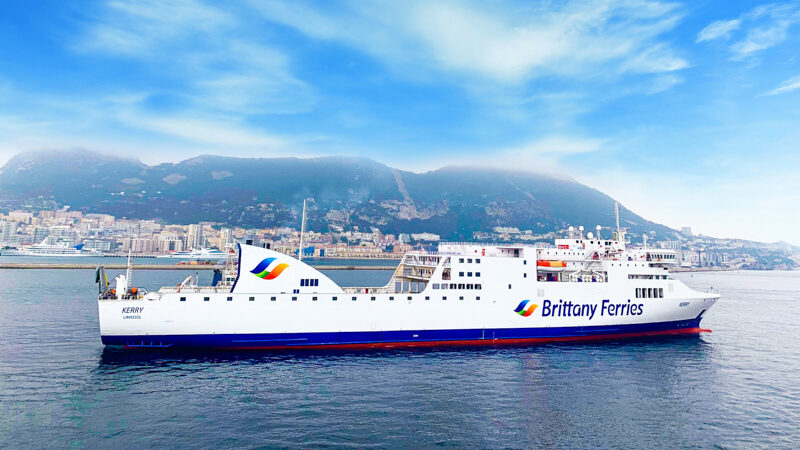
The AF MICHELA (STENA EGERIA) will be arriving in November 2019 for a one-year charter. She will be renamed KERRY.
This ship will cover the Cork to Santander route from November 2019 to November 2020.
The company’s third E-Flexer class ship, also to be chartered from Stena RoRo, will be named SANTOñA. She will arrive in 2023 and like sister ship SALAMANCA, she will be powered by LNG.

Brittany Ferries to Charter Another Visentini Ferry from Stena RoRo
Brittany Ferries is going to charter an additional ferry ahead of the 2020 season. The ship is currently sailing in the Adriatic as AF MICHELA.
There are three main reasons for the charter:
- During winter, Brittany Ferries have to send their ferry PONT-AVEN to a yard to have one of her four engines replaced. That will take almost 3 months.
- To cope with potential delays in the delivery of HONFLEUR, under construction in Flensburg.
- Generate additional capacity to prepare for the impacts of Brexit, should it happen at the end of October.
The chartered ro-pax will be operated from November 2019 until November 2020. She will take over Brittany Ferries sailings from Cork to Santander.
CONNEMARA, which operates between Cork and Santander today, will be brought under the French-flag. This is six months earlier than originally planned and reinforces Brittany Ferries commitment to the employment of French seafarers, a very important issue in France.
Following her re-flagging, CONNEMARA will be free to cover scheduled dry-dock periods for other vessels over the winter and to release ETRETAT (currently operating Portsmouth to Le Havre) to cover services from the UK to Spain in April.