KiwiRail: replacement ferry to boost Interislander service

By 2021 Newsletter week 45

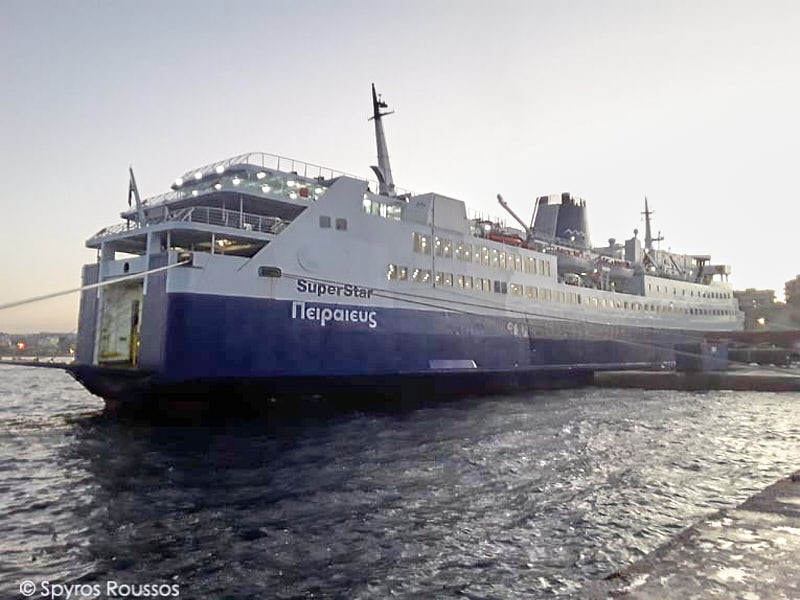
KiwiRail has chartered the CLdN Kawasaki-type roro VALENTINE for an initial 12 months.

It is due to arrive in mid-December.

Ropax KAIARAHI (ex STENA ALEGRA) requires major repairs to its gearbox after its sudden failure, and those repairs are expected to take at least until March.

The remaining two Interislander ferries, ARATERE and KAITAKI cannot serve the market alone. The freight-only ferry will free up space for passengers and their vehicles on the other ferries, ensuring New Zealanders can travel during the summer holiday season.

KiwiRail: outstanding website explains the new ship and port projects

By 2021 Newsletter week 45

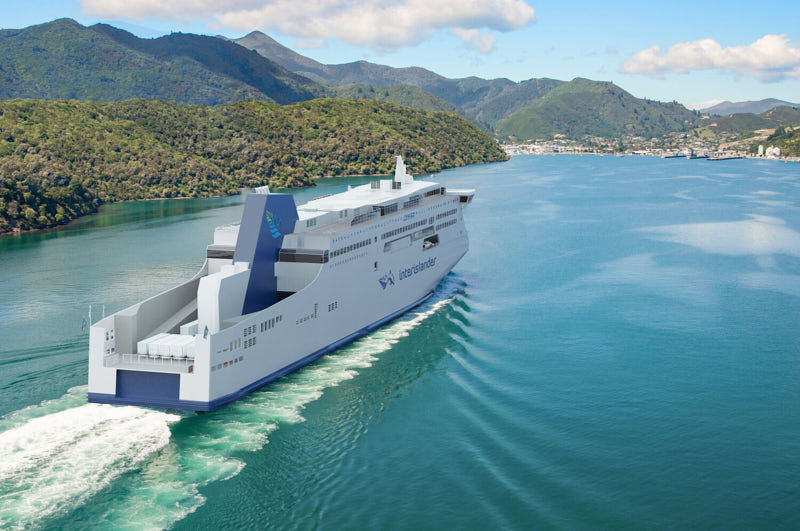
KiwiRail has ordered two brand-new, bigger, hybrid ferries.

(see Ferry Shipping News 1 July 2021)

An outstanding public website explains all details and answers a lot of questions.

Kiwirail also started a consultation for the upgrading of the Wellington / Kaiwharawhara Interislander ferry terminal.

Irish Ferries doubles frequency on Calais-Dover A departure every 2,5 hours

By 2021 Newsletter week 45

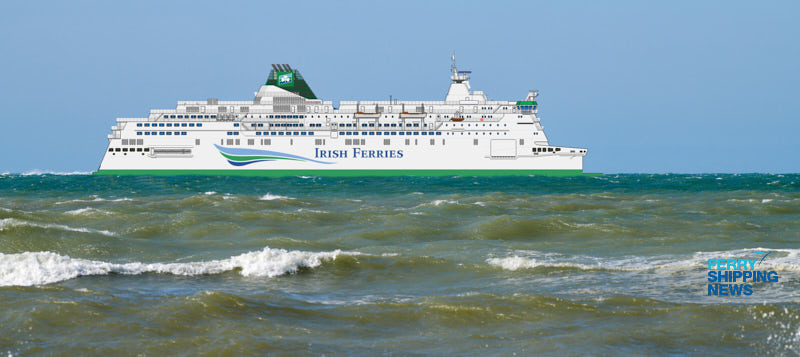
DFDS sold CALAIS SEAWAYS to Irish Continental Group PLC.

Built as PRINS FILIP in 1992, this is a ferry that has been working for most Channel operators on routes as Ostend-Dover, Ostend-Ramsgate, Le Havre-Portsmouth and Calais-Dover.

She will now serve the Dover – Calais route again, operated by Irish Ferries as ISLE OF INNISFREE.

Andrew Sheen, Irish Ferries Managing Director, said: “We are delighted be able to add a second ship to our Dover-Calais route, with the ship doubling our frequency with a departure every 2 ½ hours rather than the current 5 hours between sailings.

Passenger capacity: 1,140 – freight: 83 units

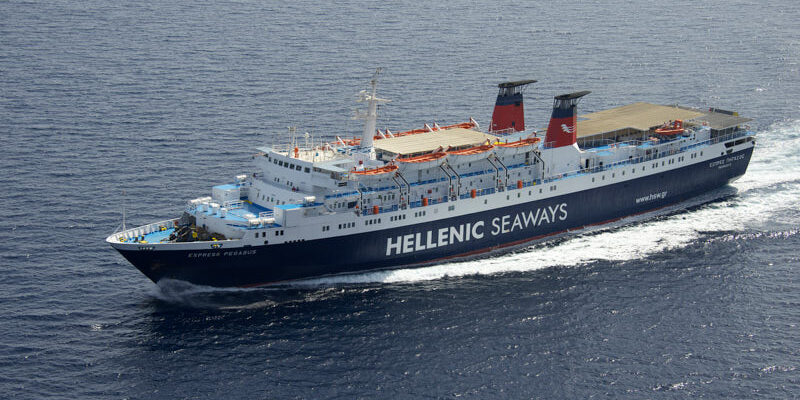
Greek Prime Minister K. Mitsotakis: Short-haul ships could be electric in the future

By 2021 Newsletter week 45

On the occasion of the 26th United Nations Conference in Glasgow, the Greek Prime Minister Kyriakos Mitsotakis gave an interview to SkyNews. The interview focused on energy and maritime policy, among others. The basic parts of that interview are:


Question: Greece owns about one-fifth of the world’s fleet. Shipping is one of the activities that is most responsible for emissions right now. How can this be stopped?

Pr. Minister: Let’s put things in perspective. 90% of world trade is done by ship. Shipping is responsible for 3% of world emissions. It’s not trivial, but it’s not huge. Shipping should take its share. But it is not clear what technology will solve the problem. That’s why we need more research and development (R&D). We need to focus more on the solutions that are currently being developed.

Question: Are we talking about nuclear-powered ships or hydrogen-powered ships?

Pr. Minister: No, hydrogen is probably the most likely scenario. But we are the managers and we have to work with the shipyards, we have to work with the manufacturers of large machinery types. They are the ones who will guide the technological innovations. Shipping will be the customer of the technology, they will produce. But at the same time, we need to have a vision for the future of shipping. That is why we are setting up, in cooperation with the European Union, a research institute to explore the future of sustainable shipping. Because honestly now we do not have the answer.

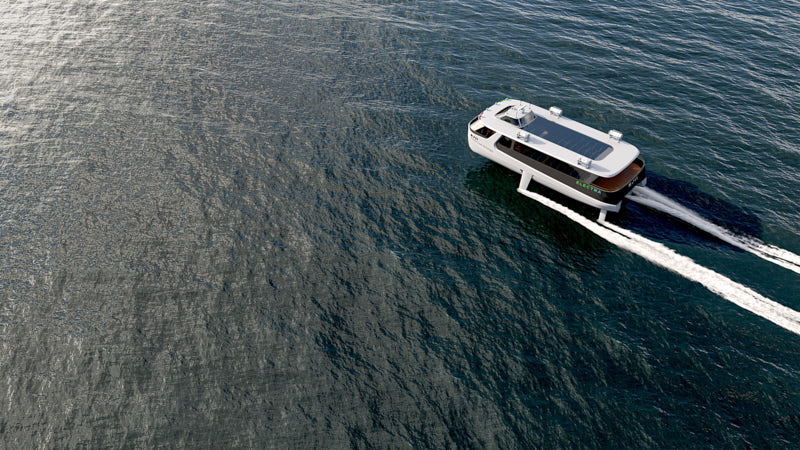
Finally, referring to the prospects of energy transition of the Hellenic Coastal Fleet, the Greek Prime Minister stressed the following: “…when we talk, for example, about shipping and short-haul ships, one could imagine that these ships could be electric in the future.”

Source: Athens News Agency – Photo: Elektra
Brittany Ferries sees surge in reservations for travel next summer

By 2021 Newsletter week 45

The booking boost for summer 2022 has brought renewed optimism, says a Brittany Ferries press release (link below).

+48% more passengers for July-September 2022 (188,878 by the end of October 2021) compared to end of October 2019 (the last pre-Covid comparison year).

+40% UK-France

+35% UK-Spain

+234% France-Ireland

This positive news for Brittany Ferries follows welcome assistance from the French state.

  • €45 million was recently authorised by Paris to compensate for passenger travel restrictions that caused Brittany Ferries’ turnover to plummet by €220m in 2020 alone.
  • A 10 million waiver for debt contracted with ADEME*
  • 6 million aid from the Brittany Region.
  • Brittany Ferries has welcomed the extension of so-called “net wage” provisions for French sailors. Announced by president Macron at Les assises de l’économie de la Mer conference in September, this tax break has been extended for three years.

*ADEME is a French state institution that helps companies transition to more environmentally friendly practices. For Brittany Ferries that included support to retro-fit exhaust emission scrubbers to six ships, cutting sulphur and particulate emissions from funnel gases.

“Amid a renewed sense of optimism, I must also add a note of caution,”said CEO Christophe Mathieu. “We still have much work to do in the years ahead. For example, we must not forget the €117 million loan granted last year, which we have repay.”

Figures for the summer seasons of 2020 and 2021 underline just how difficult the last two years have been for Brittany Ferries, as well as the size of the challenge ahead. Around 80 percent of the company’s income comes from passenger traffic and on some lines this dropped to virtually zero. See detailed figures in the press release.

KiwiRail: outstanding website explains the new ship and port projects

By 2021 Newsletter week 45

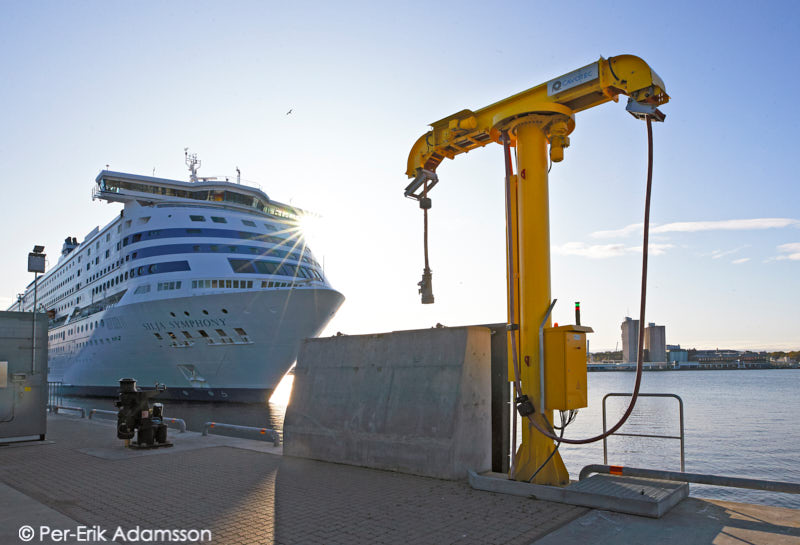
The ports of Stockholm, Helsinki and Tallinn have invested simultaneously in onshore power with the same standards.

All of the ferries operating on Stockholm – Helsinki and Stockholm – Tallinn, already connect to shore power. Now the final part of the puzzle is in place to make it possible for the ferries operating on the Helsinki – Tallinn route to connect to shore power.

Seventh CLdN sailing on Zeebrugge-Killingholme

By 2021 Newsletter week 45

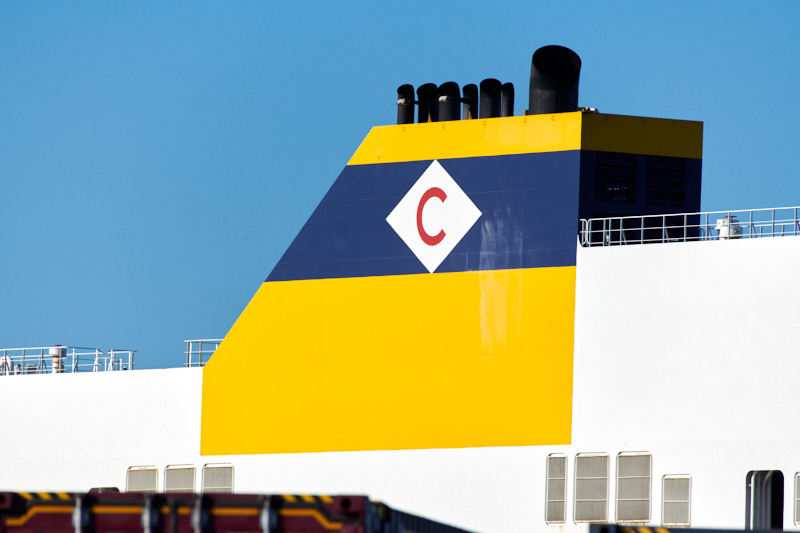
Due to increasing demand on the UK, CLdN Ro-Ro will be introducing a 7th sailing on the Zeebrugge –Killingholme service.

As from week 45 the service will run daily (Mon-Sun), offering an overnight connection between the port of Zeebrugge and Killingholme.

Since Brexit , CLdN experiences a growing and ongoing demand for unaccompanied transport between the UK and the Continent.

The modal shift towards unaccompanied transports underlines the need for more efficient transport in view of an ongoing lack of truck-drivers in the Uk and on the continent.

CLdN RoRo: less carbon emissions than a train!

By 2021 Newsletter week 45

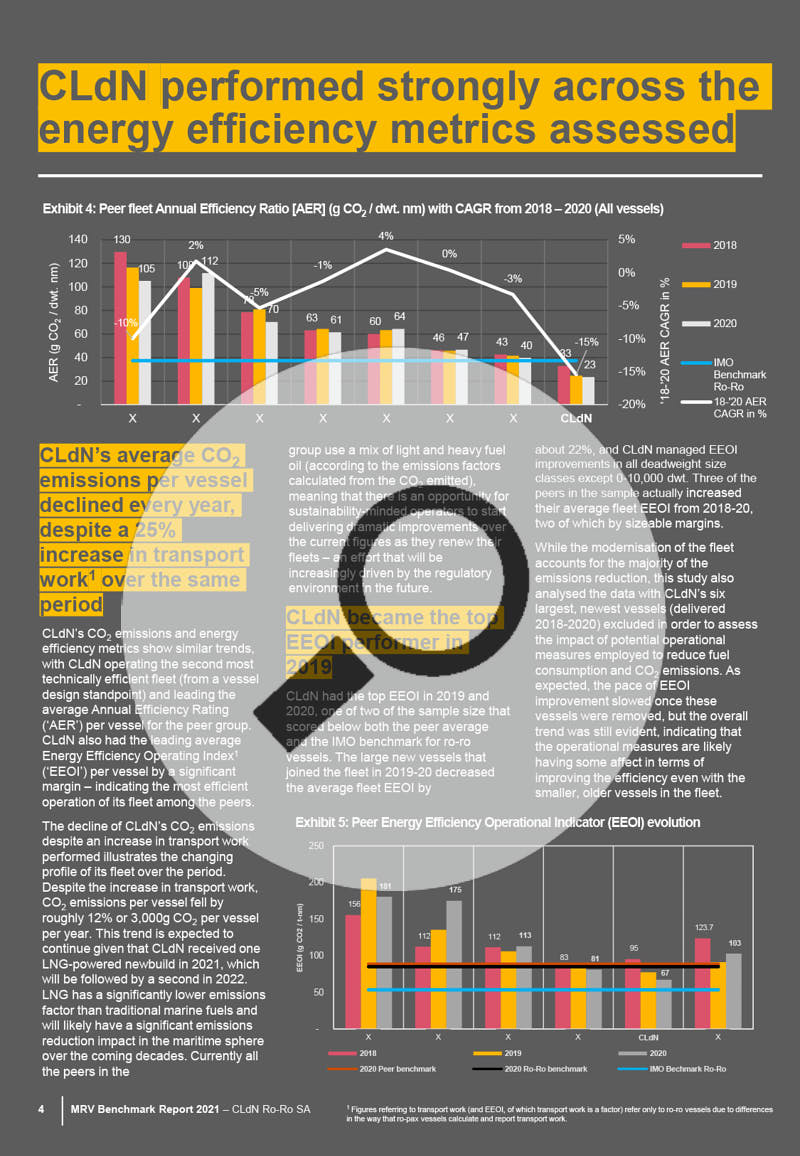
CLdN writes on LinkedIn that it is a top performer for CO2 emissions per tonne of freight carried. This statement is based on public MRV data for pure freight ro-ro vessels, as published on EMSA/Thetis-MRV.

CLdN RoRo says that, with a weighted average emission for its fleet of 36 g CO2/tonne-km ( or 67 g CO2/tonne-nm) in 2020, CLdN RoRo emitted 17% less greenhouse gas per tonne of cargo carried than their second best competitor.

Typical emissions of other modes of freight transport:

Plane: 1036 g CO2/tonne-km

Truck: 137 g CO2/tonne-km

Train: 24 g CO2/tonne-km

CLdN RoRo vessel HERMINE: 21g CO2/tonne-km.

This means HERMINE emits less carbon than a train, concludes CLdN RoRo.

CLdN’s ambition is to further reduce its carbon footprint and to maintain its position as greenest ro-ro operator by:

  • Slow steaming
  • Innovative propulsion
  • Operational efficiency

CLdN asked PwC to run an independent check and the report can now be downloaded via below link (click on page to go to https://www.cldnroro.com/downloads and then go to “Cases”).