
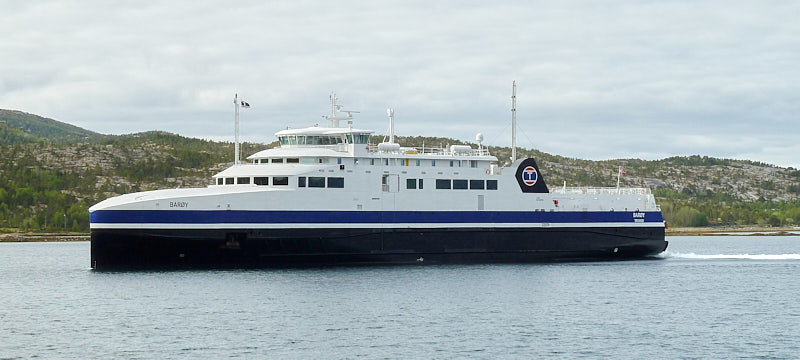
The electrification of BARØY is part of the environmental adaptations of all Vestfjorden connections to become environmentally friendly with zero-emission ships.
The ferry was built in Poland, 2012, and is LNG-powered.
The electrification of BARØY is part of the environmental adaptations of all Vestfjorden connections to become environmentally friendly with zero-emission ships.
The ferry was built in Poland, 2012, and is LNG-powered.

Color Group ASA confirmed the sale of its ship COLOR VIKING.
Eventually, the ship was sold to the Greek Seajets and currently is having repairs and branding changing in Odense (Denmark).
According to the information, the ship will be delivered until February 2023 and she is expected to serve the Piraeus-Western Cyclades line with a possible extension to another island.
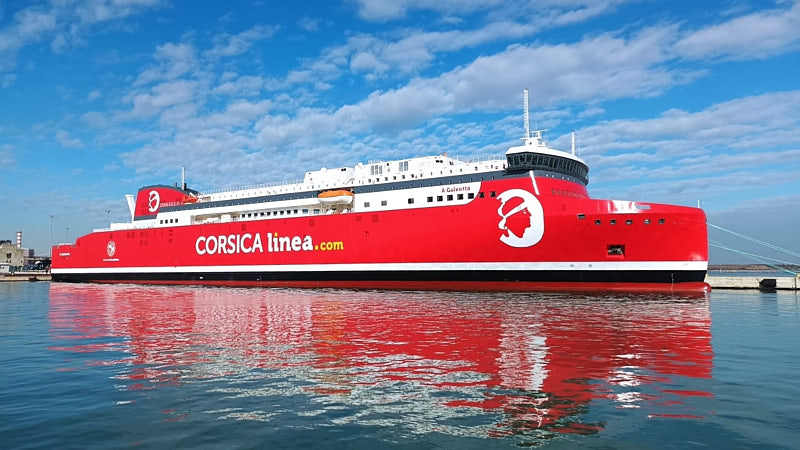
Corsica Linea took delivery of the new LNG-powered RoPax named A GALEOTTA, built by Cantiere Navale Visentini shipyard in Porto Viro.
The vessel will have the capacity to accommodate 650 passengers and 2,560 lane meters of freight. Also, the ship will be able to carry 150 cars on a separate deck.
Corsica Linea’s ferries provide year-round services from Marseille, the main trading port in France to the Mediterranean island of Corsica. The vessel is to be deployed on the route linking Marseille and Ajaccio / Bastia.
Dutch firm Titan will bunker Corsica Linea’s first LNG-powered RoPax in Marseille, as part of a deal revealed in January this year. Titan will first provide truck-to-ship operations until its 4,500 m3 LNG bunkering vessel KRIOS arrives.
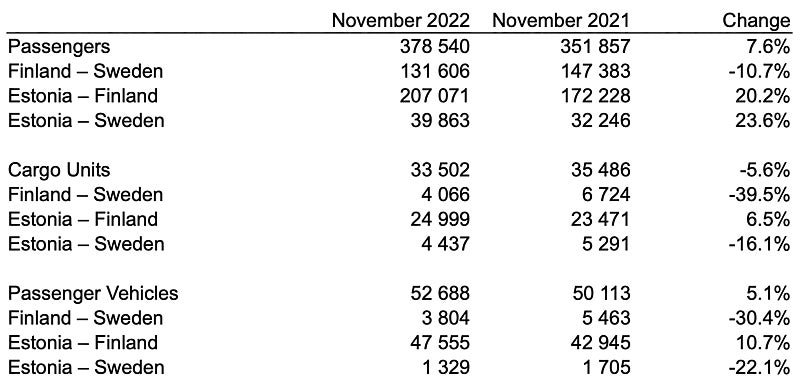
In November 2022, AS Tallink Grupp transported
+7.6% passengers (compared to November 2021)
-5.6% cargo units
+5.1% passenger vehicles
The European Parliament, the Council of Ministers represented by the Czech Presidency and the European Commission agreed preliminarily on the conditions on how to include maritime emissions in the EU ETS during the so-called trilogue on Tuesday 29 November.
As proposed by the Commission, not only trips inside the EU but also trips from EU ports to third countries and for third countries to EU ports (50%) will be included.
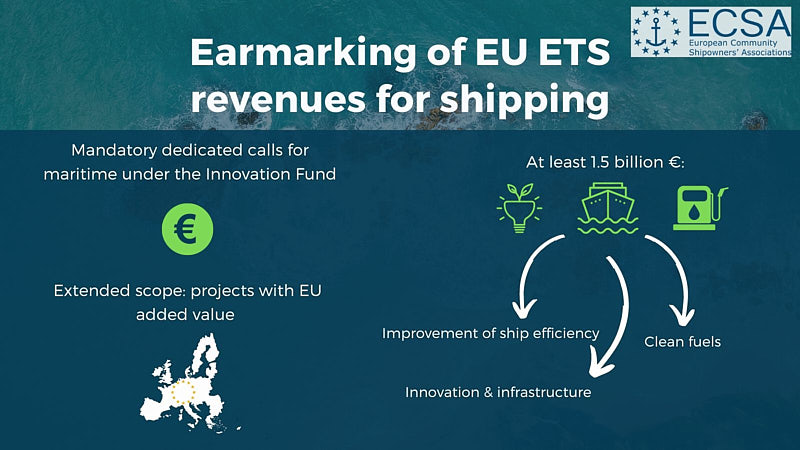
European shipowners welcome the outcome of yesterday’s trilogue negotiation and the provisional agreement on the EU ETS maritime. The Parliament and the Council have embraced the calls of the industry stakeholders to earmark EU ETS revenues back to the maritime sector to support its energy transition.
At least 20 million ETS allowances, which correspond to 1.5 billion EUR under the current ETS carbon price, will be allocated to maritime projects under the Innovation Fund.
The provisional agreement on shipping is subject to an overall agreement on the ETS revision in late December.
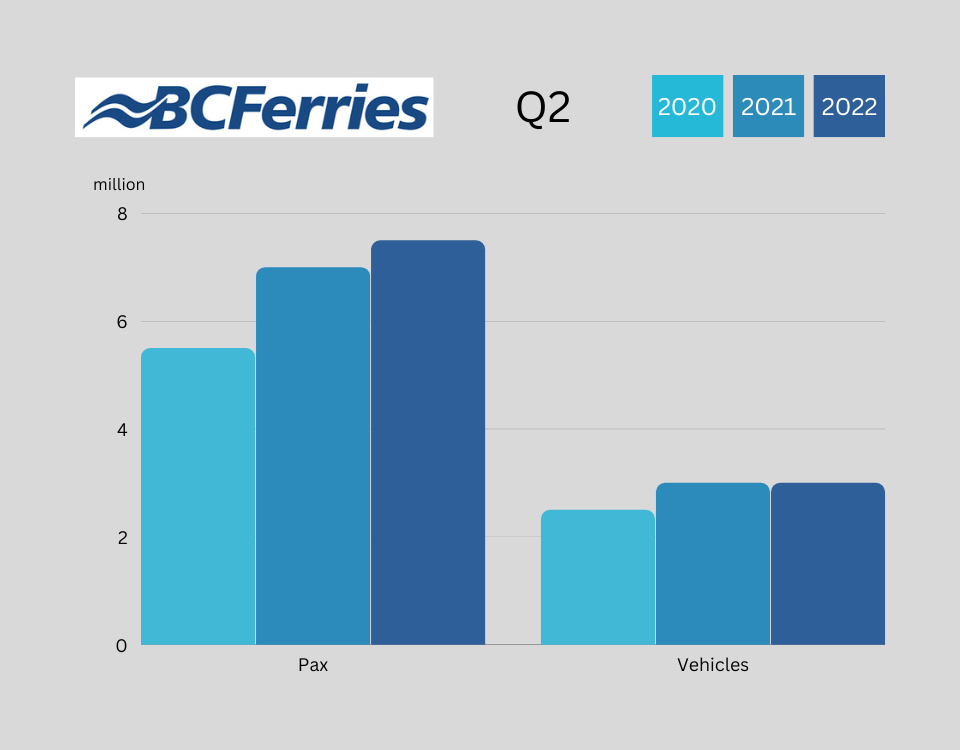
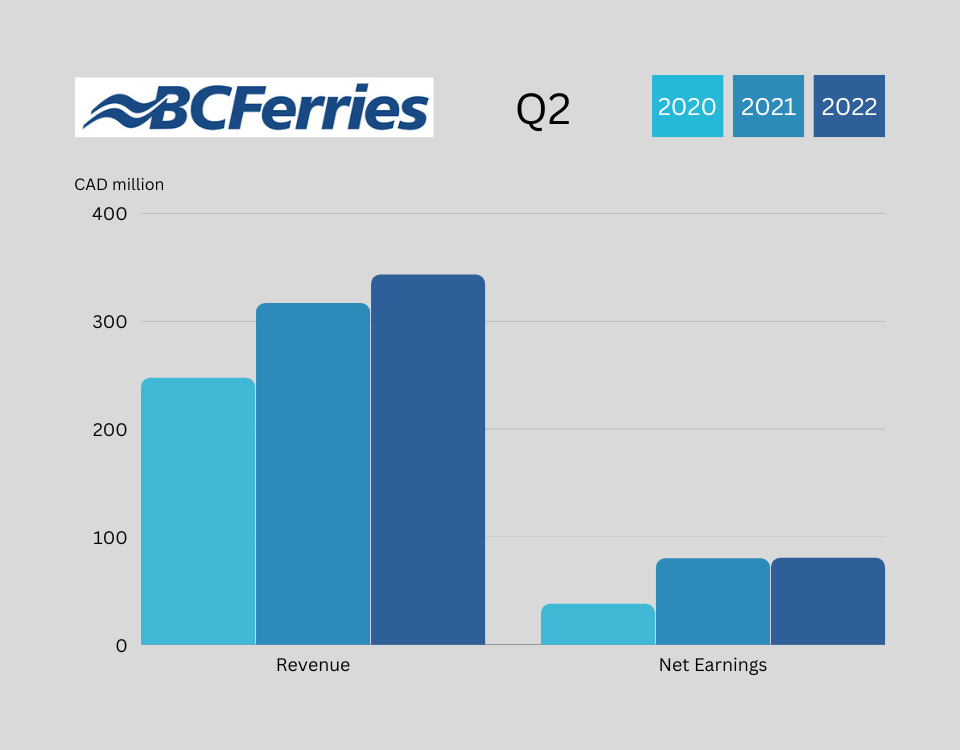
BC Ferries released its Q2 results for the three and six months ending September 30, 2022. Vehicle and passenger traffic, revenue and net earnings are all higher compared to the same periods in the prior year.
In Q2, the quarter ending September 30, 2022, BC Ferries carried 7.5 million passengers and 3.0 million vehicles.
Year-to-date, the company carried 12.9 million passengers (+28%) and 5.4 million vehicles (+15%) respectively, compared to the same period in the prior year, primarily as a result of travel restrictions being in place through most of Q1 in the prior year.
BC Ferries’ net earnings for Q2 were $80.4 million, consistent with the same quarter the previous year.
Year-to-date since April 1, 2022, net earnings were $88.3 million compared to net earnings of $84.6 million in the prior year.
Revenue for the three months ending September 30, 2022, at $343.1 million, was up $26.3 million over the same period in the prior year primarily as a result of higher passenger traffic volumes, net retail sales, ferry transportation fees and fuel surcharges.
Year-to-date, revenue was $608.0 million, up $62.0 million over the same period in the prior year primarily as a result of higher traffic volumes, net retail sales and fuel surcharges partially offset by lower Safe Restart Funding.
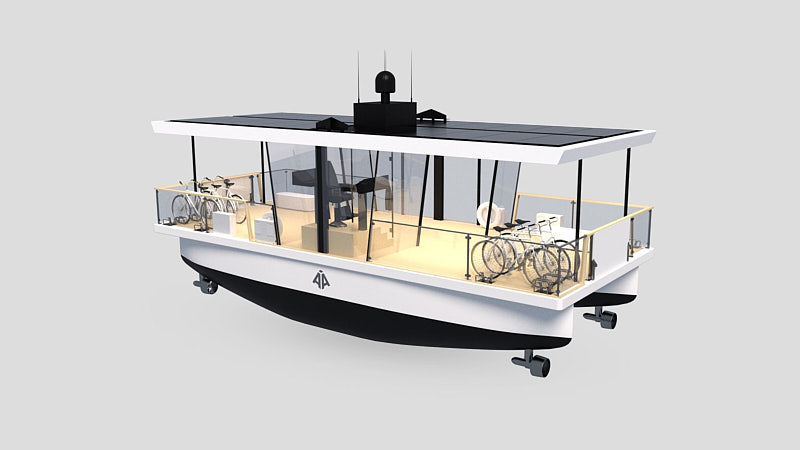

EST-Floattech recently signed a long-term framework contract with Rolls-Royce Power Systems for the ‘Green Orca 1050’ battery module onboard 9 newbuild ferries and 1 mega yacht.
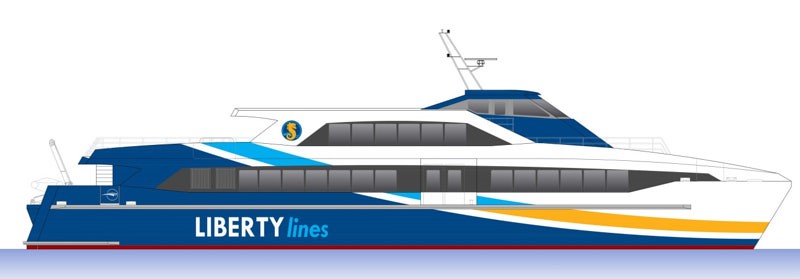
The first order of the new partnership are the lithium polymer battery modules of the ‘Green Orca 1050’ series as part of 9 hybrid fast ferries of Italian operator Liberty Lines equipped with mtu hybrid propulsion packs supplied by Rolls-Royce Power Systems.
The sister vessels of identical design will be built at the Spanish shipyard Armon between April 2023 and April 2024.
The vessels are scheduled to set sail between 2023 and 2026.
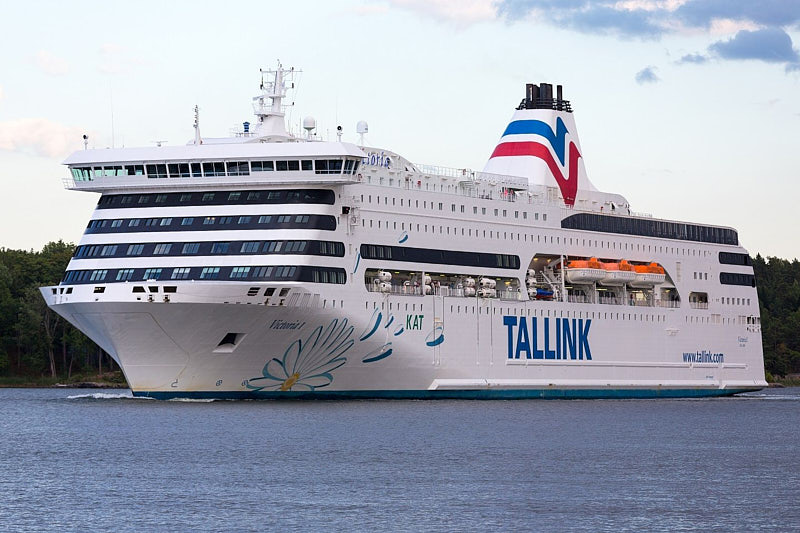
AS Tallink Grupp and Corporate Travel Management (North) Ltd on behalf of The Scottish Government have agreed an extension to the short-term time-charter agreement for ropax VICTORIA I.
The vessel is providing temporary accommodation in Scotland.
The charter has been extended for five months from 14 January 2023.