

CLdN orders two 6,700 lane-metre RoRo vessels for delivery in 2029

By 2026 Newsletter week 38

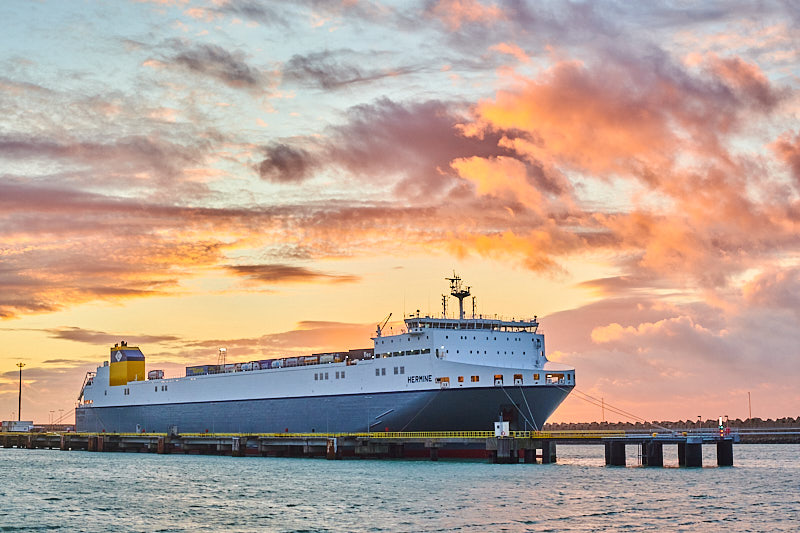
CLdN has ordered two new RoRo vessels from HD Hyundai Heavy Industries. Construction is scheduled to begin in early 2028, with delivery in mid-2029.

The closest existing fleet counterparts are the 5,000 lane-metre H5-class vessels, particularly the LNG-capable FAUSTINE and SERAPHINE. Compared with the H5 class, the newbuildings will have an additional deck and increased deck space, with a configuration specifically adapted for trailers.

Key features include:

  • 6,700 lane metres: 34% more lane capacity than the existing 5,000 lane-metre class.
  • Dual-fuel propulsion: capable of running on marine diesel or LNG.
  • Improved fuel efficiency: CLdN expects similar fuel consumption per vessel to the H5 class, but 30–40% better efficiency per tonne-kilometre of cargo carried.
  • Faster cargo handling: wide ramps with direct access to the upper decks, designed to shorten port turnaround times.
  • Provision for future upgrades: space reserved for larger electric shaft generators and batteries as technology develops.

The ships will be the 15th and 16th vessels ordered by CLdN from the South Korean shipbuilder over the past ten years. CEO Florent Maes said the order would expand fleet capacity and provide greater flexibility to meet customer needs.

Photo Mike Louagie
CLdN reports lower fleet emissions in CSR Report 2026

By 2026 Newsletter week 38

CLdN’s own fleet recorded average emissions of 32g CO₂/tonne-km in 2025, down from 37g in 2024.

According to CLdN, this was:

  • 18% lower than its next-best performing short sea competitor.
  • More than 55% lower than the peer group average.
  • More than twice as carbon-efficient as road transport by heavy goods vehicle.

The company’s new CSR Report 2026 covers its material impacts, risks and opportunities, alongside its approach to environmental, social and governance issues.

Read the report

Stena orders two hybrid E-Flexers for Gothenburg–Frederikshavn

By 2026 Newsletter week 38

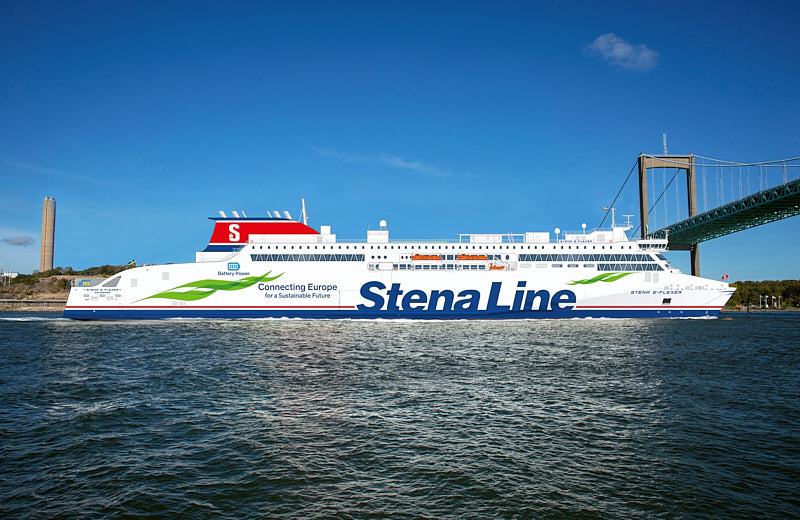
Stena RoRo has ordered two hybrid E-Flexer 2.0 RoPax ferries for the Stena Line Gothenburg–Frederikshavn route, with entry into service scheduled for 2030.

China Merchants Industry Weihai Shipyard will build the vessels. Each will carry 1,500 passengers and offer 2,750 lane metres of freight capacity. The 214.5-metre ferries will have three vehicle decks and 132 cabins for passengers and crew.

The propulsion systems will combine conventional fuel and electricity. Both vessels will be prepared for conversion to 100% electric operation once the necessary charging infrastructure is available.

The investment will renew a route currently served by STENA DANICA and STENA JUTLANDICA, which entered service in 1984 and 1996 respectively. The increased freight capacity will also support Stena Line’s planned move to Arendal, where rail connections offer opportunities for intermodal transport.

The newbuilds will become Stena Line’s sixth and seventh E-Flexers. Although intended for Gothenburg–Frederikshavn, they will also be capable of operating on other daytime routes within its network.

Stena RoRo has confirmed the order for two E-Flexer 2.0 RoPax ferries, plus two options.

Brittany Ferries charters VIZZAVONA for Cherbourg–Rosslare service

By 2026 Newsletter week 38

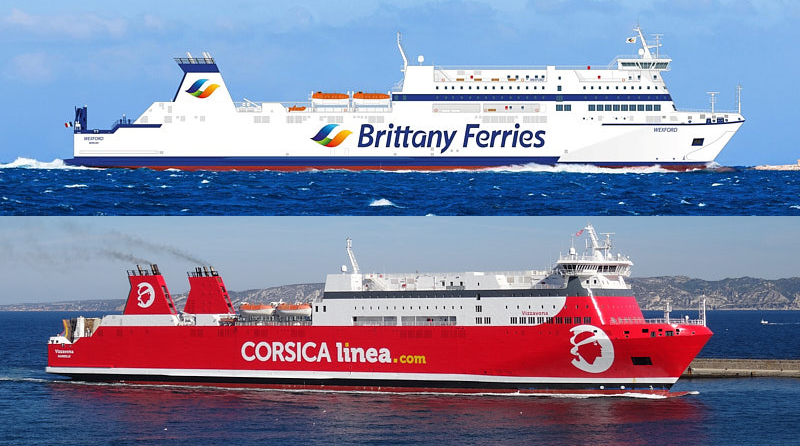
Brittany Ferries has chartered VIZZAVONA, to be renamed WEXFORD, for its Cherbourg–Rosslare route from March 2027. The RoPax will replace NORBAY, currently on temporary charter, and operate under the French flag with French seafarers.

WEXFORD will offer:

  • Three weekly return crossings between Rosslare and Cherbourg, plus one weekly Portsmouth–Cherbourg rotation.
  • Capacity for up to 500 passengers, with 146 cabins.
  • 2,500 lane metres of vehicle capacity and space for around 130 cars.

The charter fulfils Brittany Ferries’ commitment to replace NORBAY with a suitable French-flagged RoPax. NORBAY’s limited cabin capacity has constrained passenger traffic. WEXFORD will allow the operator to expand its holiday offering while maintaining substantial freight capacity.

The ship will join SALAMANCA, CLIPPER, ARMORIQUE and PONT-AVEN on Brittany Ferries’ Irish network. Together, the five vessels will offer up to seven weekly return sailings between Rosslare and Cherbourg, two between Rosslare and Bilbao, and two between Cork and Roscoff.

Photo Jean-Pierre Fabre

Measured methane emissions strengthen case for ship-specific reporting

By 2026 Newsletter week 38

Verified methane measurements from MSC Cruises reinforce Brittany Ferries’ call for emissions reporting based on actual ship performance.

A Wärtsilä case study published on 16 September highlights methane slip of 1.67% on MSC WORLD EUROPA and 1.48% on MSC EURIBIA, against the 3.1% FuelEU Maritime default. Independent verification and flag state recognition allow MSC to use these measured values for reporting.

Brittany Ferries raised the issue in September 2025 after a year-long study recorded 1.57% methane slip on SALAMANCA. CEO Christophe Mathieu argued that regulatory assumptions overstated actual emissions and called for reporting based on measured data.

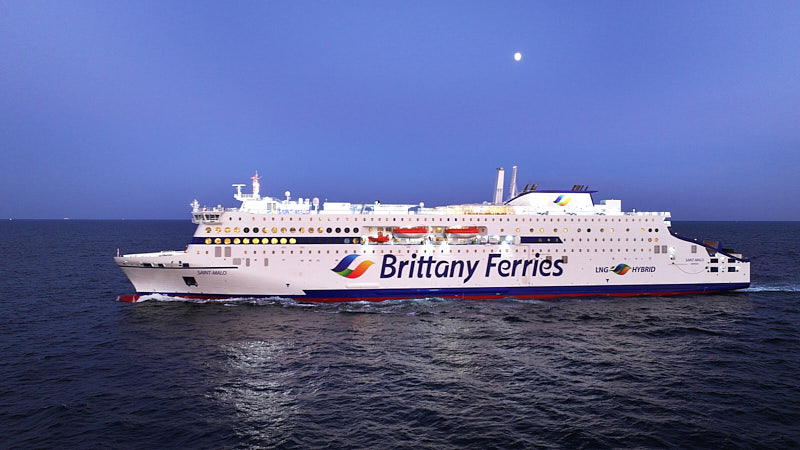
In March 2026, Bureau Veritas confirmed verification covering SALAMANCA, SANTOÑA, SAINT-MALO and GUILLAUME DE NORMANDIE, enabling measured methane values to replace defaults under MRV and FuelEU Maritime requirements.

Seajets’ RoRo renamed CARGO EXPRESS ahead of Greek coastal service

By 2026 Newsletter week 38

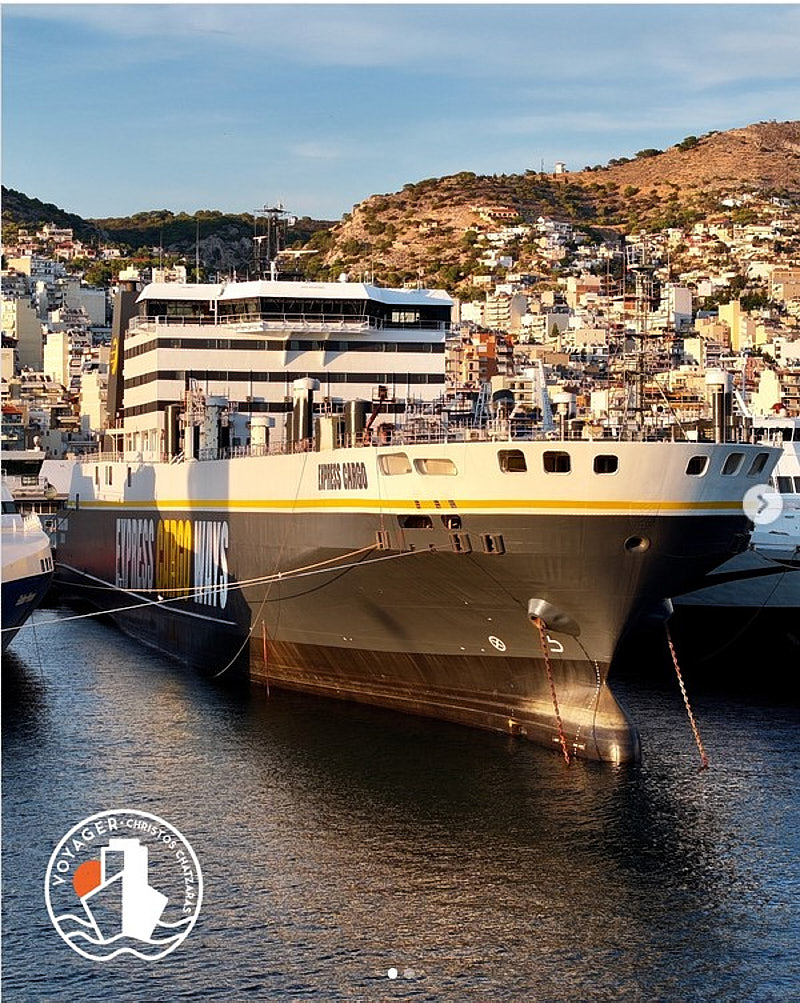
The RoRo CABO (ex-CABO STAR, FINNFOREST, ANTARES) has been renamed CARGO EXPRESS and is undergoing a refit at the Perama repair zone. The ship now carries the livery of her new operator, Express Cargoways.

The move appears to mark Seajets’ first venture into the Greek RoRo market. She was purchased in January 2026 from Canada’s Bridgemans Services Group. Built in Gdansk, Poland, in 1988 for Fincarriers, she has capacity for 130 passengers and 2,500 lane metres of freight (130 trailers). Her operating speed is 21 knots.

Photo: Voyager (Christos Chatzaras)

Oma delivers fully electric RYGERLYS to Rødne

By 2026 Newsletter week 38
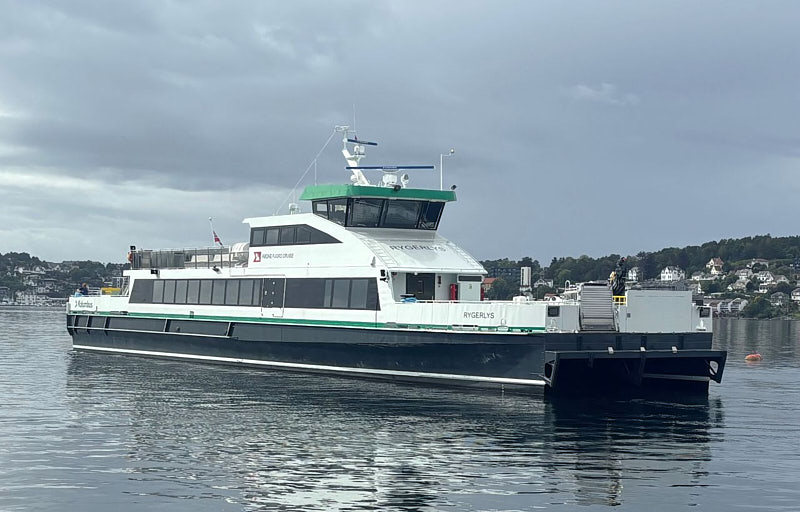
  • Oma Baatbyggeri delivered RYGERLYS (Hull No. 554) to Rødne Trafikk on 4 September 2026.
  • The electric combi-catamaran will serve Lauvik–Lysebotn under a 10-year contract with Kolumbus.
  • Dimensions: 46.3m long, 11m wide. Service speed: 19 knots.
  • Capacity: 97 passengers and 12 cars, or a combination of cars, trucks and cargo.
  • Built in aluminium at Stord, the vessel features fully electric propulsion for operation without direct emissions.

Photo: Rødne.

Stena Line sees 19% growth in Danish summer passengers

By 2026 Newsletter week 38

Danish passenger numbers on Stena Line’s Frederikshavn–Gothenburg route rose 19% year-on-year during June–August, with July recording the strongest growth at 26%.

Stena Line credits Gothenburg’s events, culture and shopping for the increase. The Gothia Cup and Partille Cup also boosted ferry travel, attracting more than 400 teams from Denmark and Germany.

Molslinjen takes over Sweden’s Koster ferry service

By 2026 Newsletter week 38

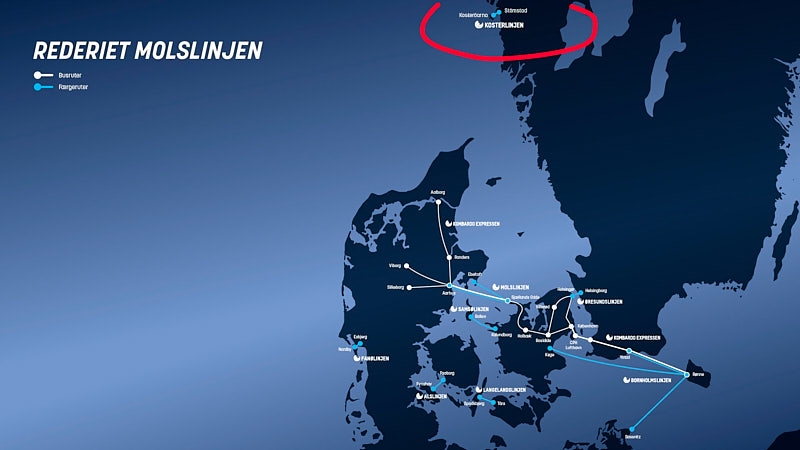
Molslinjen will take over the Strömstad–Koster Islands service on 27 September 2026, operating as Kosterlinjen on behalf of Västtrafik.

The contract was originally awarded to Torghatten. Both operators belong to Nordic Ferry Infrastructure (NFI).

Initial fleet: KOSTERSUND and KOSTERBRIS, running on biofuel.

Newbuildings: two fully electric ferries under construction in Finland, due in early 2027.

Capacity: each new ferry will carry 255 passengers and at least 30 bicycles.

Responsibilities: Västtrafik manages tickets, timetables and customer service; Kosterlinjen handles daily operations.

Serving the car-free islands of Nordkoster and Sydkoster, the route will be Molslinjen’s only service that does not carry cars.

Patras targets regular cruise calls from 2028

By 2026 Newsletter week 38

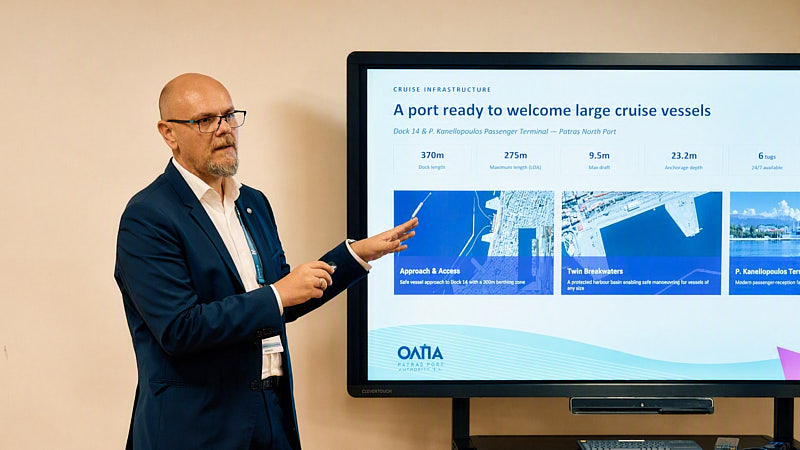
Panagiotis Anastasopoulos, President and CEO of the Port of Patras, attended the MedCruise General Assembly, Seatrade Cruise Med and the CLIA Ports & Destinations Dialogue in Las Palmas last week to promote the port’s cruise ambitions.

His strategy is to develop Patras as a multimodal port by implementing its approved master plan and expanding activities that generate greater added value for the local, regional and national economy.

In discussions with cruise companies, port representatives and international cruise planners, Anastasopoulos highlighted Patras’ strategic location in western Greece and its access to the region’s tourist and cultural attractions. His goal is to establish Patras as a regular destination on international cruise itineraries from 2028, bringing lasting economic benefits to the region and the country.

Photo: Port of Patras