INTERESTING READS

By 2019 Newsletter week 2

CLdN’s Supersized Ro-Ro’s: A Success Story, And LNG-Ready

CLdN’s super 8,000 lane meter ro-ro CELINE is now more than one year in operation.

DNV GL has published a review. No time to read? Here are some bullet points:

  • Larger vessels bring down the unit price.
  • Bigger vessels work better on long hauls.
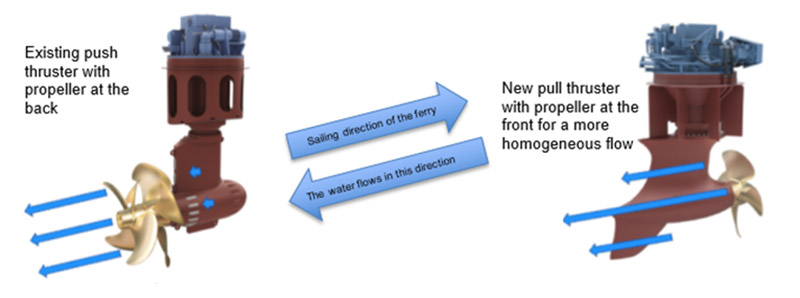
  • Transfer the best of deep-sea technology to ro-ro, with new developments in thrusters, rudders and engines.
  • Very maneuverable, in spite of their very large dimensions.
  • Learning to operate two-stroke engines rather than the four-stroke units typical for the rest of the fleet
  • Moving from low to medium voltage.
  • Operating shaft generators at variable rotational speeds with frequency converters, rather than constant-speed engines.
  • Operations with larger volumes and more decks.
  • Ready for conversion to LNG when the time is right. “It’s not a case of ‘whether’, but rather of ‘when’.

Basalt Infrastructure Acquires 30% Of Caronte & Tourist

By 2019 Newsletter week 2

The UK-based investment fund Basalt Infrastructure Partners II LP announced it has closed the acquisition of a 30% interest in the Italian ferry company Caronte & Tourist.

The terms of the transaction were not disclosed but the price might stand around €150m according to some financial sources. Basalt is an infrastructure equity investment fund focusing on investments in utilities, energy and transport infrastructure in Europe and North America. Basalt also controls Wightlink.

Caronte & Tourist owns and operates 26 ferries providing lifeline ferry services between Sicily and the Italian mainland (Strait of Messina) and between Sicily and the Sicilian minor islands. “The company has a proven and well-established management team responsible for a strong core business with additional growth potential” said Rob Gregor, managing partner of Basalt Infrastructure Partners.

“We are very excited to welcome Basalt as a long term partner in our business. Their investment coupled with our market-leading position and knowledge help deliver the industrial plan of the company, growing the business to meet the needs of the Island and pursue further growth opportunities” added Antonino Repaci, chairman of Caronte & Tourist.

SHORT NEWS

By 2019 Newsletter week 2
  • MARIA ROSARIO, once well known as the PURBECK, sank on the afternoon of 31 December 2018 at the pier in Puerto La Cruz. The vessel is owned by Venezuelan company La Nueva Conferry. She will be sold for scrap. In August, the TALLINK AUTOEXPRESS II ship sank and was refloated 40 days later. In September it was the turn of ROSA EUGENIA to take a dip.
  • The 29m midbody section needed to lengthen Grimaldi’s CRUISE ROMA has arrived at the Fincantieri yard in Palermo. The cruiseferry will shortly be arriving to get the surgery done. The extra section will create an extra 600 lane meters, 80 beds, 450 reclining seats, and a new buffet restaurant. CRUISE BARCELONA will follow.
  • LE RIF, once Sealink’s GALLOWAY PRINCESS still hasn’t entered service. After an endless refurbishment in Naples and La Spezia, the vessel arrived under tow on 8 January in Genoa at the ship repair yard. Is the ship still in the hands of Detroit World Logistics Maritime? That is unclear.
  • Trasmediterránea will no longer be using the small ferry NURA NOVA on the Ciutadella (Menorca) and Alcúdia (Mallorca) route, after she has been sold to Gestour, to be used out of Naples. Which ship will replace her, has not been announced yet.
  • A-Ship Management’s PRINCE ( the 1974-built PRINSESSAN BIRGITTA) is being chartered to Ventouris Ferries for service on the Bari-Durres run.
  • P&O Ferries charters ro-ro NEPTUNE DYNAMIS to cover for some winter overhauls.
  • Ro-ro QEZBAN suffered an engine room fire while transiting Dardanelles on 8 January. The fire was quickly extinguished and the ship went at anchor. She is working on the route Lavrio (Greece) and Yalova (Turkey) for EKOL Logistics.

UK Spends 108 Million Pound To Secure Extra Freight Ferry Capacity

By 2019 Newsletter week 1

The UK has spent £108m for “the supply of additional freight capacity on Short Sea crossings for Ro-Ro services between English and European ports.”

This is to ease potential congestion problems at Dover in the event of a no-deal Brexit, as the government ramps up its multi-billion contingency plans.

The Department for Transport has signed contracts with three ferry companies, in order to create more freight corridors away from Dover.

  • Brittany Ferries (£46.6m)
  • DFDS (£47.3m)
  • Seaborne Freight (£13.8m)

Seaborne Freight is a start-up company, with “seasoned shipping veterans”. They are working on setting up a freight ferry service between Ramsgate and Ostend, initially with two ro-ro ships.

Dredging of Ramsgate port will start on January 4th, chief executive Ben Sharp told the BBC.

The ferry services under the contracts are to be operational by 29.3.2019.

Brittany Ferries adds 19 weekly return-sailings to three routes on the western channel: Roscoff to Plymouth, Cherbourg to Poole and Le Havre to Portsmouth.

These additional rotations will allow more space for lorries, as requested by the Department for Transport. This is a 50% increase in freight capacity on the three affected routes from 29th March 2019, representing a 30% increase overall on the western Channel.

DFDS Expands Cooperation With Turkish Ekol Logistics

By 2019 Newsletter week 1

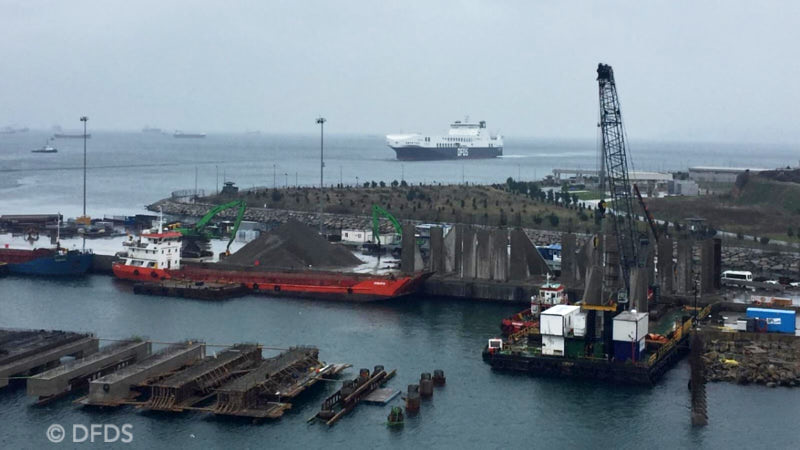
DFDS and Ekol Logistics, a leading Turkish transport company in the market between Turkey and Europe, have agreed just before Christmas to significantly expand their cooperation.

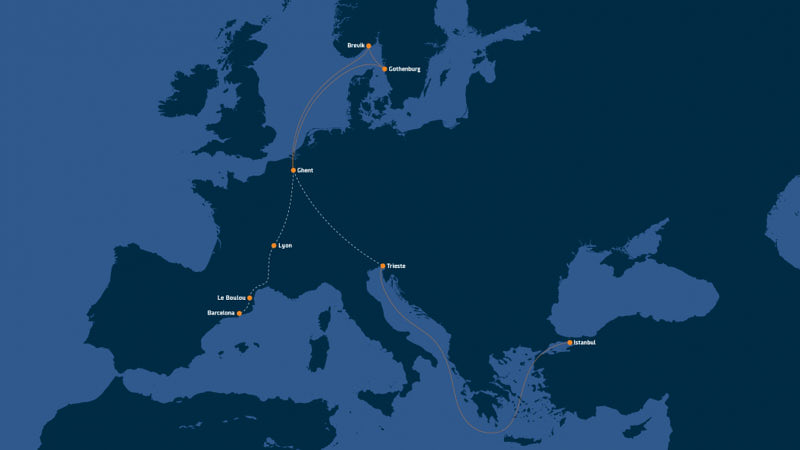
The agreement covers sea transport of trailers between Istanbul and Trieste. DFDS expects it to increase volumes of freight units in the Mediterranean by almost 30 %.

To accommodate those extra volumes, DFDS will:

1) expand terminal capacities. DFDS has signed a contract for the use of a recently built ro-ro terminal in Yalova, southeast of Istanbul.

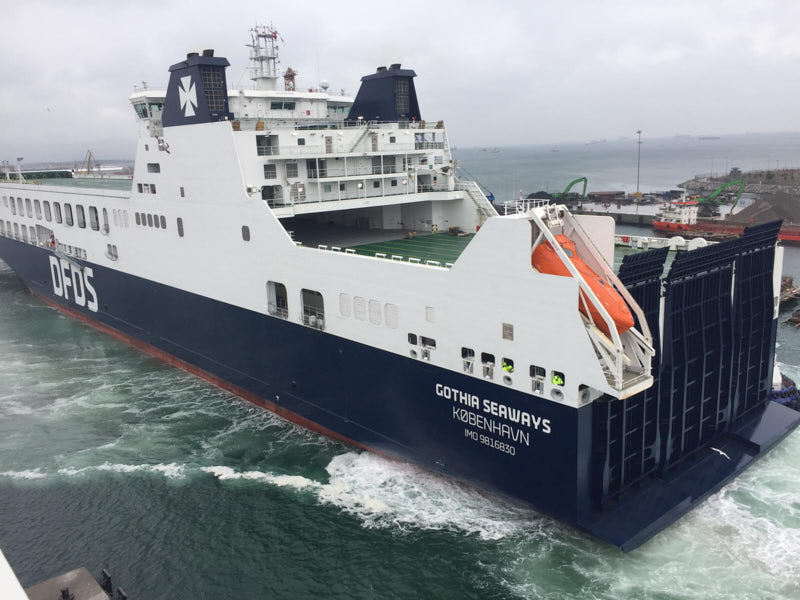
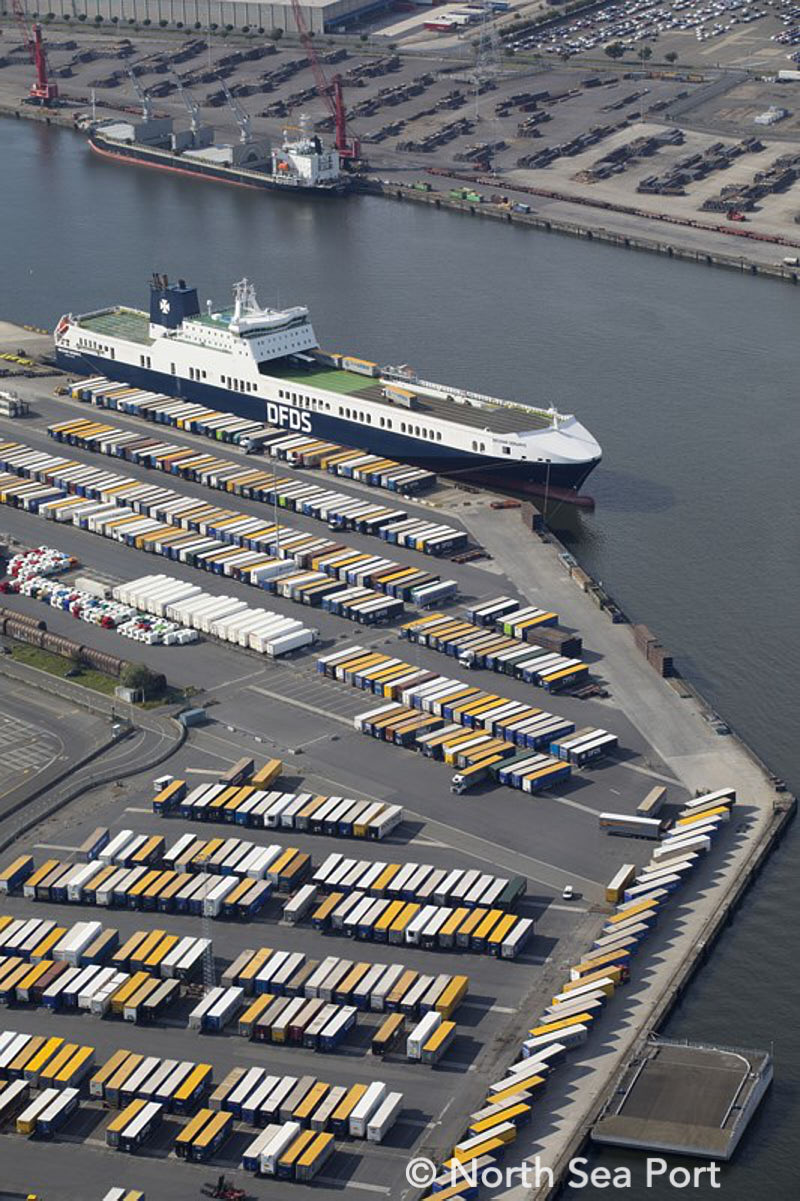
2) increase ships capacity by adding more tonnage. This means the two new 450-trailer freight ferries will not be put on Ghent-Gothenburg, but on the Med route.

The recently delivered ro-ro ALF POLLAK has been put on the former U.N. Ro-Ro line too, chartered by DFDS instead of the previously announced CLdN.

Since the acquisition of U.N. Ro-Ro in 2018, DFDS has already invested in the lengthening of ships

Moby-CIN Reverse Merger Officially Postponed

By 2019 Newsletter week 1

The reverse merger between Moby and CIN – Compagnia Italiana di Navigazione– originally set to be completed before the end of 2018 have been officially postponed by the group controlled by Vincenzo Onorato.

In a statement published on the Luxembourg stock exchange, where the €300m bond is listed (current price stands at 42% of the original value), it is written that “In the context of the procedure under the Italian Civil Code that allows creditors to bring proceedings to oppose a merger project within 60 days from its publication, a challenge against the proposed reverse merger of Moby into CIN has been served on the Companies by the Commissioners of Tirrenia di Navigazione S.p.A. in Extraordinary Administration”.

Moby is confident that “there are no reasonable grounds for Tirrenia in AS to stop the reverse merger, as it does not prejudice any creditors”. Based on that, the Onorato-controlled companies are fully confident that the Court will rule in favour of the reverse merger. A decision is expected within the first six months of 2019.

Antitrust Authority Asked Local Region To Rethink Regulation For Ferry Operators In The Gulf Of Naples

By 2019 Newsletter week 1

Following complaints filed by frequent customers and tourists, antitrust authority in Italy found that competitive constraints and unfair market conditions seems to be still present in the short sea ferry market between the port of Naples and the surrounding islands.

MSC’s controlled SNAV and Caremar, and the company Alilauro owned by the local Lauro family dominate the market.

The Antitrust authority asked the Campania Region to rethink the regulation introduced in 2016 in order to make the ferry market more transparent, accessible for new entrants and competitive.

In January 2015, the same Italian Competition Authority fined ten ferry services operators, active in the Gulf of Naples and Salerno, for their failure to respect commitments agreed on in a previous investigation. (Nicola Cappuzo)