
Iceland’s new ferry HERJOLFUR left the Crist shipyard in Poland on 9 June. She will then arrive in Vestmannaeyjar on 15 June.
For this hybrid electric ferry, port infrastructure works still need to be finished.

Iceland’s new ferry HERJOLFUR left the Crist shipyard in Poland on 9 June. She will then arrive in Vestmannaeyjar on 15 June.
For this hybrid electric ferry, port infrastructure works still need to be finished.
Fiera Infrastructure has acquired the stake for an undisclosed sum from Basalt Infrastructure Partners, which will continue as co-owner.
Remark editor FSN: Basalt also has Italian ferry company Caronte & Tourist in its portfolio
The state government’s failure to step-in to ensure the on-time delivery of two new Spirit of Tasmania ships has been criticised as TT-Line is set to meet with the troubled Flensburg-based shipbuilder this week.
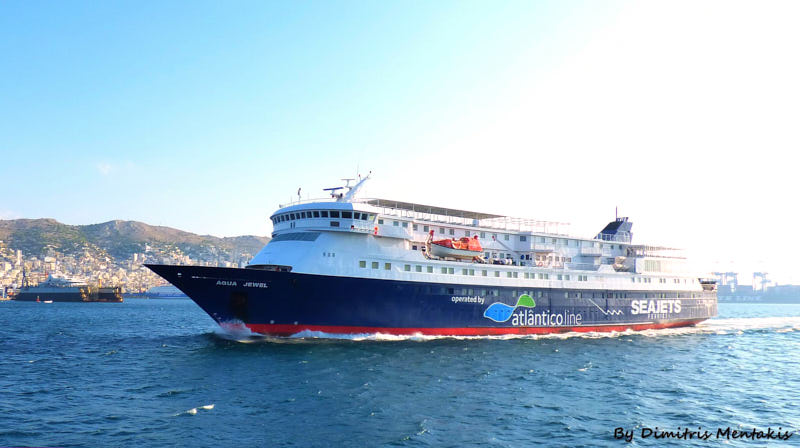
AQUA JEWEL Is Chartered to Atlanticoline for the Summer of 2019
Seajets’ AQUA JEWEL is eventually chartered to the Portuguese Atlanticoline for the summer season 2019.
The ship will replace the Hellenic Med Ferries’ AZORES EXPRESS, which still remains in Greece.
AQUA JEWEL’s place on the Inter Cyclades run is expected to take the ALEXANDRA L., which was recently chartered by Seajets and is already in Neo Molos Drapetsonas for the necessary repairs.
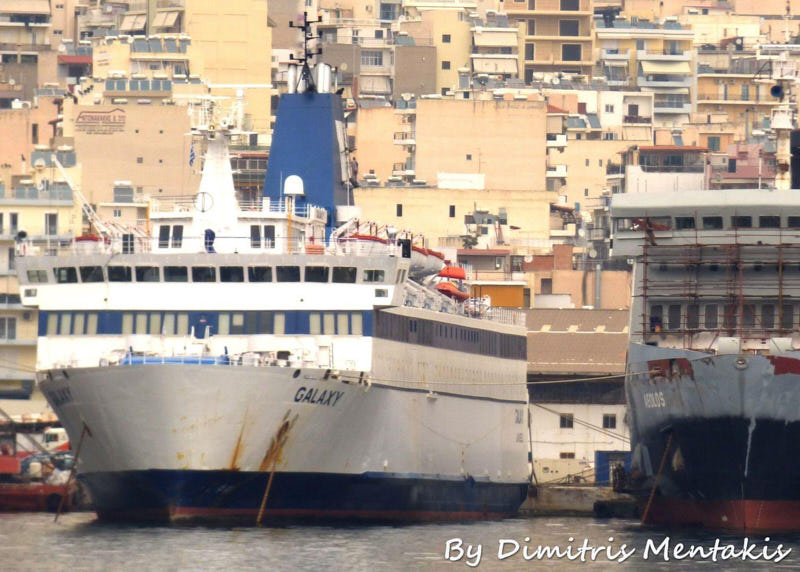
A-Ships Management’s GALAXY is chartered for three months to the Moroccan company Intershipping, for the Algeciras-Tanger Med run.
The ship is expected to be introduced on 20 June. She is currently on charter in Italy.
With GALAXY, Intershipping will operate with two ships on the line. GALAXY was chartered to AML last year for the same line.
AF CLAUDIA is the new name of the former ro-pax CALIFORNIA STAR which was recently bought by the Italian ferry company Adria Ferries. She will be deployed on the Ancona – Durrës maritime link as from next autumn. During the next summer season, the ro-pax unit will be chartered out.
As reported last December in Ferry Shipping News, the head of Frittelli Maritime group and of Adria Ferries, Alberto Rossi, announced the purchase of this ship from Baja Ferries for USD 45 million.
Currently the ship is still operating in Central America.
Other short news:
GNV AZURRA arrived in Brest, France, on 7 June. She will be used as accommodation ship at Damen Shipyards, for the refurbishment of cruise vessel SEVEN SEAS NAVIGATOR.
Virtu Ferries’ JEAN DE LA VALETTE is actually in Cadiz, prior to her Atlantic crossing, which is planned to start shortly. She will operate between Trinidad and Tobago.
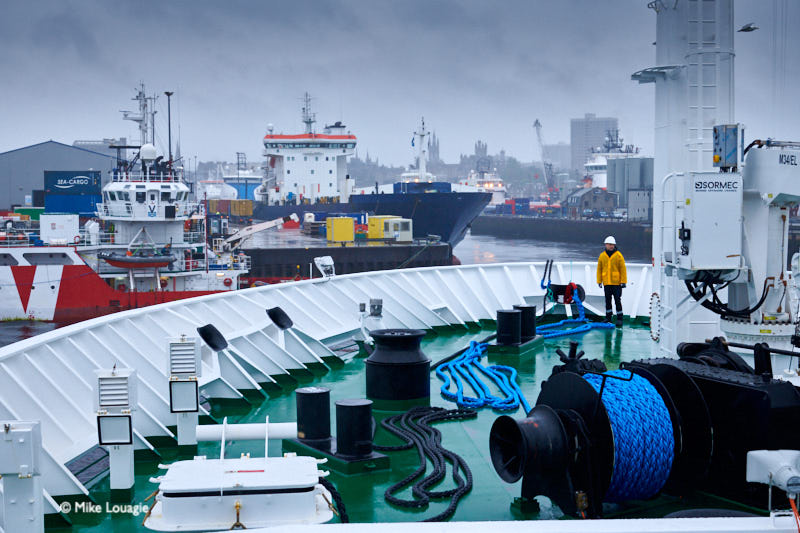
Last week I arrived in Aberdeen (Scotland) onboard the new Brodosplit-built expedition vessel HONDIUS. The weather was not very welcoming, as you can see on the picture. However, it added some drama to this maritime scene. Port of Aberdeen is a busy port for sure.
The ro-ro ferry is the HELLIAR, operating for Northlink.
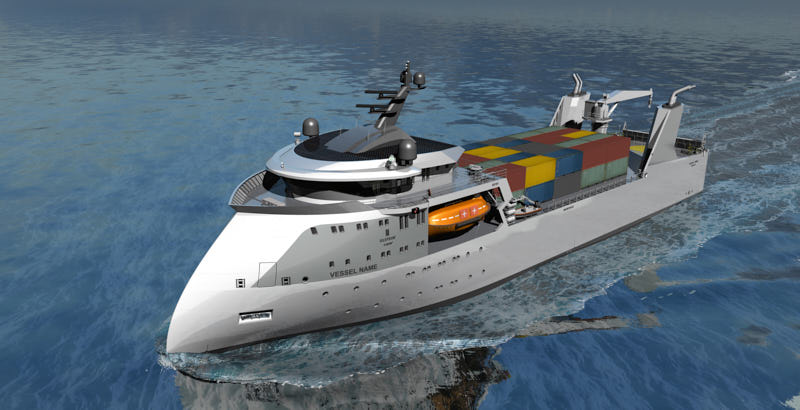
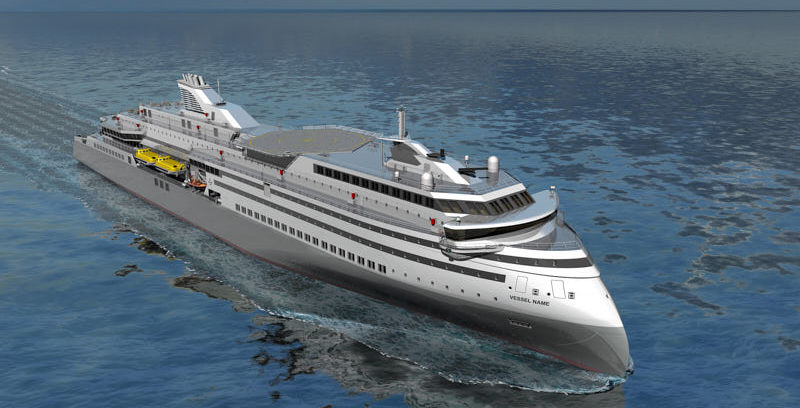
Ulstein Introduces the X-BOW® In ‘Compact Concept’ Ro-Pax Designs
Ulstein has developed a range of X-BOW® vessels for the ro-pax market. The portfolio is based on a ‘compact concept’ of shorter, wider and slower design solutions, leading to high capacity vessels and less expensive newbuilds.
Ulstein says the ‘compact concept’ increases the competitiveness of such vessel designs by higher revenue making at lower financial and operational costs. “Many ro-pax vessels operate in harsh areas, for which the X-BOW was originally designed. An X-BOW vessel (at the same speed and weather conditions) will use less power than a conventional bow vessel. The design leads to improved seakeeping, and reduced speed loss and fuel consumption, hence a reduced environmental footprint,” says Tore Ulstein, COO Design & Solutions.
Ulstein also offers the ULSTEIN ZED solution , which can also be used on ro-pax vessels to achieve zero emissions for longer periods of time when at port or in environmentally sensitive waters.
“Our ro-pax vessel designs are optimized according to market needs and will be constructed in series for the volume market,” states Tore Ulstein. One potential country for the ship construction is China.
“We have had offices and site teams in Shanghai and Ningbo for many years, and our people have long experience in system integration and site follow-up,” says Tore Ulstein. “More than half of the more than 100 Ulstein designs which have been built outside Norway, have been constructed in China with Ulstein site teams present. We have good relations to our Chinese partner yards and are currently in dialogue with several yards on the construction of these ro-pax vessels.”
The ro-pax range have been developed for volume construction. For clients who request a higher degree of customisation, Ulstein has their own prototype yard, Ulstein Verft, in Norway.
Moby’s Fine from Italian Antitrust Authority to Be Recalculated
Italy’s Administrative regional court in Rome affirmed on Tuesday that the €29 million fine imposed in March 2018 to Moby by the Antitrust authority has to be recalculated.
The fine was the final result of an investigation which found that Tirrenia CIN and Moby, both controlled by Onorato Armatori, had been involved in aggressive anti-competitive conduct, aimed at hindering the growth of its competitors on the maritime links between Sardinia and Italy mainland.
The investigation followed a complaint filed by ro-ro shipping companies Grimaldi Group and Grendi together with the road hauliers Trans-Isole and Lucianu.
Tallink will start transporting regular passengers with vehicles on the Muuga-Vuosaari cargo route from 12 June.
The ship operating on the route is Tallink’s veteran SEA WIND.
The price for a single ticket for all departures all year round will be the same: €20 for a car and €10 per passenger. The price for the van and long van is also fixed for all departures and is €30 for the van and €40 for the long van all year round for all departures.
The ferry operates on the Muuga-Vuosaari route all year round every day of the week, except Saturday and the trip from Muuga to Vuosaari takes 3.5 hours and the return trip from Vuosaari to Muuga takes 4 hours. For an additional cost passengers can book a cabin, buy breakfast, lunch and dinner, and there is also a shop onboard. The ship is not suitable for travelling for people with disabilities or for passengers with pets.
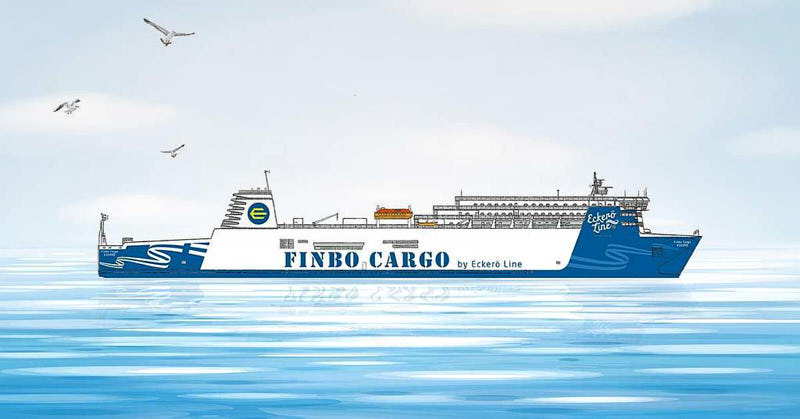
Eckerö’s recently acquired FINBO CARGO will also go to Muuga harbour, instead of the Tallinn harbour.