
- Tallink Grupp announced that the name of the new Tallinn-Helsinki route shuttle vessel, which will be built at Rauma shipyard in Finland and is due to be completed by the end of 2021, will be MySTAR. The name for the vessel was proposed as an entry in the vessel naming competition by a Finnish national.
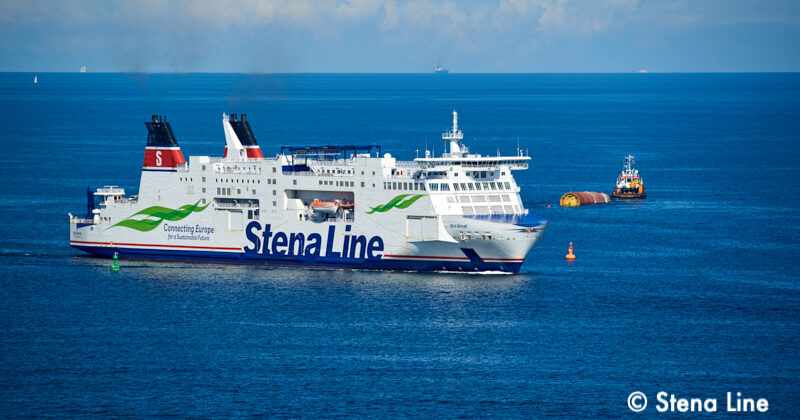
- STENA NORDICA has been positioned on the Rotterdam (Europoort) – Harwich route as an additional ship. Other ships on this route are SOMERSET and MISANA.
New Thrusters For Scandlines Ferries
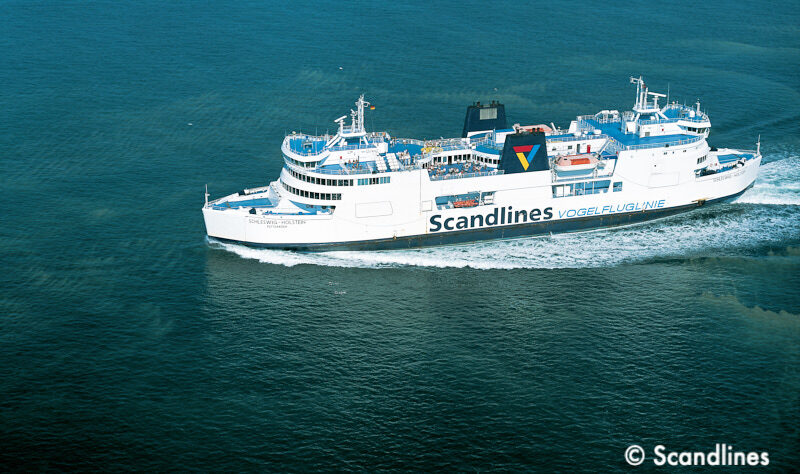
As the first of the four Scandlines hybrid ferries of the route Puttgarden-Rødby, SCHLESWIG-HOLSTEIN has been sent to the Remontowa shipyard. Four new Kongsberg Maritime thrusters have been installed.
Scandlines is switching to high-tech pull thrusters, where the propeller sits on the front of the thruster for a more homogeneous flow through the water.
This significantly reduces underwater noise and vibrations. Underwater noise is an issue of increasing importance to environmental protection organizations as a number of marine animals are adversely affected by the underwater sound caused by shipping. On the Puttgarden-Rødby route, it is mainly the harbor porpoises that are affected.
All 16 thrusters on the hybrid ferries of the Puttgarden-Rødby route will be replaced. Simultaneously, the shape of the hull around each thruster has also been changed to further optimize the flow of water to the propulsion propeller.
One of the GenSets was also upgraded and replaced with a larger 4950 kW generator, which makes it possible to operate the ship with only one instead of two generators.
Italy’s antitrust authority has given its green light to the MSC – Messina deal which still remains now to be approved by the other foreign competent authorities (Austria, Spain, South Africa and some other countries on the East Coast of Africa).
The Rome-based agency said that the merger between the two companies will not restrict or concentrate too much competition in the container transport on the routes where MSC and Messina are active (Mediterranean – North Europe, Med – Middle East and Med – East Africa), in the terminal operators and inland logistics markets in Italy.
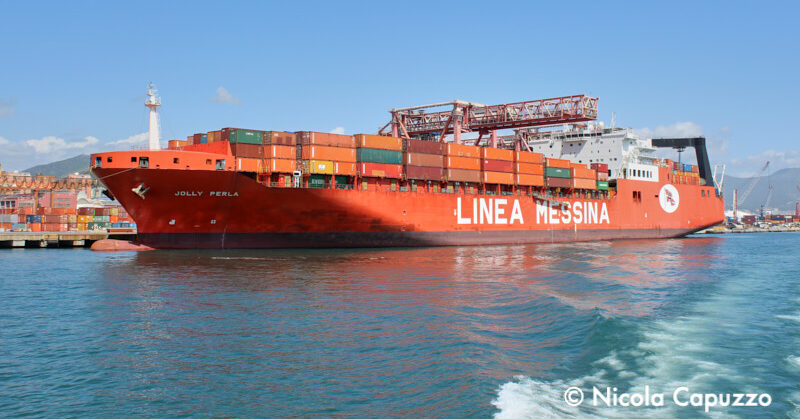
Following the agreement signed last June, Gianluigi Aponte’s Italian holding company Marinvest will invest €25m for a 49% stake in the Ignazio Messina & C. group and a 52% stake in a new vehicle called Ro-Ro Italia, controlling four of Messina’s eight modern conro ships (JOLLY DIAMANTE, JOLLY PERLA, JOLLY TITANIO and JOLLY COBALTO).
Messina has a financial exposure of over €450m, mainly with Banca Carige, related to a fleet renovation plan completed between 2011 to 2015, with the delivery of 8 new conro ships from Daewoo and STX shipyards.
The ropax FORZA, controlled by Grimaldi Holding, is being retrofitted by San Giorgio del Porto shipyard in the port of Genoa for the installation of scrubbers ahead of the January, 1st deadline when the new IMO rules come into force. Next January, TENACIA will be undergoing the same retrofit.
On both vessels, open-loop and hybrid-ready scrubbers will be installed with the potential to shift those technologies to closed-loop scrubbers.
A Greek Ferry Operator seems to be the buyer of the Nankai Ferry’s FERRY TSURUGI. Today the ship plies on the Wakayama-Tokushima run and she will be replaced by the newbuilding FERRY AI, expected to be delivered on January 2020.
FERRY TSURUGI: Built in 1997 / GT 2,604 / Passengers 470 / Cars 78
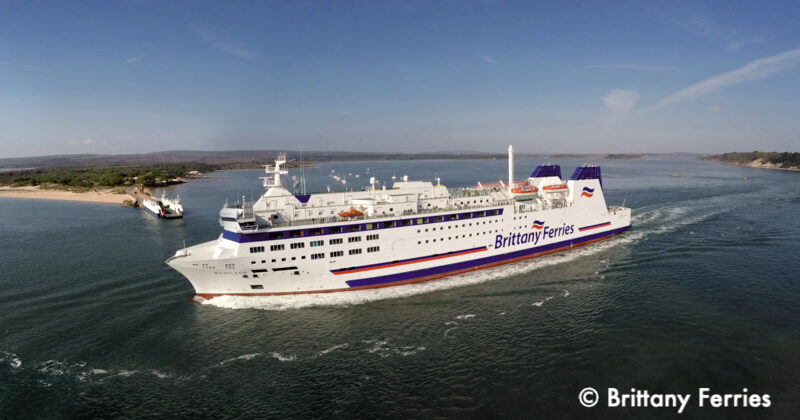
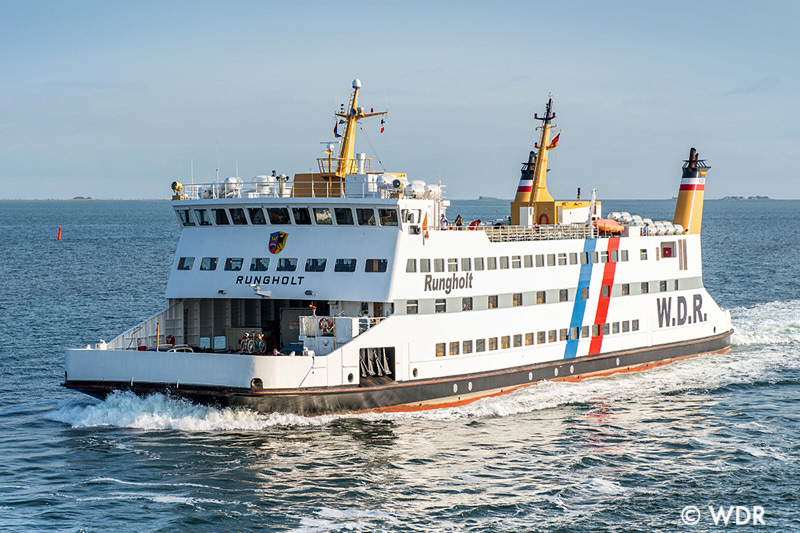
The German Wyker Dampfschiffs-Reederei Föhr-Amrum GmbH (W.D.R.) officially announced the sale of the ferry RUNGHOLT to Crete-based Blue Cruises. The ship has been traveling on the Dagebüll – Wyk (Foehr Island) – Wittdün (Amrum Island) line since 1992 and was replaced in May 2018 by the newbuilding NORDERAUE
The sale document was signed in Hamburg on October 17. She will soon depart for Greece, where she is expected to be remodelled and probably introduced on the Ierapetra-Chryssi line as the NISSOS CHRISI.
RUNGHOLT was built in Germany (1992, Husumer Schiffswerft).
GT 2,268 / 67,85m / 1,190 passengers / 53 cars / 12,5 knots.
The Norwegian company ordered its largest-ever ferries at the Turkish Sedef Shipyard.
Two big units of 109m will be built, for the route Molde – Vestnes.
A smaller 80.5m unit has also been ordered for Tjotta – Forvik.
There is an option for two more vessels.
All ferries are being designed by Multi Maritime.
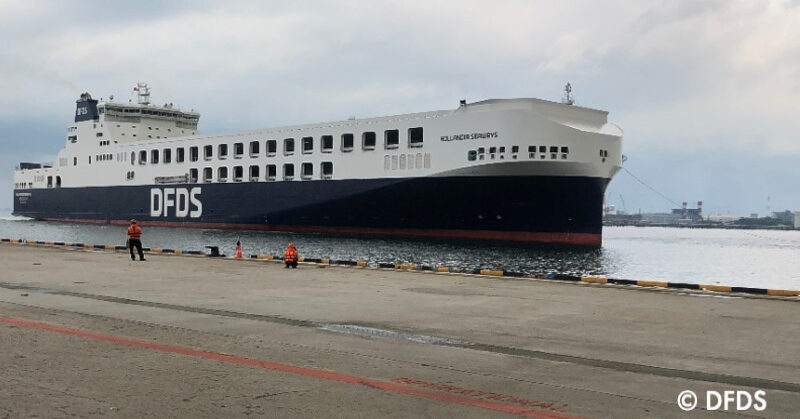
Following a successful hand-over to DFDS, three out of six mega freight ferries have now been delivered to DFDS.
Danish-flagged HOLLANDIA SEAWAYS is now on her way to her new home on the North Sea.
“Right now, the plan is a test call in Vlaardingen on 22 November, perhaps an additional call in Immingham and then final arrival in Gothenburg. The calls in Vlaardingen and Immingham are still subject to making her arrival in time to Gothenburg,” says Jens Peter Baltsersen, Senior Project Manager on the DFDS Newsroom.
Stena Line’s Germany Lines Up Ten Percent
Sweden continues to attract German visitors and Stena Line’s three Germany lines showed a substantial increase during the summer’s important peak season.
A cheap Swedish currency and favourable weather account for the largest increase in German arrivals. From Sweden, the increase comes from the passenger trains on the Trelleborg lines.
The Trelleborg lines to Rostock and Sassnitz are served by ferries and during the summer the demand for train travel has increased tremendously. Berlin has become a very hot destination for city trips by train.