

Fifth Fast Ferry Delivered By CoCo Yachts

By 2019 Newsletter week 44

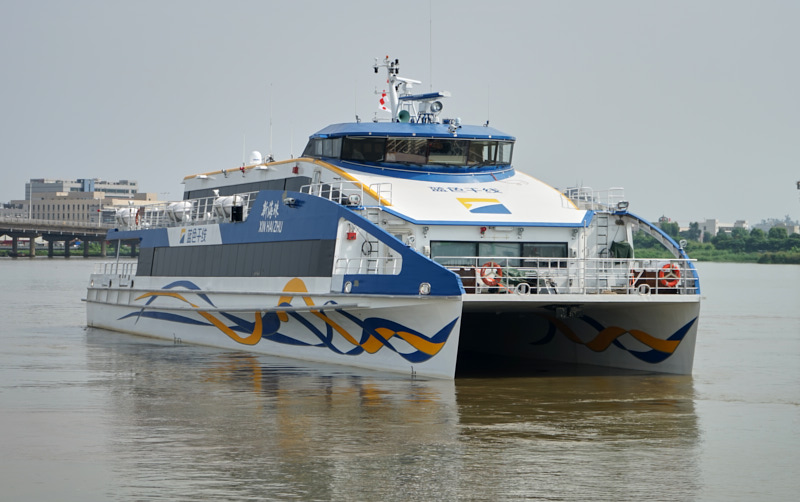
Dutch CoCo Yachts B.V. has delivered another Coastal Cruiser 356 high-speed passenger vessel, named XIN HAI ZHU, to Blue Jet Zhuhai Fast Ferries of China.

The vessel closely follows four predecessors delivered in 2016 (HAI JING and HAI QIN), 2017 (XIN HAI SHAN) and the 2019 delivered XIN HAI TIAN.

The aluminium fast ferry is fully designed by CoCo Yachts B.V. and built by Plenty Shipbuilding Industry Ltd. of Zhuhai, China. The vessel will be used between China and Hong Kong Island.

With a length of 40.2m, the vessel has a capacity of 356 passengers. For propulsion, the two propellers are connected with 2x MTU16V2000M72 main engines, which delivered a max speed of 30.7 knots.
Elliott Bay Design Group Selected To Design Hybrid-Electric Ferry For Washington State

By 2019 Newsletter week 44

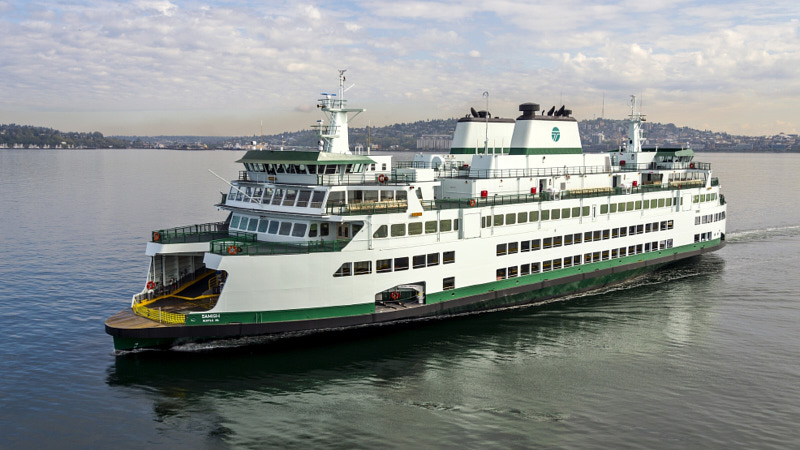
Elliott Bay Design Group (EBDG) was selected by Vigor Fab as the engineering firm that will provide functional design for the new hybrid-electric Olympic Class ferries for Washington State Ferries (WSF).

EBDG is responsible for redesigning the vessels to accommodate the major change in propulsion type without disrupting structural components.  The ferries will operate on all-battery power during crossings or can revert to a hybrid, diesel-electric propulsion if required.  Battery recharging will typically occur dockside at the terminals during offloading/loading procedures.

Earlier this year, Washington State’s Legislature authorized a contract extension for Vigor to build up to five hybrid-electric versions of their 144-vehicle Olympic Class.  The new-build authorization is a direct result of the 2040 Long Range Plan that identified the initial aspects of vessel and terminal electrification.  EBDG was a participant of the plan and is now leading the effort for an additional, supporting addendum – the WSF System Electrification Plan.  The System Electrification Plan will identify a detailed plan for deploying hybrid-electric vessels throughout the ferry system.

More than half of Washington State Ferries’ 23-vessel fleet is scheduled to be retired by 2040. The ferry system needs 16 new vessels in the next 20 years, including 13 ferries to replace vessels due for retirement and three additional vessels to fill in when other ferries are out for maintenance and to respond to growth.

Grandi Navi Veloci Charters Girolata From La Meridionale For 9+3 Months

By 2019 Newsletter week 44

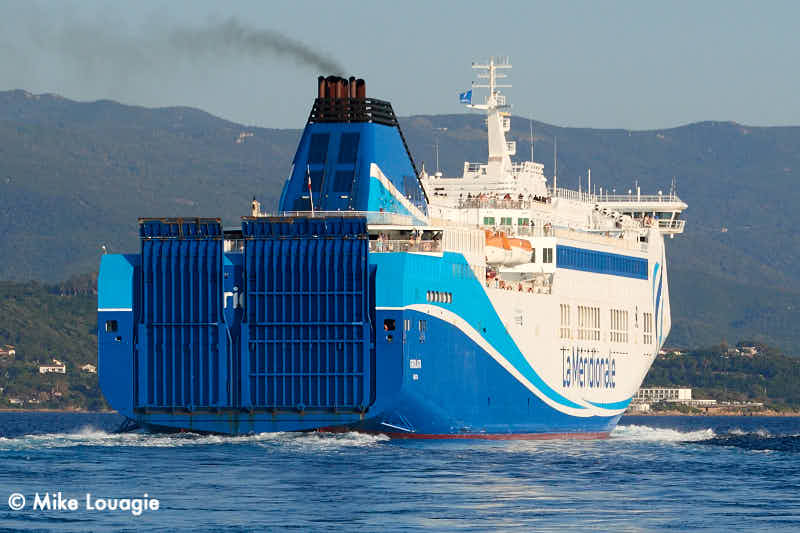
MSC-controlled Grandi Navi Veloci has chartered ropax GIROLATA from La Meridionale, as from 1 January to the end of September, with an option three more months.

The two companies agreed for a deck & engine and full catering charter. The ship will start operating in Italy under the French flag after a small refit at Chantier Navale de Marseille.

Grandi Navi Veloci confirmed the charter, specifying that it is set to be deployed on the links between the ports of Civitavecchia and Palermo-Termini Imerese in Sicily.

Tirrenia CIN Sold RoRo Beniamino Carnevale

By 2019 Newsletter week 44

Tirrenia – Compagnia Italiana di Navigazione, is rumoured to have sold for €12 million, the 27-years old roro BENIAMINO CARNEVALE to a North European buyer.

German ferry company TT Line and Polish operator Unity Line are the two options considered most likely as counterpart from several sources.

This deal would sign the fourth sale of roro vessels by Moby group this year following BARBARA KRAHULIK (currently en route to Gdansk where she will be delivered to TT Line), PUGLIA and HARTMUTH PUSCHMANN which already changed hands.

Built in 1992 by Van Der Giessen-de Noord shipyard, BENIAMINO CARNEVALE (formerly known as VIA ADRIATICO) has a capacity for 99 passengers and 1,820 lane meters.

FSG Launches RoRo Ferry

By 2019 Newsletter week 44

Flensburger Schiffbau-Gesellschaft mbH & Co. KG. has seen the christening and launch of a new 4,076 lane meter roro ferry in Flensburg on 29 October.

It is the eighth roro vessel ordered by Norwegian shipping company SIEM Europe.

The ship was named LIEKUT, which means “straight ahead” in the local dialect of Lower German. The sistership LEEVSTEN, was delivered 30 August, but is still at anchor in the Flensburg Fjord.

Nel Line’s Theofilos Escaped From The Scrapyard

By 2019 Newsletter week 44

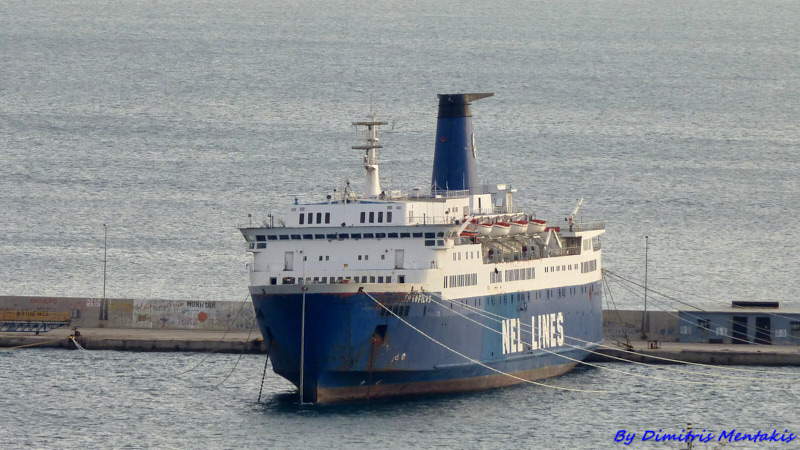
The ex-TT Line veteran THEOFILOS of the collapsed Nel Lines seems to have escaped from the scrapyard.

The Central Harbor Master of Elefsis decided to suspend the open tender for her removal. According to the official document of the decision, the old ship has been awarded – for €380,000 – to Anen Lines.

However, the ship is in a very poor condition, laid up since 2013 and the cost of her possible repair is quite serious!

FERRY FINANCE

By 2019 Newsletter week 44

Viking Line: Improved Results During Third Quarter

January–September 2019

  • Sales amounted to €380.8 million (378.1)
  • Other operating revenue was €0.2 million (0.2)
  • Operating income totalled €17.5 million (7.7)
  • Net financial items were €-3.6 million (-2.1)
  • Income before taxes amounted to €13.9 million (5.6)
  • Income after taxes totalled €11.1 million (4.8)
  • Future prospects unchanged: Operating income for 2019 will be better than operating income for 2018.

Third quarter 2019

  • Sales amounted to €153.8 million (152.3).
  • Operating income totalled €26.2 million (21.3).

FERRY PORTS

By 2019 Newsletter week 44

Port Of Zeebrugge Accelerates Innovation By Investing In 5G Network

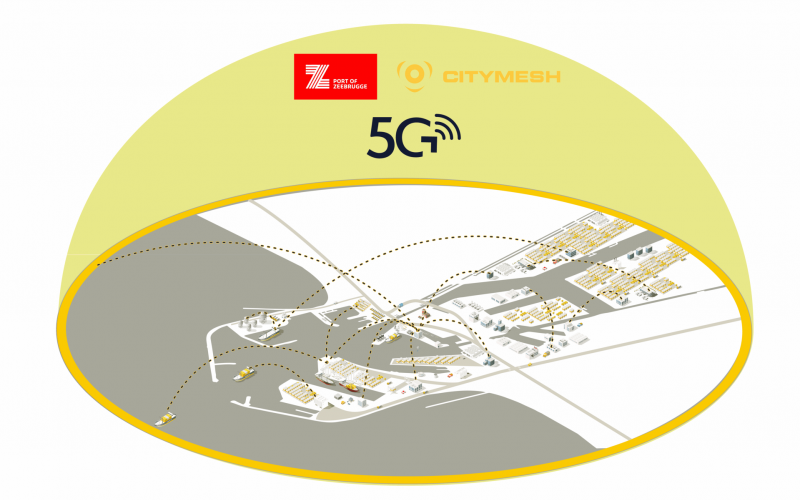
Port of Zeebrugge is to invest in a superfast critical communication network. 5G is the key technology that will be revolutionary, especially for industrial uses. The private 5G network in the Port of Zeebrugge will be the accelerator for innovation in and around the port.

In the first phase, the data network will be used for connectivity with tugboats, air pollution detectors, camera’s and quay sensors. For the new sea lock, which is to be constructed in the near future, the high-bandwidth and low-latency connectivity will prove to be an asset.

5G will be deployed at port companies for dispatching, connectivity with straddle carriers, track and trace systems and critical group communication.

Phase one, which will be operational by the end of this year, sets course for the use of the 5G network in Zeebrugge’s outer port. The second phase will include the inner port and will be implemented mid 2020.