

Port Of Olbia RoPax Terminal: Moby And Grimaldi Group Interested

By 2019 Newsletter week 46

Although no offers were officially sent to the port authority of the Sardinian Sea before the deadline of 4 November, at least two group are interested in operating the ropax terminal in the Port of Olbia.
Moby group officially said to have submitted a project finance in the last few days and also Grimaldi Group is expected to do have done the same.

Last June, the Port Network Authority of the Sardinian Sea announced that it intends to select a private partner for the management of the ropax terminal, passenger services, parking areas, and support services to road transport and to the users of the commercial area in the port of Olbia.

As of today, the ferry terminal is managed by Sinergest, subsidiary of Moby group, and the concession (which expired last year) was and will be extended until the end of 2019.

SHORT NEWS

By 2019 Newsletter week 46

Levante Ferries’ Smyrna Transformation In Full Swing

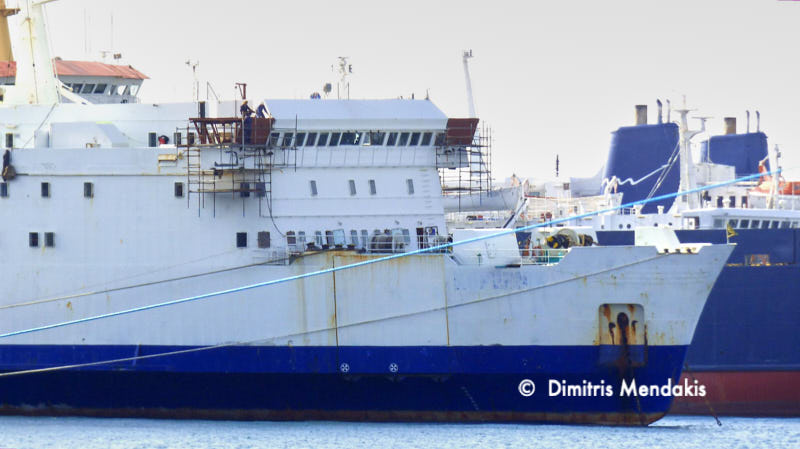
Levante Ferries’ SMYRNA is being converted into a high-quality car ferry.

The bridge wings are almost closed. Her stern superstructure is changing in order to host new ramps for passengers and the upper garage. The interior is being redone too.

After the conversion, the Norwegian-built former Unity Line train ferry is expected to be introduced on the Thessaloniki-Izmir run. Smyrna is the old Greek name for Izmir.

The conversion is done under the responsibility of Kopoukis naval architects.

Dutch Customs Authorities in the Port of Rotterdam have granted C.RO Ports with the status of Authorised Economic Operator, both for Customs and Security. The award acknowledges the company’s constant effort in maintaining the highest standards in safety and process transparency, and recognizes the trust relationship between the terminal operator and the Customs Authorities.

PHOTO OF THE WEEK

By 2019 Newsletter week 46

Slow Boat To Piraeus

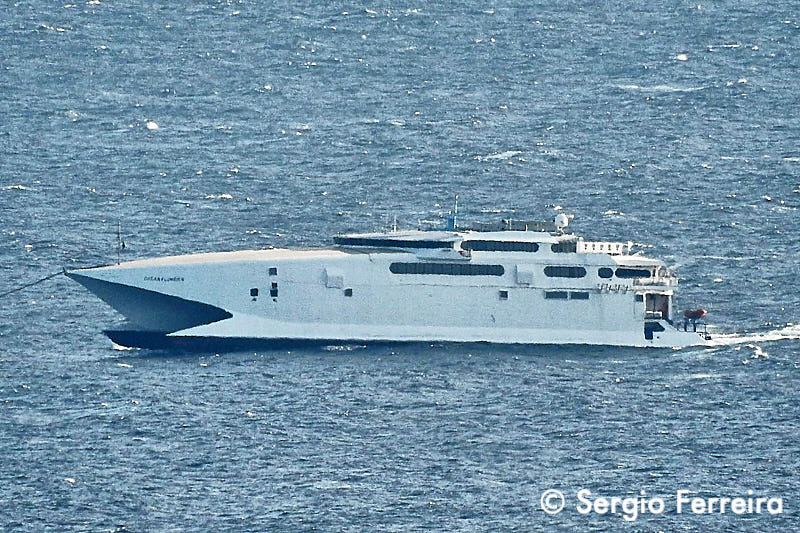
The inhabitants of Funchal could notice the slowest fast ferry ever passing their island. The vessel is Bridgemans Trinidad LP’s OCEAN FLOWER 2, which was purchased in 2017 for the Trinidad -Tobago route.

She is under tow by the Portuguese tug MONTE DA LUZ, from Curaçao to Piraeus. Seajets is the company that purchased her.

TOP STORY

By 2019 Newsletter week 45

Damen Shipyards To Build Four More Hybrid Electric Vessels

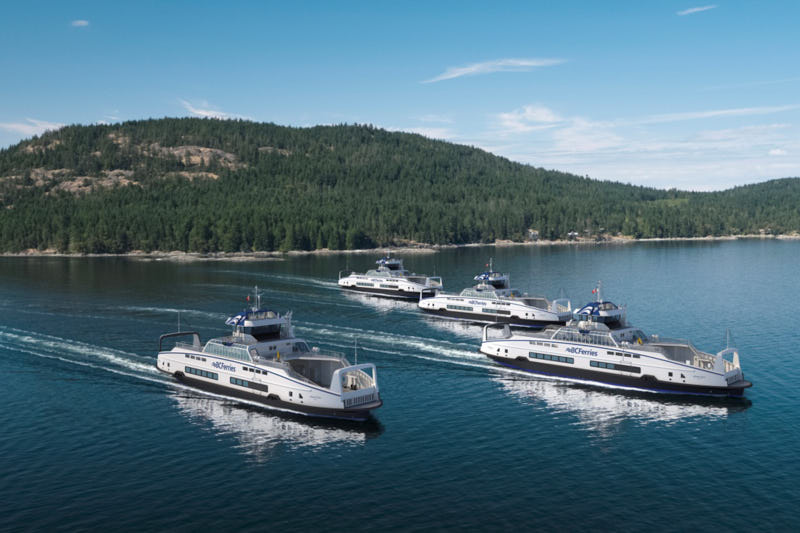
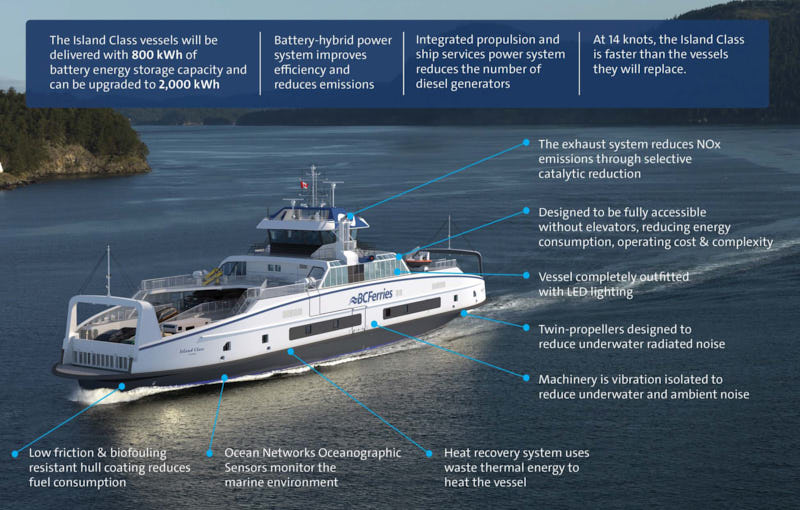
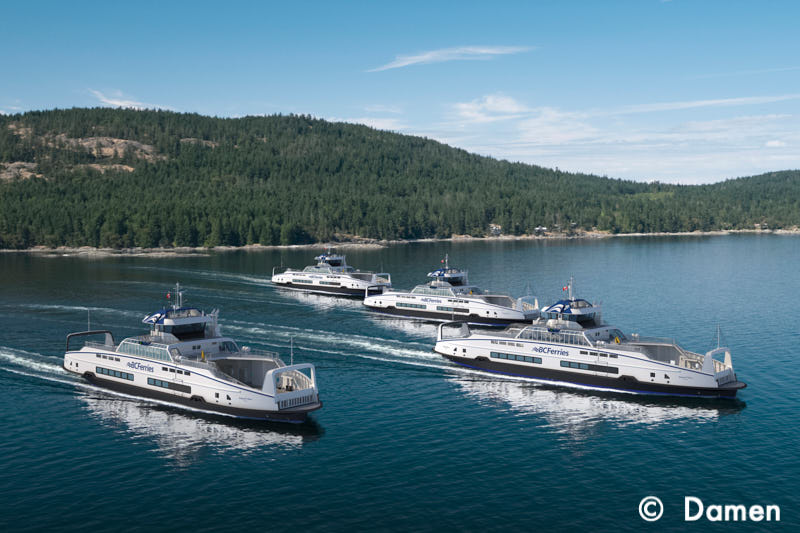
BC Ferries continues to roll out its Clean Futures Plan and has awarded Damen Shipyards Group contracts to build four more battery electric-hybrid Island Class vessels scheduled to go into service in 2022.

In the spring of 2017, BC Ferries awarded Damen contracts to build two “first in class” of these battery electric-hybrid vessels. These vessels have successfully completed sea trials and will arrive in Victoria, B.C. by January 2020.

With the extension of the partnership between BC Ferries and Damen now confirmed, Damen will extend its agreement with Point Hope Shipyards of Victoria, B.C. to provide technical and warranty support for the new vessels with their local staff.

The Island Class is a battery-powered ferry. When electric charging technology matures to make electricity available in the quantities required, BC Ferries will operate these new ships as all-electric ferries, using clean energy. In the interim, these ships will use an on board low-sulphur diesel hybrid system.

FERRY SHIPPING

By 2019 Newsletter week 45

Ferry Transaction Between Boreal And Norled

Boreal is buying the three ferries HARDANGER, RYFYLKE and BJØRNEFJORD from Norled.

Boreal needs these ferries because the Stavanger-based company won several public contracts.

HARDANGER and RYFYLKE are currently in service on the Stavanger-Tau route, which will be closed when the Ryfast tunnel opens at the end of this year.

Boreal wants to convert the ferries into battery operation after acquisition.

BJØRNEFJORD is a smaller commuter ferry built in 1990.

In addition to the purchase of the three ferries from Norled, Boreal has five electric vessels under construction.

Grendi Found A Second RoRo Ship To Increase Frequency And Capacity On Carrara – Cagliari

By 2019 Newsletter week 45

Genoa-based Grendi Trasporti Marittimi says it has found the second roro ship it was looking for.
It is needed to increase capacity and frequency of the regular line operated between the Tuscan port of Marina di Carrara and Cagliari, in Sardinia.

“Today we are offering three sailings per week. We want to increase the frequency by up to four or five round trips chartering-in a second vessel,” said Costanza Musso, CEO of the group together with her brother Antonio Musso.
The latter added: “We have just found a roro controlled by North European interests with a 1,750 lane metre capacity and a speed of 17 knots. It will be deployed from February. I cannot disclose the name of the vessel since some details of the one-year charter contract still have to be finalised.”
Antonio Musso further stated: “Thanks to this second unit, our roro service will become daily.”

Grendi’s annual turnover, coming also from logistics and land transport activities, is roughly EUR 45 million, with a 20% increase registered in the last twelve months.

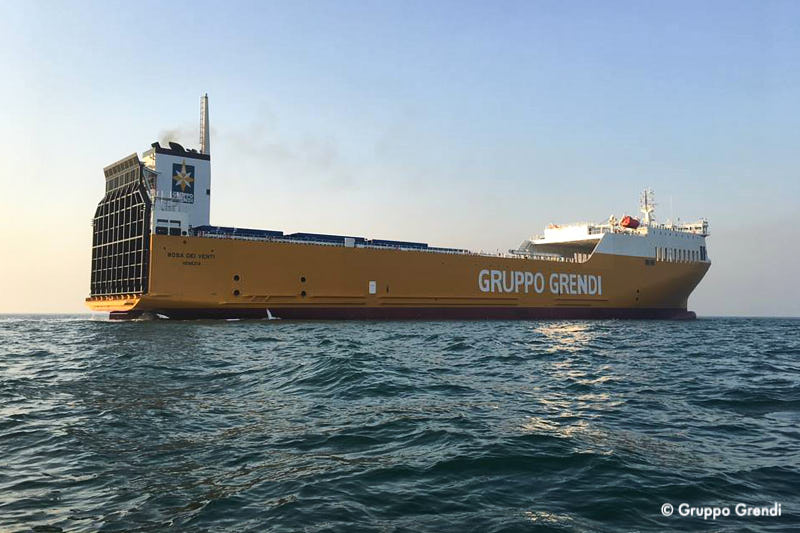
The shipping company controlled by the Musso family is active today with the 2018-built roro ship ROSA DEI VENTI (2,500 metres lane metres) long-term chartered from owner Giovanni Visentini Trasporti Fluviomarittimi.

Record Investment In Calmac Ferry Overhaul Programme

By 2019 Newsletter week 45

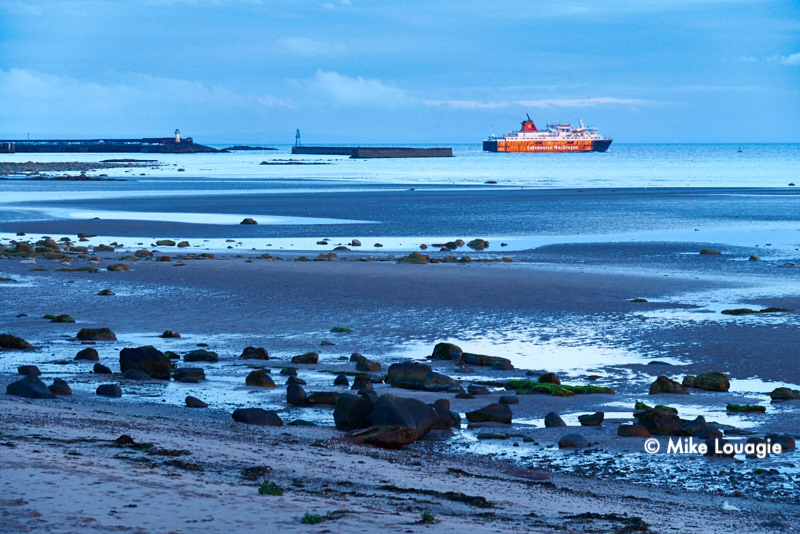
CalMac is investing a record amount in keeping its fleet in ship shape condition during this year’s winter maintenance programme.

More than GBP 9 million is being targeted at vessel resilience responding to the challenges of an increasing average age of fleet. This is in addition to the annual planned maintenance expenditure to ensure every vessel is ready for another year of supporting communities across the west coast. The resilience programme is more than double the amount spent last year.