

Finnlines Group Financial Review January–December 2019

By 2020 Newsletter week 9

Full Year 2019

  • -2.4% Revenue €574.8 million (reflecting the lower volumes in Finland’s trade over the preceding year)
  • +2.0% EBITDA €169.8 million
  • + 3.4% Result €98.3 million

“In 2019, we continued to focus on fundamentals, i.e. dedication to smart use of technology, digitalised and optimised processes across our businesses, investments in energy efficiency to advance sustainable development and effective execution of our strategy by our highly productive, skilled and committed employees. One topic in our strategic discussion is digitalisation. In recent years, we have invested a lot in information technology. We have implemented two major ERP systems, one in the port and the other relating to vessel efficiency monitoring and measurement. We have also developed mobile services in port operations. This development in digitalisation and automation increases the efficiency and effectiveness of our processes just to name a few examples.”

Emanuele Grimaldi, CEO

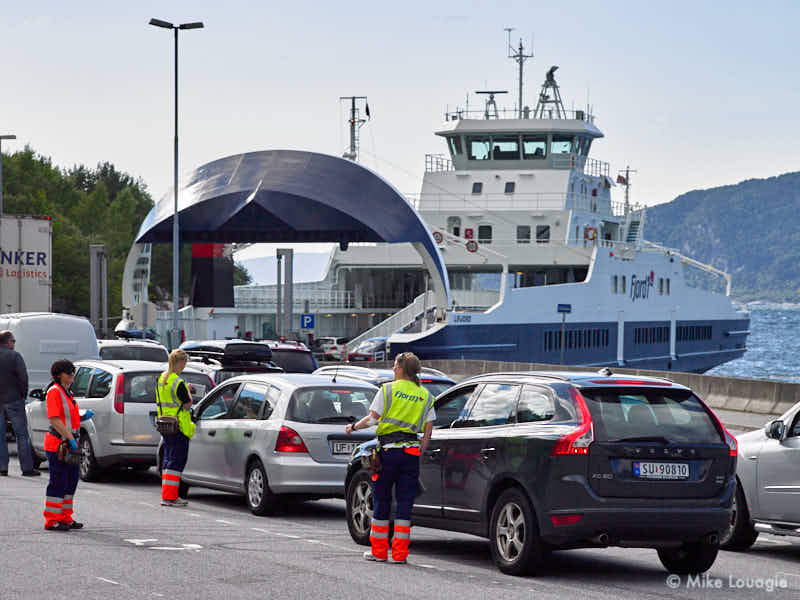
Fjord1: 2019, a Transitional Year with Contract Portfolio Changes and Significant Investments

By 2020 Newsletter week 9
  • Revenue NOK 2,724 million (-12%)
  • EBITDA NOK 819 million
  • Net profit NOK 215 million
  • Award of the long-term Halsa-Kanestraum contract for 2021-2030
  • Delivery of 9 new hybrid vessels and major retrofit of 3 existing vessels.

“2019 was a transitional year with contract portfolio changes and significant investments. We are currently about to complete a comprehensive vessel renewal programme which will turn the vessel fleet into the largest electrified vessel fleets in Norway, resulting in significantly improvement of our environmental footprint. The investment programme is a key step towards our vision to become the most environmentally friendly provider of ferry transportation and to realise the value creation potential that lies in our large long-term contract portfolio”, says Dagfinn Neteland, CEO

2020: 9 new connections

  • New contracts started 1 January.
  • Revenues in 2020 are expected to increase by 10-15% compared to 2019. Operational cost will be impacted by timing of infrastructure completion.
  • Net interest-bearing debt is expected to reverse during 2020 as the vessel renewal programme is completed in 1H 2020, operational cash flow is set to improve, and more infrastructure assets are sold.
  • The completion of the newbuild programme marks a major leap for Fjord1 towards an electrified fleet with low- or zero emissions.
  • The transition towards a low emission fleet is expected to continue gradually with additional upgrades of existing vessels for use of electricity. The timing of electrification depends on completion of onshore infrastructure.

Stability for Wasaline in Spite of Challenging Year

By 2020 Newsletter week 9

Challenges in 2019:

  • Ropax WASA EXPRESS was away for a three-week maintenance visit at the shipyard, in January
  • The Finnish Seafarer ‘s Union’s support strike in November affected operations: 8 departures were cancelled and 4 departures were without cargo.

Positive in 2019:

  • The average price of fuel decreased by 2.5% during the financial year. Due to this combined with the investments for energy savings, the fuel cost has decreased by 8.4%. The total fuel savings was 9.6%.
  • The ice winter was mild.

Key figures for 2019:

Status quo revenue €19.6 million.

Passenger traffic sales increased by 6.3% and cargo sales decreased by 6.2%.

  • -2.8% Departures 826
  • -3.5% Passengers 204,704
  • -1.4% Cars 46,312
  • -4.3% Cargo units 15,913

BC Ferries Q3 Results for the Fiscal Year Ending 31 March 2020

By 2020 Newsletter week 9
  • Number of sailings: 44,000
  • Passengers: 4.8 million (+0.7%)
  • Cars: 2.0 million (+1.6%)
  • Total revenue for Q3 increased by $3.2 million to $210.9 million (+1.5%)
  • Total revenue for Q1+Q2+Q3 increased by $33.4 million to $786.7 million  (+4.4%)
  • The increase in revenue is mainly a result of increased vehicle traffic, retail revenue and the provincial contribution for its portion of the fare initiatives.
  • Operating expenses for Q3 increased by $7.4 million to $205.7 million (+3.7%)
  • Operating expenses for Q1+Q2+Q3 increased by $27.4 million to $646.8 million (+4.4%).

The increase in operating expenses is mainly due to higher labour costs and staffing level changes.

FERRY PORTS

By 2020 Newsletter week 9

Some Troubles for Grimaldi and Tirrenia RoRo Ships in Malta 

Earlier this week Maltese chandlers and port workers stopped their operations over coronavirus fears, refusing to board vessels coming from Italy to unload cargo, Malta Today reported.

The local media was informed that port workers were complaining for a lack of medical staff in the area as they handle cargo that was coming from Italian ports. Port workers said they would not handle cargo unless in supervision and after clearance of medical doctors. “The cargo in question concerns retail food and other supplies. Maltese port workers claim they are not convinced with documents showing that the vessels have been given the all-clear” Malta Today reported.

The two vessels in question were the Grimaldi Group-controlled EUROCARGO MALTA and the Tirrenia-operated MARIA GRAZIA ONORATO. Some hours later both vesseld were regularly discharged. They could sail back to the Italian ports of Catania and Genoa.

Big Architectural Project for Historic Tallinn ‘City Hall Property’

By 2020 Newsletter week 9

The City of Tallinn has signed an MOU with Tallink Grupp AS and one of Estonia’s largest investment groups and Tallink Grupp’s largest shareholder AS Infortar for the development of the abandoned Tallinn City Hall property into an international conference and concert centre together with an accompanying passenger port, hotel, business centre, restaurants, cafes and other leisure facilities.

An architectural competition will be launched. The estimated construction period of the new centre and adjoining buildings is three years from the point when all the necessary permits have been obtained and all the required contracts have been signed.

Piraeus Port among the Four Best Container Ports in Europe for 2019

By 2020 Newsletter week 9

According to a PortEconomics.eu survey, Piraeus port takes the fourth place –in performance- behind Rotterdam, Antwerp and Hamburg.

Piraeus was not even in the top 15 in 2007.

The port of Piraeus presented a percentage increase by 5.1% in relation to 2018 and 315% compared to 2007-2019 period. According to those figures, the port of Valencia is still a “threat” to Piraeus port just as Piraeus is a “threat” to Hamburg port.

The users of Piraeus port facilities estimate that the Greek port will directly threaten both Hamburg and Antwerp provided the development of the fourth pier which is part of the COSCO’s approved master plan by the Hellenic Government. The construction and the completion of that pier spans over a two-year period. Into the game of “dominance” is also involved and the railway as the completion of the infrastructure and the electrification of the Piraeus-Thessaloniki rail axis will give both Piraeus and Thessaloniki the potential for direct competition in the level of Hamburg.

In any case, this year will be of particular interest due to Brexit processes and the streamlining of transshipment while at the Mediterranean front a particularly interesting “naval battle” involving Piraeus, Valencia and Barcelona is on the way.