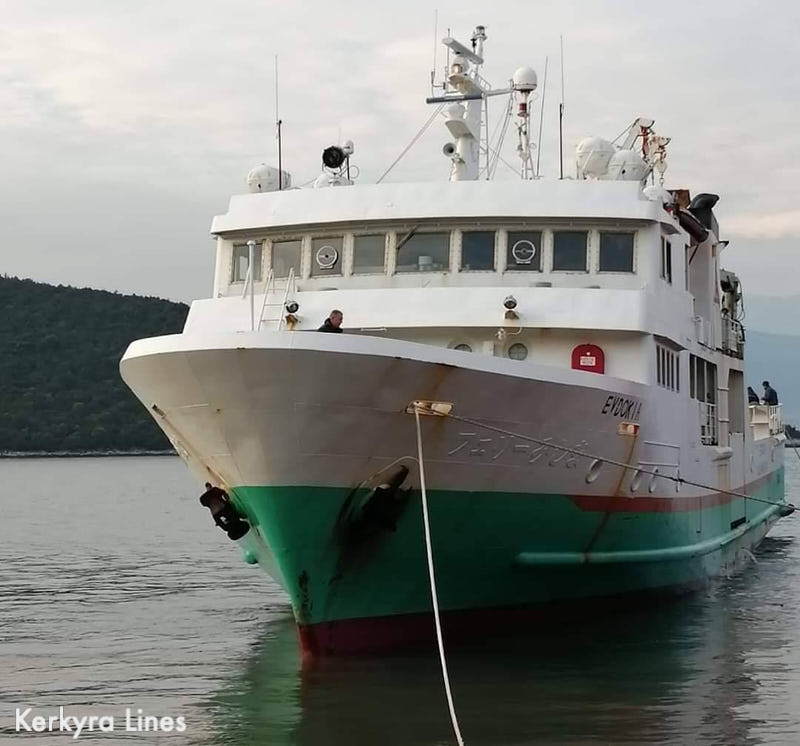
Kerkyra Lines’ EVDOKIA (ex-FERRY MISHIMA) Arrived in Greece

By 2020 Newsletter week 3

On 12 January, Kerkyra Lines’ EVDOKIA arrived in Amaliapolis (Volos) from Japan and anchored at Kouris Shipyard for conversion.
The small ferry (ex- FERRY MISHIMA) was purchased last September by the Japanese Sakido Kisen Co and began her long voyage – from Nagasaki to Greece – on 7 December 2019.

According to her company, she is not destined for the main Corfu – Igoumenitsa line. She will probably serve the Corfu – Othonoi line.
[Link: MarineTraffic]

TS Laevad and Estonian Road Administration Negotiate

By 2020 Newsletter week 3

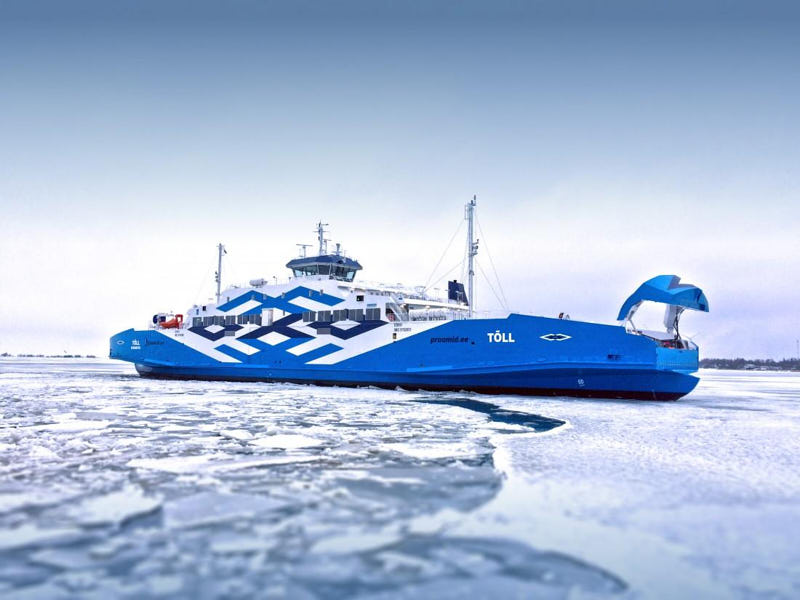
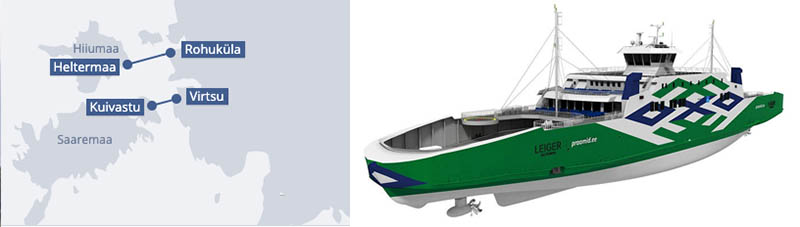
Due to continuously increasing demand on the Virtsu – Kuivastu ferry line, the Minister of Economic Affairs and Communications authorized the Estonian Road Administration to negotiate with OÜ TS Laevad, a subsidiary of AS Tallinna Sadam, to acquire an additional new-built ferry.

Subject to the results of further analyses and negotiations, the Ministry of Economic Affairs and Communications has set the goal for the Road Administration to conclude an agreement with TS Laevad by 31.03.2020 on the terms and conditions for acquiring and operating the new vessel.

Cheaper Tickets Should Generate More Traffic on Alslinjen

By 2020 Newsletter week 3

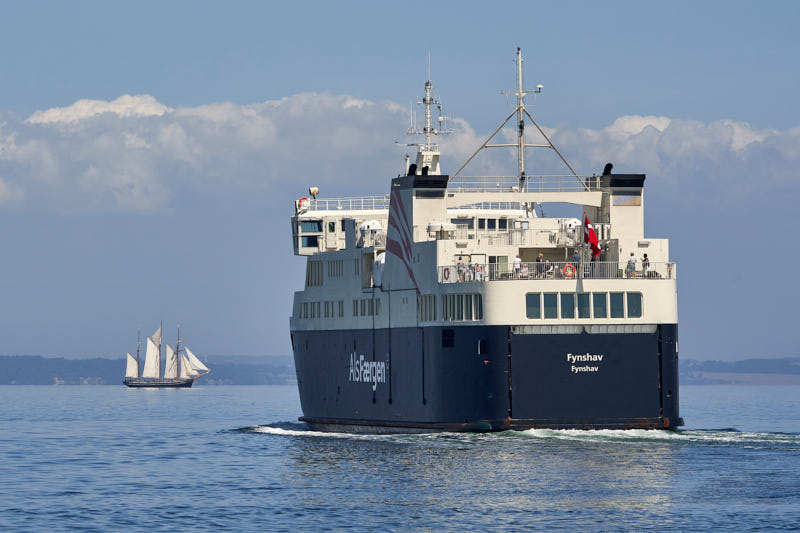
Alslinjen have started to add a dynamic low-cost structure to the existing ticketing system.
Based on early bookings and off-peak crossings, people can save money.

Alslinjen is one of the four Danske Færger ferry companies that was taken over by Molslinjen a year ago.
The ferry connects Bøjden and Fynshav. A road alternative is the Little Belt Bridge. However, CEO Carsten Jensen believes that the ferry crossing is a relaxing alternative for drivers.

During 2020 all routes will see the introduction of the Barista’s coffee concept.

French Blockade Affects Crossings between Marseille, Corsica, Tunisia and Algeria

By 2020 Newsletter week 3

Since 10 January unions from La Méridionale are on strike. They started a blockade, affecting two of their ferries and three from Corsica Linea.

What they want is an agreement for a new cooperation between La Méridionale and Corsica Linea, to operate the Corsica routes together, as in the past.

They fear that La Méridionale will have to close business. The company lost the two most important routes, Bastia and Ajaccio, which has the highest number of freight.

On 9 January, a new call for operators for the secondary routes (Marseille – Propriano and Marseille – Porto Vecchio) has been launched, for a temporary public service contract until end of 2020. Why? Because the ‘Office des Transports Corse’ deemed that the estimated capacities were wrong, after recalculating them. They say that on Porto-Vechio 220,000 lane metres are needed, whilst only 160,000 have been foreseen. It is the other way around in Propriano, where 66,000 is enough, against 96,000 planned.

There is a lot of criticism on this cancellation of the previous public service contract, “as if the rules of the game were changed during the game.”

DANIELLA CASANOVA has been diverted to Toulon. However, when the ship arrived in Ajaccio on Monday evening, the unions decided not to let her disembark passengers. DANIELLE CASANOVA and MEGA ANDREA have been rerouted to Propriano, where the port was guarded by police.

The crisis comes at a time when tourists start to think about their summer holidays.

Corsica Linea also had to cancel the crossings to Tunisia and Algeria.

SOL Becomes New Majority Shareholder in Scanlog

By 2020 Newsletter week 3

SOL Becomes New Majority Shareholder in Scanlog

Svenska Orient Linien, SOL, becomes new majority owner in the Swedish logistics company Scandinavian Logistics Partners, Scanlog. Until now, the shipping company has had a 20 percent holding in the company, but now it is expanding its ownership to just over 50 percent.

From SOL’s perspective, there are obvious benefits from the ownership in Scanlog: delivering door-to-door logistics services.

The sustainability perspective is extremely important for both organisations.

Scanlog’s business model is based on Responsible Logistics – increased cost efficiency, reduced environmental impact and responsibility for quality of delivery.

SOL has also made major investments in sustainable transportation earlier in the year through its 50 percent stake in the start-up shipping company WALLENIUS SOL. The new shipping company will transport cargo in the Baltic Sea region by 2021 with some of the world’s most modern ice-classed LNG-powered vessels. The new vessels will reduce greenhouse gas emissions by 60 percent and fuel consumption by 50 percent per trans­ported unit.

Tallink’s Vessel ROMANTIKA to be Renewed at Nauta Shipyard

By 2020 Newsletter week 3

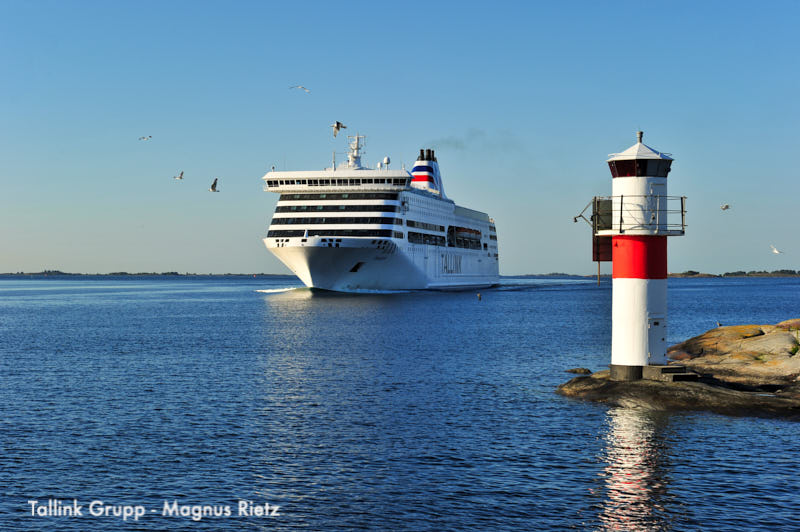
Tallink Grupp’s vessel ROMANTIKA has arrived in the Nauta Shipyard in Gdynia, Poland on 13 January for scheduled maintenance and planned renewal works. The vessel will stay in Nauta shipyard for nearly two weeks, returning to the Riga-Stockholm route on Saturday, 25 January.

During the scheduled docking, several key passenger areas will be renewed considerably and receive a complete overhaul according to the company’s refreshed brand.

The popular ship’s buffet restaurant will be refurbished according to the Grande Buffet concept. Similarily, the ship’s cafe will be renewed in accordance with the Coffee & Co. concept and the ship’s pub will be renovated in keeping with the Seapub concept.

ROMANTIKA will also be prepared for connecting the vessel with the high-voltage shore connection during its port stays in Stockholm.

FERRY FINANCE

By 2020 Newsletter week 3

TS Laevad: Excellent Year for a Reliable Ferry Service

  • Last year TS Laevad served a total of nearly 2.4 million passengers (+4%) and just over a million vehicles (+5%).
  • Virtsu – Kuivastu: 1.77 million passengers and 770,000 vehicles
  • Rohuküla – Heltermaa: 622,000 passengers and 277,000 vehicles
  • A total of 21,010 ferry crossings, with an average of 98.3% of the crossings on time.

FERRY PORTS

By 2020 Newsletter week 3

Port of Genoa Reached a New Year Record for Cruise Traffic and a 4% Increase in Ferry Passengers

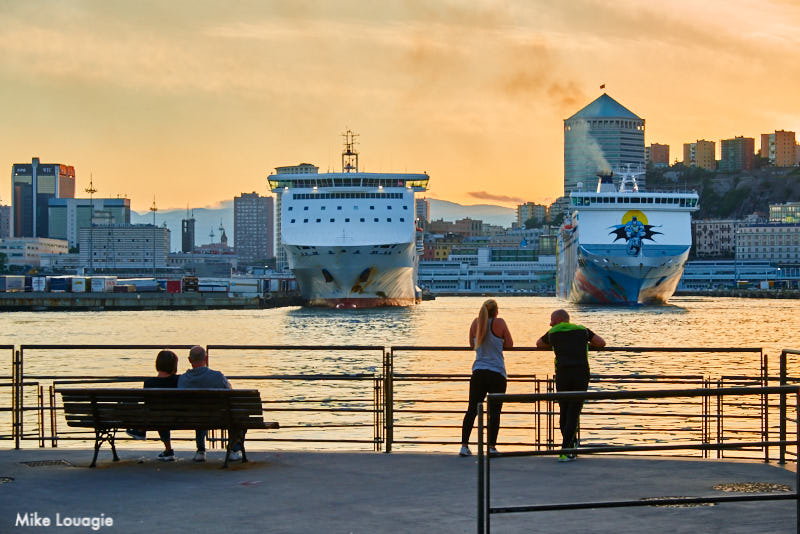
In 2019, ferry passengers increased by 88,274, compared to 2018. In total 2,168,721 passengers have been counted.

(Source: Stazioni Marittime, the local ropax terminal operator, a joint venture of MSC, Grandi Navi Veloci, Costa Crociere and Moby)

Ferry passengers between Genoa and

  • Sardinia +108,000
  • Palermo -11,000
  • North Africa -4,800
  • Corsica -5,000

Roro traffic: 1,793,116 lane metres = -4,62% For the current year a small increase of 2% ferry passengers is expected. Adding also the cruise traffic, the total number of passengers in the port of Genoa reached 3.5 million passengers.

Ports of Tallinn Saw Recovery of Passenger Traffic between Estonia and Finland

By 2020 Newsletter week 3

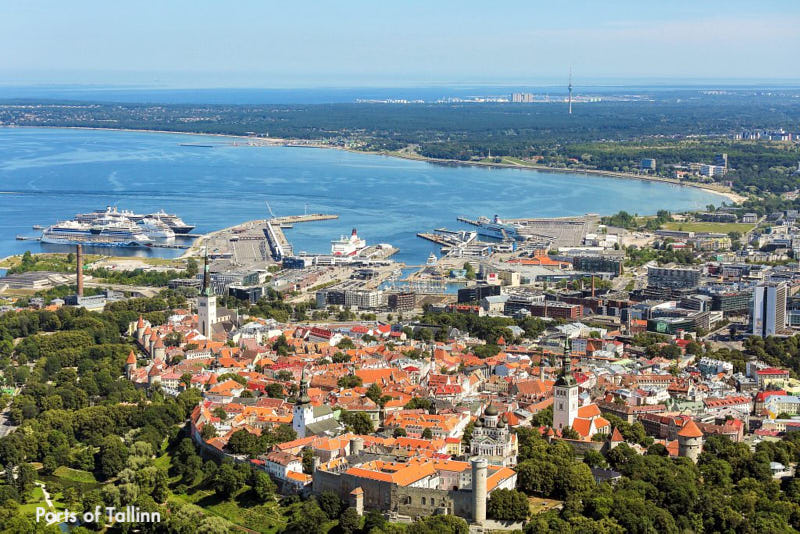
Ports of Tallinn Saw Recovery of Passenger Traffic between Estonia and Finland

In 2019 the number of passengers increased by 0.2% year-on-year, reaching a record of 10.64 million passengers. The growth was driven by passenger traffic between Estonia and Finland on the Tallinn – Helsinki and Muuga – Vuosaari routes and was also supported by another annual record of 660,000 cruise passengers.

“For the number of passengers, we reached a record for the 12th consecutive year, thanks to recovery of passenger traffic between Estonia and Finland, which was also strongly supported by the addition of servicing passengers with vehicles and the addition of a new ship on the Muuga-Vuosaari route,” says Valdo Kalm, Chairman of the Management Board of the Port of Tallinn.