

Greek Ferry Operators Tell the Minister of Shipping that the Money is not Enough

By 2020 Newsletter week 17

On April 16, the Hellenic Ministry of Shipping and Island Policy decided to subsidize the Greek Ferry Companies with EUR 15 million in order to compensate them for their losses due to Covid-19.

However, the Greek Ship-owners Association for Passenger Ships (SEEN) sent a letter to the Minister, explaining why these funds are not enough for the sector. They agreed that this is a positive measure, but they firmly disagreed with the procedure (bureaucratic and unnecessary) as well as the amount of compensation provided which does not cover the actual costs of their ships.

According to SEEN the necessary compensation based on the routes which are obliged to perform today, is estimated at EUR 15 million per month, when the Ministry’s decision to compensate them on a monthly basis with EUR 7 million (EUR 8 million less per month). SEEN also noted that in the period 21/3 to 30/4, the costs of their ships after the deduction of the revenues are estimated at EUR 20 million while the Ministry’s Decision provided only EUR 1.6 million for the same period.

For that reason, they emphasized on the need for immediate and substantial support of the Hellenic Coastal Shipping in order to avoid the collapse of the sector underlying that the problem affects the Adriatic service as well.

In view of the above they asked from the Minister to take sufficient and substantial measures in order to support the Hellenic Coastal Lines as well as the International lines (Adriatic Service):

  • Compensation of the active ships based on their real expenses (minus the income), as these have already been notified by the Ferry Companies
  • Compensate the ferries for the period from March 21 to the date of conclusion of the new Public Service contracts according to the Decision of April 16, 2020
  • Compensation of the inactive ferries according to their actual costs
  • Increase of the subsidies of the services that are executed today with Public Service Contracts
  • Compensate also the Adriatic Service, as the lines between Greece and Italy are of great importance for the import and export trade of the country, offering valuable services.

Isle of Man Steam Packet Company: Survey Findings Revealed ahead of Design of New Vessel

By 2020 Newsletter week 17

A public survey revealed high levels of satisfaction with the Isle of Man Steam Packet Company, and created valuable input for the new vessel, to be designed and built over the next few years, to replace the services currently provided by conventional ferry, BEN-MY-CHREE.

Passengers would like to see a selection of lounges, a dedicated cafe area and more tables alongside standard seating, a wider choice of food and drink, more charging/plug-in points and improved toilets.

Stena Line Puts One More Vessel in Warm Lay-Up

By 2020 Newsletter week 17

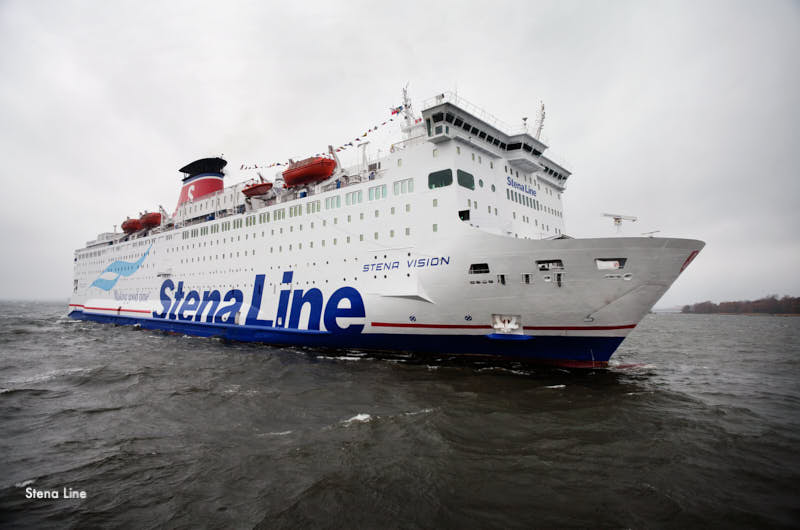
Due to the reduction of passengers caused by the ongoing pandemic, STENA VISION will be on standby from May 4 until further notice, in so-called “warm lay-up”.

The vessel will be replaced by the younger STENA BALTICA in the timetable.

STENA BALTICA is more freight-oriented than STENA VISION.

Operations on the Gdynia-Karlskrona route, especially when it comes to freight transport, will be supplemented by a third ship – STENA NORDICA – after his return from a charter agreement with the UK Ministry of Transport.

Currently, seven out of 38 vessels in the Stena Line connection network are excluded from use: fast ferry STENA CARISMA, ropax STENA DANICA, roro STENA FORECASTER, STENA FORERUNNER, ropax STENA LAGAN (presently in Turkey, Tersan shipyard), ropax SASSNITZ and roro HATCHE.

STENA SAGA, on the other hand, was transferred to Stena RoRo. (all ship names link to MarineTraffic)

Collective Redundancies for Tallink Latvija AS Employees

By 2020 Newsletter week 17

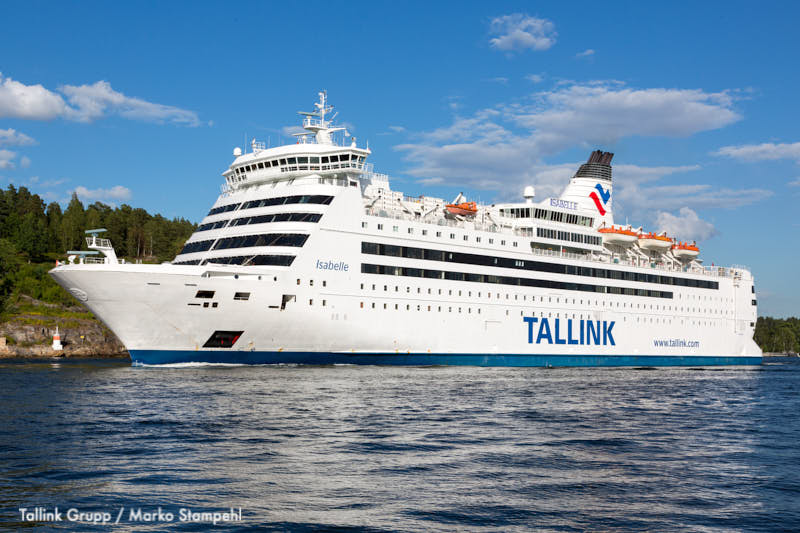
 Tallink Grupp’s subsidiary Tallink Latvija AS has notified the Latvian Employment Agency and the group’s Latvian crew members and shore personnel that it is commencing a collective redundancies process involving around 550 Latvian employees. The process involves both crew members of the group’s Latvian flagged vessels ISABELLE and ROMANTIKA as well as the company’s Latvian shore personnel.

Tallink’s Riga-Stockholm route vessels Isabelle and Romantika have been suspended at the Port of Riga since mid-March due to the ongoing state of emergency and the established travel restrictions and there is currently no information on when the operation of the route is likely to be restored.  As per maritime regulations, both vessels currently have the minimum required level of technical crew onboard, but all other onboard employees have been at home for the last month with reduced salaries, paid by the company.

FERRY FINANCE

By 2020 Newsletter week 17

A Solid DFDS Publishes Preliminary Q1 Figures

  • Preliminary Q1 revenue decreased 1% to DKK 3.8bn (mainly due to drop in passenger revenue) and preliminary EBITDA before special items decreased 10% to DKK 610m.
  • Around half of the decrease in EBITDA was related to lower passenger activity caused by Covid-19. The other half of the decrease was due to a negative Covid-19 impact on freight, increased earnings in the comparison period Q1 2019 from UK stockpiling ahead of Brexit and a lower result for special cargo logistics mainly due to one-off costs.
  • Current key priorities are to take care of employees’ and partners’ health and well-being, to preserve jobs and to continue to provide vital ferry and logistics services for our customers as well as contributing to keeping Europe’s transport infrastructure open for business.
  • DFDS has a solid financial position.
  • Suspension since mid-March of two routes, Copenhagen-Oslo and Amsterdam-Newcastle, with a large overweight of passengers vs freight.
  • Freight capacity reduced since end-March/beginning-April in remaining network of 20 ferry routes that predominantly carry freight. Capacity is reduced through lay-up of currently 12 of 50 ferries as well as other measures to reduce the number of sailings. All 20 routes continue to operate.
  • Channel and Baltic Sea passenger activity reduced to only essential travel. Reduced number of drivers per cabin in Baltic Sea.
  • Participation in government wage and fixed cost compensation programs to preserve affiliation with employees and mitigate financial impacts.
  • Around 2,200 employees so far sent on paid leave within such programs in areas with reduced activity.
  • Cost saving and postponement initiatives, including hiring freeze.
  • Reduction of investments targeting a reduction of around 20% of the investments of DKK 2.3bn planned for 2020.

Key risks

  • Reliability and continuity of operations are contingent on employee health and continued exemption of our operations from lock-down initiatives.
  • Passenger earnings in the high season — June-August — are at risk.
  • Lower activity in certain sectors may reduce freight volumes. The automotive sector is a key risk in this regard.

DFDS expects to publish its final Q1 statements on May 7.

Tallink: “We Will Cruise Again!”

By 2020 Newsletter week 17

In a letter to the shareholders, Paavo Nõgene, Tallink’s Chairman of the Management Board explains the contrast between a highly successful year 2019, with the actual situation.

Some highlights:

  • a very successful financial year in 2019
  • Return to the pre-crisis levels of demand will be gradual
  • Active negotiation with lending banks, Estonian Government and other home market Governments
  • Scale down ship operating and maintenance costs as well as other costs of sales and overheads by postponing all the non-critical investments and purchases
  • No dividend

Pandemic Drags Down Viking Line’s Q1 Results

By 2020 Newsletter week 17

Some key elements of the Q1 report.

  • Passenger traffic is marginal at present, since only the transport of people between the Finnish mainland and Åland is allowed.
  • Quick measures to cut costs have been necessary. Basically the entire staff has been furloughed.
  • Backed by Finland’s National Emergency Supply Agency’s decision to aid cargo traffic to ensure the security of supply, four of the Group’s vessels are serving the Turku – Långnäs (Åland) – Stockholm, Mariehamn – Kapellskär and Helsinki – Tallinn routes. Viking Line’s three other vessels are not in service.
  • While current cargo traffic generates revenue for each vessel to cover variable costs and a small portion of fixed costs, it does not generate positive operating income for the vessels in service.
  • To strengthen liquidity and safeguard the future of the Company, Viking Line has begun negotiations for additional funding. The intention is to use State guarantees proposed in a supplementary budget submitted to the Finnish parliament.
  • Operating income totalled EUR – 21.5m (-14.2).
  • Passenger-related revenue was EUR 63.2m (83.0), while cargo revenue amounted to EUR 11.3m (12.3). Net sales revenue was EUR 54.9m (70.1).

FINNLINES

By 2020 Newsletter week 17

The Acquisition of ANEK Lines is Unlikely to Happen

The pandemic seems to affect the rescue plan for the acquisition of the ANEK LINES by the Attica Group. The consequences of the Covid-19 had an operational and financial impact on the ANEK Lines which viability is severely threatened.

The hope that the banks had a few weeks ago for the absorption of ANEK Lines by Attica Group is now disappearing. The Cretan Ferry Operator is burdened with high non-performing loans, despite capital increases through the conversion of loans into shares in recent years, which have led creditor banks to control about 40% of its share capital.

The last increase was in early February, when Piraeus Bank (24,18%), Alpha Bank, Cross Ocean (fund that purchased the claims of the National Bank) and Bank of Attica acquired 16,3% of its share capital and converted it into a bond loan of EUR 10,84 million. Even so, ANEK’s non-performing bank liabilities at the end of the first half of 2019 amounted to EUR 255 million. Fact that mostly concerns Piraeus Bank which is ANEK Line’s largest creditor.

All of ANEK’s obligations have been classified in the financial statements as short-term borrowing, which is estimated that exceeds EUR 240 million. The total liabilities reached -in the middle of 2019-  EUR 353 million. The 2019 balance sheet is expected to be published in the coming days, but after the latest developments related to the pandemic, its financial position is expected to deteriorate drastically during the current fiscal year. Banks initially examined a scenario of drastic restructuring through a change of administration, but such a move, in addition to its inherent difficulties, would also worsen the company’s liquidity problems.

The next option was to increase control of the share capital, in order to lead the company to acquisition by another shipping company. The obvious choice was Attica Group, with which ANEK operates jointly on the lines of Crete and the Adriatic Sea. However, the consequences of the pandemic severely affected the ferry market and ferry companies are expected to lose sales of EUR 300 million. Fact that will definitely not allow Attica Group to inject liquidity into a acquisition of that scale.

Source: KATHIMERINI NEWSPAPER (Financial Part)

AS Tallink Grupp’s Explanation and Correction of Facts after Financing Negotiations Land in the Media

By 2020 Newsletter week 17

AS Tallink Grupp’s Explanation and Correction of Facts after Financing Negotiations Land in the Media

What happened?

  • LHV made a loan proposal to Tallink Grupp
  • LHV, disclosed via news agency BNS (Baltic News Service) that it has made a financing proposal to Tallink Grupp thus commencing a public debate on the topic of the financing proposal in the Estonian media.
  • Shortly before, Tallink declined the offer.
  • Because of the media attention and the spread of wrong facts, causing damage to the company’s reputation, Tallink Grupp decided exceptionally to make the terms of the proposal in question public and provide related comments.