

New RoPax Design for Metro Project

By 2020 Newsletter week 32

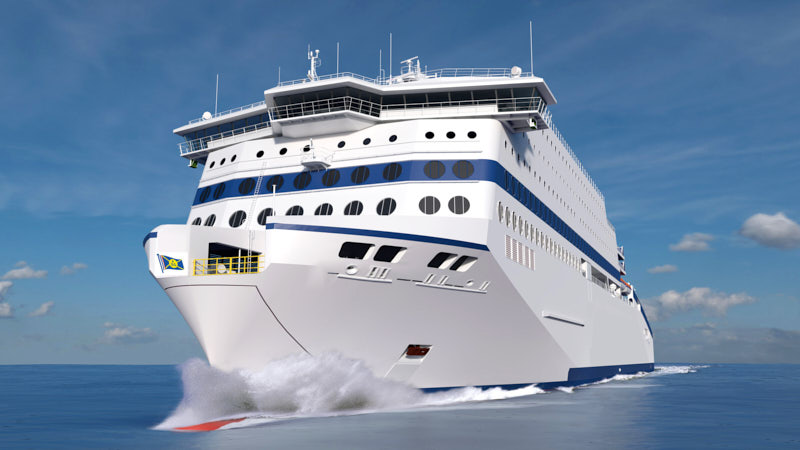
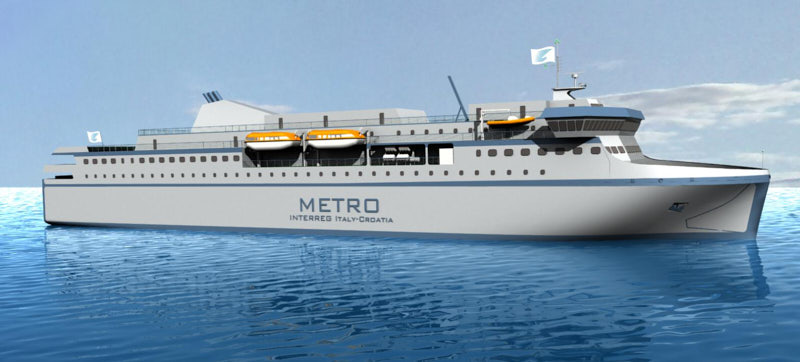
Croatia-based Flow Ship Design has published a new rendering of a ropax ferry. It has been designed for the EU-funded METRO project within the framework of the Interreg Italy – Croatia Programme.

METRO stands for “Maritime Environment-friendly TRanspOrt systems”.

Some characteristics of the hybrid ropax:

Short international routes in Adriatic Sea (Italy-Croatia / Ancona-Split)

Passengers 1,340 Crew 75

Cruising speed 15.5 knots.

Fully enclosed Main hold capacity of 630 lane meter or 2020 m2,

In addition hoistable car deck with parking area of 1865 m2

Stern and bow ramps

Twin screw, twin rudder, twin dual fuel engines driven with abt. 400 m3 LNG storage tanks. Two shaft generators (PTO/PTI) coupled with battery system with abt. 5 MWh capacity to cover entire range of electric power demand.
Two months ago, Flow Ship Design already came up with a rendering of a hybrid double-ended ferry (diesel-electric), designed to carry 600 passengers and 170 cars.

This ferry is also part of the METRO project, for the Croatian domestic route Brestova-Porozina.
Baleària Starts Sète – Nador Route

By 2020 Newsletter week 32

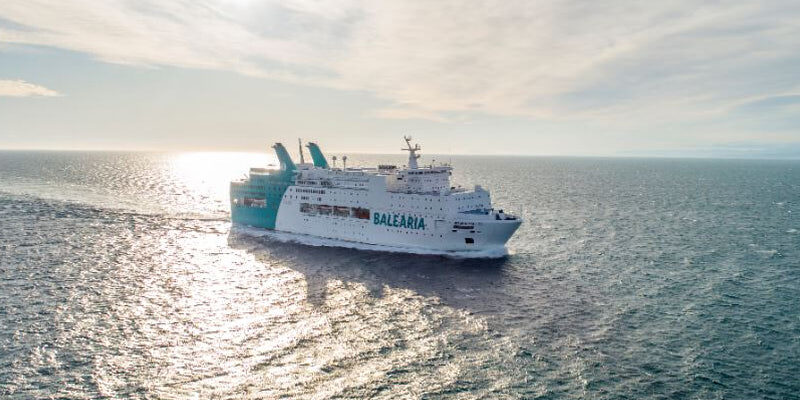
Soon after Morocco reopened its borders, Baleària started a ferry service from the French port of Sète to Nador.

The vessel is REGINA BALTICA, with according to the company’s website, a Moroccan crew.

GNV is already operating this route (and 5 Moroccan routes in total, from Italy, France and Spain)

Baleària has scheduled eleven crossings, in order to meet the demand from people of Moroccan origin residing in European countries. (six trips from France and five from Morocco).

The last crossing is planned for September 7, but the company is exploring the possibility of more trips.

All passengers must present a negative PCR test carried out no more than 48 hours before travel. For Moroccans living in Northern France, Belgium or Holland this is a challenge, because of the driving distance and time.

The capacity of the vessel is currently restricted to 1,300 passengers (1,675) and 300  vehicles (350).

Sales Contract Signed: Investor Lars Windhorst Gives Shipbuilding in Flensburg a Future

By 2020 Newsletter week 32

Sales Contract Signed: Investor Lars Windhorst Gives Shipbuilding in Flensburg a Future

There is hope for the insolvent Flensburg shipyard. Tennor Holding founder Lars Windhorst is honouring his promise to stand by the FSG, by announcing the following measures:

  • Several businesses belonging to Tennor Holding are taking on 350 employees as well as shipyard business assets, in the scope of a transferred reorganisation (in line with German insolvency law)
  • 300 staff had to move into a transfer company on 1 August (read: job losses)
  • First step: ensure the shipyard’s finances are sound
  • Order (to be confirmed) for two roro vessels
  • Newbuilding 774 (what was to become Brittany Ferries’ HONFLEUR – photo) was taken over by Siem on July 24. Siem is the former owner of FSG, from 2014-2019. Possibility to finish the vessel in Flensburg.

HSW’s EXPRESS PEGASUS Introduced on the Crete-Dodecanese Subsidized Line

By 2020 Newsletter week 32

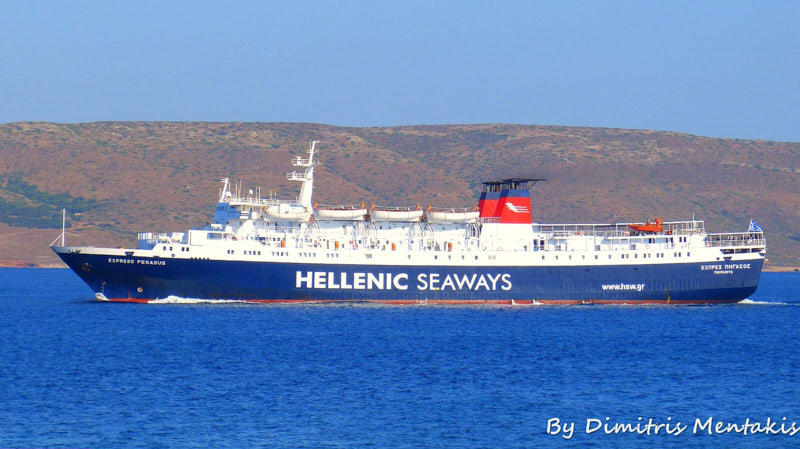
The Hellenic Seaways’ veteran EXPRESS PEGASUS will be introduced –-summer season 2020– on the Sitia (Crete)-Kasos-Karpathos-Rhodes subsidized line.

From August 5 to September 27, the ferry will connect Crete with Dodecanissa for the first time in her Greek career. The ship is expected to leave the port of Piraeus soon.

According to the schedule she will depart every Monday, Wednesday and Friday at 11.00 from Sitia and every Tuesday, Thursday and Sunday at the same time from Rhodes.

EXPRESS PEGASUS was built in Italy in 1977. Her carrying capacity is for 1.294 passengers and 185 private cars.

Increased Protocol and Strict Measures on Board Greek Ferries

By 2020 Newsletter week 32

On August 2, the Hellenic Ministry of Shipping and Island Policy announced the change in the health protocol with an increase of the passenger capacity on board coastal ferries to 80%.

The protocol on the ships with cabins is also increased to 85%, while the minimum distance of 1,5 meters is maintained between the passengers.

The passenger and crew cabins would accommodate up to four people if they are first- or second-degree relatives or people with disabilities with their escort.

At the same time, it was decided the mandatory use of face mask –from August 4 to August 18, 2020- inside and outside the ferries.

The passenger protocol in the high-speed crafts will be also increased to 80% only if they have High Efficiency Particulate Air (HEPA) filters and their installation and operation is certified according to the manufacturer’s instructions.

The shipowner, the operator and the ferry masters are responsible for the preparation of the aircraft-type seats coverage plan for each ship. Passengers, masters and crew members are required to comply with COVID-19 outbreak prevention and control measures before boarding, during boarding and when disembarking on passenger – car ferries that perform domestic trips.

For any violation of the provisions and measures the fines imposed are:

  • to passengers, naval agents and crew members the administrative fine is 150 euros
  • to ship-owners, operators and ship masters the administrative fine is 1.000 euros.

FERRY FINANCE

By 2020 Newsletter week 32

Finnlines: Essential Lifeline for Finland – Challenging Q2

 H1 2020

  • -20% Revenue EUR 236.4 million (295.5)
  • -20% EBITDA EUR 66.4 million (83.5)
  • -32% Result EUR 31.7 million (46.7)

Q2 2020

  • -33% Revenue EUR 105.8 million (157.9)
  • -43% EBITDA EUR 28.2 million (49.4)
  • -64% Result EUR million 11.0 (30.4)

Especially Q2 was extremely challenging, with almost no passenger traffic and the slowdown in global trade caused by the global pandemic.

Finnline is essential for the supply of island-like Finland. The company says that it transports more than one third of the roughly one million trucks moving over the three main sea bridges, Finland–Estonia, Finland–Sweden and Finland–Germany, which are connecting Finland to the rest of Europe.

During H1, Finnlines operated on average 19 vessels in its own traffic. The cargo volumes totalled approximately 357k (386k) cargo units, 60k (88k) cars (not including passengers’ cars) and 522k (581k) tons of freight not possible to measure in units.

In addition, some 227k (310k) private and commercial passengers were transported.

Finnlines has been following closely all the emergency measures to shipping companies, and aims for fair conditions of competition.

Eckerö’s H1 Result also Marked by Pandemic

By 2020 Newsletter week 32
  • Ferry ECKERÖ and cruise vessel BIRKA STOCKHOLM were out of service as of March 15. ECKERÖ resumed operations June 26.
  • 7 million passengers traveled with the Eckerö Group’s vessels (1.5 million last year)
  • Turnover EUR 52.8 million (EUR 102.0 million)
  • Operating profit EUR -21.8 million (EUR -7.6 million)
  • Profit including unrealized changes in market value of bunker hedges, EUR -22.2 million (EUR -5.5 million)
  • Interest-bearing liabilities EUR 99.2 million (EUR 91.8 million)
  • Net debt EUR 89.0 million (EUR 65.8 million)
  • On July 3, the Group’s intention to close down the Birka Cruises business area was announced

Tallink July 2020 Statistics Show Recovery

By 2020 Newsletter week 32

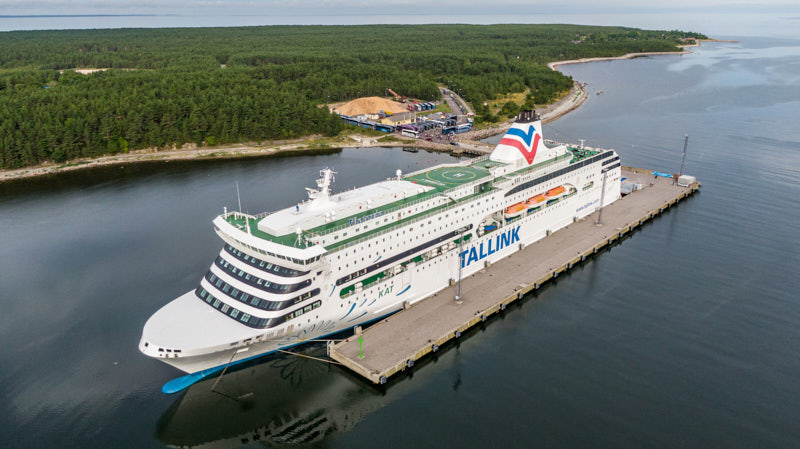
Tallink transported a total of 617,206 passengers in July. That is half of last year’s July, but more than double of June 2020.

The number of cargo units transported on all the company’s vessels in July 2020 decreased by 2.9% and amounted to 29,108 cargo units.

The greatest reductions in the number of cargo units transported have been on the Latvia-Sweden and Estonia-Sweden routes.

On the Estonia-Finland and Finland-Sweden routes cargo transportation, however, actually increased in July compared to July 2019, 2.4% and 7.1% respectively.

The total number of passenger vehicles transported in July this year also decreased: 118,167 vehicles (155,297 in July 2019).

Normal route operations, comparable at least to some extent to previous years, continued only on Tallinn-Helsinki, Muuga-Vuosaari, Paldiski-Kapellskär and Turku-Stockholm routes.

Tallinn-Stockholm and Helsinki-Stockholm routes were and currently still are suspended completely and the Riga-Stockholm route only operated four limited capacity special trips during the month.

At the same time, the company operated a number of new temporary routes and several additional special cruises during the month, which helped recover passenger numbers at least to some extent. New temporary routes such as Helsinki-Riga, Turku-Tallinn, Stockholm-Visby, a number of special cruises from Tallinn via Helsinki to Aland and one special cruise from Helsinki to Saaremaa, all proved popular with the customers and have enabled travellers around the Baltic sea to travel safely close to home this summer.

FERRY PORTS

By 2020 Newsletter week 32

Port of Tallinn Opened the New Terminal D

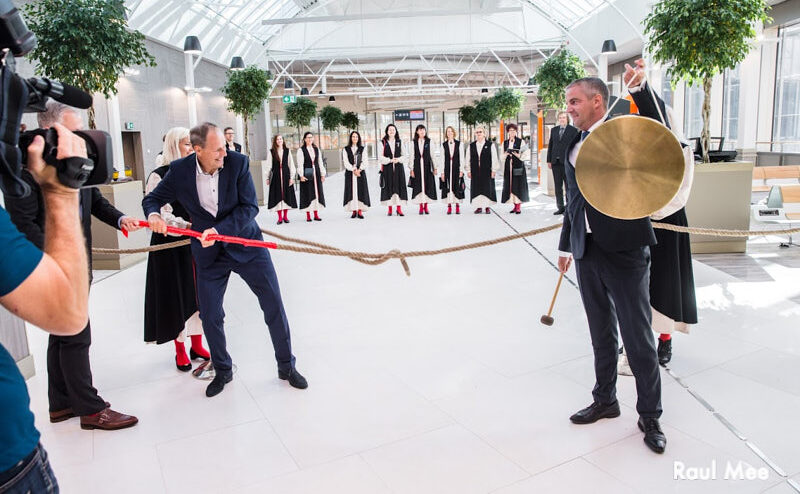
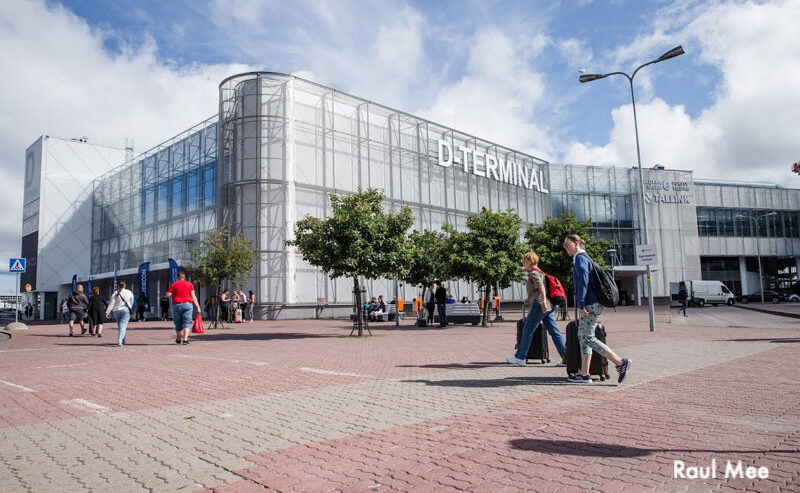
On Friday 31 July, the Port of Tallinn opened the new building of its Terminal D; the largest sea gate of Estonia, which welcomes six million passengers a year.

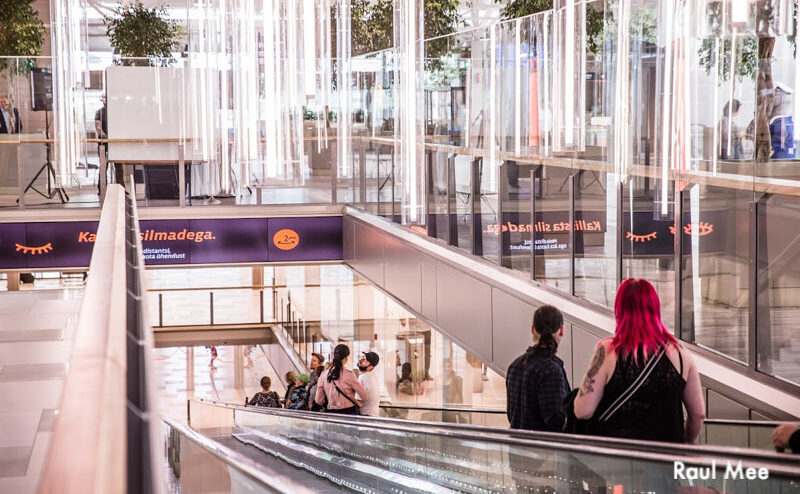
The terminal received a makeover of EUR 18.5 million and now boasts a new state-of-the-art look. The total area of the building –featuring a number of environmentally friendly solutions– nearly doubled, having reached 14,000m2.

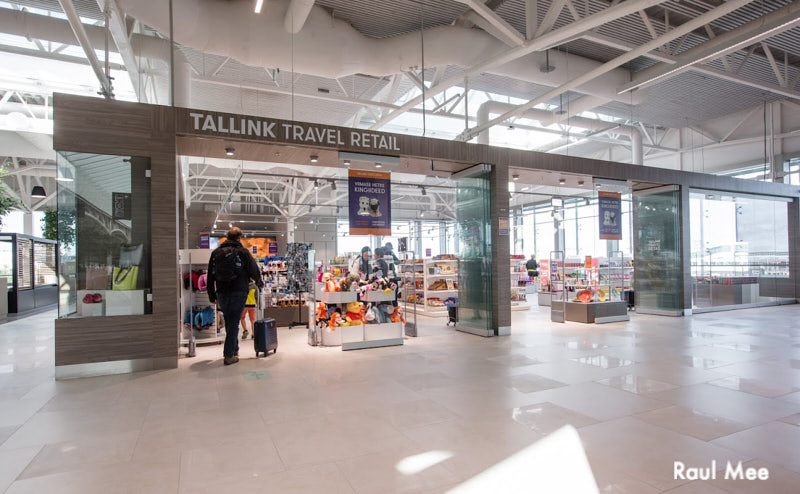
“The building offers travellers much larger waiting and seating areas, a playground for children has been added, and there is more space for cafés and shops,” said Valdo Kalm, the chairman of the board at the Port of Tallinn. “Our other priority in addition to passenger comfort was sustainability: for instance, the energy needs of the building are partially covered by solar electricity, and indoor climate is automatically regulated depending on the temperature outside.”

The reconstruction of Terminal D is co-financed by the European Union within the Connecting Europe Facility project TWIN-PORT 2 no. 2014-EU-TM-0087-M.

Port of Zeebrugge: Good Result in H1, Despite Pandemic

By 2020 Newsletter week 32

H1, 2020, the total traffic in Zeebrugge grows with 14.5% compared to the same period last year. In total, 25.1 million tonnes of cargo was handled. The sectors that show the most growth are liquid bulk (LNG: +148%), container traffics (+14%) and the solid bulk (+32%).

Although the port of Zeebrugge stayed 100% operational during the COVID-19 crisis, roro (-23%) and passengers experienced a decrease during this semester.

The decrease in roro is mainly due to the dramatic drop in the handling of new cars.

The COVID-19 crisis has a significant impact on the passenger movements in the port of Zeebrugge. Last cruise ship was on March 11.  On P&O Ferries’ Zeebrugge – Hull route, the transport of passengers halted almost completely.