Three Reasons Behind Last Week’s Corsica Maritime Transport Strike

By | 2026 Newsletter week 07 | No Comments

Unions at La Méridionale and Corsica Linea cite three core issues behind the early February strike:

  1. Fierce Competition on Maghreb Routes

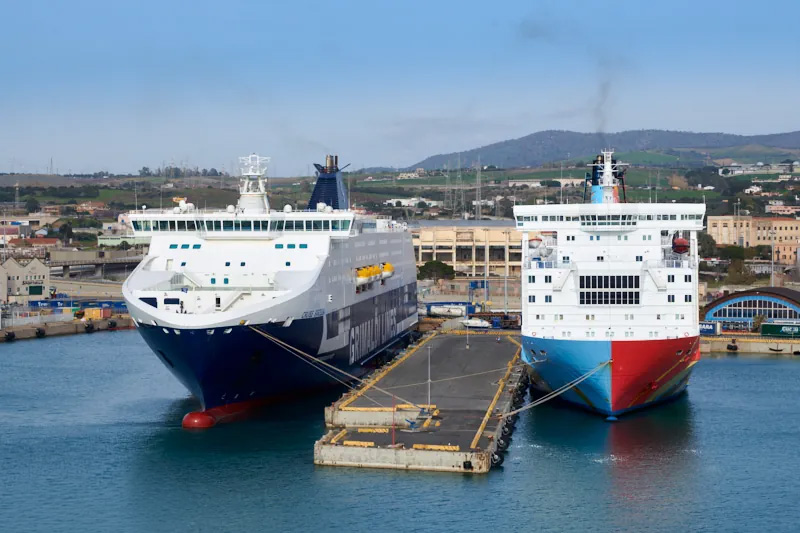
The Maghreb market represents up to 35–40% of turnover and an even higher share of profits. Competition has intensified, notably from Grandi Navi Veloci (GNV), part of MSC, which secured a strong position in Sète–Algeria services in 2025

  1. Higher-Cost French Flag

The two operators (La Méridionale & Corsica Linea) sail under stricter and more costly French social, safety and environmental rules than GNV’s Italian international flag. Talks with the French Transport Ministry are ongoing, with an eight-week working timeline agreed

  1. EU Carbon Costs (ETS)

The EU ETS regime adds further cost pressure. Greece secured exemptions for its islands; Corsica has not

Source: France 3 Corse ViaStella (in French)

HSC NATCHAN WORLD Sold to Greek Interests

By | 2026 Newsletter week 06 | No Comments

HSC NATCHAN WORLD has been sold to Greek shipowners.

Delivery is expected after 15 February.

The vessel is a sister ship of TERA JET 2 (ex NATCHAN RERA, built 2007), which was sold in Greece in January 2024.

Originally built by Incat in Tasmania in 2008, HSC NATCHAN WORLD has a capacity of 800 passengers and 355 cars.

The vessel initially operated on the Aomori–Hakodate route for Tsugaru Kaikyō Ferry.

In November 2011, following economic difficulties, she was chartered by Japan’s Ministry of Defense for military logistics and transport. Between 2011 and 2017, the vessel was transferred to Towa Enterprise Co. Ltd., followed by Kosoku Marine Transport KK.

In later years, she operated under charter within the Japan Maritime Self-Defense Force framework, supporting maritime transport operations. In 2024, the vessel was laid up at Hakodate, mainly used for events, charters, and limited operations.

A NEPITA Arrived in Greece for Conversion

By | 2026 Newsletter week 06 | No Comments

On 2 February 2026, RoPax A NEPITA (ex-SUPERFAST X) of Corsica Linea arrived at the Perama repair zone to undergo a series of modifications to her ramps and visor, reflecting her new operational role.

The vessel has been chartered for five years by Canadian operator Marine Atlantic and will replace the older RoPax LEIF ERICSON (1991) on the North Sydney–Port aux Basques route. Marine Atlantic previously chartered her sister vessel ATLANTIC VISION (ex-SUPERFAST IX), which operated on the same route between 2008 and 2024.

  1. NEPITA was built in Germany in 2002 by HDW.

Photo: Kostas Papadopoulos

Viking Line Continues Major Investment In Biogas

By | 2026 Newsletter week 06 | No Comments

Viking Line is renewing its offer of travel and transport powered by a high share of renewable European biogas in 2026.

Key points:

  • After increasing biofuel use tenfold in 2025, Viking Line has secured another year at the same ambitious level.
  • Biogas is used alongside LNG on VIKING GLORY and VIKING GRACE on the daily Turku–Stockholm route.
  • The combination delivers very low sulphur and particle emissions and a significantly reduced climate footprint.
  • Viking Line expects 50% biogas coverage for the first half of 2026.
  • In 2025, greenhouse gas emissions on the two vessels were reduced by nearly 50,000 tonnes.
  • The company is developing a green shipping corridor with the Ports of Stockholm and the Port of Turku.
  • The objective is for the corridor to become completely fossil-free by 2035.

CEO Marcus Risberg calls the biogas investment one of the clearest large-scale examples of shipping’s practical transition towards fossil-free operations.

Tallink Grupp Shuttle Moving Towards 100% Renewable Fuel

By | 2026 Newsletter week 06 | No Comments

Tallink’s shuttle vessels MEGASTAR and MYSTAR, operating on the Tallinn–Helsinki route, are close to running entirely on renewable energy.

In January, 74% of the fuel used by the two ships consisted of liquefied biomethane (LBM), marking a significant step towards replacing conventional LNG completely.

The company’s stated objective is to substitute its full LNG demand with LBM in the near future, subject to favourable pricing and secure supply. According to CEO Paavo Nõgene, the transition represents a long-term strategic move rather than a temporary fuel switch, positioning the route as a low-emission corridor across the Gulf of Finland.

A full conversion to liquefied biomethane is expected to reduce greenhouse gas emissions by approximately 75% compared with fossil fuels.

Photo: Karl-Robert_Kurm

POLSCA Baltic Ferries To Launch Gdańsk–Karlshamn Route

By | 2026 Newsletter week 06 | No Comments

POLSCA Baltic Ferries is developing its Baltic Sea network with a new ferry connection between Gdańsk and Karlshamn.

Key points:

  • The new route is part of POLSCA S.A.’s next phase in building a joint brand for Polish ferry operators.
  • An agreement has been signed with the Port of Karlshamn and the Port of Gdańsk.
  • The Gdańsk–Karlshamn line will complement existing Polish ferry routes:
    • Świnoujście–Ystad
    • Świnoujście–Trelleborg
    • Gdańsk–Nynäshamn
  • The service will be operated by two vessels with a strong cargo focus, each able to carry around 90 truck units.
  • Sailings are planned six times per week, with evening departures and morning arrivals.
  • Crossing time will be approximately 13 hours.
  • The opening is planned for later this year, subject to completion of port infrastructure adaptations in Karlshamn.

Source: Port of Karlshamn

Stena Line To Close Halmstad–Grenaa Route

By | 2026 Newsletter week 06 | No Comments

Stena Line will discontinue its ferry connection between Halmstad (Sweden) and Grenaa (Denmark).
STENA NAUTICA will continue operating the route until 30 April 2026.

Key points:

  • The decision follows long-term difficulties in achieving profitability on the route.
  • Stena Line will focus investments on routes with clearer demand, supporting both freight and passenger traffic more efficiently.
  • Main factors behind the closure include:
    • Strong competition from fixed bridge links in Denmark
    • A strained cost environment
    • Challenging market conditions driven by global uncertainty and weak economic climate
  • Stena Line has served Halmstad–Grenaa since 2020, after relocating from Varberg.
  • Agreements will be reached with Hallands Hamnar and Grenå Port to terminate the cooperation.

Ports Of Stockholm Reports Positive 2025 With Growth In Passenger Traffic

By | 2026 Newsletter week 06 | No Comments

Ports of Stockholm is closing 2025 with stable cargo volumes and rising passenger numbers across both ferry and cruise operations.

Key points:

  • Total cargo throughput reached nearly 5 million tonnes, showing a marginal increase year-on-year.
  • Ferry passenger traffic grew by around 2% compared with 2024.
  • Almost 7 million passengers travelled on Baltic Sea ferry services.
  • Cruise activity remained strong, confirming Stockholm’s position as the Baltic Sea’s leading cruise destination.
  • In 2025, 136 cruise vessels called at Stockholm and Nynäshamn.
  • Cruise passenger numbers rose to 256,000, up 30% compared with 2024.
  • Winter cruising continued to develop, with monthly calls from November to March, supporting Stockholm’s ambition as a year-round destination.

Ports of Stockholm underlined the importance of stable freight flows for regional supply, particularly for the construction sector in the Mälaren region.

Photo: Ports of Stockholm/Per-Erik Adamsson