

WALLENIUS SOL acquires Mann Lines

By 2025 Newsletter week 06

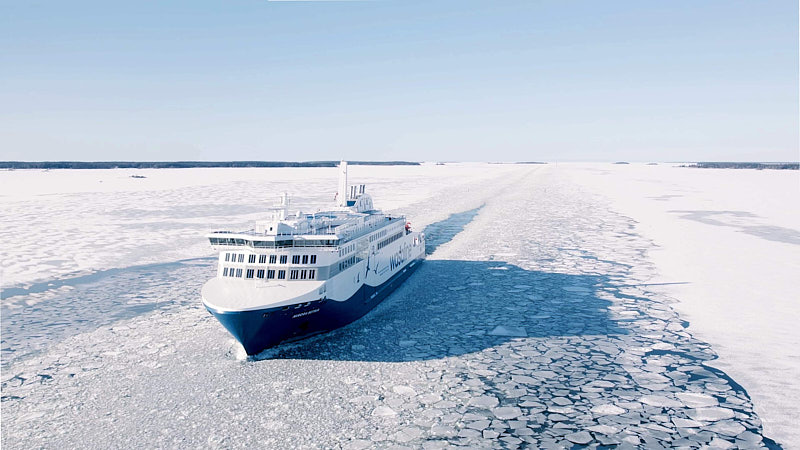
 WALLENIUS SOL, the shipping company with the base in the Bay of Bothnia, has acquired Mann Lines, the provider of liner RoRo and container vessel services, logistics and forwarding.

  • Result: larger fleet and an expanded port network stretching from the Baltic countries to North West Europe.
  • Connections with reliable partners in major hub ports extend the service range to Ireland, Spain and beyond.
  • The highly complementary routes of both companies will improve service capacity and regularity, while minimal customer overlap allows WALLENIUS SOL to add approximately 200 new clients.
  • WALLENIUS SOL will also welcome new offices in Estonia, Latvia, and the UK, while increasing its presence in Finland, Germany, and the Benelux.
  • New RoRo vessel under construction @Visentini.

“This acquisition strengthens WALLENIUS SOL’s position as a reliable partner for customers in our key operating regions, enhancing our ability to deliver a more comprehensive range of tailored solutions to meet our customers evolving needs,” says Elvir Dzanic, CEO, WALLENIUS SOL.

Bill Binks, former CEO of Mann Lines and new Vice President WS South at

WALLENIUS SOL: “We are thrilled to embark on this journey together, as we unite our expertise and resources. Being under WALLENIUS SOL leadership will unlock new opportunities for our colleagues and customers, bringing tangible benefits to the Northern European market.”

CLdN Launches Pooling Services to Support FuelEU Maritime Compliance

By 2025 Newsletter week 06

As the maritime industry faces increasing regulatory pressure to reduce emissions, CLdN has introduced pooling services to support compliance with the FuelEU Maritime (FEUM) directive. This initiative helps shipowners and operators meet stringent EU environmental requirements while mitigating the financial burden of high biofuel costs.

The FEUM directive encourages the use of renewable and low-carbon fuels to cut greenhouse gas emissions. However, biofuels—though effective—are significantly more expensive, costing 50-150% more than conventional fossil fuels. Non-compliance can lead to heavy penalties. For instance, a capesize vessel sailing from South America to Rotterdam could face a $50,000 fine if it fails to meet the required biofuel tonnage.

CLdN’s pooling system offers flexibility by allowing shipowners to offset the underperformance of one vessel with the overperformance of another, ensuring overall compliance. This mechanism not only helps companies avoid penalties but also incentivises investment in sustainable technologies.

CLdN has a fleet of over 30 vessels that sail up to 2.5 million nautical miles per year, primarily in EU waters. These ships are equipped to run on biodiesel and bio-LNG, enabling CLdN to adjust fuel blends strategically to assist partners in meeting regulations.

CLdN has already established itself as a leader in fuel efficiency. In 2023, its fleet’s CO₂ emissions averaged just 39g CO₂/tonne-km.

For more details, CLdN invites interested parties to explore its pooling services brochure or contact its Carbon Services Team. Read more: CLdN Pooling Services

NGO Shipbreaking Platform publishes list of ships dismantled worldwide in 2024

By 2025 Newsletter week 06

The NGO Shipbreaking Platform has released its 2024 annual report on ships dismantled globally. The data indicates that 80% of the global tonnage scrapped last year was dismantled under substandard conditions on the beaches of Bangladesh, India, and Pakistan.

In 2024, a total of 409 ships were dismantled worldwide, with 255 of these ships ending up in South Asian yards.

Bangladesh continues to be the preferred destination for ship scrapping, despite significant adverse impacts on workers, local communities, and fragile coastal ecosystems.

As certain segments of the shipping industry advocate for the approval of beaching yards under the Hong Kong Convention—which is set to come into effect in June this year—the European Union has yet to disclose proposals for enhancing the EU Ship Recycling Regulation. Unscheduled inspections by the European Commission at EU-approved facilities in Turkey have revealed discrepancies between theoretical plans and actual practices, resulting in several yards being removed from the EU list. Additionally, high levels of pollution in the Aliaga region have led to legal action by Turkish civil society organizations, which are demanding that the sector undergo a thorough Environmental Impact Assessment.

For the full Excel dataset of all ships dismantled worldwide in 2024, click here. 

New Ownerships for Bankrupt German Shipyards

By 2025 Newsletter week 06

Germany’s shipbuilding industry sees new ownership for bankrupt shipyards Nobiskrug and Flensburger Schiffbau-Gesellschaft (FSG). The Heinrich Rönner Group has acquired FSG, while Lürssen Group will take over Nobiskrug.

FSG, known for RoRo ferries, has an unfinished vessel for Australia’s Searoad. Searoad backs the takeover and has a deal with Heinrich Rönner to complete it.

Officials view these acquisitions as positive for sustaining the maritime industry, with efforts now on securing new contracts for long-term viability.

Gotlandsbolaget Redesigns the Oslo-Copenhagen Ships

By 2025 Newsletter week 06

In 2024, Gotlandsbolaget acquired the Oslo-Copenhagen cruise line from DFDS, including its 800 employees and the two ships PEARL SEAWAYS and CROWN SEAWAYS, renamed NORDIC PEARL and NORDIC CROWN.

The ships are undergoing a hull and funnel redesign, replacing DFDS’s dark blue with a turquoise green inspired by the Skagerrak and Kattegat seas. Their funnels will feature Gotlandsbolaget’s signature red with a white ‘G’, reflecting the company’s heritage.

Gotlandsbolaget aims to develop the route with a stronger focus on passenger experiences. The 700,000 annual travelers will enjoy a refreshed onboard atmosphere, with full cabin replacements and upgraded common areas. Renovations began with NORDIC PEARL at a Landskrona shipyard.

The Oslo-Copenhagen route, offering overnight crossings every other day, will be relaunched under a new brand in mid-March 2025.

RoRo Ship EUROCARGO ISTANBUL Sold by Grimaldi to Merna Shipping

By 2025 Newsletter week 06

The Spanish shipping company Merna Shipping is set to add a second RoRo ship to its fleet, which operates maritime routes linking Italy and Spain with Libya, Egypt, Saudi Arabia, and the UAE.

Ghannem Abdelwaheb, manager of the company, publicly announced the “new expansion of our fleet with the purchase of a ship with a capacity of 2,700 linear metres of cargo and 450 cars.”

The accompanying image depicted EUROCARGO ISTANBUL, a vessel owned by Malta Motorways of the Seas, a subsidiary of the Grimaldi Group. The latter confirmed to Ferry Shipping News the sale and imminent delivery of the 1998-built ship, which will soon be renamed MERNA 2.

CORSICA linea Boosts Maritime Training in Corsica

By 2025 Newsletter week 06

CORSICA linea is supporting the launch of Corsica’s first merchant marine officer training programme at the Lycée Maritime de Bastia, in partnership with ENSM. This three-year course, starting in 2025, will train future officers, with two years in Bastia and a final year at ENSM’s campuses in Le Havre or Marseille.

As the leading French-flagged employer in the Mediterranean, CORSICA linea will provide onboard training, experienced instructors, and a media campaign to attract young talent. The company also renewed its partnership with the Lycée Maritime, donating a diesel engine from MÉDITERRANÉE for hands-on learning.

This initiative strengthens local maritime careers and reinforces Corsica’s role in the industry.

FERRY PORTS

By 2025 Newsletter week 06

Europe’s Transport Sector Calls for Stronger EU Budget

Forty-five European transport organisations have united to urge EU Member States and the European Commission to maintain a strong, dedicated transport funding instrument in the next EU budget. As discussions on the Multi-Annual Financial Framework (MFF) approach, they stress that coordinated European infrastructure investment is vital for competitiveness, resilience, and military preparedness.

The sector warns against the Commission’s plans to shift transport funding to National Single Plans, arguing that a stable, long-term European strategy is essential. Ahead of the General Affairs Council in Warsaw, they call on national governments to prioritise transport investment with high European value.

Isabelle Ryckbost, Secretary General of the European Sea Ports Organisation (ESPO), emphasised that transport infrastructure is the backbone of the EU’s internal market and crucial for economic and geopolitical resilience. She urged EU leaders to reinforce the transport budget to secure Europe’s future.

The open letter to the EU Member States, with the full list of signatories, can be found here.

New Managing Director for Adria Port in Trieste Joins from DFDS

By 2025 Newsletter week 06

Starting in May, the Managing Director of Samer Seaports & Terminals (DFDS) in Trieste will transition to become the next CEO of Adria Port Inc., a company fully owned by the Hungarian state.

Adria Port’s mission is to implement Hungary’s port development project in Trieste, supporting the country’s foreign trade, expanding its logistics network for economic benefit, and contributing to sustainable economic growth. The company operates under the supervision of the Hungarian Ministry of Foreign Affairs and Trade.

Designed as a multipurpose terminal, Adria Port will provide container handling, RoRo operations, and general cargo services. The company emphasises efficiency and flexibility, aiming to ensure the seamless handling of diverse cargo types.

The terminal is expected to commence operations in 2026.