

- Finnlines carried 14% more private passengers between June and August 2025 compared with the same period in 2024.
- Growth was strongest on the Malmö–Świnoujście route (+38%), which opened in April 2024.
- Other routes also performed well: Naantali–Långnäs–Kapellskär (+19%) and Malmö–Travemünde and Helsinki–Travemünde (+4% each).
- “We are delighted with the results and with the warm reception of our Poland service. We see great potential ahead,” says Marco Palmu, Head of Passenger Services.
- The success reflects the impact of new routes and modernised vessels, including FINNSIRIUS and FINNCANOPUS, which have enhanced the passenger experience on the Sweden–Finland route.
Fincantieri has launched the new RoPax ferry COSTANZA I DI SICILIA at its Palermo shipyard. Delivery is planned for summer 2026.
- Built entirely in Palermo, the vessel will serve routes between Pantelleria, Lampedusa and Porto Empedocle.
- With a length of about 140m and 14,500gt, the ferry will carry up to 1,000 passengers and 200 cars, reaching 19 knots.
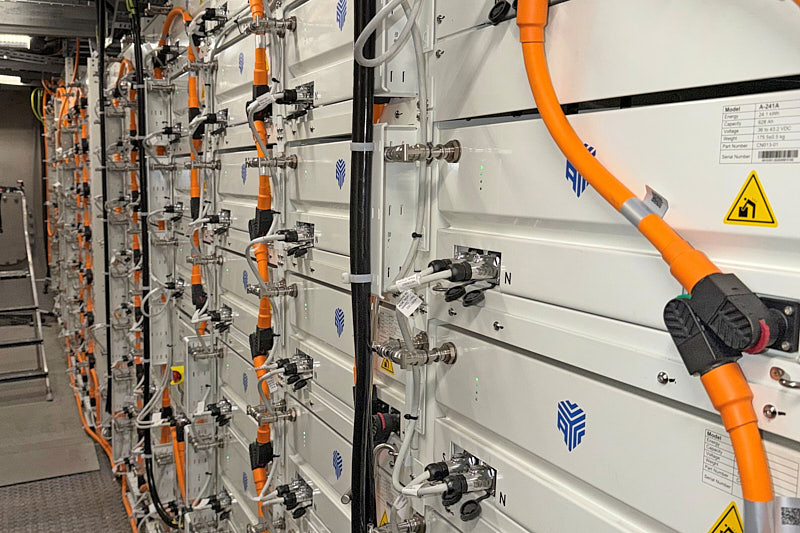
- Powered by dual-fuel engines (MGO/LNG) and equipped with solar panels and batteries, the ship will achieve zero emissions in port for up to four hours.
- The Region of Sicily will become the first in Italy to own a ferry of this kind. The 2023 contract includes an option for a second unit.
The launch ceremony was attended by Renato Schifani, President of the Sicilian Region, and Pierroberto Folgiero, CEO and General Manager of Fincantieri.
Folgiero underlined Palermo’s strategic role within the Fincantieri network, highlighting plans to relaunch the yard as part of the Group’s new industrial plan.

WALLENIUS SOL has started using Liquefied Biogas (LBG) in its BALTIC ENABLER and BOTNIA ENABLER multi-fuel vessels, following a new agreement with energy company Gasum.
- The deal enables LBG supply through Gasum’s pooling system, supporting the use of renewable fuels at scale in shipping.
- LBG, produced from organic waste, is chemically identical to LNG and can be used directly in existing dual-fuel engines.
- The switch allows WALLENIUS SOL’s customers to reduce Scope 3 emissions. The LBG is RED II certified and ISCC traceable.
- The first bunkerings took place in early October.
Rebecca Tagaeus, Sustainability Officer at WALLENIUS SOL, said the move is proof that the company’s Climate Roadmap is delivering tangible results and supporting customers’ climate goals.
Gasum’s Jacob Granqvist called pooling “a brilliant and easy opportunity” for maritime actors to join forces in reducing emissions.
The newly delivered GNV POLARIS will soon head back to the Guangzhou Shipyard International (GSI) in China to increase passenger capacity ahead of next summer.
The first in a planned series of eight RoPax units, POLARIS will gain 132 additional cabins — bringing the total from 239 to 371 — aligning her design with GNV ORION and the upcoming GNV VIRGO, expected before year-end.
A spokesperson confirmed to Ferry Shipping News that the decision stems from a design variation planned for all new vessels. The company prioritised getting POLARIS into service quickly, with the refit scheduled to begin early next year. The ship will return to Italy in time for the 2026 summer season.

After an initial import call in Marseille on 2 October, the new UGR – United Global RoRo service is still awaiting launch as the Turkish authorities have yet to issue an operating permit. According to French media “Le Marin”, the two RoRo vessels remain idle — POL STELLA in Marseille and ABU SAMRAH at anchor off Istanbul.

- Viking Line has nearly halved food waste on VIKING GLORY and VIKING GRACE through data, staff engagement and passenger awareness.
- Waste fell from 137 g to 77 g per passenger in less than a year, far exceeding the target of 100 g.
- The project began in autumn 2024 with support from Generation Waste, which provided monitoring technology and training.
- Staff now use ingredients more efficiently — even root ends, tomato stalks and leftover croissants are reused in new dishes.
- A survey of 2,000 Finns found that 58% value restaurants cutting waste and emissions, and 64% prefer locally sourced food.
- Remaining food waste from VIKING GRACE, VIKING GLORY and VIKING XPRS is converted into biogas, a carbon-neutral fuel also used on the Turku route.
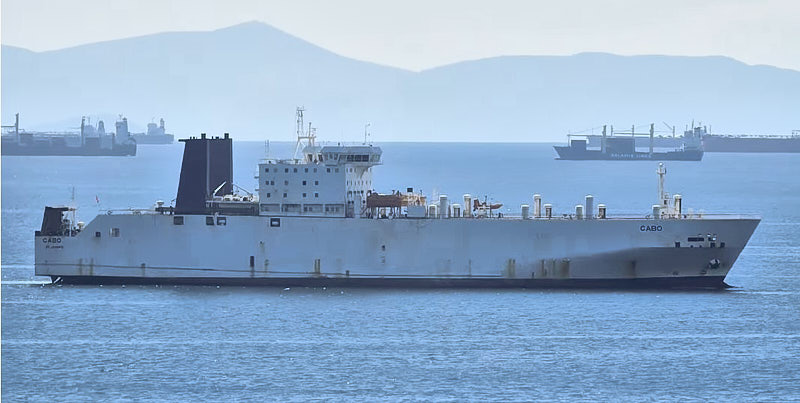
The subsidiary of AS Tallink Grupp, Baltic SF VIII Limited and Rederiaktiebolaget Eckerö have signed a sale-purchase agreement for the sale of the RoRo vessel SAILOR. The vessel will be handed over to the new owners in October.

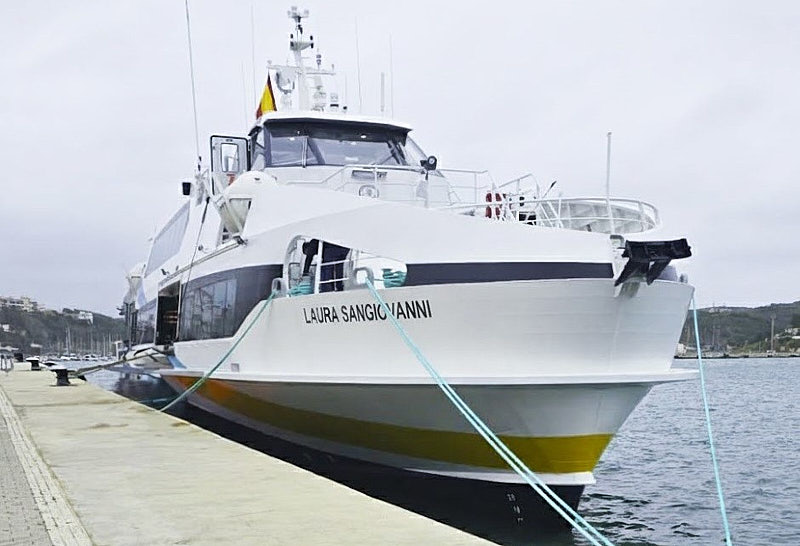
A few months after CORSICA EXPRESS THREE was sold by Corsica Ferries to BluNavy (BN di Navigazione), the fast ferry has changed hands again. Sources familiar with the matter told Ferry Shipping News that the vessel has been acquired by the Cyprus-based company Pikessea Shipping Ltd.
The sale price has not been disclosed, but BluNavy reportedly purchased the vessel for about EUR 3 million earlier this year from Corsica Ferries.
Built in 1996 by Rodriquez Shipyard, the mono-hull fast ferry measures 103 metres in length, 15 metres in width, and reaches a speed of 37 knots. She can accommodate more than 500 passengers and 150 cars, and was recently operating on the Piombino–Portoferraio and Piombino–Bastia routes in Italy.

The RoPax ferry SANTA CRUZ (ex MOBY CORSE), which has been inactive for about a year in the port of Genoa, is to be sold at auction in Italy. The Court of Genoa has appointed surveyor Federico Sommella to value the ship, while Fertonani Shipbrokers (Andrea Fertonani) has been tasked with finding a buyer.
Among the creditors are crew members, the Genoa-based ship repair company Ente Bacini, and several other parties. The sale procedure is expected to be completed within the next two to three months.
SANTA CRUZ is owned by Ferry Med Srl, controlled by Stergulc Rihard, former Managing Director of Trans Europe Shipping Lines. The vessel had been expected to be chartered to the new company L’Aures for routes to and from Algeria.
Built in 1978 by Aalborg Værft A/S in Denmark, the ferry has a gross tonnage of 19,593 tons and can carry 1,200 passengers and 450 cars, with 810 lane metres of garage capacity.

- Revenue: €326.6m (+3% vs H1 2024).
- EBITDA: €4.1m (down from €19.5m).
- Net Results: Loss of €52.3m (incl. €17.3m non-recurring costs) vs loss of €23.8m in H1 2024.
- Operating Costs: €321.0m (+14%), mainly due to emission allowances, regulatory compliance, inflation, and payroll.
- Cash: €78.6m (31.06.2025).
- Investments: €46.5m in fleet energy upgrades and hotel renovations.
Traffic Volumes
- 7m passengers (-3.6%).
- 456k private vehicles (-1.3%).
- 276k freight units (+3.8%).
- 8,272 sailings (-1.6%).
Fleet & Strategy
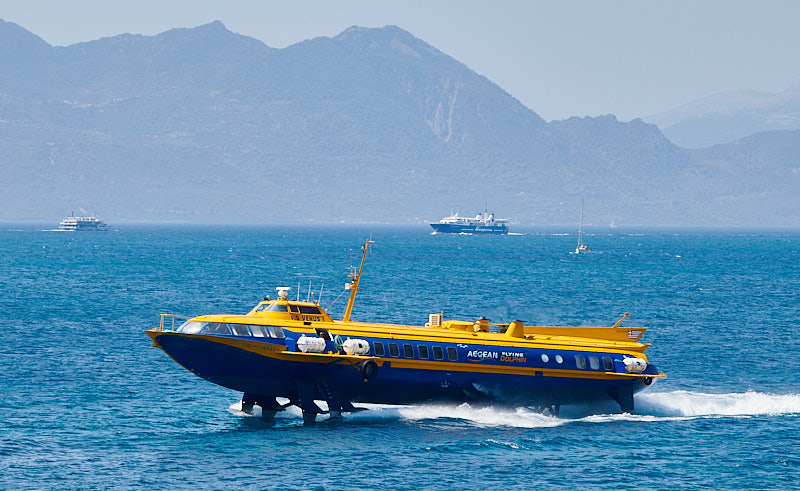
- 37 vessels: 25 RoPax, 10 highspeed, 2 RoRo.
- New E-Flexer vessels on order with hybrid propulsion.
- Sale and recycling of older vessels, reducing average fleet age to 24.9 years.
- Ongoing hotel investments in Tinos and Naxos.
- Digitalisation (Seanthesis project) to enhance passenger services.
Outlook
- Inflation and geopolitical uncertainty impacting traffic.
- Despite higher environmental costs, ticket prices largely unchanged to stimulate demand.
- Management focused on cost optimisation, revenue growth, and sustainable development.
Source: Attica Group