
Ferry Finance

By | 2018 Newsletter Week 07 | No Comments

Full-year and Q4 results for Viking Line

Viking Line’s full-year results deteriorated slightly, but the 4th quarter operating income improved significantly.

Full year key figures:
Consolidated sales €522.7 million (+0.6%)
Operating income €10.0 million (down from €13.7 million).
Passenger-related revenue €476.4 million (+0.8%)
Cargo-related revenue €43.8 million (-1.1%)

Bunker expenses increased by 18.3%, mainly because of high-speed craft VIKING FSTR.

Cargo units went slightly down. Full year results 127,668 (131,918)
Cars went up. Full year results 762,253 (682,194)
Passengers went up. Full year results 6,881,149 (6,502,191).

Trasmediterranea’s new vessel to be named VILLA DE TEROR

By | 2018 Newsletter Week 05 | No Comments

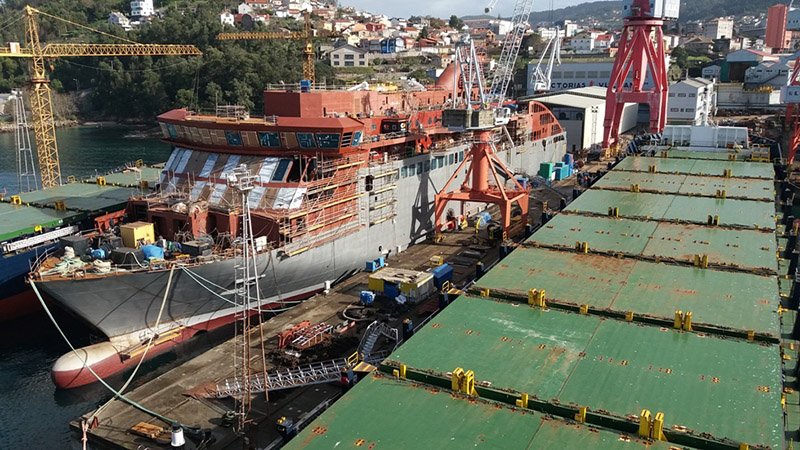
Juan Carlos Diaz Lorenzo reveals in Puente de Mando (in Spanish) the new name for the ferry under construction at the Vulcan Shipyard in Vigo for Trasmediterranea. We’re talking about the ferry that was originally ordered by Viking Line as VIKING ADCC.
Her name will be VILLA DE TEROR. The town of Teror is a municipality in the province of Las Palmas, located north of Gran Canaria.

Photo: Juan Carlos Diaz Lorenzo

Viking Line signs for more gas from AGA

By | 2017 Newsletter week 51 | No Comments

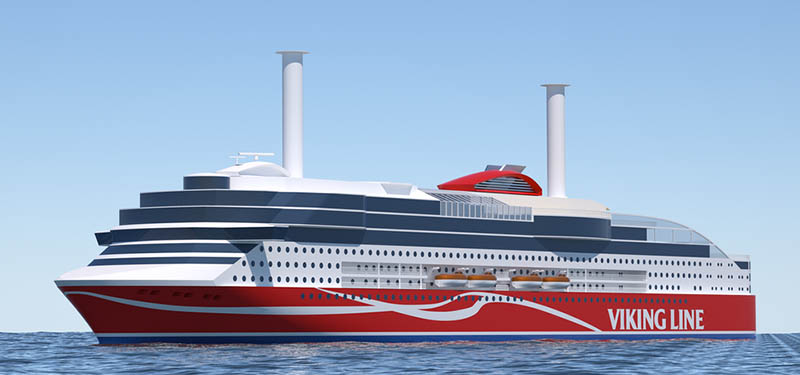
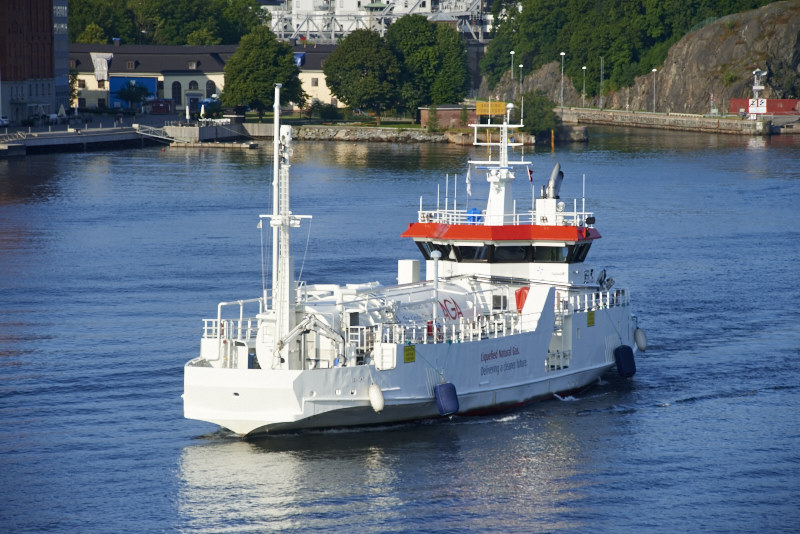
AGA Gas and Viking Line have signed a new six-year agreement for continued LNG shipments to VIKING GRACE and to the new LNG-powered cruise ship under construction in China.
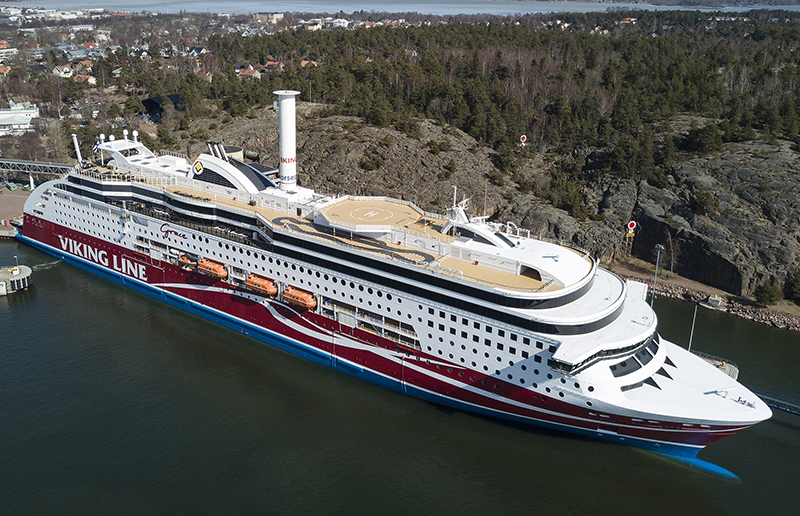
The SEAGAS LNG bunker vessel, which came into operation in the spring of 2013, supplies VIKING GRACE with more than 60 tonnes of LNG at every bunkering occasion, as the ship is moored at Stadsgården in Stockholm, and whilst passengers and freight are being (un)loaded. SEAGAS has so far carried out nearly 1,400 LNG bunkerings for VIKING GRACE.

Photo: SEAGAS ©Mike Louagie

Swedish Maritime Administration’s new fairway due and pilot fee system hits the ferry sector

By | 2017 Newsletter week 47 | No Comments

The SMA (Swedish Maritime Administration) will introduce a new fee system for its fairway dues and pilot fees. It is the intention of the SMA to implement this new system on 1 January 2018.
Two of the taxation components are the passenger and cargo fees, which affect the ferry industry.
To see the full explanation about the fees, click on the link below.
Finnish politicians and ferry owners, such as Viking Line, have protested. The new system means, in short, that the more passengers and the more freight a ship carries, and the more often it arrives at a Swedish port, the more expensive it will be for the operator.

Wärtsilä to deliver high efficiency and low emissions for new Viking Line ferry

By | 2017 Newsletter week 47 | No Comments

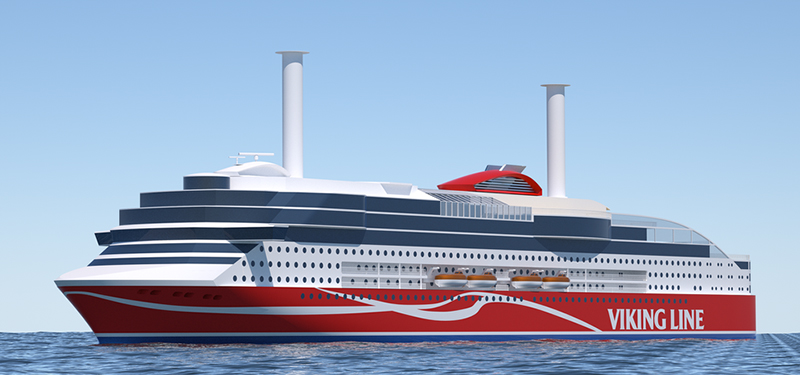
Wärtsilä will supply the engines, the navigation system, and a broad scope of other products and systems for the environmentally friendly cruise ferry being built for Viking Line. The ship is being built at the Xiamen Shipbuilding Industry yard in China and there is an option for a second vessel.
Commencing in early 2021, the new vessel will operate between Turku and Stockholm. The ship is the first LNG fuelled ferry of this size and standard to be built in China.

Viking Line’s business review for the period January – September

By | 2017 Newsletter week 47 | No Comments

Viking Line Group published its results for the first 3 quarters:
Consolidated sales: EUR 399.6 million (397.3 million)
Operating income: EUR 6.3 million (14.8 million).
Consolidated income before taxes: EUR 4.6 million (11.6 million).
Income after taxes: EUR 3.8 million (9.7 million).
In last week’s newsletter we already wrote that Viking Line’s assessment is that operating income for 2017 will decline, mainly because of the competition and the bunker prices.

Viking Line’s operating income could be lower than in 2016

By | 2017 Newsletter week 46 | No Comments

In its revised earnings forecast for the 2017 financial year, Viking Line’s assessment is that operating income for 2017 will decline, compared to operating income for 2016.

The reasons are:

  • Pressure on passenger prices and volumes because of the competition.
  • Higher bunker prices.
  • The expected revision in Finland’s restitution law for 2017 has been delayed, and it is uncertain whether this can be carried out so that it will affect consolidated earnings for 2017.

QUICK NEWS

By | 2017 Newsletter week 42 | No Comments
    • Viking Line’s chartered fast ferry EXPRESS (Incat, 1998), operating as VIKING FSTR, was withdrawn from the Helsinki-Tallinn route earlier than planned, for technical reasons. Instead of October 22 she made her last crossing on October 17.
    • Naviera Armas is chartering the Trasmediterránea Incat fast ferry ALBORAN for the Canary Islands route Los Cristianos-San Sebastián de La Gomera-Valle Gran Rey. The charter contract is for six months. It is not the first time ALBORAN is being chartered by Armas.
    • Naviera Armas will introduce another high-speed craft, the VOLCAN DE TENO. She is currently being overhauled in Cadiz and will service the Canary Islands too. This Incat was acquired from Hellenic Seaways in 2016.
    • Transmediterranea charters the 2,171 lane meter ro-ro MAESTRO SEA, which for a long time has been laid up in Marseille. She runs on Cadiz – Tenerife – Las Palmas instead of VOLCAN DE TENEGUIA, which is away for drydocking.
    • Passengers travelling on Spirit of Tasmania will now have free access to 7,000 online newspapers and magazines from more than 120 countries, thanks to the PressReader app. The app and its publications can be downloaded by passengers on a mobile or tablet prior to sailing, using the Wi-Fi at the terminals.
    • Instead of sending its ferry WIGHT SKY to drydock, Wightlink decided to do an in-water survey with divers. Therefore the vessel sailed to Portland Port, a nearby harbour, also on the South Coast of Britain. The primary reason Portland was chosen was because of ‘the clarity of the water’.
    • In the first 9 months of the year Port of Rotterdam has seen a further growth of the ro-ro freight volumes, an increase of 6.6%. Reason is the growth on the most dominant market, the UK, and more traffic on new markets such as Portugal, Iceland and Scandinavia. Report can be downloaded via this link.
    • Axel Meynköhn, CEO of the ferry company Wyker Dampfschiffs-Reederei announced that the new ferry will be named NORDERAUE. The vessel is currently in the final phase of construction at the Neptun Yard in Rostock. If everything goes well the ship could be christened on December 30. The ship is ready two months earlier than planned.
    • Greek website Elliniki Aktoploia’ reports that the new name of the MOBY LOVE will be AIOLOS. She will run with the ANEMOS (ex MOBY BABY) under the name Med Lines. It is not known where they will operate.
    • Viking Line’s ROSELLA was chartered for a big international police anti-terrorist exercise, involving eight or nine countries. After discharging in Kapellskär on Wednesday morning October 18, the vessel was withdrawn from service for the exercise. On October 19 she runs again as normal.
    • Bad luck for REGINA BALTICA passengers on Friday the 13th. They had to leave the ship in Valencia because of an engine room fire. The vessel is chartered by Balearia for the Valencia-Mostaganem route (Algeria). Until she’s repaired, the Baltic veteran is being replaced by BAHAMA MAMA.

Viking Line revises earnings forecast for fiscal year 2017

By | 2017 Newsletter week 37 | No Comments

Viking Line says in its stock market announcements that operating profit for 2017 is expected to be lower than the year before, which is different to what the board assessed previously.

Reasons are:

  • Pressure on prices as well as volumes, because of competition.
  • Higher bunker prices expected.

Remark:

  • A correction of Finland’s refund legislation for 2017 is expected to have a positive impact on the Group’s earnings.