Sea-Cargo Completes Hybrid Retrofit of TRANS HAV and TRANS SOL

By 2026 Newsletter week 16

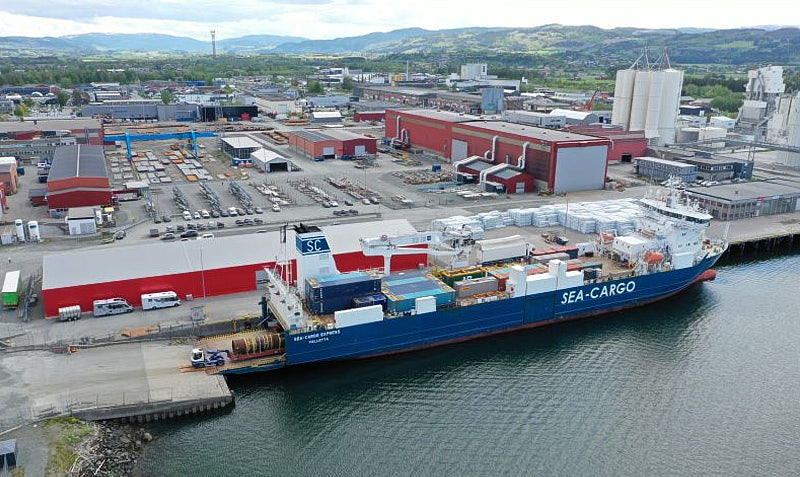
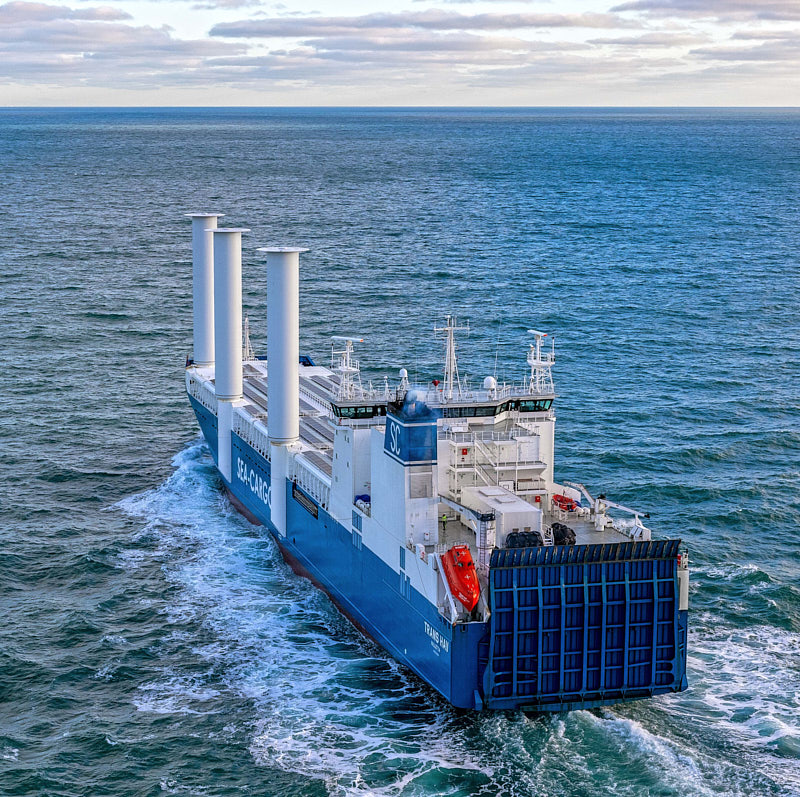
Sea-Cargo has completed a major rebuild of TRANS HAV and TRANS SOL, marking another step in its fleet modernisation and decarbonisation strategy.

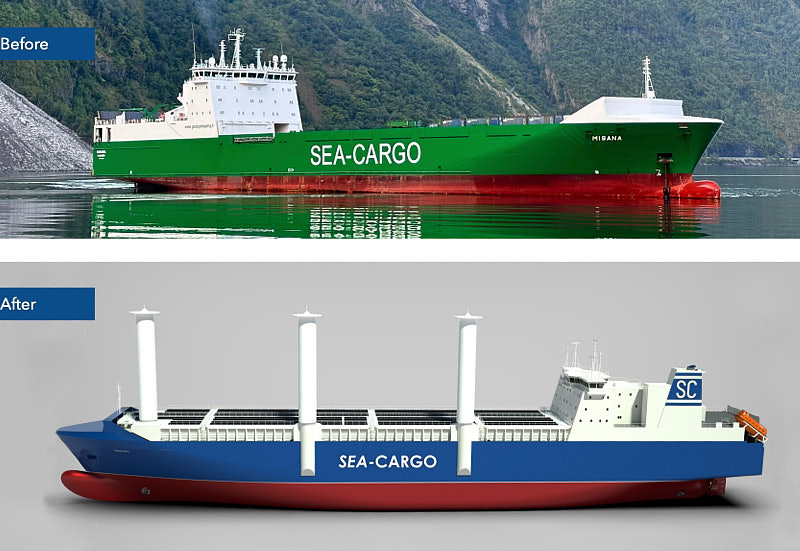
The two vessels now operate with an integrated hybrid energy platform combining wind, solar and battery technology. Each ship has been fitted with three rotor sails, 1,600 m² of solar panels, battery storage systems, new propellers optimised for 14-knot service speed, shore power connectivity and upgraded control systems.

Sea-Cargo says the latest rebuild delivers a 35% reduction in CO2 emissions per tonne transported, while the company’s upgraded fleet has achieved a 50% total emission reduction.

Under favourable wind conditions, the rotor sails can generate thrust equivalent to around 7,500 kW, significantly reducing engine load. Solar panels also provide renewable electricity while increasing protected cargo capacity through an integrated garage deck.

The vessels continue to trade between Norway and continental Europe under long-term industrial contracts, including cooperation with Hydro. Sea-Cargo said stable cargo volumes and fixed routes were essential to justify investments of this scale.


Sea-Cargo Adopts, Adapts, Improves Two RoRo Vessels

By 2025 Newsletter week 13

Sea-Cargo announced the purchase and the remodelling of the RoRo vessels MISIDA and MISANA.

The transformation will focus on cutting-edge sustainability initiatives and technological upgrades and will be performed summer 2025.

  • 3 new rotorsails from Norsepower.
  • New optimised propellers from Kongsberg designed for a 14-knots speed to improve fuel efficiency.
  • NOX scrubber by Pureteq.
  • Major upgrade to machinery & control systems from Wärtsilä, including advanced energy- saving features and bridge equipment to compensate blind sectors.
  • Covered weather deck increasing under-deck capacity.
  • Solar panels 1600 m2 solar panels installed on the weather deck cover.
  • Battery and frequency converter systems from NES, featuring an energy pack with shore power and peak shaving.
  • New power management system from Smart Automation, integrating the rotorsail and battery technology for optimal energy efficiency.

Through the implementation of these measures, Sea-Cargo anticipates a reduction of up to 50% in fossil fuel consumption.

The vessels will be renamed TRANS HAV and TRANS SOL.

Trasmediterránea Rescued with an Injection of 340 million

By 2021 Newsletter week 2

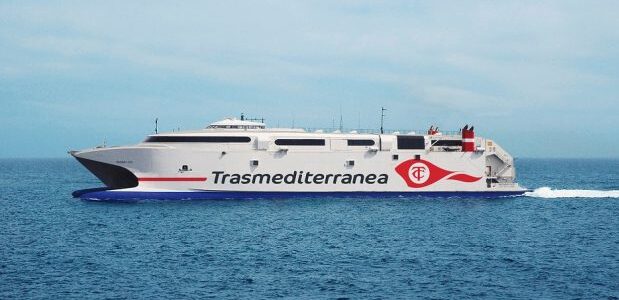
Naviera Armas, owner of Trasmediterránea, has closed an agreement with its main financial creditors (Barings, Bain Capital, Cheyne Capital and JPMorgan) to convert a total of 240 million euros in debt into capital and, in addition, receive a liquidity injection of up to 100 million euros through a bridge loan, according to Expansión.

To save the current economic situation, the Armas family intends to contribute 40 million with the sale of the (fast ferry) ship VILLA DE TENOR. In this way, Armas will be able to maintain control of the group’s rights.

The New Sea-Cargo

By 2021 Newsletter week 1

Sea-Cargo initiated major changes to the already well-established liner system in the North Sea. Since 2001, Sea-Cargo have offered seafreight between Western Norway, Denmark, the Netherlands and UK with its roro and general cargo vessels.

As of week 1, this will be extended to also include Sweden and Poland (Swinoujscie, Gothenburg and Lysekil) as part of a TOTAL reorganisation with NEW transport routes, DOUBLE capacity and a completely NEW FLEET adapted to a modern and future-oriented transport system – where all cargo will be handled with load carriers (cassettes).

The fleet also includes the SC CONNECTOR. This roro vessel has been rebuilt and equipped with rotor sails.