

ESPO Calls For Shore Power Flexibility And Greater Protection For Island Connectivity

By 2026 Newsletter week 46

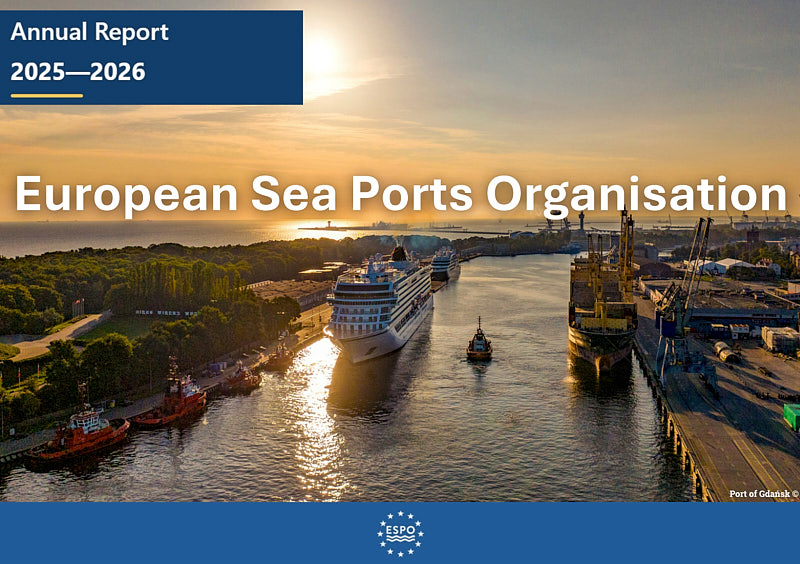
The European Sea Ports Organisation (ESPO) highlights shore power deployment, island connectivity and border checks among the priorities affecting ferry ports in its Annual Report 2025–2026.

ESPO stresses that ports’ ability to deliver onshore power supply (OPS) depends on factors often outside their control, including grid connections, electricity availability and energy prices. Ahead of the anticipated review of the Alternative Fuels Infrastructure Regulation, it calls for greater implementation flexibility and closer involvement of energy providers and grid operators.

Key points for the ferry sector include:

  • Island connectivity: ESPO welcomes the proposed five-year extension of existing EU ETS derogations for smaller islands and outermost regions to 2035. It advocates broader exemptions where ETS costs disproportionately affect island connectivity, affordability and cohesion.
  • Shore power costs: Competitively priced electricity is essential to encourage ships to connect. ESPO supports pricing transparency while stressing that costs vary between ports according to local electricity prices, grid capacity and operational requirements.
  • Border operations: The report identifies uneven preparedness for the EU Entry/Exit System at seaport border crossings, including equipment, staffing and operational constraints. ESPO continues to monitor the impact on passenger flows.

More broadly, ESPO argues that ports need substantial infrastructure investment, faster permitting and a strong European transport budget to fulfil their growing responsibilities in decarbonisation, energy security and military mobility.

https://www.espo.be/publications/annual-report-2025-2026

ESPO Welcomes Council Conclusions on European Ports Strategy

By 2026 Newsletter week 24

The European Sea Ports Organisation has welcomed the Council Conclusions on the European Ports Strategy, describing them as a strong foundation for future discussions.

ESPO particularly supports the focus on competitiveness, regulatory simplification, investment-friendly policies, and measures to address the impact of the EU ETS on European ports. The organisation also welcomed recognition of ports’ growing role as energy hubs and key players in Europe’s decarbonisation efforts.

Read more: https://www.espo.be/news/espo-welcomes-the-council-conclusions-on-the-european-ports-strategy-a-solid-basis-for-further-discussions

ESPO Calls for EU ETS Reform to Protect Ports and Short-Sea Shipping

By 2026 Newsletter week 22
  • ESPO has urged the European Commission to use the upcoming review of the maritime EU ETS to address carbon leakage, business leakage and competitive distortions affecting EU ports and short-sea shipping.
  • According to ESPO, the current system is encouraging cargo diversion to non-EU ports, reducing direct connectivity and shifting investment towards neighbouring countries outside the EU.
  • The organisation warns that some short-sea shipping services are already losing traffic to road transport, which remains outside the ETS until 2028.
  • ESPO is calling for measures to restore a level playing field, including changes to the treatment of transhipment ports and greater recognition of the impact on peripheral and outermost regions.
  • The ports association also wants a larger share of ETS revenues reinvested in maritime and port decarbonisation projects.
  • ESPO stresses that it supports the EU’s climate objectives but argues that the current ETS framework is undermining both competitiveness and the effectiveness of decarbonisation efforts.

https://www.espo.be/news/eu-ets-review-last-call-from-europes-ports-to-restore-the-level-playing-field-and-stop-business-leakage

CER and ESPO Call for Stronger Rail–Port Connectivity

By 2026 Newsletter week 11

Turkish civil society organisations have renewed their call for the removal of Aliağa shipbreaking yards from the EU list of approved ship recycling facilities, citing severe pollution and systemic mismanagement.

During a meeting with the European Commission (DG ENVI) on 24 February, NGOs highlighted environmental degradation in the area, including contamination with Persistent Organic Pollutants (POPs) linked to ship recycling activities. They also pointed to several recent incidents at yards that remain on the EU list, including the discharge of unidentified liquids during the dismantling of the vessel LILY HA.

The organisations argue that the current situation poses significant environmental and health risks and are calling for the suspension of Aliağa facilities from the EU list until improvements are implemented.

Click and read the open letter: 

ESPO Regrets Postponement of IMO Net-Zero Framework

By 2025 Newsletter week 43

The European Sea Ports Organisation (ESPO) has expressed serious concern over the International Maritime Organisation’s decision to postpone adoption of the Net-Zero Framework (NZF) by one year. The delay, agreed at the MEPC meeting in London, risks slowing global climate ambition and the pace of maritime decarbonisation.

The NZF was intended to set a global regulatory framework for shipping emissions, including a fuel standard and carbon pricing mechanism. ESPO called the postponement a missed opportunity, warning it could prolong regulatory fragmentation and undermine the momentum for a unified global approach.

ESPO urges the European Commission to maintain progress through tax incentives for clean fuels, subsidies, and ETS revenues directed towards onshore power supply and clean fuel infrastructure.

“The postponement should not lead to a cancellation of ambition,” ESPO stated, calling on governments, industry, and civil society to stay engaged in developing a credible and ambitious global framework for shipping’s energy transition.

ESPO Welcomes Continuation of CEF Programme

By 2025 Newsletter week 43

The European Sea Ports Organisation (ESPO) welcomes the European Commission’s decision to continue the Connecting Europe Facility (CEF), ensuring continued EU funding for developing and upgrading Europe’s transport and energy networks.

ESPO highlights the geostrategic role of ports as multimodal hubs supporting trade, energy, military mobility, and industrial activity. Secretary General Isabelle Ryckbost stressed the need for investment support to help ports deliver on public-interest projects that may not yield immediate returns.

The proposed €81.4 billion CEF budget is seen as a positive step, though ESPO considers it a minimum to achieve Europe’s strategic goals in competitiveness, resilience, and decarbonisation.

The ESPO position can be found here

ESPO Welcomes Outcome of EU–UK Summit

By 2025 Newsletter week 22
  • The European Sea Ports Organisation (ESPO) welcomes the results of the first EU–UK Summit, held on 19 May in London, as a key step towards restoring stronger trade relations.
  • ESPO applauds plans to ease controls on animals, plants, and related products, viewing this as a boost for agri-food trade and food security.
  • The organisation supports aligning the EU and UK Emissions Trading Systems but stresses the need for coordination with IMO’s global efforts to avoid market distortion in maritime transport.
  • Enhanced cooperation on maritime safety and security is welcomed, including collaboration on the ISPS Code, cybersecurity, and responses to shadow fleet activity.
  • ESPO calls for rapid implementation to deliver legal certainty, rebuild trust, and enable deeper EU–UK cooperation.
  • The ESPO Statement can be read here.

ORGANISATIONS

By 2025 Newsletter week 17

ESPO Welcomes EP’s Budget Committee’s Plea for Greater Funding for Transport, Energy and Dual-Use Infrastructure Within the Next MFF

The European Sea Ports Organisation (ESPO) welcomes the report of the European Parliament’s Budget Committee voted on 23 April, titled “On a revamped long-term budget for the Union in a changing world,” by co-rapporteurs Siegfried Mureşan (EPP) and Carla Tavares (S&D). The compromise amendments and the full report can be found here.

The report stresses the need for the next Multiannual Financial Framework (MFF) to allocate significantly greater funding to energy and transport, in line with the objective of achieving climate neutrality by 2050. This requires the decarbonisation of the economy through the deployment of clean technologies and the enhancement of energy and transport infrastructure.

The Budget MEPS are also asking support for military mobility in the future EU budget, to enhance infrastructure for dual-use—both military and civilian— to strengthen the Union’s defence capabilities.

The Budget Committee finally underlines the importance of ensuring that the MFF is adequately resourced and sustainably financed and recognises that budgetary needs post-2027 will be significantly higher than the amounts allocated in the 2021–2027 MFF.

In the Media

By 2024 Newsletter week 43

“The Transport Network Must Be Developed Across Europe”

Isabelle Ryckbost, Secretary General of the European Sea Ports Organisation (ESPO), expressed concern over the EU Commission’s potential restructuring of its budget framework, which could shift EU funding control to individual member states. She fears this could undermine a European approach to transport policy, as countries might prioritise local projects, like roads, over critical cross-border infrastructure, such as ports or rail connections.

Despite the EU’s existing guidelines for the trans-European transport network (TEN-T), Ryckbost stresses that coordinated European investment is essential for an integrated transport network, ensuring optimal connections that serve the entire EU, not just individual countries.

While she acknowledges the need to streamline EU programmes, she highlights the importance of the Connecting Europe Facility (CEF), which funds key infrastructure projects. Ryckbost believes this targeted approach must continue to ensure the development of essential transport links, like hinterland connections for major ports, which benefit all of Europe.

Source: DVZ

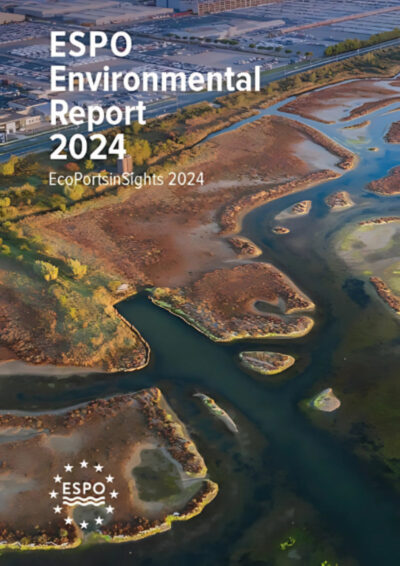
ESPO’s Environmental Report 2024: Climate change more than ever a priority for Europe’s ports

By 2024 Newsletter week 43

One of the main features of this report remains the Top 10 of environmental priorities, a list which sheds light on the environmental challenges faced by European ports. This ranking provides both ESPO and European policymakers with the critical insights needed to make well-informed decisions. For the third consecutive year, climate change maintains its position as the foremost environmental concern for European ports.

Apart from climate change, other key priorities in the sector shifted, with energy efficiency taking the second position and air quality moving to third, compared to the 2023 report.

Together, these three form a trio of critical environmental concerns for ports in the region.

Climate change adaptation is increasingly important, with 64% of ports reporting climate-related operational challenges, an increase from 47% last year. Additionally, 73% of ports are working to enhance the resilience of existing infrastructure, while 86% are integrating climate adaptation into new projects.

Notably, water-related port development has maintained its position from last year’s report, continuing to rank among the Top 10 priorities for the second consecutive year.

Click here to see the report