

PINS Project Shows How Battery Storage Can Accelerate Port Electrification

By 2026 Newsletter week 22
  • The UK-funded PINS (Port Infrastructure using Novel Energy Storage) project has demonstrated that battery energy storage combined with smart energy management can make shore power and vessel charging more affordable and practical for ports facing grid constraints.
  • Pilot studies were conducted at Cowes, Portsmouth and Falmouth, each representing different operational and infrastructure challenges.
  • The project assessed four battery technologies: lithium-iron phosphate, second-life lithium-ion, sodium-ion and soluble lead-flow batteries, finding both established and emerging technologies suitable for port electrification.
  • Modelling showed that battery-supported systems can reduce peak grid demand, enable higher-power charging and optimise the use of onsite renewable energy.
  • Charging solutions evaluated ranged from CCS-based DC charging for smaller vessels to high-power shore connections for ferries and cruise ships, alongside wireless charging and DC microgrids.
  • The study concluded that storage-led electrification can reduce the need for costly grid upgrades while supporting emissions reductions and operational flexibility.
  • Project partners hope to move to a real-world demonstration phase, providing evidence to support wider deployment across UK ports and harbours.

Read more: https://iuk-business-connect.org.uk/programme/uk-shipping-office-for-reducing-emissions/

Karlshamn-Gdansk Ferry Project Reaches Key Milestone

By 2026 Newsletter week 22
  • Trial port calls for the planned ferry service between Karlshamn and Gdansk have been successfully completed.
  • The trials mark an important step towards establishing the new transport corridor developed with POLSCA Baltic Ferries.
  • The future service is intended to provide a reliable and efficient link for both freight and passenger traffic.
  • The partners say the route will support regional connectivity and economic growth.

Corsica Ferry Traffic Up 2.8% in March

By 2026 Newsletter week 22
  • Corsica recorded 93,700 ferry passengers in March 2026, an increase of 2.8% compared with March 2025.
  • Ferry traffic grew faster than air traffic, which increased by just 0.5% during the same period.
  • Bastia remained the island’s leading ferry port, handling 52% of all ferry passengers, followed by Ajaccio with 29%.
  • Corsica Ferries retained its dominant market position with a 54% share of ferry passengers, ahead of Corsica Linea (28%).
  • Domestic French routes accounted for 80% of ferry passenger traffic, while services to and from Italy represented the remaining 20%.
  • Freight volumes carried by sea fell by 1.6% year-on-year to 170,100 tonnes in March.

FRS Finland to Introduce Fully Electric Ferry on Archipelago Route

By 2026 Newsletter week 22
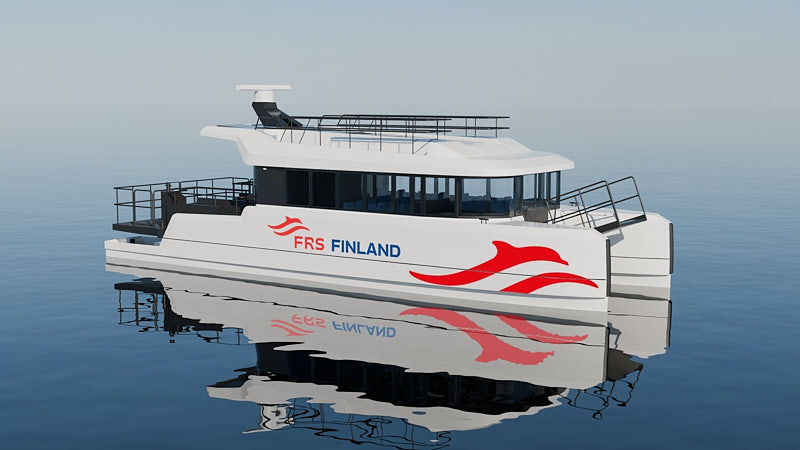
  • FRS Finland has secured a 15-year contract to operate the Kalkkiranta–Bodö–Pörtö route from September 2027.
  • The service will introduce Finland’s first fully electric passenger vessel of this size in scheduled archipelago traffic.
  • The new vessel, a Callboats CAT 16, will carry up to 58 passengers and offer barrier-free access.
  • The ferry will operate with zero emissions, supporting the decarbonisation of local maritime transport.
  • Winter operations will continue using FRS Finland’s modernised existing fleet.
  • The vessel will be built in Finland by Callboats, highlighting domestic shipbuilding expertise.
  • FRS Finland hopes the project will pave the way for similar electric ferry solutions elsewhere in Finland.

ESPO Calls for EU ETS Reform to Protect Ports and Short-Sea Shipping

By 2026 Newsletter week 22
  • ESPO has urged the European Commission to use the upcoming review of the maritime EU ETS to address carbon leakage, business leakage and competitive distortions affecting EU ports and short-sea shipping.
  • According to ESPO, the current system is encouraging cargo diversion to non-EU ports, reducing direct connectivity and shifting investment towards neighbouring countries outside the EU.
  • The organisation warns that some short-sea shipping services are already losing traffic to road transport, which remains outside the ETS until 2028.
  • ESPO is calling for measures to restore a level playing field, including changes to the treatment of transhipment ports and greater recognition of the impact on peripheral and outermost regions.
  • The ports association also wants a larger share of ETS revenues reinvested in maritime and port decarbonisation projects.
  • ESPO stresses that it supports the EU’s climate objectives but argues that the current ETS framework is undermining both competitiveness and the effectiveness of decarbonisation efforts.

https://www.espo.be/news/eu-ets-review-last-call-from-europes-ports-to-restore-the-level-playing-field-and-stop-business-leakage

CLdN Appoints Cameron Bowie as COO of Shipping

By 2026 Newsletter week 22

CLdN has appointed Cameron Bowie as Chief Operating Officer of CLdN Shipping, effective 13 July 2026.

Bowie joins from container shipping company Hapag-Lloyd, where he currently serves as Managing Director UK & Ireland. He brings 36 years of experience in the maritime transport sector.

According to CLdN, his experience will support the company’s ambitions in short-sea container shipping and its continued expansion in UK, Irish and European trades.

Bowie succeeds Gary Walker, who will retire this summer after almost three decades with CLdN. Walker joined the company in 1997 and has led its shipping activities for the past 12 years, overseeing a significant expansion of operations.