

September Volumes Show Mixed Picture for Freight

By 2025 Newsletter week 41

DFDS reported September freight volumes of 3.5m lane metres, up 0.8% year-on-year but 1.2% lower when adjusted for route changes.

  • North Sea: Volumes remained stable across most routes, maintaining the same level as 2024.
  • Mediterranean: Declined due to a continued slowdown in Turkish automotive production and domestic demand, as well as reduced capacity on one route responding to market competition.
  • Channel: Increased, supported by the successful launch of the new Jersey routes.
  • Baltic Sea: Continued to perform above 2024 levels, sustaining positive growth.
  • Strait of Gibraltar: Also above 2024, contributing to overall resilience.

For the last twelve months (2025–24), total freight volumes rose 2.3% to 41.7m lane metres (up 1.2% when adjusted for route changes).

Passenger numbers, however, were weaker. In September, 392k passengers represented a 7.4% drop year-on-year (adjusted), with lower Channel traffic outweighing growth in the Baltic. Car volumes fell 5.7%, and total passenger numbers for the past year declined 14.5% to 5.5m (or 0.4% growth adjusted for route changes).
Autorité de la Concurrence Rejects Anticompetitive Complaint Against DFDS and P&O Ferries

By 2025 Newsletter week 38
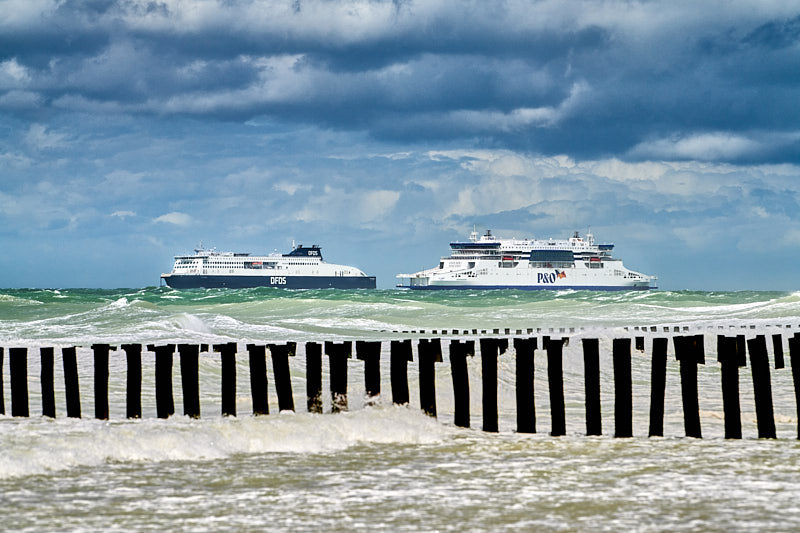
  • Background: France Manche SA and The Channel Tunnel Group Ltd (“Eurotunnel”) filed a complaint against DFDS and P&O Ferries.
  • Allegations: The two operators were accused of a capacity-sharing agreement on the Calais–Dover route, with a mechanism to rebalance capacity.
  • Legal Basis: Objection raised under Article 101 TFEU and Article L. 420-1 of the French Commercial Code.
  • Decision: The Autorité found no anticompetitive purpose in the agreement.
  • Key Findings:
    • Capacity could be shared proportionally and adjusted at any time.
    • Both operators retained incentives to optimise costs, improve services and remain price-competitive.

Conclusion: The Autorité de la Concurrence ruled that the arrangement did not restrict competition. [source]

Photo Mike Louagie

DFDS and TT-Line Enter Baltic Sea Space Charter Agreement

By 2025 Newsletter week 35

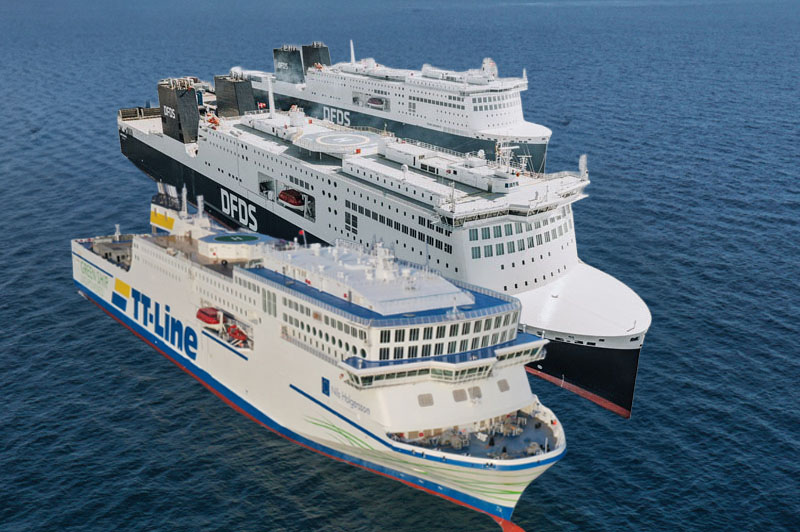
DFDS and TT-Line have signed a mutual space charter agreement covering freight and passengers on Baltic Sea routes.

 Agreement Details

  • Covers the Karlshamn–Klaipeda RoPax route, currently operated by both companies.
  • Grants DFDS access to TT-Line capacity on Klaipeda–Trelleborg and Klaipeda–Travemünde.
  • Effective 1 October 2025 for freight on all routes (Travemünde is freight-only)
  • Effective 1 October 2025 for passengers on Karlshamn routes.
  • Effective 1 November 2025 for passengers on Trelleborg.


Benefits

  • Higher frequency and capacity across all routes.
  • Reduced emissions through optimised sailings.
  • Each operator maintains control of commercial activities and customer relations.

TT-Line Expansion

  • TT-Line will deploy NILS HOLGERSSON, one of its new LNG-powered Green RoPax ferries, on the Klaipeda routes (once a week).

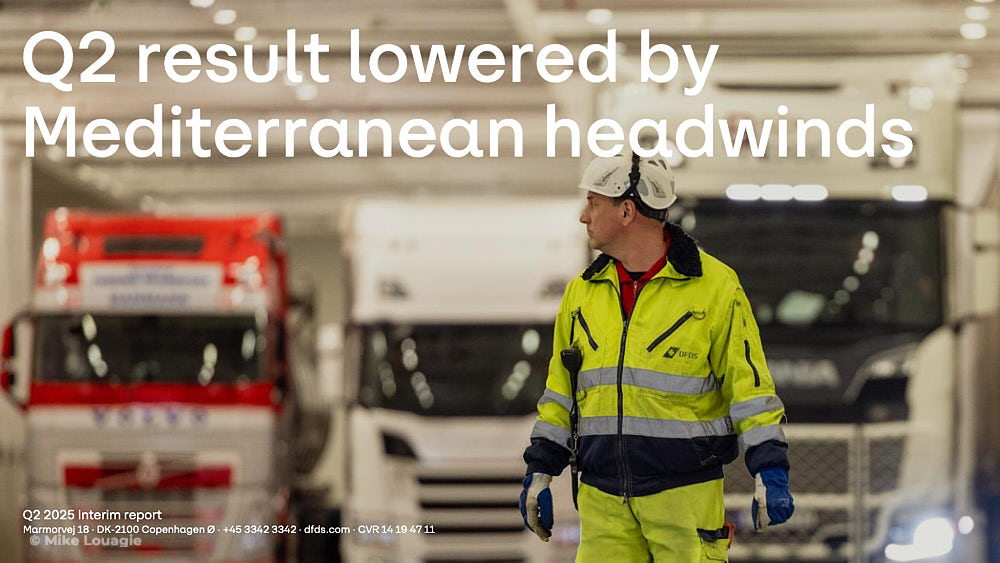
DFDS Q2 Result Lowered by Mediterranean Headwinds

By 2025 Newsletter week 34

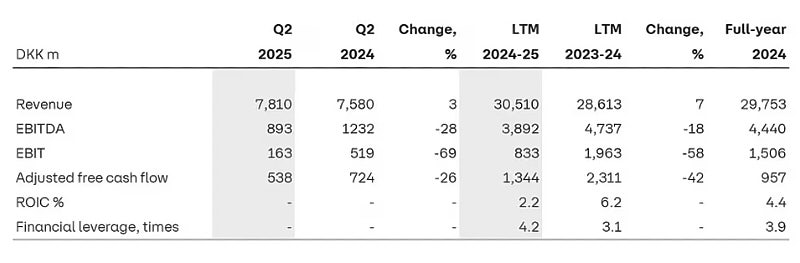
Q2 2025

  • Revenue: DKK 7.8bn (+3%, organic –2%)
  • EBIT: DKK 163m (–69%)
  • Adjusted free cash flow: DKK 538m (–26%)
  • CO₂ ferry emission intensity: –4.1%

Outlook 2025

  • EBIT: DKK 0.8–1.0bn (previously ~DKK 1.0bn)
  • Revenue growth: ~5%
  • Adjusted free cash flow: ~DKK 1.0bn (unchanged)

CEO’s comments

  • Most of the network performed as expected.
  • Mediterranean remains the key earnings challenge.
  • Logistics Boost turnaround on track.
  • Türkiye & Europe South turnaround slower; breakeven may be delayed.

Geopolitics

  • New EU–USA trade deal sets a 15% tariff on EU exports to USA.
  • Short-term EU growth may be impacted.
  • Nearshoring expected to accelerate trade with Türkiye and Morocco, benefiting DFDS’s network.

Read the Q2 2025 interim report

Or click on this cover below for the full presentation:

DFDS July Volumes: Solid Freight Growth in Most Areas

By 2025 Newsletter week 34

Q2 2025

  • Revenue: SEK 961.1m (604.1m)
  • Adjusted EBIT: –SEK 17.7m (27.3m)
  • Net result after tax: –SEK 53.6m (55.1m)
  • Passenger growth on Gotland routes: +8.1%
  • Go Nordic Cruiseline: 182,500 passengers

H1 2025

  • Revenue: SEK 1,569.7m (989.0m)
  • Adjusted EBIT: –SEK 195.1m (–39.4m)
  • Net result after tax: –SEK 278.8m (92.3m)
  • Destination Gotland: passengers +4.7% (690,400), freight lane metres +2.6% (374,300)
  • Go Nordic Cruiseline: 317,000 passengers, 31,000 vehicles

CEO’s comments

  • Stable performance in Gotland traffic with positive June passenger growth.
  • Go Nordic Cruiseline weighed on results due to launch and lower onboard revenues.
  • Biogas investment and LNG bunkering agreements move traffic towards lower emissions.
  • Gotland Horizon X under construction for delivery in H2 2028.
  • New partnership: Gotland Hotels with Strawberry – Visby hotel to become a Quality Hotel in 2026.

Dividend: SEK 20.30 per share (9.80).

Source: https://corporate.gotlandsbolaget.se/sv/ (in Swedish)

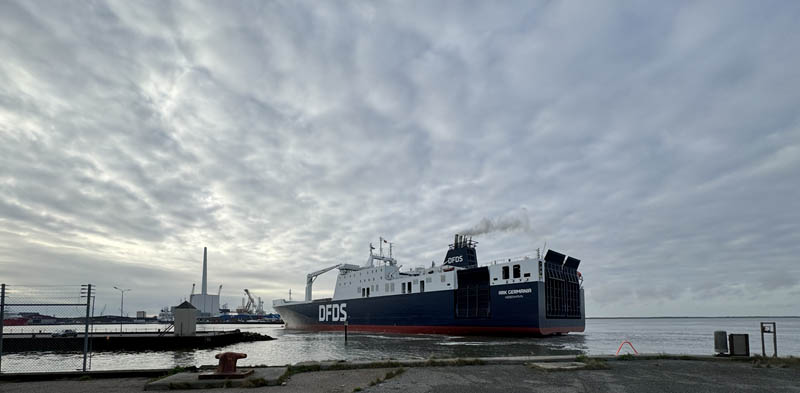
DFDS Marks 150 Years of Esbjerg–UK Route

By 2025 Newsletter week 26
  • DFDS celebrates 150 years since the first Esbjerg–UK sailing in 1875.
  • The freight route handles over 100,000 trailers annually (1.5 million lane metres).
  • Originally carrying cattle, later Danish exports like bacon, butter, and eggs.
  • Passenger services ran from 1925 to 2014, but freight has always been core.
  • CEO Torben Carlsen: “The route is a symbol of enduring partnership between Denmark and the UK.”
  • Two vessels—ARK DANIA and ARK GERMANIA—offer six weekly departures to Immingham (18.5h crossing).

DFDS Completes First Sailing Between Spain and the Netherlands

By 2025 Newsletter week 22
  • DFDS has launched a new weekly short-sea freight route between the Netherlands and Spain.
  • The service departs from Matrans Terminal (Rotterdam), calls at DFDS’s Vlaardingen terminal, and arrives at P&J Carrasco terminal (Vilagarcía de Arousa).
  • The new corridor strengthens multimodal transport between Southern and Central Europe.

Key Facts

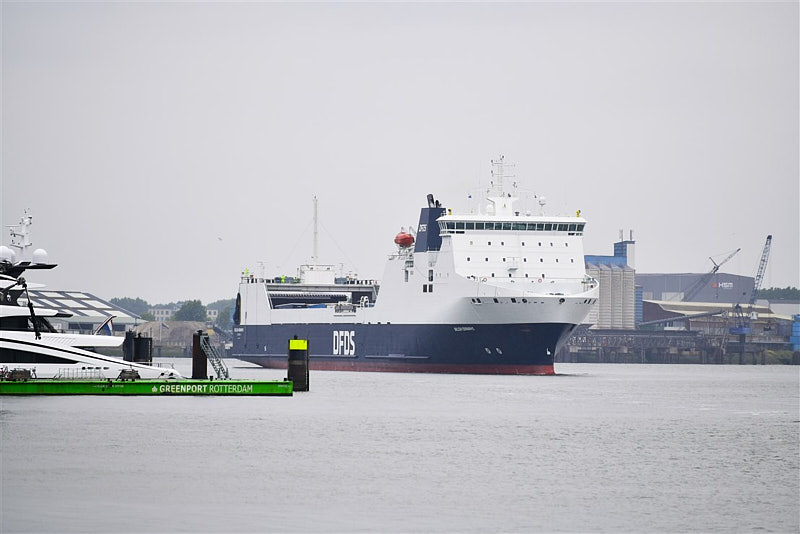
  • First sailing: BELGIA SEAWAYS departed Rotterdam on a Saturday and arrived in Spain early Tuesday.
  • Capacity: 2,660 lane metres.
  • Suitable for unaccompanied trailers, containers, and out-of-gauge cargo.
  • Sectors: Automotive, wind, battery, FMCG, and process industries.

Strategic Impact

  • Supports emissions reduction by shifting freight from road to sea.
  • Enhances connections with the UK, Scandinavia and mainland Europe.
  • Integrated into DFDS’s wider European network.

New Collaboration

  • DFDS has signed a new cooperation agreement with Hydro, the global aluminium and energy company.

DFDS and Volvo Trucks Shift to Night Logistics at Port of Antwerp

By 2025 Newsletter week 21

DFDS and Volvo Trucks have moved container flows between Ghent and the port of Antwerp from day to night. The focus is on emission-free logistics using electric trucks.

Key Facts:

  • Since October 2024, DFDS has transported spare parts containers for Volvo Trucks during the night.
  • The cargo moves between Volvo’s Ghent distribution centre and Antwerp’s deep-sea terminals.
  • DFDS uses heavy electric trucks.
  • Around 150 containers per month are now moved at night.

Why Night Logistics?

  • Less congestion: Fewer delays and more reliable deliveries.
  • Better use of infrastructure: Roads and terminals are less busy at night.
  • Increased truck utilisation: Vehicles run more efficiently.
  • Smoother planning: Admin tasks during the day support night operations.

Read more: Newsroom Port of Antwerp Bruges

Digital

By 2025 Newsletter week 21

DFDS Expands with Nowhere Networks after a Great First Year

After one year of operational use, DFDS has chosen to expand its deployment of Nowhere Networks’ hybrid connectivity solution. The decision follows positive experiences with the initial rollout across seven freight vessels and multiple European ports.

Full article here

DFDS April 2025 Report: Easter Timing Is Good for Passenger Numbers

By 2025 Newsletter week 20

This year Easter holidays fell in April (last year in March). In general, this decreases freight volumes and increases passenger volumes.

RoRo – freight:

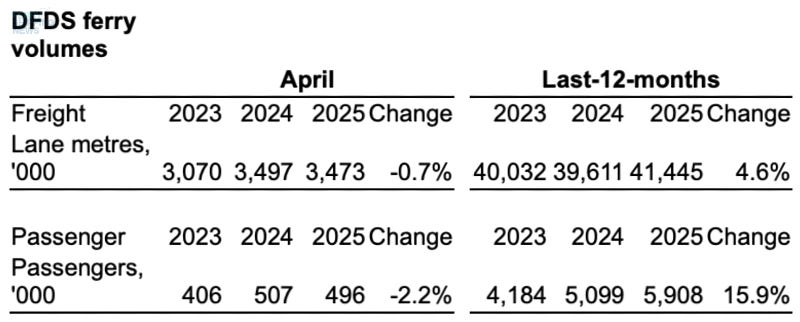
  • Total volumes in April 2025 of 3.5m lane metres were 0.7% below 2024 and down 2.5% adjusted for route changes. YTD growth rates were -0.4% and -1.0%, respectively.
  • North Sea volumes were below 2024 following primarily a dip in automotive volumes between Germany and the UK.
  • Mediterranean volumes were above 2024 driven by mainly a shift of road volumes to ferry, a capacity increase between Tunisia and France, and the opening of a new route between Egypt and Italy.
  • Channel volumes were below 2024 due to mainly the Easter timing difference.
  • Baltic Sea volumes were below 2024 driven mostly by a temporary capacity reduction on one route following tonnage changes.
  • Strait of Gibraltar volumes were above 2024.
  • For the last twelve months 2025-24, the total transported freight lane metres increased 4.6% to 41.4m from 39.6m in 2024-23. The increase was 0.7% adjusted for route changes.

Ferry – passenger:

  • The number of passengers in April 2025 was adjusted for route changes* up 15.1% to 432k vs 2024 and the adjusted YTD growth rate was -3.2%.
  • The monthly increase was driven by mainly the Easter timing difference.
  • The number of cars in April was 13.0% above 2024 adjusted for route changes.
  • For the last twelve months 2025-24, the total number of passengers increased 15.9% to 5.9m compared to 5.1m for 2024-23. The increase was 3.7% adjusted for route changes.

*Adjusted for sale of Oslo-Frederikshavn-Copenhagen end October 2025, Tarifa-Tanger Ville due to considerable capacity changes ahead of exit from route early May 2025, and addition of Jersey routes from end March 2025.